Golden Currant
Ribes aureum
Last reviewed: October 2026
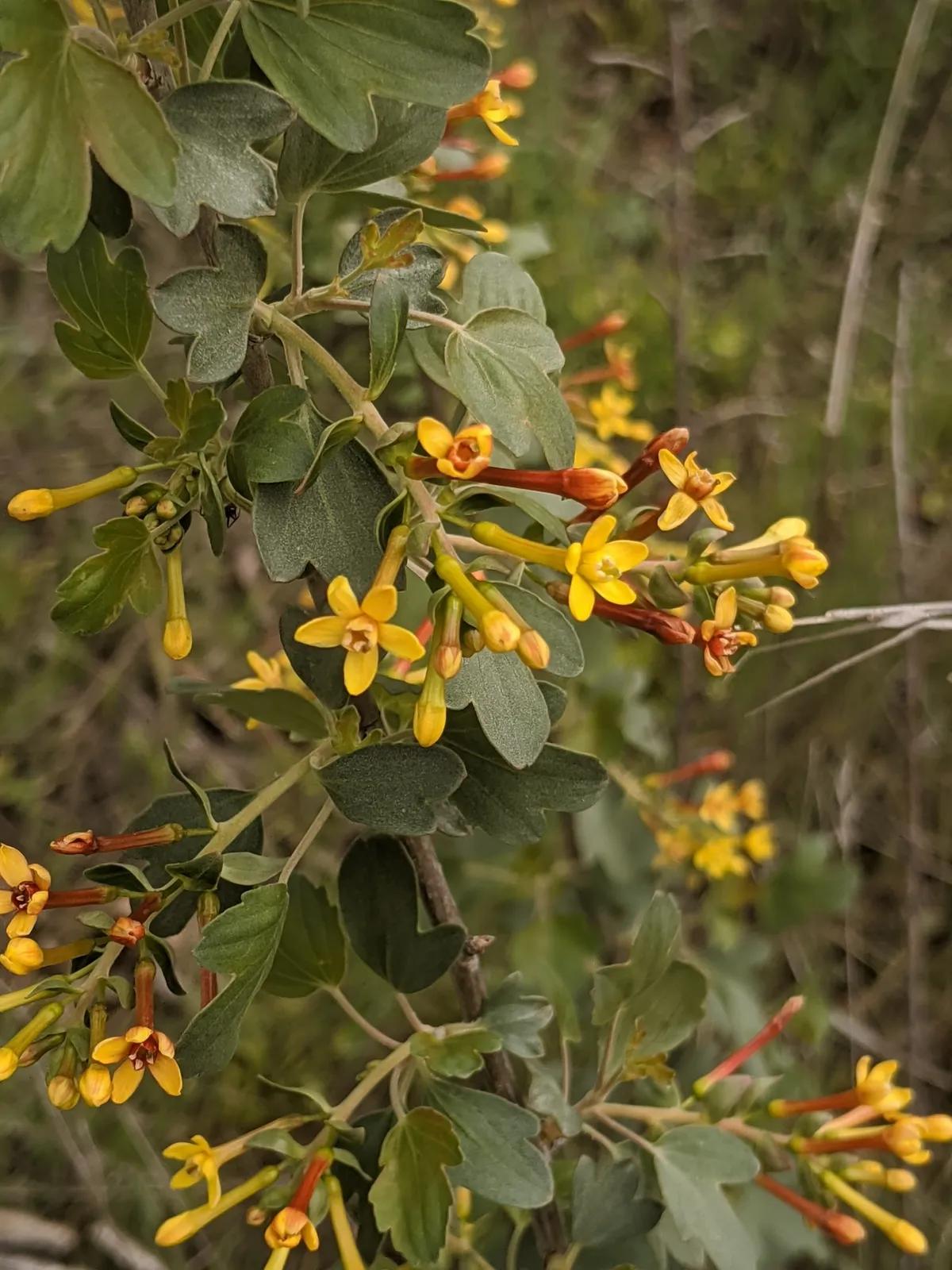
Ribes aureum (Golden Currant) is a drought-tolerant native shrub producing fragrant yellow flowers from April through June. This adaptable plant thrives across western and central North America, attracting bees, butterflies, and hummingbirds.
Toxicity unknown
Golden Currant (Ribes aureum) is not listed by the ASPCA Animal Poison Control Center (opens in new tab) or the other sources we check, so we have no verdict for it either way. Absence from those lists is not a clearance. If your pet shows symptoms after eating any plant, call the ASPCA at (888) 426-4435.
The USDA PLANTS Database (opens in new tab) does not flag Golden Currant as toxic to livestock.
Light
full sun
Water
low
Size
24"–72" H × 24"–72" W
Bloom
Apr, May, Jun
Native to
AR, AZ, CA, CO and 20 more states
Pollinators
bees, butterflies, hummingbirds
Before you buy
Your city may pay you to plant this
Cities and water utilities offer rebates for replacing lawn with native and water-wise plants. We track 459 programs across 44 states, each with a link to the provider and the date we last checked it.
Find rebates in your areaPicture natives in your own yard
Upload a photo of your yard and Patch Vision shows a rendering of it planted with natives for your region, like Golden Currant.


Browse plants for this ecoregion
Golden currant produces fragrant yellow flowers in spring followed by edible berries in summer. This hardy plant offers excellent drought tolerance and attractive fall foliage colors ranging from yellow to red.
Growing Golden Currant
Grow Golden Currant in full sun and low water. Mature plants reach 24 to 72 inches tall and spread 24 to 72 inches wide. Expect low maintenance to keep it looking intentional in a front yard.
How to care for Golden Currant, by region
How to care for Golden Currant where it is actually grown: year-round basics plus what to do each season, region by region, with the sources for each.
Care guidance last updated: September 2026
Southern California/Northern Baja Coast (includes Los Angeles, CA)
Year-round
Golden currant grows in the Santa Monica and San Gabriel foothills and canyons around Los Angeles, and Calscape lists it as native to that part of the Southern California chaparral region. It handles clay or sandy soil, wants full sun near the coast and part shade inland, and only needs occasional deep watering once it is established. Golden yellow flowers open in winter and spring and draw hummingbirds and native bees, and ripe berries feed birds through summer. True currants in the Ribes genus, unlike the small dried Zante currants sold in stores, are not linked to the kidney toxicity seen in grape and raisin poisoning in dogs.
- Plant in full sun along the coast, part shade inland, in well drained soil.
- Water deeply every one to two weeks the first year, then cut back to an occasional soak once established.
- Expect winter and spring flowers that draw hummingbirds and native bees, plus berries birds eat through summer.
- This is a true Ribes currant, not the dried Zante currant linked to dog poisoning cases.
Fall
Leaves turn a burgundy color and drop through fall, and this is also when the fungus that causes blister rust can linger in fallen leaf litter under a golden currant.
- Rake up and remove fallen leaves instead of leaving them under the shrub, to lower the chance of blister rust returning next year.
- Fall's mild, cooling weather in the Los Angeles area is also a good time to plant a new golden currant or transplant one.
- Skip heavy pruning now and wait for the plant to go fully dormant in winter.
Cleaning up dropped leaves in fall keeps the bed looking tidy for anyone walking by.
Winter
Winter is when golden currant starts blooming in the Los Angeles area, with clusters of golden yellow flowers opening while the shrub is still bare or just leafing out. It is also the best time to do any real pruning.
- Prune in late winter before flowering starts, taking out old or crowded stems rather than shearing the whole shrub.
- Avoid pruning in late fall, since it pushes tender new growth right when the plant should be resting.
- Cut back watering to about once a month, since Los Angeles winter rain usually covers the rest.
Early yellow blooms in the dead of winter give the front yard color when most other plants look bare.
Spring
Spring is when golden currant finishes blooming and pushes new leafy growth around Los Angeles. The tubular yellow flowers that opened in late winter keep drawing hummingbirds into spring, and the soft new shoots are the part aphids go after first.
- Watch new growth for aphid clusters and hose them off before they spread.
- Hold off on major pruning until after flowering finishes so you do not cut off the current bloom.
- Keep watering regularly while the shrub pushes new leaves, then taper off as summer approaches.
The yellow spring flowers and hummingbird visits make this a good front yard accent while it is in bloom.
Summer
Summer in the Los Angeles area is dry heat, and this is where golden currant's chaparral roots show. Once established it wants very little water, and a deep soak roughly twice a month is plenty even in the warmest months.
- Soak deeply about twice a month in summer rather than watering shallowly and often.
- Give inland plantings afternoon shade if the leaves start looking scorched or thin.
- Ripening berries in early summer feed birds, so leave some fruit on the shrub rather than picking it clean.
Sources: Calscape: Golden Currant, Ribes aureum var. gracillimum, VCA Hospitals: Grape, Raisin, and Currant Poisoning in Dogs, Santa Fe Extension Master Gardeners: Golden Currant, Ask Extension: Pruning golden currant
Southern Rockies (includes Durango, CO)
Year-round
Golden currant is a tough, low-water shrub that settles in well around Durango once it has a season to root in.
- Golden currant is native to Colorado's foothill and canyon habitats, and Durango's elevation and soils fall well within the shrub's natural range.
- Once it is established, it needs very little supplemental water and handles alkaline soils and dry stretches without much fuss.
- It grows into a loose, arching shrub, usually a few feet to around ten feet tall, spreads slowly by underground runners, and tolerates hard shearing if you want to keep its shape tidy.
- Fragrant, clove scented yellow flowers open in spring and the plant is an early nectar source for hummingbirds, bees, and butterflies.
- If there is a white pine growing nearby, know that golden currant is an alternate host for white pine blister rust, a fungal disease of pines. It is worth a quick check with a local extension office before planting it right next to susceptible pines.
Its manageable mature size and tidy response to shearing make it an easy, HOA-friendly choice for a foundation bed or informal border, though its light suckering habit means it benefits from a defined bed edge to keep it from wandering.
Fall
Fall brings leaf color, the first frost, and another good planting window for golden currant.
- Leaves turn yellow to red before dropping, usually around the time Durango sees its first frost in late September.
- Once summer heat breaks and before the ground freezes, fall is a good time to plant or move golden currant.
- Taper off watering as the plant goes dormant. An established shrub does not need extra water once its leaves are down.
- If you want to prune for shape, wait until the plant is fully dormant later in the season rather than cutting it back now.
Winter
Winter is the dormant season and the best low-stress time for structural pruning.
- Golden currant is fully deciduous and sits dormant through Durango's cold winters, and is hardy well past the typical winter lows here.
- Late winter, while the plant is still dormant and before new growth starts, is the best low-stress time to prune out dead, crossing, or overly long branches. This shrub tolerates hard shearing well.
- A couple inches of mulch over the root zone can buffer the freeze and thaw swings common at this elevation, though an established plant does not need extra winter water.
- Hold off pruning if a warm stretch tempts new growth early. A late freeze can still damage buds that break too soon.
Spring
Spring is bloom time for golden currant and a good window to plant a new one in Durango.
- Clove scented yellow flowers open as the leaves come in, generally through April and into May at this elevation, and draw in hummingbirds and early bees.
- Late frosts are common here into May, so a newly planted shrub's tender new growth can get nipped. Established plants shrug this off, but a young transplant does better with a cover on nights a hard freeze is expected.
- Once the ground has thawed, spring is a good time to put in a new golden currant from a nursery pot.
- Water new plantings regularly through spring while roots are still establishing, then taper off once the shrub is through its first full growing season.
Summer
Summer is when the berries ripen and this shrub needs the least help from you.
- Fruit ripens from green to yellow to deep purple through early and mid summer, and birds and other wildlife will clean up whatever is left on the branch.
- Once established, let the soil dry out between waterings. This shrub handles Durango's dry summer stretches on its own and mainly needs extra water during an unusually long hot, dry spell.
- If Durango gets its usual late summer monsoon rain, ease off supplemental watering on the days it pours so the roots are not sitting in soggy soil.
- The shrub can look a bit rough after fruiting. That is normal and not a signal to prune. Save any shaping cuts for when it is dormant.
Sources: Ribes aureum, Native Plant Database, Lady Bird Johnson Wildflower Center, Golden Currant (Ribes aureum var. aureum) Plant Guide, USDA NRCS, Frost Dates for Durango, CO, Almanac.com
In an HOA neighborhood
Golden Currant is an HOA-friendly choice. Maintenance level: low. Tidiness: 4 out of 5.
Works well in: front yard, foundation, street edge, mid zone.
Wildlife value
The fragrant flowers attract bees, butterflies, and hummingbirds in spring. Birds enjoy the nutritious berries in summer, making this an excellent wildlife habitat plant.
Common questions
- When does Golden Currant bloom?
- Golden Currant produces its fragrant yellow flowers from April through June, with peak bloom typically occurring in late spring.
- What pollinators visit Golden Currant?
- Golden Currant attracts diverse pollinators including bees, butterflies, and hummingbirds, making it valuable for pollinator gardens.
- Where is Golden Currant native?
- Golden Currant is native across much of western and central North America, from California and Washington east to Minnesota and Texas, including most western states and parts of the Great Plains.
- How much water does Golden Currant need?
- Golden Currant is drought-tolerant once established, requiring minimal supplemental watering in most climates. It performs well in low to moderate moisture conditions.
- Is Golden Currant toxic to livestock?
- The USDA PLANTS Database does not flag Golden Currant as toxic to livestock.
- Is Golden Currant HOA-friendly?
- Golden Currant is generally an HOA-friendly choice in the right placement, with low maintenance.
These answers were drafted with an AI model from this plant's data. Verify care details with a local expert.
Native range data from the World Checklist of Vascular Plants (Kew). Pollinator and host plant associations compiled from GBIF, iNaturalist, and published ecological literature.
If something looks wrong
Common plant problems, and what to check first
These come up on almost any plant. Each guide lists the likely causes in the order they are worth ruling out, with one thing to check before you act on any of them, and links to the source it came from.
- It is dying right after planting
- Leaves turning yellow
- Wilting even though I watered it
- Brown crispy leaf tips
- Bugs on the plant
Ready to grow Golden Currant? Add it to your garden in Pollinator Patch to track it and get season-by-season care guidance.