Pearly everlasting
Anaphalis margaritacea
Last reviewed: September 2026
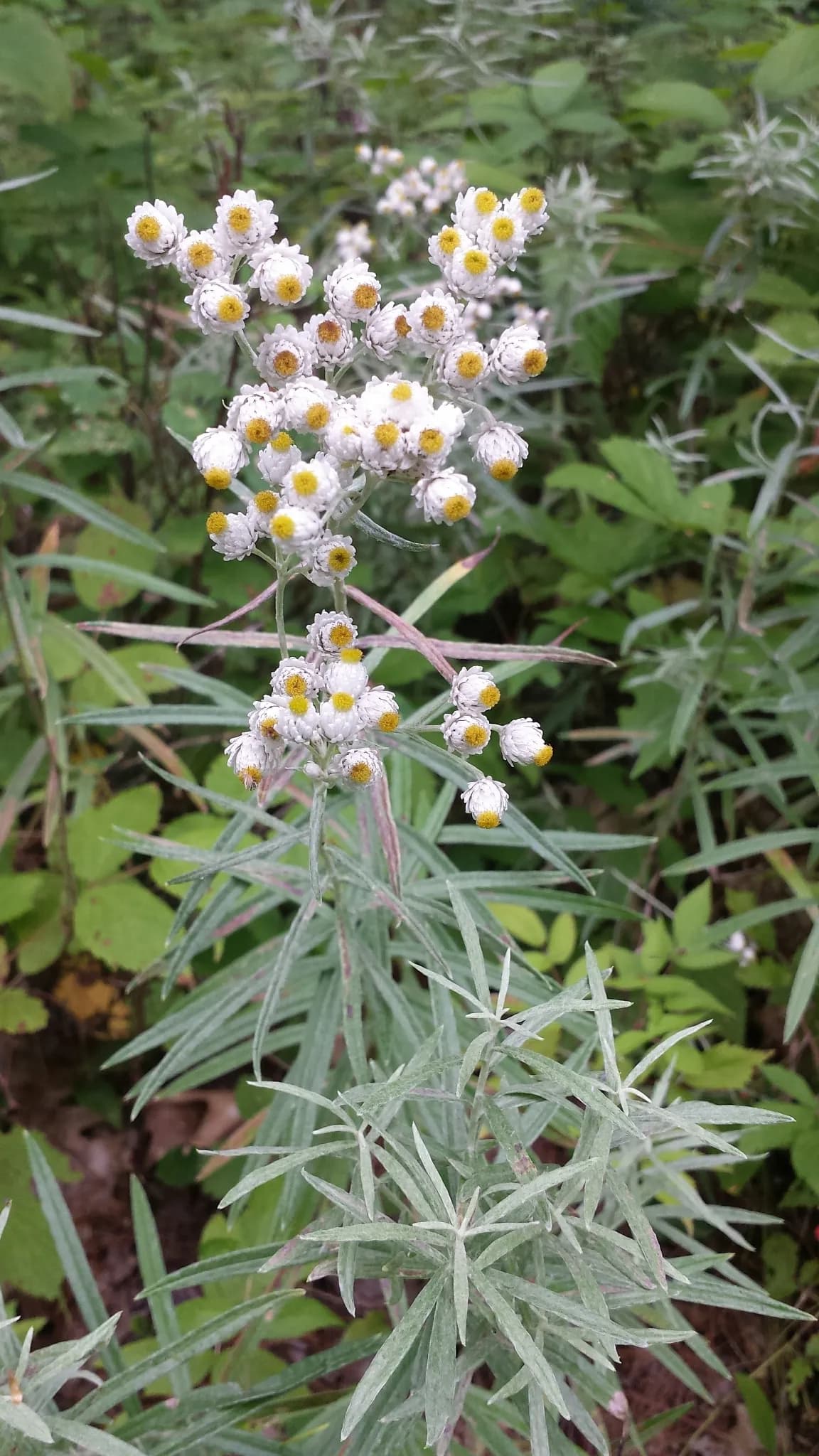
Pearly everlasting is a drought tolerant forb that blooms July through September with clusters of papery white flowers, thriving in full sun along dry meadows, roadsides and open slopes.
Toxicity unknown
Pearly everlasting (Anaphalis margaritacea) is not listed by the ASPCA Animal Poison Control Center (opens in new tab) or the other sources we check, so we have no verdict for it either way. Absence from those lists is not a clearance. If your pet shows symptoms after eating any plant, call the ASPCA at (888) 426-4435.
Light
full sun
Water
low
Size
12"–36" H × 12"–24" W
Bloom
Jul, Aug, Sep
Native to
AR, AZ, CA, CO and 34 more states
Pollinators
native bees, wasps, butterflies
Before you buy
Your city may pay you to plant this
Cities and water utilities offer rebates for replacing lawn with native and water-wise plants. We track 459 programs across 44 states, each with a link to the provider and the date we last checked it.
Find rebates in your areaPicture natives in your own yard
Upload a photo of your yard and Patch Vision shows a rendering of it planted with natives for your region, like Pearly everlasting.


Browse plants for this ecoregion
An upright plant with narrow gray-woolly leaves and dense clusters of papery pearl-white flower heads that hold their shape long after bloom. It colonizes poor dry ground and lean gravelly soil where little else establishes.
Growing Pearly everlasting
Grow Pearly everlasting in full sun and low water. Mature plants reach 12 to 36 inches tall and spread 12 to 24 inches wide.
How to care for Pearly everlasting, by region
How to care for Pearly everlasting where it is actually grown: year-round basics plus what to do each season, region by region, with the sources for each.
Care guidance last updated: August 2026
Willamette Valley (includes Portland, OR)
Year-round
Pearly everlasting is a tough, low-water perennial native to the Pacific Northwest, including Oregon, and it does well in Portland's dry summers and mild winters. It spreads by underground rhizomes and its leaves are used by American lady butterfly caterpillars.
- Give it full sun and well-drained soil. Once it is established it does not need extra summer water, which fits Portland's dry summer pattern well.
- It spreads by rhizomes and can form a slowly widening patch over a few years, so give it room or plan to edge the bed back each year.
- American lady butterflies lay eggs on pearly everlasting and the caterpillars build small silk tents in the leaf tips, so a few chewed leaf tips in summer is the plant doing its job as a host plant, not a problem to fix.
- ASPCA does not have a specific entry for pearly everlasting or the Anaphalis genus in its toxic or non-toxic plant lists, so we cannot confirm a clean record either way. As general caution, discourage pets from chewing on it.
Fall
In fall the flower heads dry to a papery white and can be left standing for texture or cut for indoor arrangements.
- The dried, papery flower heads are the 'everlasting' part of the name and hold their look well into fall, so many gardeners leave them standing instead of deadheading.
- Fall is a good time to divide crowded clumps if the patch has spread further than you want.
- Hold off on heavy pruning once early fall arrives. New growth stimulated too late in the season can get damaged by the first frost.
Leaving the papery seed heads standing through fall gives an HOA-conscious front bed some structure instead of bare dirt.
Winter
Portland's zone 8b winters are mild enough that pearly everlasting needs no special winter protection. The only choice is whether to leave or cut back the dried stems.
- The plant is dormant and hardy well past Portland's typical winter lows, so no mulching or covering is needed here.
- Leaving the dried stems standing keeps seed heads and structure through winter, or you can cut them back now instead of waiting for spring.
- Rain, not cold, is Portland's main winter challenge for this plant, so good drainage going into fall matters more than any frost protection.
Cutting back the dried stems for a clean winter silhouette, rather than leaving them standing, is an HOA-conscious option where front-yard tidiness matters most.
Spring
Late winter through early spring is the best time to cut back last year's dried stems before new growth starts.
- Cut old flower stalks and foliage down to a few inches above the ground in late winter or very early spring, before new shoots come up.
- This clears space for the new rhizome shoots coming up from the base and keeps the front bed looking maintained.
- New spring growth starts low and silvery green. Full-size flower stalks do not show up until later in summer.
Cutting back the dead winter stems in early spring is an HOA-friendly way to keep the front bed looking maintained before new growth fills in.
Summer
Pearly everlasting blooms mid to late summer with clusters of small white, papery flowers that pollinators and butterflies use.
- Deadheading spent flower clusters gives a tidier look, but leaving some flowers is fine too and keeps feeding pollinators longer.
- Water only during extended dry spells. This plant is built for Portland's dry summer, and extra water raises the risk of the base rotting.
- Check leaf tips for small silk-tent shelters. Those are American lady caterpillars using the plant as a host, and it is a good sign for the garden.
Deadheading spent blooms partway through summer is an HOA-friendly way to keep the front yard looking tidy.
Sources: USDA PLANTS Profile: Anaphalis margaritacea, Lady Bird Johnson Wildflower Center: Anaphalis margaritacea, OregonFlora: Anaphalis margaritacea, Butterflies and Moths of North America: American Lady (Vanessa virginiensis), ASPCA Toxic and Non-Toxic Plants, letter A, Oregon State University Garden Ecology Lab: Plant of the Week, Western Pearly Everlasting
Wildlife value
Host plant for American lady.
A confirmed larval host for the American lady butterfly, and the late flower heads carry small bees and wasps into autumn.
Common questions
- When does pearly everlasting bloom?
- Pearly everlasting typically flowers from July through September, forming clusters of small white papery bracted blooms.
- What pollinators visit pearly everlasting?
- Its flowers draw native bees, wasps and butterflies, and the foliage serves as a larval host for some fritillary butterflies.
- How much water does pearly everlasting need?
- This forb prefers low soil moisture and performs well in dry, well drained sites once it becomes established.
- What light does pearly everlasting need to grow well?
- Full sun produces the strongest bloom, though the plant can tolerate part sun or light shade, especially in cooler regions.
These answers were drafted with an AI model from this plant's data. Verify care details with a local expert.
Native range data from vouchered herbarium specimen records and regional native plant society lists. Pollinator and host plant associations compiled from GBIF, iNaturalist, and published ecological literature.
If something looks wrong
Common plant problems, and what to check first
These come up on almost any plant. Each guide lists the likely causes in the order they are worth ruling out, with one thing to check before you act on any of them, and links to the source it came from.
- It is dying right after planting
- Leaves turning yellow
- Wilting even though I watered it
- Brown crispy leaf tips
- Bugs on the plant
Ready to grow Pearly everlasting? Add it to your garden in Pollinator Patch to track it and get season-by-season care guidance.