Common Serviceberry
Amelanchier arborea
Last reviewed: October 2026
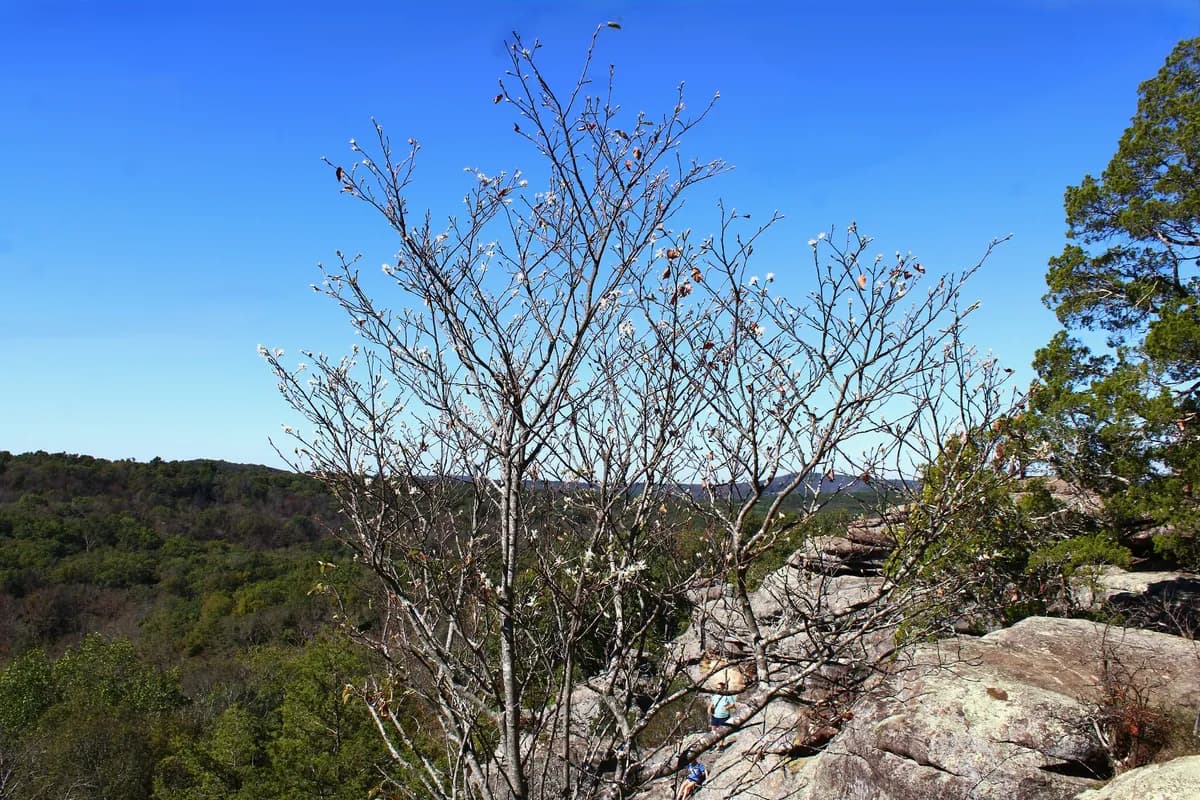
Amelanchier arborea is a small deciduous tree that produces white flowers in March and April, thriving in part sun with medium moisture along woodland edges and open sites.
Toxicity unknown
Common Serviceberry (Amelanchier arborea) is not listed by the ASPCA Animal Poison Control Center (opens in new tab) or the other sources we check, so we have no verdict for it either way. Absence from those lists is not a clearance. If your pet shows symptoms after eating any plant, call the ASPCA at (888) 426-4435.
Light
part sun
Water
medium
Size
180"–300" H × 144"–180" W
Bloom
Mar, Apr
Native to
AL, AR, CT, DC and 32 more states
Pollinators
mason bees, mining bees, bumble bees
Before you buy
Your city may pay you to plant this
Cities and water utilities offer rebates for replacing lawn with native and water-wise plants. We track 459 programs across 44 states, each with a link to the provider and the date we last checked it.
Find rebates in your areaPicture natives in your own yard
Upload a photo of your yard and Patch Vision shows a rendering of it planted with natives for your region, like Common Serviceberry.


Browse plants for this ecoregion
A small understory tree with silvery young leaves, drooping clusters of white flowers before leaf-out, and sweet purple summer fruit. Smooth gray striped bark and orange fall color give it four seasons of interest.
Growing Common Serviceberry
Grow Common Serviceberry in part sun and medium water. Mature plants reach 180 to 300 inches tall and spread 144 to 180 inches wide.
How to care for Common Serviceberry, by region
How to care for Common Serviceberry where it is actually grown: year-round basics plus what to do each season, region by region, with the sources for each.
Care guidance last updated: October 2026
Ridge and Valley (includes Harrisburg, PA)
Year-round
Downy serviceberry is a low-care small tree for sun to part shade and moist, well-drained soil.
- It grows 15 to 25 feet tall and 10 to 15 feet wide, slowly.
- It tolerates clay, sand, and occasional wet or dry spells.
- It is hardy in zones 4 to 9.
- It is slow to root after transplanting, so keep new trees watered.
Remove root suckers to keep a single tree shape, which looks tidier in a front yard.
Fall
Fall brings gold, orange or red leaves and is a good planting season.
- Plant by early October so roots settle before winter.
- Water until the ground freezes.
- Skip fertilizer.
Winter
Winter care is minimal for this hardy tree.
- It is hardy through Harrisburg cold.
- Check mulch is not piled against the trunk.
- The source gives no pruning schedule, so only remove suckers or broken branches.
Spring
Spring brings drooping clusters of white flowers, March to May.
- Plant in spring and water weekly until established.
- Remove root suckers as they appear if you want a tree form.
- Mulch the root zone, keeping mulch off the trunk.
Summer
Summer care is deep watering for young trees.
- Water young trees deeply once a week in dry weather.
- Watch leaves for spots or insects, since the source lists leaf miner, aphids and leaf spot as common issues.
- Fruit forms May to August.
Sources: NC State Extension Plant Toolbox: Amelanchier arborea
Wildlife value
Among the earliest woody plants to bloom, feeding emerging mason and mining bees; the fruit is stripped quickly by birds.
Common questions
- When does Allegheny serviceberry bloom?
- Amelanchier arborea typically flowers in March and April, producing clusters of white blossoms before its leaves fully expand.
- What pollinators visit Amelanchier arborea flowers?
- Mason bees, mining bees, and bumble bees are common early season visitors to the flowers of Amelanchier arborea.
- How much light does this tree need?
- Amelanchier arborea grows best in part sun but can adapt to brighter or shadier spots depending on soil moisture and site conditions.
- What kind of soil moisture does it prefer?
- It does well in medium moisture soils and can tolerate short dry periods once its root system is established.
These answers were drafted with an AI model from this plant's data. Verify care details with a local expert.
Native range data from the World Checklist of Vascular Plants (Kew). Pollinator and host plant associations compiled from GBIF, iNaturalist, and published ecological literature.
If something looks wrong
Common plant problems, and what to check first
These come up on almost any plant. Each guide lists the likely causes in the order they are worth ruling out, with one thing to check before you act on any of them, and links to the source it came from.
- It is dying right after planting
- Leaves turning yellow
- Wilting even though I watered it
- Brown crispy leaf tips
- Bugs on the plant
Ready to grow Common Serviceberry? Add it to your garden in Pollinator Patch to track it and get season-by-season care guidance.