Narrowleaf Mountain Mint
Pycnanthemum tenuifolium
Last reviewed: October 2026
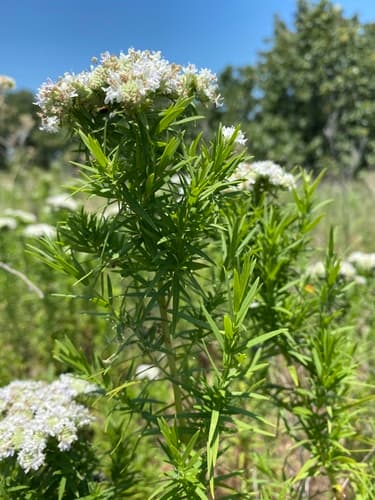
Narrow-leaf mountain-mint is an upright, clump-forming forb that blooms small white flower clusters from July through September, attracting bees, butterflies, and wasps to sunny meadows and open woodland edges.
Toxicity unknown
Narrowleaf Mountain Mint (Pycnanthemum tenuifolium) is not listed by the ASPCA Animal Poison Control Center (opens in new tab) or the other sources we check, so we have no verdict for it either way. Absence from those lists is not a clearance. If your pet shows symptoms after eating any plant, call the ASPCA at (888) 426-4435.
Light
full sun
Water
medium
Size
12"–36" H × 12"–36" W
Bloom
Jun, Jul, Aug
Native to
AL, AR, CT, DE and 30 more states
Pollinators
bees, butterflies, wasps, moths, nectar insects
Deer
Resistant (per Prairie Moon Nursery)
Before you buy
Your city may pay you to plant this
Cities and water utilities offer rebates for replacing lawn with native and water-wise plants. We track 459 programs across 44 states, each with a link to the provider and the date we last checked it.
Find rebates in your areaPicture natives in your own yard
Upload a photo of your yard and Patch Vision shows a rendering of it planted with natives for your region, like Narrowleaf Mountain Mint.


Browse plants for this ecoregion
Narrow-leaf mountain-mint is a compact native perennial with slender, aromatic foliage and clusters of small white flowers that bloom from midsummer through fall. The plant forms neat clumps and produces a pleasant minty fragrance when brushed against. It thrives in full sun with average moisture and provides long-lasting color in the garden.
Growing Narrowleaf Mountain Mint
Grow Narrowleaf Mountain Mint in full sun and medium water. Mature plants reach 12 to 36 inches tall and spread 12 to 36 inches wide. Expect low maintenance to keep it looking intentional in a front yard.
How to care for Narrowleaf Mountain Mint, by region
How to care for Narrowleaf Mountain Mint where it is actually grown: year-round basics plus what to do each season, region by region, with the sources for each.
Care guidance last updated: October 2026
Cross Timbers (includes Fort Worth, TX)
Year-round
Narrow-leaf mountain mint is a clump-forming native mint that fits the Cross Timbers and Grand Prairie around Fort Worth. It stands about 2 to 3 feet tall with thin, silvery leaves and dense heads of small pale flowers in summer. It takes full sun to part shade and handles the dry, rocky ground common to this region once it settles in.
- Native to the Grand Prairie and Northern Prairie Outliers that make up the Cross Timbers, per the Native Plant Society of Texas vegetation-area list.
- Grows in a tidy upright clump, so it reads as a planted perennial rather than a weed.
- Crushed leaves smell strongly of mint, which is normal and not a sign of anything wrong.
- Give it full sun to part shade and average, well-drained soil to match its wild rocky-woods habitat.
The neat, clumping shape and fine silvery foliage keep it looking intentional in a front bed, which reads as HOA-friendly.
Fall
In fall the flowers fade and the seed heads dry to a soft tan. Around Fort Worth you can either leave the stems standing for winter interest and seed-eating birds or cut them back once they look ragged. Water needs drop off as temperatures cool.
- Let some seed heads stand if you want birds to pick at them through fall and winter.
- Stop supplemental watering as the plant slows down and rain picks up.
- Fall is a fine time to plant a new one, since cooler soil helps roots settle before summer.
- Skip fertilizer, this native does best in lean soil and does not need feeding.
If you prefer a cleaner look, cutting the faded stems in fall keeps the bed neat through the dormant months.
Winter
Winter is a rest period. The plant dies back to the ground around Fort Worth and the roots wait out the cold. There is almost nothing to do beyond deciding whether to leave the dry stems standing or clear them before spring.
- Dying back to bare ground in winter is normal, the crown is alive underground and will return.
- Leave stems up for winter structure, or cut them to a few inches if you want a tidy bed.
- No watering is needed while the plant is dormant.
- Wait until late winter to do any hard cutback so the old stems protect the crown through cold snaps.
Standing tan stems can look intentional in winter, but a late-winter trim is the safe choice if your HOA prefers cleared beds.
Spring
Spring is when new shoots push up from the crown around Fort Worth. This is the time to cut back last year's dry stems and let the fresh growth take over. Water it while roots are still shallow so it establishes before summer heat.
- Cut the old brown stems down to a few inches once you see green shoots at the base.
- Water a new plant about once a week in spring if rain is short, then taper off as it roots in.
- This is a good time to divide a crowded clump by digging it up and splitting the roots into pieces.
- Pull spring weeds around the young shoots by hand so they do not get crowded out early.
Cutting the old stems in early spring keeps the plant tidy right when neighbors start paying attention to front yards.
Summer
Summer is the main show. The plant blooms from about June through September and pulls in a steady crowd of bees, butterflies, and skippers. Around Fort Worth it can take the heat with only occasional deep watering once established.
- Expect small whitish to lavender flower clusters from roughly June into September.
- The Xerces Society lists narrow-leaf mountain mint as a preferred pollinator plant with special value to native bees, so leave the blooms up for the insects.
- An established clump needs only a deep soak during long dry spells, not frequent watering.
- If stems flop after a storm, you can trim them lightly, but many gardeners just let it be.
The flat flower heads sit at a uniform height, giving the summer bed a calm, mounded look rather than a wild one.
Sources: Native Plant Society of Texas - Pycnanthemum tenuifolium, Lady Bird Johnson Wildflower Center - Narrowleaf mountain mint, Missouri Botanical Garden Plant Finder - Pycnanthemum tenuifolium, North Carolina Extension Gardener Plant Toolbox - Pycnanthemum tenuifolium
East Central Texas Plains (includes College Station, TX)
Year-round
Narrow-leaf mountain mint is a strong native fit for the East Central Texas Plains and Post Oak Savanna around College Station. It grows in an upright clump about 2 to 3 feet tall with thin silvery leaves and summer flowers that pollinators love. It thrives in the sandy, fast-draining Post Oak soils of this region.
- Native to the East Central Texas Plains and Northern Post Oak Savanna, per the Native Plant Society of Texas vegetation-area list.
- The Lady Bird Johnson Wildflower Center notes it grows in fast-draining Post Oak woods, matching this region's sandy soils.
- Forms a tidy clump that reads as a planted perennial rather than a weed.
- Takes full sun to part shade and smells strongly of mint when the leaves are crushed.
The neat clump and fine silvery foliage keep it looking intentional in a front bed, which reads as HOA-friendly.
Fall
Fall dries the flowers to tan seed heads around College Station. Leave the stems for winter interest and seed-eating birds, or cut them once they look ragged. Watering drops off as the weather cools and fall rains come.
- Leave some seed heads standing to feed birds through fall and winter.
- Stop supplemental watering as the plant slows and rain picks up.
- Fall planting works well in sandy soil, cooler ground lets roots settle before summer.
- Do not fertilize, this native prefers lean soil and needs no feeding.
If you prefer a cleaner look, a fall cutback keeps the bed neat through the dormant months.
Winter
Winter is a rest period around College Station. The plant dies back to the ground and the crown waits out the cold underground. There is little to do beyond deciding whether to leave the dry stems standing or clear them before spring.
- Dying back to bare ground is normal, the crown is alive and returns in spring.
- Leave stems up for winter structure, or cut to a few inches for a tidy bed.
- No watering is needed during dormancy.
- Hold any hard cutback until late winter so old stems shield the crown through freezes.
Standing tan stems can look intentional, but a late-winter trim is the safe choice if your HOA prefers cleared beds.
Spring
Spring brings new shoots from the crown around College Station. Cut back last year's dry stems, water the young growth while roots are shallow, and divide a crowded clump if you want more. Sandy Post Oak soil drains fast, so check moisture more often.
- Cut old brown stems to a few inches once green shoots appear at the base.
- In fast-draining sandy soil, water a new plant a bit more often in spring if rain is short.
- Divide a crowded clump now by digging and splitting the roots into pieces.
- Hand-pull spring weeds around the young shoots so they do not crowd the plant.
An early-spring cutback keeps the bed tidy right when front yards get the most attention.
Summer
Summer is peak bloom around College Station, roughly June through September, and the flower heads pull in bees, butterflies, and skippers all day. In sandy Post Oak soil an established plant handles heat with occasional deep watering.
- Small whitish to lavender flower clusters open from about June into September.
- The Xerces Society lists narrow-leaf mountain mint as a preferred pollinator plant with special value to native bees, so leave blooms up for the insects.
- In fast-draining sand, give a deep soak during long dry spells rather than light daily watering.
- If stems flop after a storm you can trim lightly, but many gardeners just let it be.
The even flower height gives the summer bed a calm, mounded look that stays neat in a front yard.
Sources: Native Plant Society of Texas - Pycnanthemum tenuifolium, Lady Bird Johnson Wildflower Center - Narrowleaf mountain mint, Missouri Botanical Garden Plant Finder - Pycnanthemum tenuifolium, North Carolina Extension Gardener Plant Toolbox - Pycnanthemum tenuifolium
Erie Drift Plain (includes Cleveland, OH)
Year-round
Narrowleaf mountain mint is a tough, upright native perennial that thrives on neglect once it is settled in the Cleveland area. It handles the cold winters and clay-heavy soils of the Erie Drift Plain well, wants full sun to part shade, and spreads slowly by roots rather than running like true garden mint. Water it while it is getting established, then mostly leave it alone.
- Establishment: water a new plant deeply once or twice a week through its first summer so the roots reach down; after that first season it rarely needs watering here.
- Watering once established: skip routine watering. Only give it a soak during a long midsummer dry spell, since it prefers dry to medium soil and rots in soggy ground.
- Spread management: it creeps outward slowly by shallow roots. Once every couple of years, slice off the outer clump with a spade in spring and compost or move it to keep the patch tidy.
- Common mistake: do not plant it in a low, wet spot or overwater it. Constant moisture and rich, heavy feeding are what actually cause it to flop and struggle here.
Fall
In fall around Cleveland you have a choice. Leaving the seed heads and stems standing feeds birds and shelters overwintering native insects, and the dried silhouette holds up under early snow. If your front bed needs to look neat, a partial trim is fine, but a full cutback is better saved for spring.
- For wildlife, leave the stems and seed heads standing through fall and winter. Small birds pick the seeds and native bees shelter in the hollow stems.
- If you prefer a tidier bed, cut stems back partway now and finish the cleanup in spring rather than scalping it to the ground before winter.
- This is a fine second window to divide the clump if you missed spring, as long as you do it early enough for roots to settle before the ground freezes.
If a standing-seedhead look is too wild for your street, a partial fall trim keeps the bed reading as intentional and lowers the odds of a violation letter while still leaving some cover for insects.
Winter
Winter is hands-off in the Cleveland area. This plant is fully cold-hardy through the Erie Drift Plain's freezes and lake-effect snow, so it needs no protection. Standing stems left from fall add a little structure to the dormant bed and hold snow.
- Do nothing. The plant is dormant and reliably survives the cold winters here with no mulch or cover needed.
- Leave any standing stems in place. They shelter overwintering insects and give the winter bed some vertical interest.
- Skip watering entirely; the roots are dormant and wet, frozen soil only causes rot.
Left-up stems can look scruffy in a formal front yard, so if a neighbor or board is strict, trimming them to a low, even height keeps the winter bed reading as intentional.
Spring
Spring is cleanup and cutback time in the Cleveland area. Cut last year's dead stems down to a few inches once hard frosts have passed, usually mid to late April, so fresh growth comes up clean. This is also the easiest window to divide the clump if it has crept wider than you want.
- After the last hard frost (mid to late April here), cut the old brown stems back to about 3 to 4 inches above the ground.
- If the patch has spread past its spot, dig and split the outer edges with a spade now while the plant is still short and easy to handle.
- Hold off on fertilizer. Rich feeding makes the stems tall and floppy, which is the opposite of what you want in a front bed.
Doing the dead-stem cutback in spring reads as intentional care and avoids the ragged look that can prompt a violation letter in a tidy front yard.
Summer
Summer is peak bloom and peak pollinator season for this plant around Cleveland, with clusters of tiny flowers covered in bees and small butterflies. It needs almost nothing from you now beyond watching for drought. A quick pass of deadheading is optional and mostly about controlling seed.
- Only water during a long, hot dry stretch with no rain for a couple of weeks. A single deep soak is plenty; it is built for dry summers here.
- Leave most flowers up for the bees and butterflies. If you want to limit self-seeding, snip off the spent flower heads before they brown and drop seed.
- If stems lean after a summer storm, they usually stand back up on their own. Staking is not needed unless the plant is in too much shade.
A light midsummer deadheading pass keeps the bloom looking fresh and controlled, which reads as tended rather than weedy from the curb.
Sources: USDA NRCS Plant Guide Narrowleaf Mountainmint, Missouri Botanical Garden Plant Finder Pycnanthemum tenuifolium, ASPCA Non-Toxic Mint Plant Listing, North Carolina Extension Gardener Plant Toolbox Pycnanthemum tenuifolium, Lady Bird Johnson Wildflower Center Pycnanthemum tenuifolium, Epic Gardening Pycnanthemum tenuifolium Care (community tip)
Northern Piedmont (includes Lancaster, PA)
Year-round
Narrow-leaf mountain mint is a fine-leaved, bushy perennial with clusters of small white flowers. It spreads fast, so plan for that.
- Plant in full to part sun in soil that drains well.
- It grows about 2 feet tall and can reach 4 feet.
- It spreads rapidly and naturalizes, so edging helps contain it.
It spreads fast, so use hardscape edging near sidewalks and lawn lines to keep curb appeal neat.
Fall
Flowering winds down. Cut it back or leave stems up as you prefer.
- Pull unwanted runners before the ground freezes.
- Divide crowded clumps in early fall.
- Leave some stems up for winter interest.
- Rake leaves from the center of the clump.
Winter
The plant is dormant and needs nothing from you.
- No watering is needed.
- Cut stems back in late winter before new growth.
- Zone 6b to 7a winters are fine.
- Plan edging or a container before spring if it has spread too far.
Spring
New growth comes up quickly. Spring is when you set the boundaries for this spreader.
- Dig out runners that go past the bed edge.
- Divide or share extra clumps.
- Space new plants 1 to 3 feet apart.
- Skip fertilizer.
Summer
Small white flowers open from June into August. The plant tolerates a dry spell or a wet one.
- Water new plants during dry weeks.
- Established clumps need little help.
- Trim spent flower stems to keep it tidy.
- Keep pulling runners that wander.
Sources: NC State Extension Plant Toolbox: Pycnanthemum tenuifolium
Ouachita Mountains (includes Hot Springs, AR)
Year-round
Narrow-leaf mountain mint grows naturally right around Hot Springs, and it also does well planted in a home garden. It likes full sun and soil that drains, and it spreads by its roots, so give it room or a border to keep it where you want it.
- The National Park Service lists this plant as native and present at Hot Springs National Park, so this is a genuine local native, not just native to Arkansas as a whole.
- Plant it in full sun to partial shade in soil that drains well. It tolerates clay, sandy, or rocky soil once it is established.
- It spreads by rhizomes (underground roots) and can fill in a bed within a couple of seasons. A dedicated bed or a bed set back from the front walk works better than a tight foundation planting.
- It is winter hardy in USDA zones 4a through 8b, which comfortably covers the Hot Springs area.
A patch that spreads past its bed line can look untidy from the street or draw an HOA inquiry. A buried edging strip keeps the bed line crisp for anyone reviewing curb appeal.
Fall
Flowering can continue into early fall before the plant starts to fade for winter. Leave the seed heads standing instead of cutting the plant down.
- Hot Springs' average first fall frost falls around October 31, so flowering and seed heads can last right up until then.
- Leave the dried flower heads and stems standing through fall. They stay ornamental and give seed to birds.
- Fall is a good time to note where a physical edge or a future division is needed, since the spreading roots are easiest to trace back to the parent clump now.
Winter
The plant dies back to the ground for winter and stays dormant until new shoots return in spring. Leave the dead stems standing rather than cutting them down.
- Hot Springs winters are mild to cool, with freezes typically ending by mid March. This plant is winter hardy well beyond that cold, down to USDA zone 4a.
- Leave the dried stems standing through winter. They give shelter to overwintering insects, and the bare look is temporary.
- No watering or feeding is needed over winter. The plant is dormant and its roots are doing the work underground.
Dead stems in a front bed can look unkempt to neighbors or an HOA board over winter. If that is a concern, cut the stems back to 2 to 3 inches in late winter, just before new growth starts, instead of leaving them up all season.
Spring
New shoots come up from the roots in spring. Cut back last year's dried stems before the new growth gets tall, and watch for shoots popping up outside the spot you planted it.
- Hot Springs' average last spring frost falls around April 3. Wait until you see new growth at the base before cutting old stems down to about 2 to 3 inches.
- Because this plant spreads by underground roots, new shoots can show up several inches from last year's clump. Pull or move strays early while they are easy to spot.
- Spring is the best time to divide a clump that has outgrown its space. Dig and split it, then replant the divisions elsewhere since this plant tolerates a wide range of soil types.
Summer
Summer is bloom time, from June into August, and this plant holds up well through Hot Springs' hot, humid stretch without much fuss.
- Flowers open from June through August and draw native bees, bumblebees, and butterflies, according to the Lady Bird Johnson Wildflower Center.
- It handles the dry spells common in a Hot Springs summer once it has a full growing season of roots down. Water only during extended dry stretches.
- Skip cutting it back in summer. Trimming now removes the flowers pollinators are actively using.
Sources: NPS NPSpecies profile: Pycnanthemum tenuifolium at Hot Springs National Park, NC State Extension Gardener Plant Toolbox: Pycnanthemum tenuifolium, NWS Little Rock: Frost and Freeze Information for Arkansas (Hot Springs), Lady Bird Johnson Wildflower Center: Pycnanthemum tenuifolium
Piedmont (includes Atlanta, GA)
Year-round
Narrow-leaf mountain mint is native to the Atlanta area and one of the best plants you can grow for pollinators, with a long bloom that keeps bees, wasps, and butterflies busy most of the summer. It is easygoing about soil and drought once established, but it spreads by rhizome, so give it a spot where that is welcome or a hard edge to keep it in bounds.
- Plant in full sun to light shade in average, well-drained soil. It handles clay, sand, and rocky soil without complaint.
- Space plants 1 to 3 feet apart since a single plant widens to about a foot across before it starts blooming.
- Water it through the first growing season to get it established, then it only needs extra water in extended dry stretches.
- It spreads by underground rhizomes, so plan for that from the start rather than fighting it later.
- Skip fertilizer. Average soil is enough, and rich soil just makes the stems taller and floppier.
Keeping the patch edged with pavers, a mowed strip, or a buried root barrier keeps this HOA-friendly, since it reads as an intentional bed instead of a plant escaping into the lawn.
Fall
Bloom tapers off into fall, and this is the window to decide between leaving seed heads up for wildlife or cutting the plant back for a neater look going into winter.
- Flowering usually continues into September in the Atlanta area before the plant shifts to seed.
- Leaving seed heads standing feeds late-season insects and any seed-eating birds through fall.
- For a tidier front-yard look, cut stems back to a few inches once flowering ends and foliage starts to brown.
- Fall, once Atlanta's heat breaks in October, is also a good second window to divide or transplant.
A fall cutback right after bloom ends keeps the bed looking tidy and HOA-friendly heading into winter, if that matters more to you than leaving seed heads for wildlife.
Winter
The plant dies back to the ground for winter and needs nothing beyond an optional cutback, since Atlanta's typical winter cold is well within its range.
- Foliage dies back to the ground after the first hard freeze, typically by mid-November in the Atlanta area.
- If you skipped the fall cutback, do it in late winter, usually by late February, before new shoots start.
- No winter protection or mulching for cold is needed here. Atlanta's average winter lows sit comfortably within this plant's range.
- Leaving some old stems standing over winter gives overwintering insects a place to shelter, if a looser look works for the spot.
If the bed was not cut back in fall, doing it in late winter before new growth starts keeps things looking HOA-friendly without cutting into bloom time.
Spring
Spring is when the rhizomes wake up and the clump starts widening for the season, which makes it the best time to divide the plant or put in a containment edge before growth takes off.
- New growth typically appears in April in the Atlanta area, after the average last frost around March 21.
- Divide crowded clumps in early spring while new shoots are still just a few inches tall.
- Pull any rhizome runners that have crossed the bed's edge before they harden off, which is easiest to do in spring.
- If you did not cut back old stems over winter, do it now before new growth gets tall.
- A light mulch layer helps hold moisture and keep early weeds down while the clump fills back in.
Re-edging the bed and pulling stray runners in spring is the single easiest thing you can do to keep this planting looking tended and HOA-friendly all season.
Summer
Summer is peak bloom, with small white flower clusters opening from June into September and drawing steady pollinator traffic through Atlanta's hottest, most humid months.
- Flowers open in dense clusters from June through September, right through Atlanta's peak summer heat and humidity.
- The plant tolerates heat and both dry and wet spells well, so extra water is only needed during extended dry stretches.
- Hold off on any pesticide use on or near the plant while it is blooming, since the pollinator visits are the whole point of growing it.
- If stems flop after a heavy summer thunderstorm, a light shear once the first bloom flush fades can tidy the clump without ending the bloom.
Sources: Lady Bird Johnson Wildflower Center: Pycnanthemum tenuifolium, Xerces Society: Pollinator Plants for the Southeast Region, NC State Extension: Plant Toolbox, Pycnanthemum tenuifolium, Penn State Arboretum: Mountain Mint, A Buzz-Worthy Must-Have
Ridge and Valley (includes Harrisburg, PA)
Year-round
Slender mountain mint is an easy, clumping perennial with white summer flowers that bees and butterflies love.
- It grows in full to part sun and tolerates all soil types, as long as drainage is good.
- It reaches about 2 feet and can hit 4, spreading 2 to 3 feet wide.
- It can spread rapidly, so edging or hardscape helps keep it in bounds.
- NC State lists no significant insect or disease problems.
Neat, fine-textured clumps with white flowers suit a front bed when edged.
Fall
Fall is the moment to check how far the clump has crept.
- Trim back or pull any edges that have wandered past the border.
- Mid to late flowers can linger into fall according to its listed bloom times.
- The plant supports Wavy-lined Emerald larvae, so leave a little foliage standing.
Winter
Winter is quiet for this perennial and it needs no special care.
- Established clumps need no watering through the cold months.
- Leave the spent stems or cut them back, since NC State gives no pruning rule.
- Good drainage is the main thing to protect, so avoid piling heavy mulch on the crown.
Spring
Spring is a good time to set plants and decide how far you want the clump to roam.
- Plant in full to part sun with good drainage.
- It prefers acidic soil with a pH under 6.0.
- Install edging or hardscape borders now, since it can spread rapidly.
Summer
Summer brings the white blooms and needs little from you.
- It blooms from June to August.
- It tolerates occasional dry or wet spells.
- Bees, butterflies and native sweat bees visit the flowers, so skip anything that would harm them.
Sources: NC State Extension Plant Toolbox: Pycnanthemum tenuifolium, Pennsylvania Wildflower Conservancy: Slender Mountain Mint
South Central Plains (includes Beaumont, TX)
Year-round
Narrow-leaf mountain mint is a natural fit for the Piney Woods around Beaumont. It grows in an upright clump about 2 to 3 feet tall with thin silvery leaves and summer flowers pollinators cannot resist. It suits the acidic, sandy pine-barren soils and part shade of this region.
- Native to the Western Gulf Coastal Plain and pine barrens, per the Native Plant Society of Texas and Lady Bird Johnson Wildflower Center.
- Grows in various moist to dry acidic soils, matching the sandy pine-country ground here.
- Takes full sun to part shade, so it works at the edge of pine canopy.
- Forms a tidy clump and smells strongly of mint when the leaves are crushed.
The neat clump and fine silvery foliage keep it looking intentional in a front bed, which reads as HOA-friendly.
Fall
Fall dries the flowers to tan seed heads around Beaumont. Leave the stems for winter interest and seed-eating birds, or cut them once they look ragged. Watering drops off as the weather cools and fall rains arrive.
- Leave some seed heads standing to feed birds through fall and winter.
- Stop supplemental watering as the plant slows and rain picks up.
- Fall planting works well in sandy soil, cooler ground lets roots settle before summer.
- Do not fertilize, this native prefers lean soil and needs no feeding.
If you prefer a cleaner look, a fall cutback keeps the bed neat through the dormant months.
Winter
Winter is a rest period around Beaumont. The plant dies back to the ground and the crown waits out the cold underground. There is little to do beyond deciding whether to leave the dry stems standing or clear them before spring.
- Dying back to bare ground is normal, the crown is alive and returns in spring.
- Leave stems up for winter structure, or cut to a few inches for a tidy bed.
- No watering is needed during dormancy.
- Hold any hard cutback until late winter so old stems shield the crown through cold snaps.
Standing tan stems can look intentional, but a late-winter trim is the safe choice if your HOA prefers cleared beds.
Spring
Spring brings new shoots from the crown around Beaumont. Cut back last year's dry stems, water the young growth while roots are shallow, and divide a crowded clump if you want more. Sandy pine-country soil drains fast, so watch moisture.
- Cut old brown stems to a few inches once green shoots appear at the base.
- In fast-draining sandy soil, water a new plant a bit more often in spring if rain is short.
- Divide a crowded clump now by digging and splitting the roots into pieces.
- Hand-pull spring weeds around the young shoots so they do not crowd the plant.
An early-spring cutback keeps the bed tidy right when front yards get the most attention.
Summer
Summer is peak bloom around Beaumont, roughly June through September, and the flower heads pull in bees, butterflies, and skippers through the humid heat. Once established the plant handles Piney Woods summers with occasional deep watering.
- Small whitish to lavender flower clusters open from about June into September.
- The Xerces Society lists narrow-leaf mountain mint as a preferred pollinator plant with special value to native bees, so leave blooms up for the insects.
- In fast-draining sand, give a deep soak during long dry spells rather than light daily watering.
- If stems flop after a storm you can trim lightly, but many gardeners just let it be.
The even flower height gives the summer bed a calm, mounded look that stays neat in a front yard.
Sources: Native Plant Society of Texas - Pycnanthemum tenuifolium, Lady Bird Johnson Wildflower Center - Narrowleaf mountain mint, Missouri Botanical Garden Plant Finder - Pycnanthemum tenuifolium, North Carolina Extension Gardener Plant Toolbox - Pycnanthemum tenuifolium
Southwestern Appalachians (includes Chattanooga, TN)
Year-round
Narrow-leaf mountain mint is an easygoing, upright clumper that grows about 2 feet tall. In Chattanooga it handles clay and limestone soil and does fine in sun to part shade.
- Give it sun to part shade and soil that drains. It tolerates clay, loam, sand and rocky ground.
- It handles both occasional dry spells and occasional wet spells once settled.
- It spreads fairly fast, so plant it where it has room or edge the bed.
- Space plants 1 to 3 feet apart and expect little pest or disease trouble.
If it sits near a lawn edge, a clean border keeps the spreading clump tidy.
Fall
Fall is when seed capsules form (September to October) and the plant winds down. It is also a fine time to plant in Chattanooga while the soil is still warm.
- Leave the seed heads standing for now. They add texture to the bed.
- New plants set out in fall need water every week or so until the ground cools.
- Lift and split a crowded clump if you missed spring.
- Rake leaves off the crown so it does not stay soggy.
Winter
In winter the top growth dies back and the roots rest. It is hardy in zones 4 to 8, so Chattanooga's mild winters are no trouble.
- Wait until late winter to cut stems down if you want standing stems for winter interest.
- No watering is needed. Winter rain is plenty.
- Skip heavy mulch piled on the crown, since wet crowns can sulk.
- Plan where to divide or move clumps in spring.
Cutting back old stems in late winter keeps the bed looking neat before spring.
Spring
Spring is when new shoots push up from the clump. This is the best time to divide or move it and to set new plants in Chattanooga's soil.
- Cut off last year's dead stems at the base before new growth gets tall.
- Divide crowded clumps now by lifting and splitting them. Division is an easy way to make more plants.
- Water new plants every few days for the first couple of weeks, then let rain do most of the work.
- Pull or dig out shoots that wander past the bed edge.
Summer
Summer is bloom season, roughly June through August, with small whitish to pink flower clusters. It copes with Chattanooga's heat and the odd dry stretch.
- Water new plants deeply once a week during dry weeks. Established plants rarely need extra water.
- Skip fertilizer. Rich soil mostly just makes it flop and spread faster.
- Watch the clump edge and trim back anything creeping into neighbors.
- Leave the flowers alone so they can finish blooming.
Sources: NC State Extension Plant Toolbox: Pycnanthemum tenuifolium
Texas Blackland Prairies (includes Dallas, TX)
Year-round
Narrow-leaf mountain mint is a good native fit for the Blackland Prairies around Dallas. It grows in an upright clump about 2 to 3 feet tall with thin silvery leaves and summer flower heads that pollinators swarm. It handles the heavy prairie clay and full sun that define this region.
- Native to the Southern Blackland Prairie, per the Native Plant Society of Texas vegetation-area list.
- Forms a tidy clump that reads as a planted perennial, not a weedy sprawl.
- Takes full sun to part shade and tolerates the clay soils common around Dallas.
- Leaves smell strongly of mint when crushed, which is normal for this plant.
The compact clump and fine silvery foliage keep it looking deliberate in a front prairie bed, which reads as HOA-friendly.
Fall
Fall fades the flowers to dry tan seed heads around Dallas. You can leave the stems for winter interest and seed-eating birds or cut them once they look ragged. Watering tapers off as the weather cools and fall rains arrive.
- Leave some seed heads standing to feed birds through fall and winter.
- Stop supplemental watering as the plant slows and rain picks up.
- Fall planting works well here, cooler soil lets roots settle before next summer.
- Do not fertilize, this native prefers lean soil and needs no feeding.
If you prefer a cleaner look, a fall cutback keeps the bed neat through the dormant months.
Winter
Winter is a rest period around Dallas. The plant dies back to the ground and the crown waits out the cold under the soil. There is little to do beyond choosing whether to leave the dry stems standing or clear them before spring.
- Dying back to bare ground is normal, the crown is alive underground and returns in spring.
- Leave stems up for winter structure, or cut to a few inches for a tidy bed.
- No watering is needed during dormancy.
- Hold any hard cutback until late winter so old stems shield the crown through freezes.
Standing tan stems can look intentional, but a late-winter trim is the safe choice if your HOA prefers cleared beds.
Spring
Spring brings fresh shoots from the crown around Dallas. Cut back last year's dry stems, water the new growth while roots are shallow, and divide a crowded clump if you want more plants. Prairie clay holds moisture, so do not overwater.
- Cut old brown stems to a few inches once green shoots appear at the base.
- Water a new plant about once a week if spring rain is short, less often in heavy clay that stays damp.
- Divide a crowded clump now by digging and splitting the roots into pieces.
- Hand-pull spring weeds around the young shoots so they do not crowd the plant.
An early-spring cutback keeps the bed tidy right when front yards get the most attention.
Summer
Summer is peak bloom around Dallas, roughly June through September, and the flower heads draw a constant mix of bees, butterflies, and skippers. Once established the plant handles Blackland Prairie heat with only occasional deep watering.
- Small whitish to lavender flower clusters open from about June into September.
- The Xerces Society lists narrow-leaf mountain mint as a preferred pollinator plant with special value to native bees, so leave blooms up for the insects.
- An established clump needs only a deep soak during long dry spells.
- In rich clay it may grow taller and lean, so a light trim in early summer keeps it upright if you like.
The even flower height gives the summer bed a calm, mounded look that stays neat in a front yard.
Sources: Native Plant Society of Texas - Pycnanthemum tenuifolium, Lady Bird Johnson Wildflower Center - Narrowleaf mountain mint, Missouri Botanical Garden Plant Finder - Pycnanthemum tenuifolium, North Carolina Extension Gardener Plant Toolbox - Pycnanthemum tenuifolium
Western Gulf Coastal Plain (includes Houston, TX)
Year-round
Narrow-leaf mountain mint is a solid native fit for the Gulf Coast Prairies and Marshes around Houston. It grows in an upright clump about 2 to 3 feet tall with thin silvery leaves and summer flowers that pollinators cover. It tolerates the low, sometimes wet ground common near the coast.
- Native to the Gulf Coast Prairies and Marshes and Texas-Louisiana Coastal Marshes, per the Native Plant Society of Texas vegetation-area list.
- Handles low, wet areas and thickets as well as drier spots, so it suits coastal-prairie soils.
- Forms a tidy clump that reads as a planted perennial, not a weed.
- Takes full sun to part shade and smells strongly of mint when the leaves are crushed.
The neat clump and fine silvery foliage keep it looking intentional in a front bed, which reads as HOA-friendly.
Fall
Fall dries the flowers to tan seed heads around Houston. Leave the stems for winter interest and seed-eating birds, or cut them once they look ragged. Watering tapers off as the weather cools, though the coast stays mild.
- Leave some seed heads standing to feed birds through fall and winter.
- Cut back on supplemental watering as the plant slows and fall rains arrive.
- Fall planting works well in the mild coastal climate, giving roots a long head start.
- Do not fertilize, this native prefers lean soil and needs no feeding.
If you prefer a cleaner look, a fall cutback keeps the bed neat through the dormant months.
Winter
Winter is a rest period around Houston, though the coastal climate is mild. The plant dies back to the ground and the crown waits out the cool months underground. There is little to do beyond deciding whether to leave the dry stems standing or clear them.
- Dying back to bare ground is normal, the crown is alive and returns in spring.
- Leave stems up for winter structure, or cut to a few inches for a tidy bed.
- No watering is needed during dormancy.
- In this mild climate you can cut back in late winter just before new shoots appear.
Standing tan stems can look intentional, but a late-winter trim is the safe choice if your HOA prefers cleared beds.
Spring
Spring brings new shoots from the crown around Houston, and it comes early in this mild coastal climate. Cut back last year's dry stems, water the young growth while roots are shallow, and divide a crowded clump if you want more plants.
- Cut old brown stems to a few inches once green shoots appear at the base.
- Water a new plant about once a week if spring rain is short, less in low spots that hold moisture.
- Divide a crowded clump now by digging and splitting the roots into pieces.
- Hand-pull spring weeds around the young shoots so they do not crowd the plant.
An early-spring cutback keeps the bed tidy right when front yards get the most attention.
Summer
Summer is peak bloom around Houston, roughly June through September, and the flower heads draw bees, butterflies, and skippers through the humid heat. Once established the plant handles coastal summers with occasional deep watering.
- Small whitish to lavender flower clusters open from about June into September.
- The Xerces Society lists narrow-leaf mountain mint as a preferred pollinator plant with special value to native bees, so leave blooms up for the insects.
- An established clump needs only a deep soak during dry spells, and coastal rains often cover it.
- In rich, moist soil it may grow taller and lean, so a light early-summer trim keeps it upright if you like.
The even flower height gives the summer bed a calm, mounded look that stays neat in a front yard.
Sources: Native Plant Society of Texas - Pycnanthemum tenuifolium, Lady Bird Johnson Wildflower Center - Narrowleaf mountain mint, Missouri Botanical Garden Plant Finder - Pycnanthemum tenuifolium, North Carolina Extension Gardener Plant Toolbox - Pycnanthemum tenuifolium
In an HOA neighborhood
Narrowleaf Mountain Mint is an HOA-friendly choice. Maintenance level: low. Tidiness: 4 out of 5.
Works well in: front yard, foundation, street edge, mid zone.
Wildlife value
This plant is exceptional for pollinators, attracting numerous species of native bees, butterflies, and beneficial wasps throughout its extended bloom period. The dense flower clusters provide abundant nectar and pollen from July through September.
Common questions
- When does narrow-leaf mountain-mint bloom?
- It typically flowers from July through September, with small white to pale lavender blooms clustered at the tops of upright stems.
- What pollinators does narrow-leaf mountain-mint attract?
- Its late-summer flowers are highly attractive to a variety of bees, butterflies, and wasps, making it a strong nectar plant in meadow and garden settings.
- How much sun and water does narrow-leaf mountain-mint need?
- It grows best in full sun with medium soil moisture, but established plants tolerate part sun and drier conditions reasonably well.
- What growing conditions suit narrow-leaf mountain-mint best?
- It does well in open meadows, prairies, and woodland edges with well-drained soil, and it spreads readily once established in favorable sites.
- Is Narrowleaf Mountain Mint HOA-friendly?
- Narrowleaf Mountain Mint is generally an HOA-friendly choice in the right placement, with low maintenance.
These answers were drafted with an AI model from this plant's data. Verify care details with a local expert.
Native range data from vouchered herbarium specimen records and regional native plant society lists. Pollinator and host plant associations compiled from GBIF, iNaturalist, and published ecological literature.
If something looks wrong
Common plant problems, and what to check first
These come up on almost any plant. Each guide lists the likely causes in the order they are worth ruling out, with one thing to check before you act on any of them, and links to the source it came from.
- It is dying right after planting
- Leaves turning yellow
- Wilting even though I watered it
- Brown crispy leaf tips
- Bugs on the plant
Ready to grow Narrowleaf Mountain Mint? Add it to your garden in Pollinator Patch to track it and get season-by-season care guidance.