Purpletop Tridens
Tridens flavus
Last reviewed: September 2026
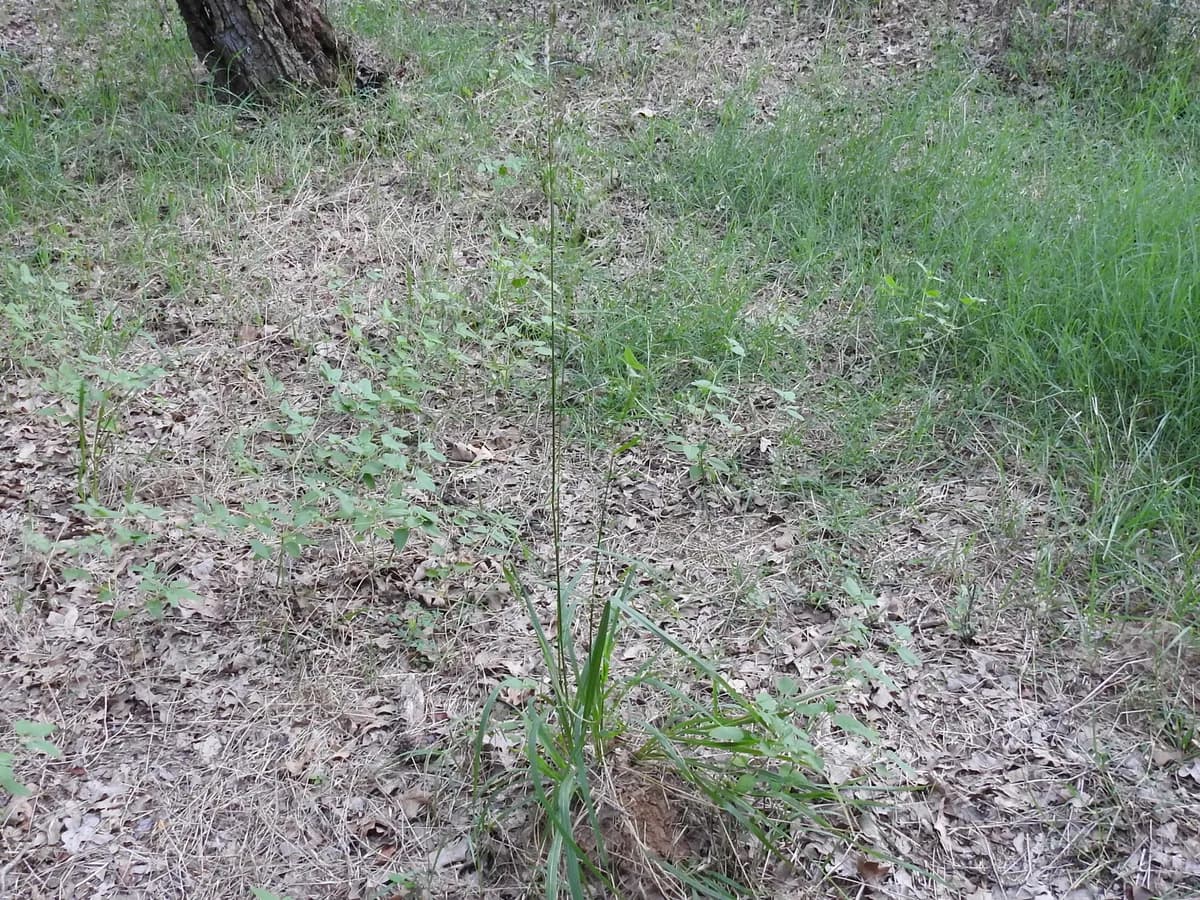
Purpletop tridens is a warm season bunchgrass that blooms from June through August, producing airy, purple-tinged seed heads. It grows well in open fields, prairies and roadsides across much of the eastern and central United States, tolerating full sun to partial shade.
Toxicity unknown
Purpletop Tridens (Tridens flavus) is not listed by the ASPCA Animal Poison Control Center (opens in new tab) or the other sources we check, so we have no verdict for it either way. Absence from those lists is not a clearance. If your pet shows symptoms after eating any plant, call the ASPCA at (888) 426-4435.
The USDA PLANTS Database (opens in new tab) does not flag Purpletop Tridens as toxic to livestock.
Light
full sun
Water
medium
Size
24"–48" H × 12"–24" W
Bloom
Jun, Jul, Aug
Native to
AL, AR, CT, DE and 31 more states
Pollinators
bees
Before you buy
Your city may pay you to plant this
Cities and water utilities offer rebates for replacing lawn with native and water-wise plants. We track 452 programs across 44 states, each with a link to the provider and the date we last checked it.
Find rebates in your areaBrowse plants for this ecoregion
Redtop is a native warm-season grass that forms upright clumps with fine-textured foliage and airy seed heads. It produces delicate reddish-purple flower clusters from June through August, adding movement and seasonal interest to the landscape. This drought-tolerant grass works well in naturalized areas and prairie-style plantings.
Growing Purpletop Tridens
Grow Purpletop Tridens in full sun and medium water. Mature plants reach 24 to 48 inches tall and spread 12 to 24 inches wide. Expect low maintenance to keep it looking intentional in a front yard.
How to care for Purpletop Tridens, by region
How to care for Purpletop Tridens where it is actually grown: year-round basics plus what to do each season, region by region, with the sources for each.
Care guidance last updated: September 2026
Ouachita Mountains (includes Hot Springs, AR)
Year-round
Purpletop tridens is a native warm-season bunchgrass that holds up well in the Ouachita Mountains around Hot Springs, handling the region's hot, humid summers and average clay or rocky soil without fuss.
- Native to Arkansas and the Ouachita Mountains ecoregion, per the Lady Bird Johnson Wildflower Center.
- A warm-season C4 bunchgrass, it greens up late and does most of its growing June through September in Hot Springs' heat.
- Tolerates the region's clay and rocky soils and needs no supplemental fertilizer.
- Produces reddish-purple seed heads from late summer into fall.
- Serves as a larval host for several skipper butterfly species, per the USDA plant guide for the species.
- Divide crowded clumps every few years to keep them vigorous.
The purple-red seed heads and upright winter form read as an intentional ornamental grass rather than an overgrown patch, especially kept at a clean bed edge.
Fall
Fall is the showiest season for this grass around Hot Springs, with reddish-purple seed heads peaking before the area's average first frost in late October.
- Seed heads reach their peak purple-red color from September into October.
- Leave seed heads uncut through fall, they provide winter interest and seed for birds.
- No need to protect it from Hot Springs' typical first frost near late October, this is a fully cold-hardy native grass.
- A good time to collect seed if starting new clumps elsewhere in the yard.
- Foliage begins to bronze and go dormant after the first frost.
Winter
The dormant, straw-colored clump stays standing through a mild Ouachita Mountains winter and waits for its single cutback near the season's end.
- Foliage goes fully dormant and turns tan or straw colored, typically staying upright through Hot Springs winters.
- Standing clumps provide cover for overwintering insects and seed for birds.
- Occasional Ouachita Mountains ice storms can flatten tall clumps, this is cosmetic and does not harm the plant.
- No watering or fertilizing needed during dormancy.
- Hold off on cutting back until late winter, right before new growth starts.
A tan, upright dormant clump reads as a deliberate ornamental planting to most neighbors, not a weed. If winter tidiness still matters more, a single cut in late fall instead of leaving it standing is an acceptable trade against losing the overwinter wildlife value.
Spring
Spring is when purpletop tridens breaks dormancy near Hot Springs, and the whole care task for the season is the once-a-year cutback before new blades take over.
- Cut old growth back to a few inches by mid to late March, before new shoots start and ahead of Hot Springs' typical last frost near early April.
- New blue-green blades emerge slowly since this is a warm-season grass, expect it to lag behind cool-season lawns for several weeks.
- Skip fertilizer, extra nitrogen just causes floppy growth later in the season.
- Divide overgrown clumps now if starting a new planting elsewhere in the yard.
- Cool, wet spring soil can slow rooting on fresh divisions, be patient.
The single most important pruning step for curb appeal is cutting the whole dormant clump down before new blades emerge. Skipping it leaves a matted brown patch well into the growing season.
Summer
Purpletop tridens does its heaviest growing during Hot Springs' hot, humid summer and needs no extra water once it is established.
- Full growth season, expect the clump to reach its mature 3 to 5 foot height with flowering culms.
- Established plants handle Hot Springs' July and August heat and humidity without supplemental watering.
- Watch first-year plantings for drought stress during dry August stretches, water deeply if leaves start rolling.
- Purple-tinged seed heads begin showing by late summer.
- No common pest or disease issues in a typical home garden.
Sources: Tridens flavus, Lady Bird Johnson Wildflower Center Native Plant Database, Purpletop Tridens Plant Guide, USDA NRCS
Want these tasks as reminders timed to your yard? Pollinator Patch turns this guidance into a season-by-season care plan for the plants you actually grow.
In an HOA neighborhood
Purpletop Tridens takes more care to keep looking intentional in a front yard. Maintenance level: low. Consider it for backyard or mid-zone beds rather than the street edge.
Works well in: backyard only.
- Appears too wild and informal for typical HOA standards
- Can look unkempt when dormant in winter
- May be perceived as weedy rather than intentionally planted
Wildlife value
The flowers attract bees and other pollinators during the summer months. Seeds provide food for birds, particularly songbirds and game birds.
Common questions
- When does purpletop tridens bloom?
- Purpletop tridens typically flowers from June through August, sending up loose, purplish panicles above the foliage.
- How much light and water does purpletop tridens need?
- This grass performs best in full sun but tolerates partial shade, and it grows well in medium moisture soils while also handling drier conditions once established.
- What is the growth habit of purpletop tridens?
- It is a clump forming perennial grass that dies back to the ground each winter and regrows from its base the following spring.
- Do bees use purpletop tridens?
- Bees are known to visit purpletop tridens, using it as a source of pollen during its summer bloom period.
- Is Purpletop Tridens toxic to livestock?
- The USDA PLANTS Database does not flag Purpletop Tridens as toxic to livestock.
- Is Purpletop Tridens HOA-friendly?
- Purpletop Tridens takes more care to look intentional in a front yard. Consider it for backyard or mid-zone beds rather than the street edge.
These answers were drafted with an AI model from this plant's data. Verify care details with a local expert.
Native range data from vouchered herbarium specimen records and regional native plant society lists. Pollinator and host plant associations compiled from GBIF, iNaturalist, and published ecological literature.
If something looks wrong
Common plant problems, and what to check first
These come up on almost any plant. Each guide lists the likely causes in the order they are worth ruling out, with one thing to check before you act on any of them, and links to the source it came from.
- It is dying right after planting
- Leaves turning yellow
- Wilting even though I watered it
- Brown crispy leaf tips
- Bugs on the plant
Ready to grow Purpletop Tridens? Add it to your garden in Pollinator Patch to track it and get season-by-season care guidance.
Planning a bed around it? Start a free plan with this plant
Not sure where to start? Take the 2-minute yard quiz