Spotted Joe-Pye Weed
Eutrochium maculatum
Last reviewed: September 2026
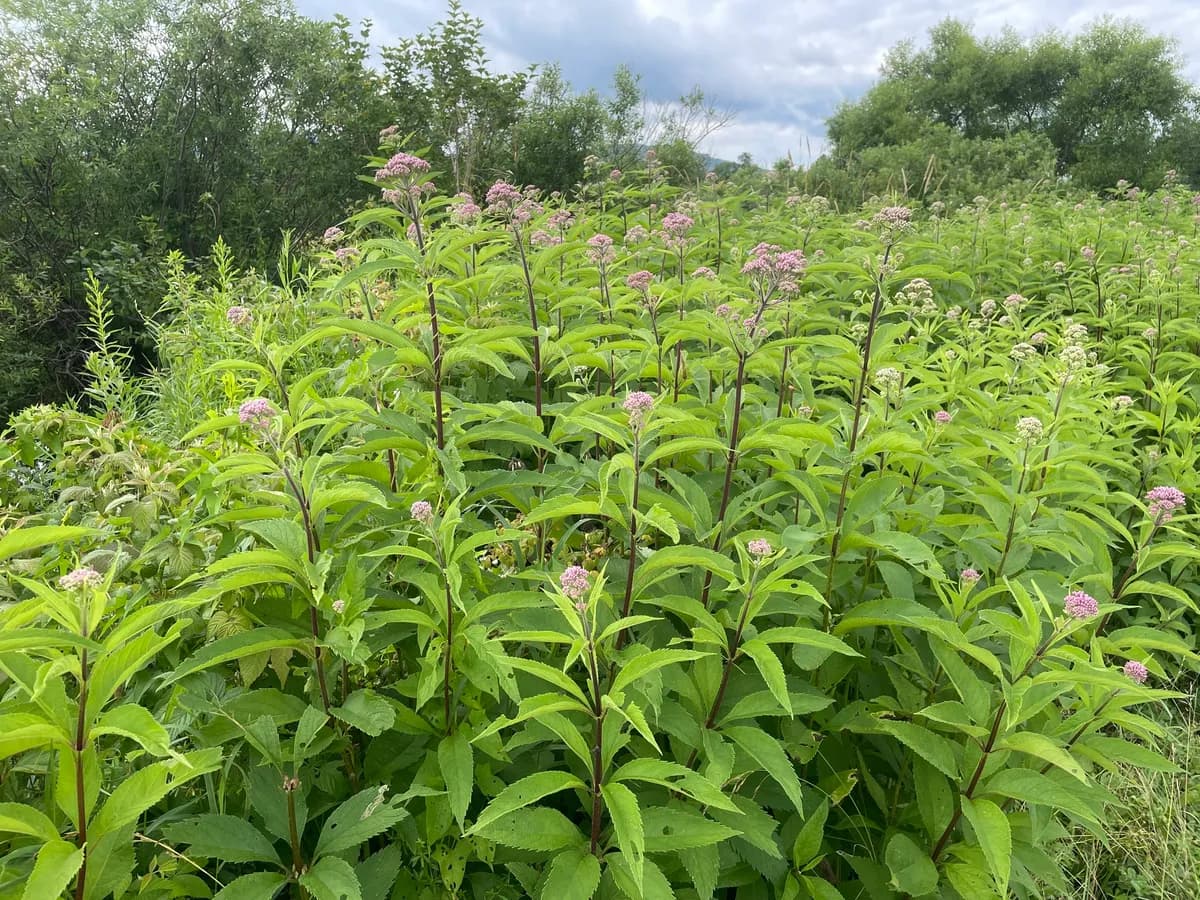
Spotted Joe-Pye Weed is a tall wetland forb that blooms with rounded pink-purple flower clusters from July through September, attracting bees and butterflies to moist meadows and stream edges.
Toxicity unknown
Spotted Joe-Pye Weed (Eutrochium maculatum) is not listed by the ASPCA Animal Poison Control Center (opens in new tab) or the other sources we check, so we have no verdict for it either way. Absence from those lists is not a clearance. If your pet shows symptoms after eating any plant, call the ASPCA at (888) 426-4435.
The USDA PLANTS Database (opens in new tab) does not flag Spotted Joe-Pye Weed as toxic to livestock.
Light
part sun
Water
medium
Size
36"–84" H × 18"–36" W
Bloom
Jul, Aug, Sep
Native to
AZ, CO, CT, IA and 28 more states
Pollinators
bees, butterflies, moths
Deer
Resistant (per Prairie Moon Nursery)
Before you buy
Your city may pay you to plant this
Cities and water utilities offer rebates for replacing lawn with native and water-wise plants. We track 459 programs across 44 states, each with a link to the provider and the date we last checked it.
Find rebates in your areaPicture natives in your own yard
Upload a photo of your yard and Patch Vision shows a rendering of it planted with natives for your region, like Spotted Joe-Pye Weed.


Browse plants for this ecoregion
Joe Pye Weed is a tall native wildflower that produces large, fluffy pink-purple flower clusters in late summer. This robust perennial forms substantial clumps and thrives in areas with consistent moisture, making it excellent for rain gardens or naturally wet spots.
Growing Spotted Joe-Pye Weed
Grow Spotted Joe-Pye Weed in part sun and medium water. Mature plants reach 36 to 84 inches tall and spread 18 to 36 inches wide. Expect low maintenance to keep it looking intentional in a front yard.
How to care for Spotted Joe-Pye Weed, by region
How to care for Spotted Joe-Pye Weed where it is actually grown: year-round basics plus what to do each season, region by region, with the sources for each.
Care guidance last updated: September 2026
Southeastern Wisconsin Till Plains (includes Milwaukee, WI)
Year-round
Spotted Joe-Pye Weed is confirmed native to Wisconsin and is found throughout the state, so it's a strong match for a moist, low spot in a Milwaukee yard. It's a tall native perennial, usually 4 to 6 feet, with fragrant pink to purple flower clusters that draw in butterflies from midsummer into fall.
- Give it full sun to part shade and rich, consistently moist to wet soil, it does not do well if the ground dries out.
- Expect a tall, upright plant, usually 4 to 6 feet, so give it room toward the back of a bed or along a fence line.
- Space plants 1 to 3 feet apart so air can move through the foliage.
- The fragrant flower clusters are a real draw for butterflies from midsummer into fall.
Fall
Fall is when Spotted Joe-Pye Weed puts on its best show in Milwaukee gardens, with flowers continuing into September, and it's also a good time to divide crowded clumps or think about a tidy cutback before winter.
- Flowers usually continue into September before fading with the first hard frosts.
- This is a good time to divide crowded clumps, about four to six weeks before the ground freezes so roots can settle in.
- Cut stems back to a few inches once they've browned, or leave them standing into winter if you like the added texture.
- Clear fallen leaves from around the base so the crown doesn't sit under wet, matted debris going into winter.
Cutting the dead stems back in fall keeps a tall stand of Joe-Pye Weed looking tidy through winter, which is an HOA-friendly option if a neater front-yard look matters on your street.
Winter
Milwaukee's zone 5 winters are cold, and Spotted Joe-Pye Weed is a hardy perennial for this climate that needs no special protection once established, though a newly planted one benefits from a layer of mulch its first winter.
- No watering is needed once the ground freezes, the plant is dormant until spring.
- A plant in its first winter benefits from a couple inches of mulch over the crown after the ground starts to freeze.
- Stems left standing over winter can catch snow and add some structure to an otherwise bare bed.
- Avoid walking on or piling snow directly over the crown, since next year's shoots come up from that same spot.
Spring
In Milwaukee's short zone 5 spring, wait until after your last frost to plant or divide Spotted Joe-Pye Weed, and keep the soil consistently moist while new shoots come up from the crown, this plant does not tolerate drying out.
- Wait until after your last frost, usually mid to late May in the Milwaukee area, to plant or move it.
- Keep the soil consistently moist while new growth gets established, this plant does not tolerate drying out.
- New shoots come up slowly from the crown in spring, so mark the spot in fall if you want to avoid digging into it by accident.
- A light layer of compost in spring is enough, this plant does not need rich fertilizer to grow well.
Summer
Through Milwaukee's summer, Spotted Joe-Pye Weed wants consistently moist to wet soil and starts budding for its bloom, which usually opens in July, so don't let it dry out during hot, dry stretches.
- Water during dry spells, aim for consistently moist to wet soil rather than letting it dry out between waterings.
- Flower buds form through midsummer, with blooms usually opening in July.
- Mulch around the base to help hold moisture in through hot, dry stretches.
- Check that mulch isn't piled against the crown itself, a few inches of clearance is enough.
Sources: Eutrochium maculatum (Spotted Joe-pye weed), Native Plant Database, Eupatorium maculatum - Joe Pye Weed, Friends of the UW-Madison Arboretum
In an HOA neighborhood
Spotted Joe-Pye Weed takes more care to keep looking intentional in a front yard. Maintenance level: low. Consider it for backyard or mid-zone beds rather than the street edge.
Works well in: backyard only.
- Very tall height appears wild and uncontrolled
- Can look scraggly when dormant
- May be perceived as weedy rather than ornamental
Wildlife value
Host plant for eight-spotted forester moth.
The large flower clusters are magnets for butterflies, bees, and moths throughout the blooming season. Seeds provide food for birds in fall and winter.
Common questions
- When does Spotted Joe-Pye Weed bloom?
- It typically flowers from July through September, producing domed clusters of small pink to purple blooms atop tall stems.
- What kind of habitat does Spotted Joe-Pye Weed prefer?
- It grows best in consistently moist to wet soils, such as those found in wet meadows, marsh edges, and low-lying areas along streams.
- What pollinators visit Spotted Joe-Pye Weed?
- Bees, butterflies, and moths regularly visit the flower clusters for nectar during the summer bloom period.
- How much sun does Spotted Joe-Pye Weed need?
- It grows well in part sun and also tolerates full sun to part shade, especially where soil moisture stays high.
- How tall does Spotted Joe-Pye Weed get?
- Mature plants often reach four to six feet, making them a good back-of-border choice in rain gardens and wet meadow plantings.
- Is Spotted Joe-Pye Weed toxic to livestock?
- The USDA PLANTS Database does not flag Spotted Joe-Pye Weed as toxic to livestock.
- Is Spotted Joe-Pye Weed HOA-friendly?
- Spotted Joe-Pye Weed takes more care to look intentional in a front yard. Consider it for backyard or mid-zone beds rather than the street edge.
These answers were drafted with an AI model from this plant's data. Verify care details with a local expert.
Native range data from the World Checklist of Vascular Plants (Kew). Pollinator and host plant associations compiled from GBIF, iNaturalist, and published ecological literature.
If something looks wrong
Common plant problems, and what to check first
These come up on almost any plant. Each guide lists the likely causes in the order they are worth ruling out, with one thing to check before you act on any of them, and links to the source it came from.
- It is dying right after planting
- Leaves turning yellow
- Wilting even though I watered it
- Brown crispy leaf tips
- Bugs on the plant
Ready to grow Spotted Joe-Pye Weed? Add it to your garden in Pollinator Patch to track it and get season-by-season care guidance.