Tall Cinquefoil
Drymocallis arguta
Last reviewed: October 2026
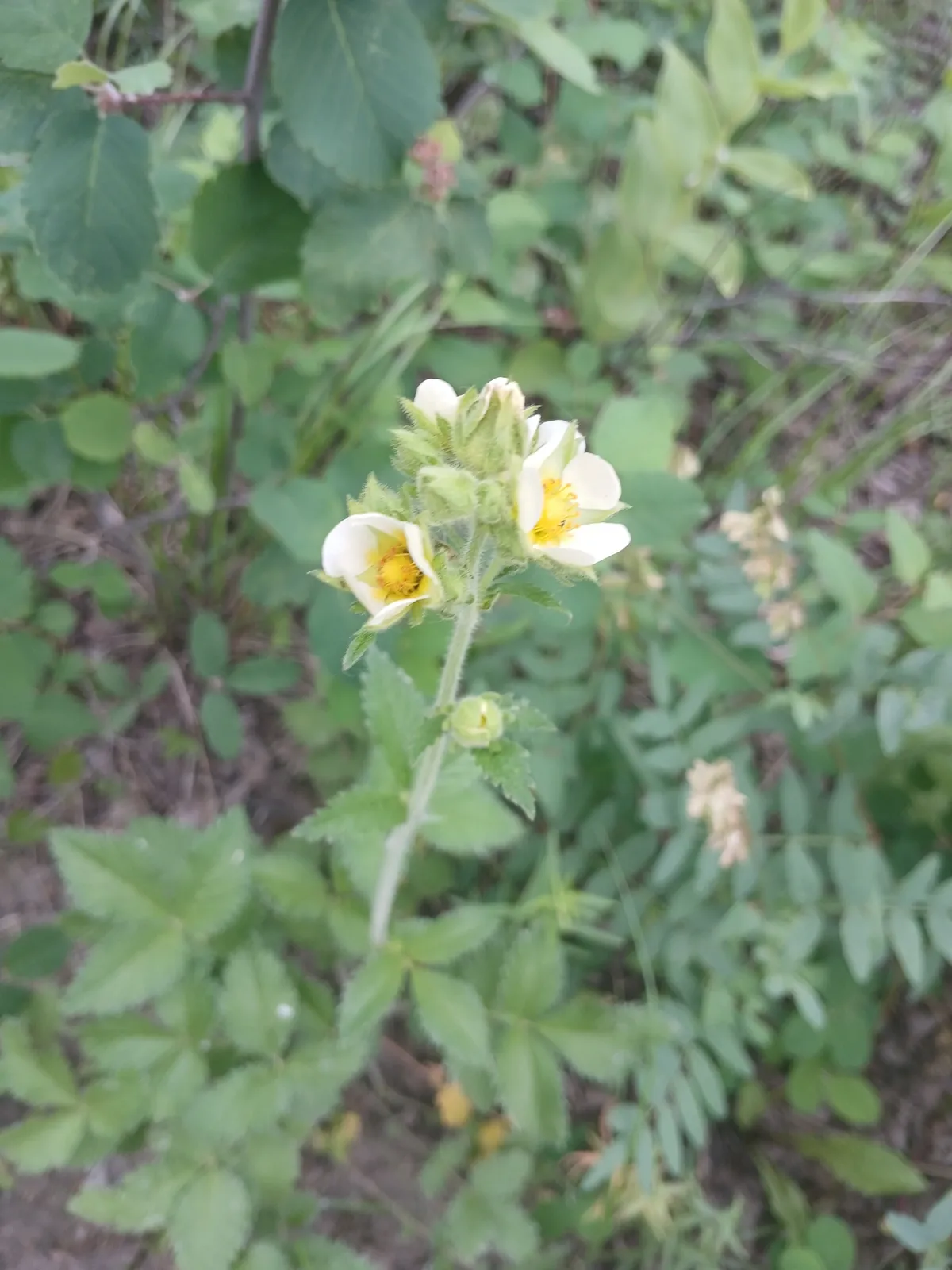
Drymocallis arguta is a tall prairie forb that blooms from June through August with clusters of white flowers on sticky, hairy stems. It thrives in open prairies, rocky slopes and dry meadows under full sun with low water needs.
Toxicity unknown
Tall Cinquefoil (Drymocallis arguta) is not listed by the ASPCA Animal Poison Control Center (opens in new tab) or the other sources we check, so we have no verdict for it either way. Absence from those lists is not a clearance. If your pet shows symptoms after eating any plant, call the ASPCA at (888) 426-4435.
Light
full sun
Water
low
Size
12"–24" H × 12"–18" W
Bloom
Jun, Jul, Aug
Native to
AR, CO, IA, IL and 23 more states
Pollinators
bees, beetles
Before you buy
Your city may pay you to plant this
Cities and water utilities offer rebates for replacing lawn with native and water-wise plants. We track 459 programs across 44 states, each with a link to the provider and the date we last checked it.
Find rebates in your areaPicture natives in your own yard
Upload a photo of your yard and Patch Vision shows a rendering of it planted with natives for your region, like Tall Cinquefoil.


Browse plants for this ecoregion
Drymocallis arguta is a compact native perennial that produces clusters of small white or cream flowers from June through August. This drought-tolerant plant forms neat clumps with attractive compound leaves and thrives in sunny locations with minimal watering once established.
Growing Tall Cinquefoil
Grow Tall Cinquefoil in full sun and low water. Mature plants reach 12 to 24 inches tall and spread 12 to 18 inches wide. Expect low maintenance to keep it looking intentional in a front yard.
How to care for Tall Cinquefoil, by region
How to care for Tall Cinquefoil where it is actually grown: year-round basics plus what to do each season, region by region, with the sources for each.
Care guidance last updated: September 2026
Eastern Corn Belt Plains (includes Columbus, OH)
Year-round
Prairie cinquefoil is a native Ohio prairie and open woods perennial with clusters of creamy white flowers, valued for being tough and drought tolerant once it is established.
- Native to Ohio's prairies, open woods, and roadsides, per the Lady Bird Johnson Wildflower Center
- Grows about 2 to 3 feet tall with a long taproot that makes it very drought tolerant once established
- Prefers full sun and average to dry, well drained soil, and is not fussy about soil type
- Blooms over a long stretch from June into September with small white to pale yellow flowers
- Spreads slowly by rhizomes without being aggressive, and stays clump forming
- Virtually pest and disease free once established
Stays upright and clump forming rather than sprawling, and its long bloom period gives a tidy, intentional look in a front yard prairie style bed rather than a weedy one.
Fall
Bloom tapers off into fall, and this is a good window for planting or dividing.
- Flowering can continue into September before tapering off as days shorten
- Fall is a good time to plant, giving the taproot time to establish before winter
- Leave seed heads standing through fall for wildlife and winter interest rather than cutting back right away
- Columbus's first fall frost typically arrives around mid October, which ends the bloom season
Winter
This is a cold hardy prairie plant that needs no winter protection in central Ohio.
- Dies back to a basal rosette or to the ground, depending on the winter, and resumes growth in spring
- Hardy through Columbus's USDA zone 6b winters with no mulching or protection required
- Leaving old stems standing over winter provides some habitat value and winter interest
- No watering or feeding needed during dormancy
Spring
Spring is when new growth emerges and rosettes fill out, ahead of a long summer bloom season.
- New basal rosettes of toothed, strawberry-like leaves emerge as soil warms in April
- No fertilizer needed in average to lean soil, since rich soil can cause floppy growth
- A good time to plant new starts so the taproot can establish before summer heat and dry spells
- Water new spring plantings regularly until established; mature plants need little supplemental water
Summer
Summer is peak bloom season, and established plants handle Columbus heat and dry spells well thanks to the deep taproot.
- Flowers open from June through September, with small white to creamy yellow blooms drawing small bees and other pollinators
- Established plants tolerate Columbus's summer dry spells without supplemental watering, thanks to the long taproot
- Deadheading is optional since seed heads are not especially showy, but removing spent flower stalks keeps the look tidier
- Full sun keeps growth compact; too much shade or overly rich soil can make stems flop
Sources: Lady Bird Johnson Wildflower Center: Potentilla arguta (Drymocallis arguta), ASPCA: Cinquefoil (Potentilla spp.) toxicity, Prairie Moon Nursery: Drymocallis arguta (Prairie Cinquefoil), National Weather Service Wilmington OH: Fall Frost/Freeze
In an HOA neighborhood
Tall Cinquefoil is an HOA-friendly choice. Maintenance level: low. Tidiness: 3 out of 5.
Works well in: front yard, foundation, mid zone.
- May appear sparse or weedy to neighbors unfamiliar with native plants
- Winter dormancy leaves bare spots
Wildlife value
The summer blooms attract native bees and beetles, providing nectar and pollen during the peak growing season.
Common questions
- When does Prairie Cinquefoil bloom?
- Drymocallis arguta typically flowers from June through August, producing clusters of small white blossoms atop tall, sticky-hairy stems.
- What kind of light and water does this plant need?
- It grows best in full sun and tolerates low water conditions, making it well suited to dry, open sites such as prairies and rocky slopes.
- What pollinators visit Prairie Cinquefoil?
- Bees and beetles are the main visitors to its flowers, drawn to the open blooms for pollen during the summer bloom period.
- Is Drymocallis arguta a shrub or an herbaceous plant?
- It is a forb, an herbaceous perennial that dies back to the ground each year rather than maintaining woody growth.
- What habitats suit this plant best?
- It grows well in prairies, open woodlands, meadows and rocky or gravelly slopes where drainage is good and competition from taller plants is limited.
- Is Tall Cinquefoil HOA-friendly?
- Tall Cinquefoil is generally an HOA-friendly choice in the right placement, with low maintenance.
These answers were drafted with an AI model from this plant's data. Verify care details with a local expert.
Native range data from vouchered herbarium specimen records and regional native plant society lists. Pollinator and host plant associations compiled from GBIF, iNaturalist, and published ecological literature.
If something looks wrong
Common plant problems, and what to check first
These come up on almost any plant. Each guide lists the likely causes in the order they are worth ruling out, with one thing to check before you act on any of them, and links to the source it came from.
- It is dying right after planting
- Leaves turning yellow
- Wilting even though I watered it
- Brown crispy leaf tips
- Bugs on the plant
Ready to grow Tall Cinquefoil? Add it to your garden in Pollinator Patch to track it and get season-by-season care guidance.