Common Juniper
Juniperus communis
Last reviewed: October 2026
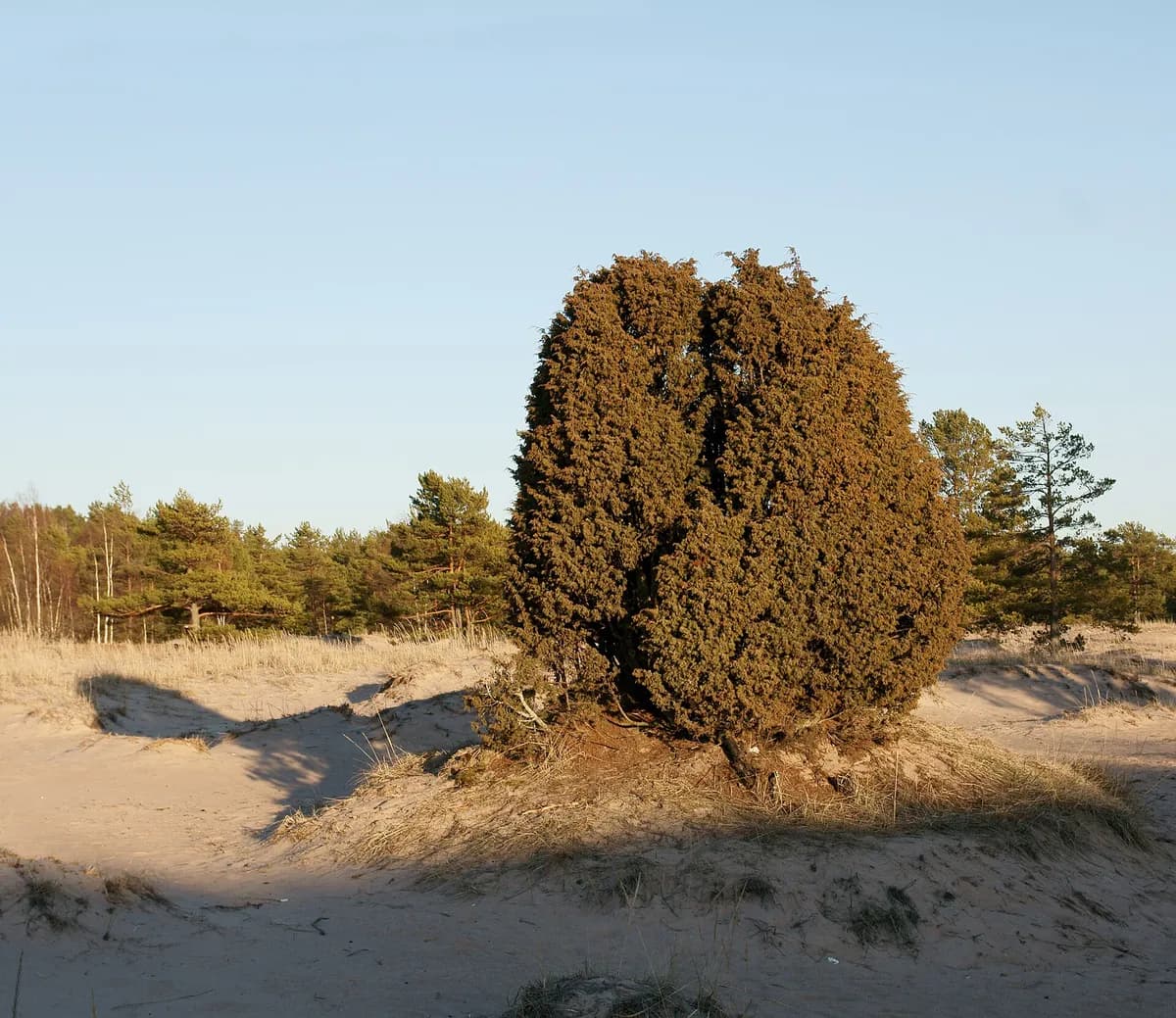
Juniperus communis is a low, spreading evergreen shrub that thrives in full sun with low water needs, blooming in May and June across cool temperate climates from mountain slopes to open rocky ground.
Toxicity unknown
Common Juniper (Juniperus communis) is not listed by the ASPCA Animal Poison Control Center (opens in new tab) or the other sources we check, so we have no verdict for it either way. Absence from those lists is not a clearance. If your pet shows symptoms after eating any plant, call the ASPCA at (888) 426-4435.
The USDA PLANTS Database (opens in new tab) does not flag Common Juniper as toxic to livestock.
Light
full sun
Water
low
Size
12"–96" H × 24"–120" W
Bloom
May, Jun
Native to
AL, AZ, CA, CO and 34 more states
Before you buy
Your city may pay you to plant this
Cities and water utilities offer rebates for replacing lawn with native and water-wise plants. We track 459 programs across 44 states, each with a link to the provider and the date we last checked it.
Find rebates in your areaPicture natives in your own yard
Upload a photo of your yard and Patch Vision shows a rendering of it planted with natives for your region, like Common Juniper.


Browse plants for this ecoregion
Common juniper is a versatile evergreen shrub that tolerates poor soils and drought conditions exceptionally well. Its needle-like foliage and compact to spreading growth habit make it useful for foundation plantings, slopes, and naturalized areas.
Growing Common Juniper
Grow Common Juniper in full sun and low water. Mature plants reach 12 to 96 inches tall and spread 24 to 120 inches wide. Expect low maintenance to keep it looking intentional in a front yard.
How to care for Common Juniper, by region
How to care for Common Juniper where it is actually grown: year-round basics plus what to do each season, region by region, with the sources for each.
Care guidance last updated: August 2026
Northeastern Coastal Zone (includes New York, NY)
Year-round
Common juniper is a tough, low evergreen shrub that does well in the New York City area's full sun and rocky, well drained soils. It is easygoing about neglect but has one hard rule: it needs drainage, not water.
- Give it full sun and soil that drains well. It struggles and can develop root rot in heavy clay or a spot that stays wet, so this is not a plant for a low, soggy corner of the yard.
- It is naturally drought tolerant once it has a full growing season in the ground. Water new plantings deeply but infrequently rather than a little bit every day.
- Only cut into the green, living parts of the branches. Juniper wood that has already gone bare and brown will not send out new growth, so cutting back into it leaves a permanent gap in the shrub.
- In the wild here, the native form of common juniper is a low, spreading variety called Juniperus communis var. depressa. A lot of nursery plants sold simply as common juniper are instead an upright Eurasian variety that is not native to New York, so check the tag if native origin matters to you.
- The ASPCA's toxic and non-toxic plant lists for dogs and cats do not include an entry for juniper at all, so there is no confirmed pet safety rating either way. If your pet is a chewer, it is worth keeping an eye on them around it and calling your vet if they eat a noticeable amount.
Fall
Fall is common juniper's best planting window here and a good time for a light cleanup pass before winter.
- Cooler air with soil that is still warm makes fall a strong time to plant or transplant. Aim for at least six weeks before the ground freezes so roots have time to settle in.
- If needed, do a light shaping pass, still cutting only into live green wood. This is also a good time to remove old dead twigs and any branch tips that browned over summer, since clearing out that dead and infected wood is one of the most effective ways to cut down next year's disease.
- Rake up and throw away, rather than compost, any fallen needles or twig clippings that show blight symptoms. The fungi that cause it overwinter in that debris.
- Add a 2 to 3 inch layer of mulch out to the plant's drip line, keeping it pulled back a few inches from the base of the stem so moisture does not sit against it.
A tidy fall shaping keeps common juniper's low, neat form, which reads as HOA-friendly front yard structure.
Winter
Winter is when common juniper does its real work as a year round evergreen anchor, so protecting its shape matters more than active care.
- This shrub is winter hardy well beyond the New York City area's zone 7b conditions. The main risk is not cold, it is weight: junipers are multi stemmed evergreens that are especially prone to branch breakage from heavy, wet snow.
- After a heavy snow, gently brush branches upward with a broom to relieve the weight, rather than knocking down or shaking them hard. Leave ice-coated branches alone, since trying to remove ice usually snaps more than it saves.
- Hold off on any pruning until you are back into the growing season. Cold weather wood is brittle and it is hard to tell live from dead wood until new growth starts.
- Its low, blue-green, spreading form provides useful winter structure in a front yard bed without needing anything done to it at all.
Its evergreen winter silhouette holds a neat, HOA-conscious shape through the dormant season with no pruning needed.
Spring
Spring is a good time to plant common juniper here, and it is the season to watch for two things that show up on the new growth.
- If you are planting or transplanting, spring gives roots a full season to settle in before summer heat. Loosen compacted soil and mix in coarse sand or fine gravel if your soil holds water, since drainage matters more than fertilizer for this plant.
- In wet spring weather, watch for small orange, jelly-like horn-shaped growths on the branches. This is cedar-apple rust, which uses juniper as its overwintering host and needs a nearby apple or crabapple tree to complete its cycle. It rarely does serious harm to the juniper itself.
- Cool, wet spring weather is also when Phomopsis twig blight shows up, browning and killing the tips of new shoots. If you spot it, prune out the affected shoot tips and dispose of them (do not compost) before new growth fills in, since old infected wood is a major source of next year's spores.
- Skip a heavy spring fertilizer feeding. This shrub is adapted to lean soil, and pushing soft new growth with extra nitrogen makes it more vulnerable to the diseases above.
Summer
Summer care for common juniper is mostly about not overwatering it and catching hot weather pests and disease early.
- Water at the base in the early morning rather than overhead, so the foliage dries out during the day. Wet foliage sitting in humid summer air is what invites twig blight fungi to take hold.
- Warm summer weather is when Kabatina blight becomes active, killing twigs a year or older. It needs a small wound to get in, usually from insect or mite feeding, branches rubbing together, or a pruning cut, so avoid unnecessary trimming during hot, dry stretches.
- Hot, dry weather can also bring spider mites. Look for a fine, dusty stippling on the needles or light webbing between branches, and knock down a light infestation with a strong jet of water every few days.
- Do not fertilize in summer. Feeding pushes soft new growth right when disease and pest pressure is at its highest.
Sources: New York Flora Atlas - Juniperus genus page, ASPCA Toxic and Non-Toxic Plant List - Dogs, ASPCA Toxic and Non-Toxic Plant List - Cats, UMN Extension - Cedar-apple rust and related rust diseases, University of Maryland Extension - Juniper Twig Blights, UMN Extension - Protecting trees and shrubs in winter
In an HOA neighborhood
Common Juniper is an HOA-friendly choice. Maintenance level: low. Tidiness: 4 out of 5.
Works well in: front yard, foundation, street edge, mid zone.
Wildlife value
Provides important winter shelter and nesting sites for birds, while its berries feed various wildlife species including cedar waxwings and other songbirds.
Common questions
- What growing conditions does Common Juniper need?
- Common Juniper does best in full sun with low water once established. It tolerates poor, rocky, or sandy soils as long as drainage is good.
- When does Common Juniper bloom?
- Common Juniper produces small, inconspicuous cones in May and June rather than showy flowers.
- Does Common Juniper stay green year round?
- Yes, it is evergreen and keeps its needle-like, blue-green foliage through winter.
- How is Common Juniper used in landscaping?
- It is often planted as a low, spreading shrub on slopes, in rock gardens, or in dry, open sites where it needs little supplemental water.
- Is Common Juniper toxic to livestock?
- The USDA PLANTS Database does not flag Common Juniper as toxic to livestock.
- Is Common Juniper HOA-friendly?
- Common Juniper is generally an HOA-friendly choice in the right placement, with low maintenance.
These answers were drafted with an AI model from this plant's data. Verify care details with a local expert.
Native range data from the World Checklist of Vascular Plants (Kew). Pollinator and host plant associations compiled from GBIF, iNaturalist, and published ecological literature.
If something looks wrong
Common plant problems, and what to check first
These come up on almost any plant. Each guide lists the likely causes in the order they are worth ruling out, with one thing to check before you act on any of them, and links to the source it came from.
- It is dying right after planting
- Leaves turning yellow
- Wilting even though I watered it
- Brown crispy leaf tips
- Bugs on the plant
Ready to grow Common Juniper? Add it to your garden in Pollinator Patch to track it and get season-by-season care guidance.