Hoary Verbena
Verbena stricta
Last reviewed: October 2026
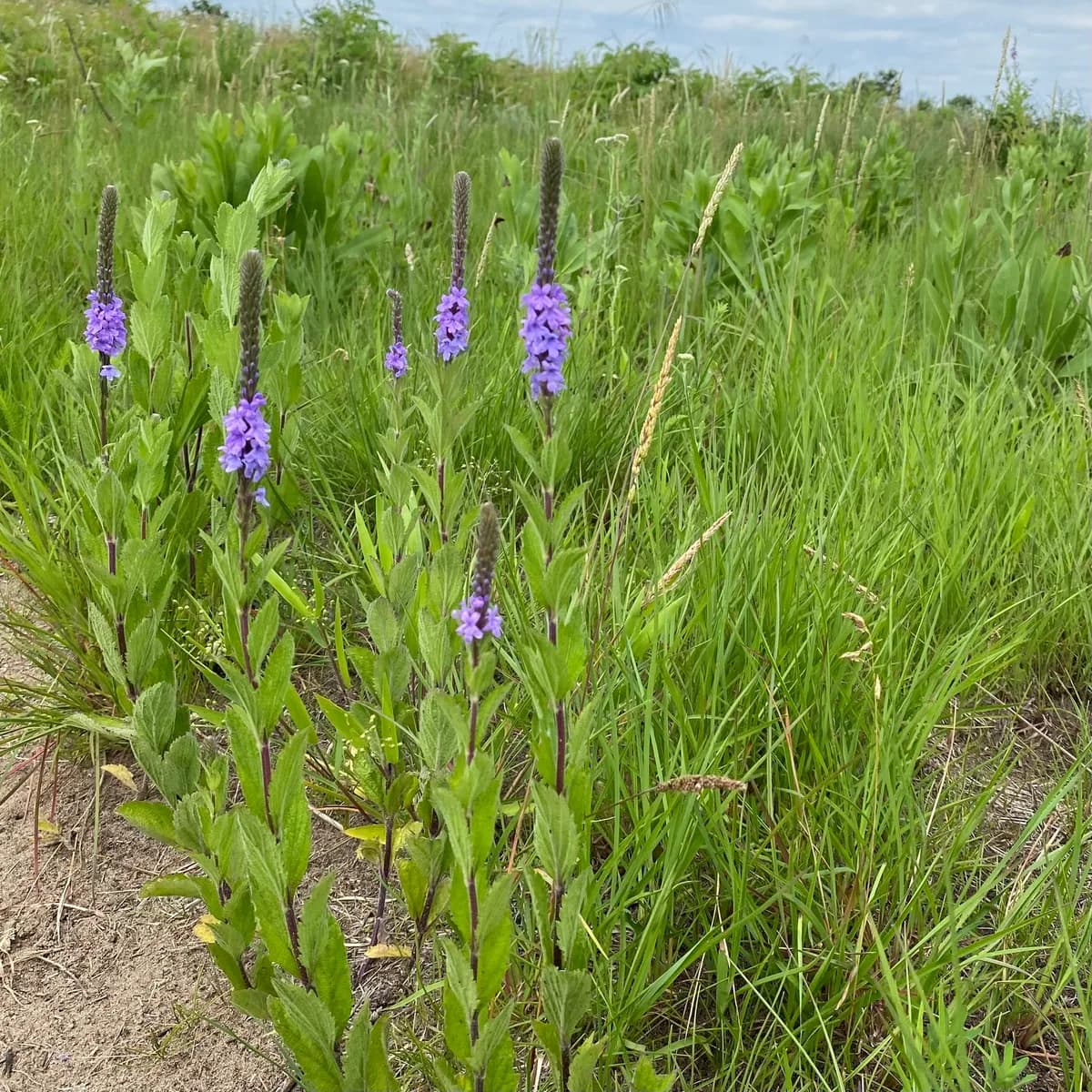
Hoary Vervain is a drought tolerant prairie forb that blooms from June through September, producing narrow spikes of small purple flowers favored by bees and butterflies.
Toxicity unknown
Hoary Verbena (Verbena stricta) is not listed by the ASPCA Animal Poison Control Center (opens in new tab) or the other sources we check, so we have no verdict for it either way. Absence from those lists is not a clearance. If your pet shows symptoms after eating any plant, call the ASPCA at (888) 426-4435.
Light
full sun
Water
low
Size
12"–72" H × 12"–12" W
Bloom
Jun, Jul, Aug
Native to
AL, AR, AZ, CO and 29 more states
Pollinators
bees, butterflies
Deer
Resistant (per Prairie Moon Nursery)
Before you buy
Your city may pay you to plant this
Cities and water utilities offer rebates for replacing lawn with native and water-wise plants. We track 459 programs across 44 states, each with a link to the provider and the date we last checked it.
Find rebates in your areaPicture natives in your own yard
Upload a photo of your yard and Patch Vision shows a rendering of it planted with natives for your region, like Hoary Verbena.


Browse plants for this ecoregion
Hoary vervain is a sturdy native perennial with tall spikes of small purple flowers that bloom from June through September. This drought-tolerant plant forms upright clumps and provides reliable color in sunny, dry locations where other plants struggle.
Growing Hoary Verbena
Grow Hoary Verbena in full sun and low water. Mature plants reach 12 to 72 inches tall and spread 12 to 12 inches wide. Expect low maintenance to keep it looking intentional in a front yard.
How to care for Hoary Verbena, by region
How to care for Hoary Verbena where it is actually grown: year-round basics plus what to do each season, region by region, with the sources for each.
Care guidance last updated: July 2026
Cross Timbers (includes Fort Worth, TX)
Year-round
Hoary vervain is a tough dry-prairie perennial that fits the Cross Timbers around Fort Worth. It wants full sun and dry, sandy or gravelly soil, and it sends up tall purple flower spikes through the summer. Once it settles in, it mostly takes care of itself.
- Native to the Cross Timbers and Grand Prairie of north-central Texas, so it belongs in a Fort Worth-area yard (Native Plant Society of Texas).
- Give it full sun and dry, sandy or gravelly soil. It does poorly in shade or soggy ground.
- It is drought tolerant once established, so you can water it very little after the first season.
- Purple flower spikes bloom from the bottom up, June through September (Lady Bird Johnson Wildflower Center).
- It reseeds freely. Pull unwanted seedlings in spring if you want to keep it in bounds.
A clump of upright purple spikes reads as an intentional planting, which keeps a front bed looking cared-for rather than weedy. Edge the bed and thin the reseeders to hold a tidy shape.
Fall
Flowering winds down in fall and the plant starts setting seed. You get to choose: cut it back for a neat look, or leave the seed heads up for birds and self-sowing. Water needs are near zero now.
- Blooming tapers off through September. After that the plant puts energy into seed.
- Leave some seed heads standing if you want birds to feed and new plants next year (Native Plant Society of Texas).
- Cut stalks to the ground in late fall if you prefer a clean bed over the winter.
- Stop watering. Fall rain plus the plant's drought tolerance is plenty.
If your street prefers a tidy off-season look, cutting the stalks down in late fall keeps the bed neat while the plant rests underground.
Winter
Hoary vervain is a perennial that dies back to the roots in winter and returns in spring. There is almost nothing to do. Leave the crown alone, hold off on water, and do not smother it with mulch.
- The top growth goes dormant and brown in winter. The roots are alive and will resprout in spring, so do not dig it up.
- No watering needed. Winter moisture in dry soil is all it wants.
- Keep heavy mulch off the crown. This dry-soil plant can rot if kept wet and covered.
- Any standing stalks you left can be cut down anytime before spring growth starts.
Spring
Spring is when hoary vervain wakes up and puts on leafy growth before it blooms. It is also your window to divide clumps, thin seedlings, and set the plant up for a strong summer. Go easy on water since it likes things dry.
- New growth pushes up from the base in spring. Clear away last year's dead stalks so light reaches the crown.
- Thin out volunteer seedlings now if the patch spread more than you wanted last year.
- Do not add rich compost or heavy mulch over the crown. This plant wants lean, dry, sandy soil.
- Skip fertilizer. Feeding leads to floppy stems that need staking.
Cutting back the old stalks in early spring gives the bed a clean start before neighbors are out gardening, which reads as deliberate upkeep.
Summer
Summer is peak season. Tall purple spikes bloom for weeks and pull in bees and butterflies during the hottest part of the Fort Worth year. This is a low-water plant, so let the soil dry between the rare waterings.
- Blooms June through September with purple spikes that flower from the bottom up (Lady Bird Johnson Wildflower Center).
- It is a larval host for the Common Buckeye butterfly, so expect caterpillars on the leaves and leave them be (Butterflies and Moths of North America, via Lady Bird Johnson Wildflower Center).
- The Xerces Society lists it as having special value to native bees, so it earns its spot as a summer nectar source (Lady Bird Johnson Wildflower Center).
- Water deeply but rarely. It handles Texas summer drought once established and rots in constantly wet soil.
- Snip spent spikes if you want a tidier look, or leave some to reseed and feed birds.
The steady purple color through the heat gives a front bed reliable summer interest when many plants have quit, which helps the yard look tended.
Sources: Native Plant Society of Texas, Verbena stricta, Lady Bird Johnson Wildflower Center, Verbena stricta, Minnesota Wildflowers, Verbena stricta (community tip)
East Central Texas Plains (includes College Station, TX)
Year-round
Hoary vervain suits the sandy Post Oak Savanna soils around College Station. It wants full sun and dry, well-drained sand, and it rewards you with tall purple summer spikes. It is a low-care perennial once it is settled.
- Its Texas range includes the Western Gulf Coastal Plain and sandy flatwoods, which fits the Post Oak Savanna's dry sandy ground (Native Plant Society of Texas).
- Plant it in full sun on well-drained sandy soil. Shade and wet clay will not work.
- It is drought tolerant, so it can ride out a dry Central Texas summer with little watering.
- Purple flower spikes bloom June through September (Lady Bird Johnson Wildflower Center).
- It self-sows readily. Thin the seedlings each spring if you want to keep the patch contained.
Grouped in a defined bed, the upright purple spikes look like a chosen planting rather than a roadside volunteer, which keeps curb appeal on your side.
Fall
Bloom fades and seed sets in fall. Decide whether to cut back for neatness or leave seed heads for birds and self-sowing. Watering can basically stop.
- Flowering trails off after September as the plant shifts to setting seed.
- Leave some seed heads up for birds and next year's seedlings, or cut them off to limit spread (Native Plant Society of Texas).
- Cut stalks to the ground in late fall if you want a clean winter bed.
- Stop supplemental watering. Fall rain is enough.
Cutting stalks down in late fall keeps the bed tidy through the dormant months if your street favors a manicured look.
Winter
This perennial dies back to the roots in winter and returns in spring. Leave it alone. No water, no heavy mulch on the crown, and do not assume the brown top means it is dead.
- Top growth turns brown and dormant. The roots stay alive and resprout in spring, so do not dig it out.
- No watering is needed over winter.
- Keep thick mulch off the crown so the dry-soil plant does not stay wet and rot.
- Any leftover stalks can be cut down anytime before spring growth begins.
Spring
Spring brings fresh leafy growth before summer bloom. Use this window to tidy old stalks, thin seedlings, and keep the soil lean. This plant does not want pampering.
- Clear away last year's dead stems so light and air reach the new basal growth.
- Thin extra seedlings now if the patch spread more than you wanted.
- Do not enrich the soil or pile on mulch. It wants lean, dry sand.
- Skip fertilizer to avoid weak, floppy stems.
A quick early-spring cleanup gives the bed a crisp start before the neighborhood greens up, reading as deliberate care.
Summer
Summer is the show. Purple spikes bloom for weeks and draw bees and butterflies through the Central Texas heat. Keep water light and let the sandy soil dry out between drinks.
- Blooms June through September with purple spikes flowering bottom to top (Lady Bird Johnson Wildflower Center).
- It is a larval host for the Common Buckeye butterfly, so caterpillars on the leaves are a good sign, not a pest problem (Butterflies and Moths of North America, via Lady Bird Johnson Wildflower Center).
- The Xerces Society flags it as having special value to native bees, making it a solid summer nectar plant (Lady Bird Johnson Wildflower Center).
- Water deeply and rarely. It handles drought once established and dislikes constantly wet roots.
- Trim spent spikes for a neater look, or leave some to reseed and feed birds.
Dependable purple color through the hottest weeks keeps a front bed looking alive when a lot of plantings have faded.
Sources: Native Plant Society of Texas, Verbena stricta, Lady Bird Johnson Wildflower Center, Verbena stricta, Minnesota Wildflowers, Verbena stricta (community tip)
Erie Drift Plain (includes Cleveland, OH)
Year-round
Hoary vervain is a tough prairie perennial that loves what most Cleveland yards fight against, which is full sun and lean, dry ground. Around here you have heavy glacial clay, so the real trick is drainage, not watering. It sends up tall purple flower spikes from June into September and feeds bees and butterflies the whole time. It is native to Ohio per the USDA PLANTS Database. It dies back to bare stems every winter and self-seeds, so plan for a plant that looks wild rather than tidy.
- Give it full sun, at least six hours a day, or it flops and blooms poorly
- Plant it high on a slope or a raised, amended spot so winter clay does not stay soggy
- Water only to get it started, then let it go dry since it is very drought tolerant
- Skip the fertilizer and rich compost, which just make it tall and floppy
- Leave the June to September flower spikes up for bees and butterflies
- Expect volunteer seedlings and pull the ones you do not want
This is a tall plant, up to about 4 feet, that reads wild or weedy and drops to bare stems all winter, and it self-seeds. It is not an HOA-friendly front foundation plant. Site it in a back bed or a designated pollinator or meadow area, deadhead to limit self-seeding, and cut it back so it does not look neglected.
Fall
Fall gives you a second, shorter planting window in the Cleveland area, but you have to move early. Get plants in the ground in early fall so the roots settle before the first hard freeze, because the growing season here is short and winter comes on fast. Blooming tapers off through September. The big decision is whether to cut the plant back now or leave the stems standing for winter interest and seed.
- Plant only in early fall so roots settle well before the ground freezes
- Leave standing stems up if you want seedheads for birds and winter structure
- Cut back and clean up spent spikes if you want to limit reseeding
- Skip fall fertilizer, which pushes soft growth that winter kills
- Do not overwater going into winter, since soggy clay is the real danger
- Mark the spot, since it dies to the ground and is easy to forget
Winter
Winter is full dormancy in Cleveland, and this plant handles the cold fine down through zone 6a. It drops to bare stems or nothing at all, so the yard looks empty where it stands. The one real risk here is not the cold, it is wet heavy clay sitting around the crown during freeze and thaw cycles and deep lake-effect snow. Good drainage is what carries it through, so keep water moving away from the crown.
- Leave it alone, it is hardy and needs no cold protection in zone 6
- Do not water at all, the crown rots in cold, soggy clay
- Leave stems standing for seed and winter interest, or cut them for a tidier look
- Make sure snowmelt and runoff drain away from the crown, not toward it
- Avoid piling heavy wet mulch or leaves on the crown
- Wait until spring to do any real cutting back or dividing
Spring
Spring is your main planting window in the Cleveland area, and it is the safer of the two because roots get a long warm season to settle before the freeze. Wait until the heavy clay dries out a bit and is not a muddy mess, usually mid to late spring here. New shoots come up slowly from the old crown, so do not panic if it looks dead early on. This is also the time to thin out crowded self-sown seedlings before they get big.
- Plant new plants once the clay is workable and not soggy, mid to late spring
- Cut last year's dead stems down to the ground if you left them up over winter
- Water new spring plantings until you see fresh growth, then ease off
- Do not mulch heavy or pile it against the crown, since that traps moisture
- Thin or move volunteer seedlings now while they are small
- Hold off on fertilizer, this plant wants lean soil
Summer
Summer is the show. From June through September the tall spikes open purple flowers from the bottom up and pull in bees and butterflies through Cleveland's humid warm season, per the Lady Bird Johnson Wildflower Center. Established plants shrug off summer dry spells and want almost no water. Your main job is to keep it standing upright and to decide how much you want it to reseed.
- Do not water established plants unless you hit a long, hard drought
- Leave the flower spikes up so bees and butterflies keep feeding
- Deadhead spent spikes if you want to cut down on self-seeding
- Stake or place it near sturdier neighbors if the tall stems lean
- Watch for powdery mildew in humid stretches and improve airflow if it shows
- Do not feed it, rich soil makes the floppiness worse
Sources: USDA PLANTS Database, Verbena stricta, Lady Bird Johnson Wildflower Center, Verbena stricta, North Carolina Extension Gardener Plant Toolbox, Verbena stricta, Xerces Society, pollinator friendly plant lists
Texas Blackland Prairies (includes Dallas, TX)
Year-round
Hoary vervain is a prairie wildflower native to North Texas that thrives in full sun and lean, dry soil. It self-seeds readily and can look scraggly if left alone, so plan on a bit of upkeep if it sits near the front of the yard.
- Choose a spot with at least 6 hours of direct sun a day.
- In heavy black clay, plant on slightly raised ground so the crown doesn't sit in standing water after rain.
- Once established, water only during extended dry stretches. Rich or overly moist soil makes the stems weak and floppy.
- Deadhead spent flower spikes through the growing season to control self-seeding and keep the clump looking tended.
- Give it 12 to 18 inches of space from neighboring plants. A mature clump typically reaches 2 to 4 feet tall.
This plant reads as intentional when grouped with other perennials rather than planted alone, and kept deadheaded so it doesn't spread into a weedy patch. Place it mid bed rather than as a stand-alone specimen right at the front walk.
Fall
Bloom carries into early fall, then the plant fades and drops seed as North Texas cools toward the mid November first frost.
- Let the last flower spikes finish blooming into September before cutting the plant back.
- Once bloom fades, cut spent flower stalks back to the basal rosette to limit self-seeding if you don't want it spreading.
- Fall is a reasonable time to thin an overgrown clump, but wait until after the first frost has knocked back top growth.
- Rake fallen seed heads out of mulched beds if you want to keep the plant from colonizing nearby areas.
- Skip watering once temperatures cool in October and November unless the fall stays unusually dry.
Cutting back the fading flower stalks in fall keeps the bed looking maintained instead of left to go to seed heading into winter.
Winter
Hoary vervain dies back to a basal rosette or ground level in winter and needs no care through North Texas's mild but occasionally hard freezes.
- Leave the dormant clump alone through winter. No watering needed.
- The fall cutback (see fall guidance) is usually enough; further pruning isn't needed until late winter.
- Cut back any remaining dead stalks to a few inches above ground in February, before spring growth resumes.
- During a severe Arctic outbreak, a couple inches of mulch over the crown adds protection, though established plants tolerate typical North Texas winter lows.
- Skip fertilizer until active growth resumes in spring.
A bare, cut-back clump can look untended over winter. A couple inches of mulch around it reads as an intentionally maintained bed rather than a dead patch.
Spring
Spring, after the mid March last frost, is the best time to put hoary vervain in the ground in North Texas.
- Plant after mid March once frost risk has passed and soil has warmed.
- Water new transplants every 2 to 3 days for the first 3 to 4 weeks while roots establish.
- In heavy black clay, plant slightly high on a small mound so the crown stays out of standing water from spring rains.
- Expect a low rosette of gray green leaves through March and April before the flower stalk shoots up later in spring.
- Skip compost or rich fertilizer at planting. Lean soil keeps the plant from growing floppy.
The early rosette stage stays low and reads as neat groundcover, so it won't draw attention before the taller flower spikes appear later in the season.
Summer
Summer is hoary vervain's bloom season, with spikes of small purple flowers from June onward, and established plants handle North Texas heat and dry spells with little help.
- Plants established more than one growing season need no supplemental water except during a dry stretch of 3 or more weeks with no rain.
- First summer plantings still need a deep soak about once a week during July and August heat.
- Deadhead finished flower spikes in mid to late summer to encourage more blooms and limit reseeding.
- Watch for stems flopping over after heavy summer storms. Stake or trim leaning stems if the plant is in a visible spot.
- Skip fertilizer in summer. Feeding in the heat encourages weak, leggy growth.
Storm-flattened stems are the main curb appeal risk this season. Stake or trim leaning growth promptly so the bed doesn't read as neglected.
Sources: Lady Bird Johnson Wildflower Center: Verbena stricta
Western Gulf Coastal Plain (includes Houston, TX)
Year-round
Hoary vervain reaches the Western Gulf Coastal Plain near Houston, but only on dry, sandy, well-drained spots. It is not a plant for wet coastal ground. Give it full sun and lean sandy soil and it will send up purple summer spikes.
- Its Texas range includes the Western Gulf Coastal Plain, so it belongs on the sandy, well-drained parts of the Houston region (Native Plant Society of Texas).
- Plant only in dry, sandy, well-drained soil in full sun. It will rot in low, wet, or heavy-clay coastal spots.
- It is very drought tolerant and needs little water once established.
- Purple flower spikes bloom June through September (Lady Bird Johnson Wildflower Center).
- It reseeds on its own. Thin seedlings each spring to keep the patch in check.
Because it needs a dry sunny spot, it works best in a raised or well-drained front bed where its upright purple spikes look intentional and neat.
Fall
Bloom winds down and seed sets in fall. Choose between cutting back for a neat look or leaving seed heads for birds and self-sowing. Watering can stop with fall rains.
- Flowering fades after September as the plant sets seed.
- Leave some seed heads for birds and next year's plants, or clip them to limit spread (Native Plant Society of Texas).
- Cut stalks to the ground in late fall for a clean winter bed.
- Stop watering. Fall rain and the plant's drought tolerance cover it.
A late-fall cut-back keeps the bed neat through the mild coastal winter if your street prefers a manicured look.
Winter
This perennial rests over winter and comes back in spring. On the Gulf Coast the main risk is a wet, mild winter rotting the crown, so keep it dry and uncovered. Otherwise there is nothing to do.
- Top growth browns and goes dormant. The roots stay alive and resprout in spring, so leave it in place.
- Do not water. Winter rain is more than enough here.
- Keep mulch off the crown and make sure water drains away, since a wet mild winter can rot this dry-soil plant.
- Cut down any remaining stalks anytime before spring growth starts.
Spring
Spring is for cleanup and leafy growth before bloom. On the humid Gulf Coast, the key is drainage and airflow. Tidy old stalks, thin seedlings, and keep the soil lean and dry.
- Remove last year's dead stems so light and air reach the crown, which matters more in humid coastal air.
- Thin volunteer seedlings if the patch spread last year.
- Do not add rich soil or heavy mulch. This plant wants dry, lean sand.
- Skip fertilizer to keep stems sturdy instead of floppy.
An early-spring tidy-up keeps the bed crisp before the growing season kicks off, reading as deliberate care.
Summer
Summer brings the purple spikes and the pollinators. On the Gulf Coast the main job is to avoid overwatering, since this dry-soil plant hates wet feet in the humidity. Water sparingly and let it dry out.
- Blooms June through September with purple spikes that open from the bottom up (Lady Bird Johnson Wildflower Center).
- It is a larval host for the Common Buckeye butterfly, so caterpillars on the foliage are welcome, not a problem (Butterflies and Moths of North America, via Lady Bird Johnson Wildflower Center).
- The Xerces Society lists it as having special value to native bees, so it pulls its weight as a summer nectar plant (Lady Bird Johnson Wildflower Center).
- Water very little. Constant moisture plus Gulf Coast humidity is the fastest way to rot this plant.
- Deadhead spent spikes for a tidy look, or leave a few to reseed and feed birds.
Steady purple color through the hot months keeps a front bed looking maintained when summer heat has thinned out other plantings.
Sources: Native Plant Society of Texas, Verbena stricta, Lady Bird Johnson Wildflower Center, Verbena stricta, Minnesota Wildflowers, Verbena stricta (community tip)
In an HOA neighborhood
Hoary Verbena takes more care to keep looking intentional in a front yard. Maintenance level: low. Consider it for backyard or mid-zone beds rather than the street edge.
Works well in: backyard only.
- Tall growth habit can appear wild or weedy
- Goes completely dormant in winter leaving bare stems
- May self-seed and spread beyond intended areas
Wildlife value
The long blooming period makes this an excellent nectar source for bees and butterflies throughout summer and early fall.
Common questions
- When does Hoary Vervain bloom?
- Hoary Vervain typically flowers from June through September, with slender spikes opening a few blossoms at a time along the stem.
- What pollinators visit Hoary Vervain?
- Bees and butterflies regularly visit the small purple flowers of Hoary Vervain for nectar throughout its summer bloom period.
- How much water does Hoary Vervain need?
- This plant handles low moisture well and is often found on dry, well drained soils in prairies, roadsides, and disturbed ground, though it can tolerate occasional average moisture too.
- How much sun does Hoary Vervain require?
- Hoary Vervain grows best in full sun and can also perform reasonably well in lightly shaded or part sun conditions, though flowering is heaviest with more direct light.
- What growing conditions suit Hoary Vervain best?
- It thrives in open, sunny sites with lean or gravelly soil, making it a good fit for prairie restorations, meadows, and dry roadside plantings.
- Is Hoary Verbena HOA-friendly?
- Hoary Verbena takes more care to look intentional in a front yard. Consider it for backyard or mid-zone beds rather than the street edge.
These answers were drafted with an AI model from this plant's data. Verify care details with a local expert.
Native range data from the World Checklist of Vascular Plants (Kew). Pollinator and host plant associations compiled from GBIF, iNaturalist, and published ecological literature.
If something looks wrong
Common plant problems, and what to check first
These come up on almost any plant. Each guide lists the likely causes in the order they are worth ruling out, with one thing to check before you act on any of them, and links to the source it came from.
- It is dying right after planting
- Leaves turning yellow
- Wilting even though I watered it
- Brown crispy leaf tips
- Bugs on the plant
Ready to grow Hoary Verbena? Add it to your garden in Pollinator Patch to track it and get season-by-season care guidance.