Howell's Pussytoes
Antennaria howellii
Last reviewed: September 2026
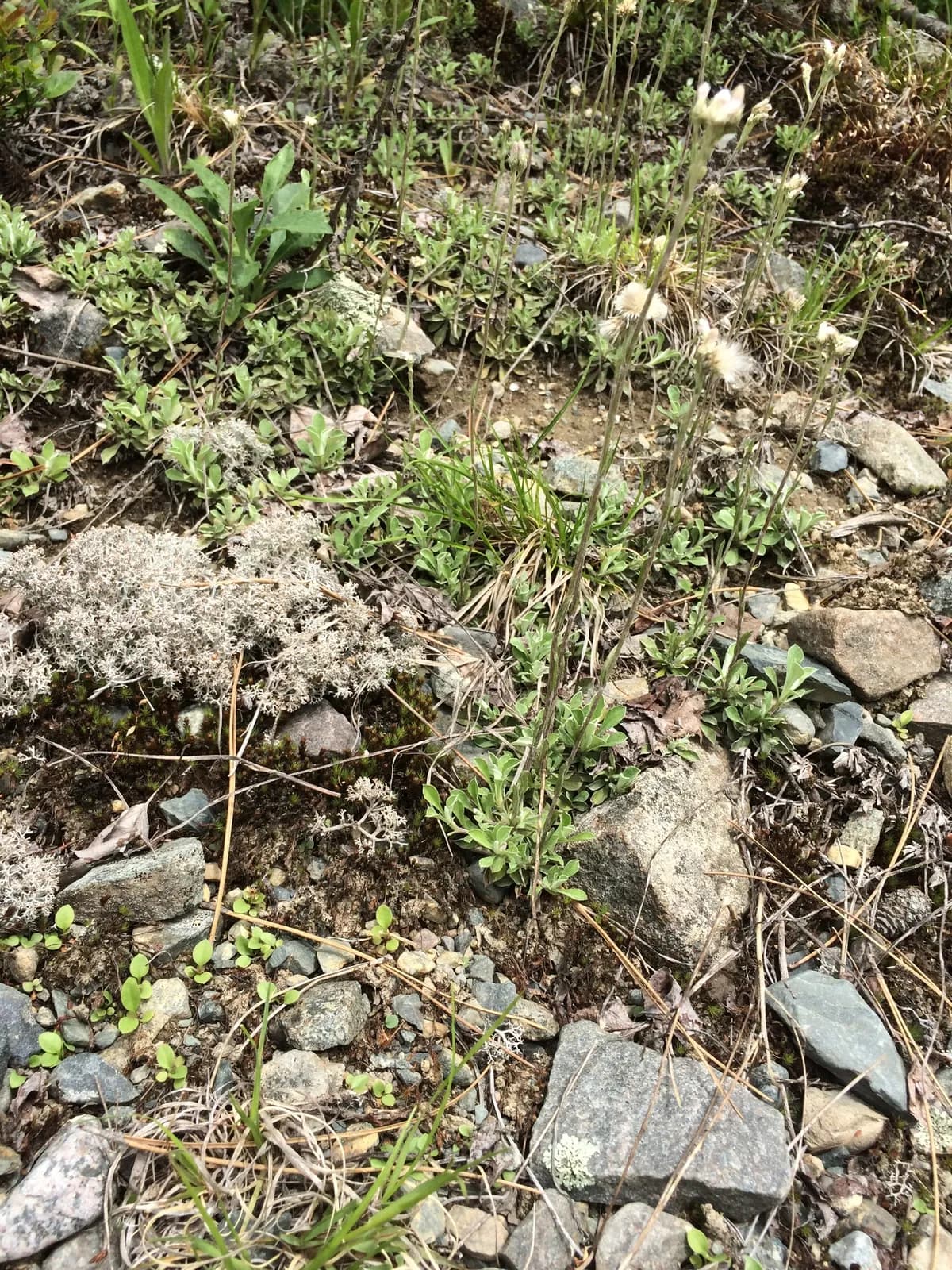
Howell's pussytoes is a low, mat-forming forb with gray-green foliage and small white flower heads that bloom from May through July. It favors dry, sunny to lightly shaded ground such as open woods, rocky slopes, and sandy fields.
Toxicity unknown
Howell's Pussytoes (Antennaria howellii) is not listed by the ASPCA Animal Poison Control Center (opens in new tab) or the other sources we check, so we have no verdict for it either way. Absence from those lists is not a clearance. If your pet shows symptoms after eating any plant, call the ASPCA at (888) 426-4435.
Light
full sun
Water
low
Size
4"–12" H × 4"–12" W
Bloom
May, Jun, Jul
Native to
CA, CO, CT, DE and 31 more states
Pollinators
bees, beetles
Before you buy
Your city may pay you to plant this
Cities and water utilities offer rebates for replacing lawn with native and water-wise plants. We track 459 programs across 44 states, each with a link to the provider and the date we last checked it.
Find rebates in your areaPicture natives in your own yard
Upload a photo of your yard and Patch Vision shows a rendering of it planted with natives for your region, like Howell's Pussytoes.


Browse plants for this ecoregion
Howell's pussytoes is a low-growing evergreen perennial that forms compact mats of silvery-gray foliage. It produces small, fuzzy white flower clusters from May through July and thrives in sunny, dry conditions. This drought-tolerant groundcover works well in rock gardens and areas with poor soil.
Growing Howell's Pussytoes
Grow Howell's Pussytoes in full sun and low water. Mature plants reach 4 to 12 inches tall and spread 4 to 12 inches wide. Expect low maintenance to keep it looking intentional in a front yard.
How to care for Howell's Pussytoes, by region
How to care for Howell's Pussytoes where it is actually grown: year-round basics plus what to do each season, region by region, with the sources for each.
Care guidance last updated: August 2026
Northern Allegheny Plateau (includes Binghamton, NY)
Year-round
Howell's pussytoes is native to New York, including the Southern Tier around Binghamton, and grows as a low silvery-gray evergreen mat only a few inches tall. It likes full sun and dry, thin soil, and once it settles in it spreads slowly on its own through underground runners. This plant needs almost no upkeep, no regular watering and no fertilizer, which makes it a good pick for a front bed that doesn't get much attention.
- Plant in full sun with well-drained, even poor or sandy soil, it does not want rich garden soil
- Water it during its first season while it establishes, after that skip supplemental watering except in an extended drought
- Do not fertilize, lean soil is what keeps this plant compact and tidy
- Give it room to spread, it fills in slowly through underground runners rather than by seed alone
- Blooms May through July with small fuzzy white to pink flower clusters on short stalks
Its low, even silvery mat reads as an intentional groundcover rather than a bare or weedy patch, which helps at the front of a bed where an HOA-conscious homeowner wants a tidy first impression.
Fall
Fall care for Howell's pussytoes is mostly about doing nothing. The mat holds its silvery color into cooler weather since the foliage is evergreen, and it does not need cutting back before winter. A light cleanup of fallen leaves helps keep the low mat from getting smothered.
- Rake or blow fallen leaves off the mat so the evergreen foliage is not buried
- No need to cut the plant back, the silvery leaves stay through winter
- Skip fall fertilizing, this plant does better left lean
- Good season to divide and move pieces of an established patch into bare soil nearby if you want faster fill-in
Clearing fall leaf litter off the mat keeps the silvery groundcover visible instead of looking like a neglected leaf pile at the front of the bed.
Winter
Howell's pussytoes is hardy through cold Southern Tier winters and needs no protection. The evergreen leaves may flatten or look silvery-brown under snow, but the plant is simply dormant, not dead, and it greens back up on its own in spring.
- Leave the plant alone all winter, no covering, mulching, or cutting back needed
- Expect the leaves to look flattened or dull brown under snow cover, this is normal dormancy, not dieback
- Avoid repeatedly walking on or piling snow onto the mat, it can compact the shallow roots
- Do not judge plant health in late winter, wait for new green growth in spring before deciding anything looks dead
The flattened, dull look under snow is normal dormancy, not a sign of a neglected bed, useful context for an HOA-conscious homeowner during a winter walkthrough.
Spring
Spring is when Howell's pussytoes wakes up from winter. The silvery leaves usually look a little rough after snow and ice, and new growth fills in fast once the weather warms. Flower stalks start pushing up in May, so this is the best window to tidy the patch before it blooms.
- Clear away leaves or debris sitting on top of the mat once the ground thaws
- Trim off winter-browned or matted foliage in early spring, new silvery growth fills in behind it
- No fertilizer needed, established plants do best left alone in lean soil
- If you want to fill a bare spot, this is a good time to move a small piece of the mat with its runners attached
- Watch for the first fuzzy flower stalks starting in May
A quick spring tidy-up before bloom keeps the patch looking cared for rather than overgrown, useful if the bed sits close to a sidewalk or property line.
Summer
Once summer heat sets in, Howell's pussytoes is one of the lowest-maintenance plants in a native bed. It is built for dry, sunny spots, so it usually needs no watering during a normal summer, only in an unusually long dry stretch. Spent flower stalks turn into small fluffy seed heads that add texture and let the plant spread a bit further.
- Skip watering unless the area goes several weeks with no rain
- Leave spent flower stalks standing, the fluffy seed heads are part of the look and let the plant self-sow lightly
- If it is being used as a small lawn substitute, wait until after flowering and seed drop before any mowing or trimming
- Check that nearby taller plants are not shading it out, this species wants full sun to stay dense
Timing any summer mowing to after bloom keeps a lawn-substitute patch from looking patchy mid-season, which matters most in a visible front strip.
Sources: New York Flora Atlas, Antennaria howellii ssp. canadensis (Native, SNR in New York), USDA PLANTS Database, Antennaria howellii (ANHO) profile, Go Botany (Native Plant Trust), Antennaria howellii species page, Toadshade Wildflower Farm, Antennaria howellii growing guide
Western Allegheny Plateau (includes Pittsburgh, PA)
Year-round
Howell's pussytoes is a low, silvery groundcover that is native to Pennsylvania and does fine in Pittsburgh's clay soils as long as drainage is decent. It spreads slowly into a mat and asks for very little once it is settled in.
- Give it full sun to light shade and let the soil dry out between waterings. It does not want to sit wet.
- Work grit into heavy clay or plant it on a slight slope or raised spot so water does not pool around the crown.
- It spreads on its own through underground runners, so give it room to fill in rather than crowding it with other groundcovers.
- The foliage stays low and silvery gray most of the year, with small white flower clusters on short stalks in spring.
- Antennaria, the pussytoes genus this plant belongs to, is a caterpillar host plant for the American Lady butterfly, so a patch left alone can support them.
This is a low, tidy groundcover that stays under a few inches tall and never needs mowing, which reads as neat and intentional in a front-yard bed.
Fall
Fall is a second good window for dividing and planting, and the foliage stays evergreen through the season.
- Divide and transplant clumps now if you want to fill in bare spots before winter.
- Rake fallen tree leaves off the mat so the evergreen foliage is not smothered underneath.
- Skip the fertilizer. This plant does best in low-fertility soil, and rich beds work against it.
Clearing fallen leaves off the mat in fall keeps the groundcover visible and tidy instead of looking neglected.
Winter
This groundcover is cold-hardy and stays evergreen under snow through a typical Pittsburgh winter.
- Leave the foliage in place. It holds its silvery leaves through winter and does not need cutting back.
- If you do any cleanup, save it for late winter before new growth starts, and remove only dead or damaged leaves.
- Keep de-icing salt off the bed if it sits near a walkway or driveway. Salt is harder to flush out of clay soil.
An evergreen mat that holds its shape under snow reads as maintained all winter, with nothing to rake or cut back.
Spring
Spring is bloom season for this plant and the best window to plant or divide clumps.
- Small white puffy flower clusters open on short stalks from April into June.
- Plant new starts or divide existing clumps now while the soil is workable.
- After snowmelt, check that water is not pooling in clay soil around the crown. Move a plant to a better-drained spot if it stays soggy for more than a day or two.
Spring bloom is subtle, small white tufts close to the ground, so the bed keeps its neat, low look even while flowering.
Summer
Summer is the low-maintenance stretch. The plant handles dry spells well and mostly needs to be left alone.
- Water only during extended dry stretches. Once established it tolerates drought better than most groundcovers.
- Snip off the spent flower stalks after bloom if you want a tidier, more uniform mat.
- Watch for standing water after heavy summer storms, especially in low spots in a clay bed.
Trimming spent flower stalks after bloom keeps the mat looking clipped and deliberate through the summer.
Sources: Lady Bird Johnson Wildflower Center - Antennaria howellii (native range, growing conditions, bloom time), Toadshade Wildflower Farm - Antennaria howellii growing guide, Butterflies and Moths of North America - Vanessa virginiensis (American Lady) larval host plants
In an HOA neighborhood
Howell's Pussytoes is an HOA-friendly choice. Maintenance level: low. Tidiness: 3 out of 5.
Works well in: front yard, foundation, street edge, mid zone.
Wildlife value
The flowers attract various bees and beetles during the late spring and summer blooming period. As a native groundcover, it provides habitat for small beneficial insects.
Common questions
- When does Howell's pussytoes bloom?
- It typically blooms from May through July, sending up short flowering stalks with clusters of small whitish to grayish flower heads above a low mat of basal leaves.
- What pollinators visit Howell's pussytoes?
- Bees and beetles are the most common visitors, feeding on pollen and nectar from the small flower heads produced during the spring and early summer bloom period.
- How much water does Howell's pussytoes need?
- It does best with low to moderate moisture in well-drained soil and does not tolerate soggy or constantly wet ground.
- What light conditions does Howell's pussytoes prefer?
- Full sun is ideal, though the plant also tolerates part sun and light shade, which makes it a good fit for open meadows, rock gardens, and lightly wooded edges.
- What kind of habitat suits Howell's pussytoes?
- It grows well in dry, open sites with well-drained soil, including rocky slopes, sandy fields, and thin woodland edges, in regions with cold winters and warm summers.
- Is Howell's Pussytoes HOA-friendly?
- Howell's Pussytoes is generally an HOA-friendly choice in the right placement, with low maintenance.
These answers were drafted with an AI model from this plant's data. Verify care details with a local expert.
Native range data from the World Checklist of Vascular Plants (Kew). Pollinator and host plant associations compiled from GBIF, iNaturalist, and published ecological literature.
If something looks wrong
Common plant problems, and what to check first
These come up on almost any plant. Each guide lists the likely causes in the order they are worth ruling out, with one thing to check before you act on any of them, and links to the source it came from.
- It is dying right after planting
- Leaves turning yellow
- Wilting even though I watered it
- Brown crispy leaf tips
- Bugs on the plant
Ready to grow Howell's Pussytoes? Add it to your garden in Pollinator Patch to track it and get season-by-season care guidance.