Judastree
Cercis canadensis
Last reviewed: August 2026
Cercis canadensis, or eastern redbud, opens clusters of pink to purple flowers in April and May before its heart shaped leaves unfold. This small deciduous tree grows well in part sun with medium moisture and draws bees and butterflies.
Toxicity unknown
Judastree (Cercis canadensis) is not listed by the ASPCA Animal Poison Control Center (opens in new tab) or the other sources we check, so we have no verdict for it either way. Absence from those lists is not a clearance. If your pet shows symptoms after eating any plant, call the ASPCA at (888) 426-4435.
The USDA PLANTS Database (opens in new tab) does not flag Judastree as toxic to livestock.
Light
part sun
Water
medium
Size
240"–360" H × 240"–360" W
Bloom
Apr, May
Native to
AL, AR, CT, DE and 26 more states
Pollinators
bees, butterflies
Before you buy
Your city may pay you to plant this
Cities and water utilities offer rebates for replacing lawn with native and water-wise plants. We track 452 programs across 44 states, each with a link to the provider and the date we last checked it.
Find rebates in your areaBrowse plants for this ecoregion
Eastern Redbud is a small ornamental tree known for its stunning spring display of pink-purple flowers that bloom directly on the branches before leaves emerge. This attractive native tree develops a broad, rounded crown and heart-shaped leaves that turn yellow in fall.
Growing Judastree
Grow Judastree in part sun and medium water. Mature plants reach 240 to 360 inches tall and spread 240 to 360 inches wide. Expect moderate maintenance to keep it looking intentional in a front yard.
How to care for Judastree, by region
How to care for Judastree where it is actually grown: year-round basics plus what to do each season, region by region, with the sources for each.
Care guidance last updated: July 2026
Cross Timbers (includes Fort Worth, TX)
Year-round
Eastern Redbud is a small native tree with a rounded, spreading shape that puts on a burst of pink-purple flowers along its bare branches every spring before the leaves come out. It grows well in the part-sun conditions common along North Texas front yards and, once established, tolerates the heat and dry spells of the region.
- Give it a spot with morning sun and afternoon shade, or dappled light most of the day, rather than full baking sun.
- Expect a mature size of about 20 to 30 feet tall and nearly as wide, so plant at least 15 feet from the house, walkway, or driveway.
- Water deeply once a week during the first two growing seasons to help the root system establish.
- Avoid heavy pruning; redbuds branch naturally into a graceful vase shape and heavy shearing removes next year's flower buds.
- In heavy black clay, plant it high on a slight mound or amend the planting hole for drainage; in the sandier soils west of the metro it will need water more often through its first summer.
Fall
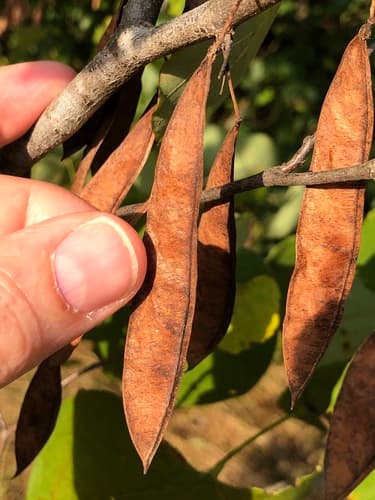
Fall brings a modest yellow leaf color and is the best season of the year to plant a new Eastern Redbud in North Texas, since cooling temperatures let roots establish without summer heat stress. Seed pods that formed after spring flowering also mature and dry on the branches through fall.
- Plant new redbud trees in October or November while the soil is still warm and air temperatures have cooled.
- Water a newly planted fall redbud twice a week for the first month, then taper to once a week through winter if rain is scarce.
- Leave the flat brown seed pods on the tree; they are a normal part of the plant's cycle and drop naturally over winter.
- Rake fallen leaves away from the trunk base to reduce fungal issues, but leaving leaf litter further out in the bed is fine and often good for soil life.
- Do this fall's planting on the west side of a bed if you want summer afternoon shade for other plants in future years, since redbud is one of the better small shade trees for tucking near a patio.
A newly planted tree with a stake and mulch ring reads as an intentional landscaping investment, especially when placed with visible spacing from the foundation and walkway.
Winter
Eastern Redbud is fully dormant in winter, dropping its leaves and standing bare until the spring flower buds swell in late February or March. North Texas winters are mild enough that established redbuds need little care, aside from protection during the occasional hard Arctic freeze.
- This is the correct season for any structural pruning: remove crossing, damaged, or crowded branches in January or February while the tree is leafless and easy to see.
- Do not fertilize in winter; wait until the tree is actively growing again in spring.
- During a hard Arctic freeze warning, water the root zone a day ahead if the soil is dry, since well-hydrated roots handle sudden cold better.
- Mulch stays useful in winter too; keep 2 to 3 inches over the root zone to buffer soil temperature swings during freeze-thaw cycles.
- A young tree's thin bark can be prone to winter sunscald on the trunk's south or west side; wrapping the trunk loosely with tree wrap for the first winter or two is a common precaution.
Spring
Spring is showtime for Eastern Redbud: clusters of small pink-purple flowers cover the bare branches in March and April before the heart-shaped leaves fill in. This is also the best time of year to plant one so its roots have a full growing season to settle in before summer heat.
- Watch for the pink-purple bloom to open in March and run into April, ahead of the leaves.
- If you are planting a new redbud, get it in the ground in March or early April while temperatures are mild.
- Water a new planting twice a week through spring if rain is light, soaking the root zone rather than a quick sprinkle.
- Skip fertilizer in spring; established redbuds in North Texas soils rarely need it and pushing fast growth can weaken the trunk.
- Leave fallen flower petals where they land for a few days rather than raking daily; they break down quickly and feed the soil.
The flower display reads as an intentional ornamental feature, not overgrowth, and is one of the most recognizable spring native-tree blooms in North Texas.
Summer
Once established, Eastern Redbud handles North Texas summer heat well, but a tree planted within the last year or two still needs regular deep watering through the July and August stretch of 100 degree afternoons and weeks without rain.
- Water a young redbud (planted within the last two years) deeply once a week during July and August; established trees over three years old usually need only occasional deep watering in drought.
- Add 2 to 3 inches of mulch out to the drip line, kept a few inches back from the trunk, to hold soil moisture and keep roots cooler.
- Do not prune in summer; wait for dormant season so you are not cutting into next spring's flower buds.
- Some leaf yellowing or a few dropped leaves during the hottest weeks is normal heat stress and not a sign the tree is dying.
- Check young trees for a leaning trunk after summer thunderstorms and re-stake loosely if needed, removing stakes once the tree stands firm on its own.
Sources: Cercis canadensis - Lady Bird Johnson Wildflower Center, Cercis canadensis - Missouri Botanical Garden Plant Finder, Redbud, Eastern - Texas A&M AgriLife Extension Aggie Horticulture
Texas Blackland Prairies (includes Dallas, TX)
Year-round
Eastern Redbud is a small native tree with a rounded, spreading shape that puts on a burst of pink-purple flowers along its bare branches every spring before the leaves come out. It grows well in the part-sun conditions common along North Texas front yards and, once established, tolerates the heat and dry spells of the region.
- Give it a spot with morning sun and afternoon shade, or dappled light most of the day, rather than full baking sun.
- Expect a mature size of about 20 to 30 feet tall and nearly as wide, so plant at least 15 feet from the house, walkway, or driveway.
- Water deeply once a week during the first two growing seasons to help the root system establish.
- Avoid heavy pruning; redbuds branch naturally into a graceful vase shape and heavy shearing removes next year's flower buds.
- In heavy black clay, plant it high on a slight mound or amend the planting hole for drainage; in the sandier soils west of the metro it will need water more often through its first summer.
Fall
Fall brings a modest yellow leaf color and is the best season of the year to plant a new Eastern Redbud in North Texas, since cooling temperatures let roots establish without summer heat stress. Seed pods that formed after spring flowering also mature and dry on the branches through fall.
- Plant new redbud trees in October or November while the soil is still warm and air temperatures have cooled.
- Water a newly planted fall redbud twice a week for the first month, then taper to once a week through winter if rain is scarce.
- Leave the flat brown seed pods on the tree; they are a normal part of the plant's cycle and drop naturally over winter.
- Rake fallen leaves away from the trunk base to reduce fungal issues, but leaving leaf litter further out in the bed is fine and often good for soil life.
- Do this fall's planting on the west side of a bed if you want summer afternoon shade for other plants in future years, since redbud is one of the better small shade trees for tucking near a patio.
A newly planted tree with a stake and mulch ring reads as an intentional landscaping investment, especially when placed with visible spacing from the foundation and walkway.
Winter
Eastern Redbud is fully dormant in winter, dropping its leaves and standing bare until the spring flower buds swell in late February or March. North Texas winters are mild enough that established redbuds need little care, aside from protection during the occasional hard Arctic freeze.
- This is the correct season for any structural pruning: remove crossing, damaged, or crowded branches in January or February while the tree is leafless and easy to see.
- Do not fertilize in winter; wait until the tree is actively growing again in spring.
- During a hard Arctic freeze warning, water the root zone a day ahead if the soil is dry, since well-hydrated roots handle sudden cold better.
- Mulch stays useful in winter too; keep 2 to 3 inches over the root zone to buffer soil temperature swings during freeze-thaw cycles.
- A young tree's thin bark can be prone to winter sunscald on the trunk's south or west side; wrapping the trunk loosely with tree wrap for the first winter or two is a common precaution.
Spring
Spring is showtime for Eastern Redbud: clusters of small pink-purple flowers cover the bare branches in March and April before the heart-shaped leaves fill in. This is also the best time of year to plant one so its roots have a full growing season to settle in before summer heat.
- Watch for the pink-purple bloom to open in March and run into April, ahead of the leaves.
- If you are planting a new redbud, get it in the ground in March or early April while temperatures are mild.
- Water a new planting twice a week through spring if rain is light, soaking the root zone rather than a quick sprinkle.
- Skip fertilizer in spring; established redbuds in North Texas soils rarely need it and pushing fast growth can weaken the trunk.
- Leave fallen flower petals where they land for a few days rather than raking daily; they break down quickly and feed the soil.
The flower display reads as an intentional ornamental feature, not overgrowth, and is one of the most recognizable spring native-tree blooms in North Texas.
Summer
Once established, Eastern Redbud handles North Texas summer heat well, but a tree planted within the last year or two still needs regular deep watering through the July and August stretch of 100 degree afternoons and weeks without rain.
- Water a young redbud (planted within the last two years) deeply once a week during July and August; established trees over three years old usually need only occasional deep watering in drought.
- Add 2 to 3 inches of mulch out to the drip line, kept a few inches back from the trunk, to hold soil moisture and keep roots cooler.
- Do not prune in summer; wait for dormant season so you are not cutting into next spring's flower buds.
- Some leaf yellowing or a few dropped leaves during the hottest weeks is normal heat stress and not a sign the tree is dying.
- Check young trees for a leaning trunk after summer thunderstorms and re-stake loosely if needed, removing stakes once the tree stands firm on its own.
Sources: Cercis canadensis - Lady Bird Johnson Wildflower Center, Cercis canadensis - Missouri Botanical Garden Plant Finder, Redbud, Eastern - Texas A&M AgriLife Extension Aggie Horticulture
Want these tasks as reminders timed to your yard? Pollinator Patch turns this guidance into a season-by-season care plan for the plants you actually grow.
In an HOA neighborhood
Judastree takes more care to keep looking intentional in a front yard. Maintenance level: moderate. Consider it for backyard or mid-zone beds rather than the street edge.
Works well in: backyard only.
- May suffer significant dieback or death in harsh winter conditions
- Requires careful winter protection in colder regions
Wildlife value
Host plant for Henry's elfin, reakirt's blue.
The early spring blooms provide crucial nectar for bees and butterflies when few other flowers are available. Seeds are eaten by birds, and the foliage supports various native caterpillars.
Common questions
- When does eastern redbud bloom?
- Eastern redbud typically flowers in April and May, with clusters of pink to purplish blooms appearing on bare branches before the leaves emerge.
- What pollinators visit eastern redbud flowers?
- Bees and butterflies are the main visitors to eastern redbud flowers, feeding on nectar during the spring bloom period.
- How much light does eastern redbud need?
- It grows best in part sun but tolerates conditions ranging from full sun to part shade, especially as an understory tree in wooded settings.
- How much water does eastern redbud need?
- It does well with medium moisture and can handle occasional dry spells once established, though it does not tolerate prolonged drought or standing water.
- What does eastern redbud look like as it matures?
- It grows into a small deciduous tree with a rounded, spreading canopy and heart shaped leaves that follow the spring flowers.
- Is Judastree toxic to livestock?
- The USDA PLANTS Database does not flag Judastree as toxic to livestock.
- Is Judastree HOA-friendly?
- Judastree takes more care to look intentional in a front yard. Consider it for backyard or mid-zone beds rather than the street edge.
These answers were drafted with an AI model from this plant's data. Verify care details with a local expert.
Native range data from vouchered herbarium specimen records and regional native plant society lists. Pollinator and host plant associations compiled from GBIF, iNaturalist, and published ecological literature.
If something looks wrong
Common plant problems, and what to check first
These come up on almost any plant. Each guide lists the likely causes in the order they are worth ruling out, with one thing to check before you act on any of them, and links to the source it came from.
- It is dying right after planting
- Leaves turning yellow
- Wilting even though I watered it
- Brown crispy leaf tips
- Bugs on the plant
Ready to grow Judastree? Add it to your garden in Pollinator Patch to track it and get season-by-season care guidance.
Planning a bed around it? Start a free plan with this plant
Not sure where to start? Take the 2-minute yard quiz