Red Maple
Acer rubrum
Last reviewed: October 2026
Acer rubrum, or red maple, is a deciduous tree that blooms from March through May and tolerates both wet lowland soils and drier upland sites. It grows well in part shade with medium moisture across much of the eastern and midwestern United States.
Toxicity unknown
Red Maple (Acer rubrum) is not listed by the ASPCA Animal Poison Control Center (opens in new tab) or the other sources we check, so we have no verdict for it either way. Absence from those lists is not a clearance. If your pet shows symptoms after eating any plant, call the ASPCA at (888) 426-4435.
Red Maple is listed as toxic to grazing livestock such as cattle, sheep, and goats at a slight level by the USDA PLANTS Database (opens in new tab). This is a livestock indicator and is separate from pet toxicity.
Light
part shade
Water
medium
Size
360"–1200" H × 240"–600" W
Bloom
Mar, Apr, May
Native to
AL, AR, CT, DE and 32 more states
Pollinators
bees, butterflies, beetles
Before you buy
Your city may pay you to plant this
Cities and water utilities offer rebates for replacing lawn with native and water-wise plants. We track 459 programs across 44 states, each with a link to the provider and the date we last checked it.
Find rebates in your areaPicture natives in your own yard
Upload a photo of your yard and Patch Vision shows a rendering of it planted with natives for your region, like Red Maple.


Browse plants for this ecoregion
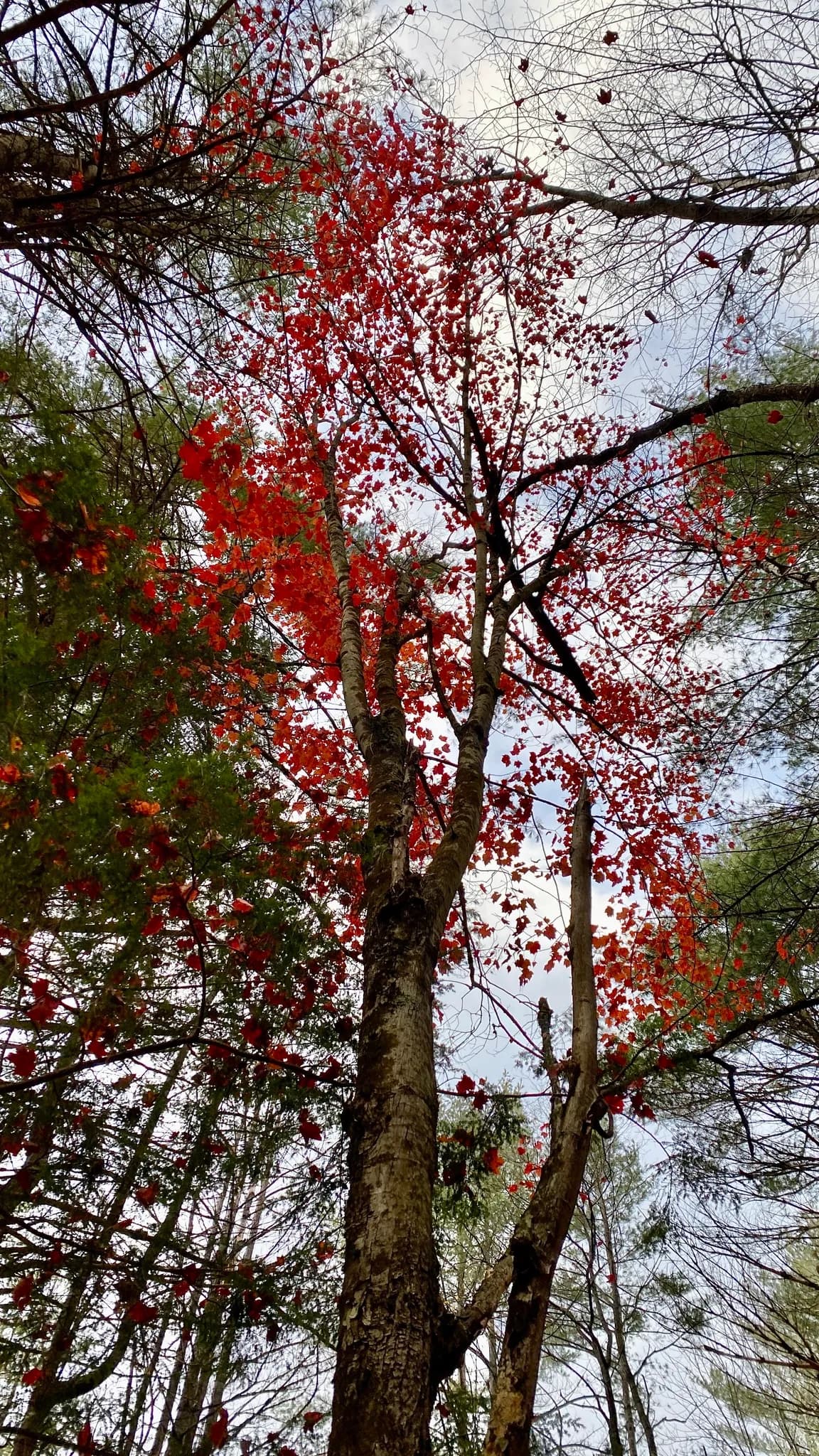
Red maple is a fast-growing native tree that provides excellent fall color with brilliant red, orange, and yellow leaves. It adapts well to various soil conditions and produces small red flowers in early spring before the leaves emerge.
Growing Red Maple
Grow Red Maple in part shade and medium water. Mature plants reach 360 to 1200 inches tall and spread 240 to 600 inches wide. Expect low maintenance to keep it looking intentional in a front yard.
How to care for Red Maple, by region
How to care for Red Maple where it is actually grown: year-round basics plus what to do each season, region by region, with the sources for each.
Care guidance last updated: September 2026
Ridge and Valley (includes Harrisburg, PA)
Year-round
Red maple is a fast growing native shade tree that adapts well to Harrisburg yards, tolerating both wet spots and drier upland soil once it is established.
- Red maple does best in full sun to part shade with moist, slightly acidic soil, though it also tolerates clay and short dry spells once established, according to the Lady Bird Johnson Wildflower Center and NC State Extension.
- Plan for a mature height of about 40 to 60 feet, so give it room away from the house, driveway, and power lines wherever it is planted.
- Water deeply and regularly for the first two to three years after planting. Even a mature red maple can use a deep soak during Harrisburg's dry summer stretches, per Penn State Extension.
- Keep a 2 to 4 inch ring of mulch around the base, pulled back a few inches from the trunk, to hold soil moisture and protect the bark from mower and trimmer damage.
- Red maple is native to Pennsylvania and grows across a wide range of habitats in the state, from wet lowlands to well drained upland ground, according to Penn State Extension and the Lady Bird Johnson Wildflower Center.
- The ASPCA lists red maple as non-toxic to dogs and cats. Its leaves are toxic to horses, especially once wilted, so keep clippings and fallen leaves away from any horses on the property.
Fall
Fall is red maple's showcase season in Harrisburg, with some of the earliest color of any tree in the yard, plus the start of the best pruning window.
- Red maple is typically one of the first trees in the Harrisburg area to color up, often showing red, orange, and yellow in the same canopy before many other trees turn, per Penn State Extension.
- Rake and clear fallen leaves and the winged seed pods (samaras) from walkways, beds, and the lawn as they drop.
- Once the tree is fully dormant after leaf drop, this opens the season's best pruning window, which runs through winter, per Penn State Extension.
- If fall has been dry, give the tree a deep watering before the ground freezes so roots head into winter well hydrated.
Clearing fallen leaves and samaras soon after they drop reads as intentional, tidy upkeep and helps avoid a violation letter in an HOA-conscious neighborhood.
Winter
Winter is the main pruning season for red maple in Harrisburg, though cuts made late in the season can cause a harmless fluid drip from the wound.
- Winter, roughly November through March once leaves are fully down, is the main pruning window for red maple in Harrisburg, per Penn State Extension.
- Cuts made in late winter, when freezing and thawing swing back and forth, can cause the tree to weep from the wound as it thaws. Iowa State University Extension confirms this does not harm the tree and it will stop on its own.
- To skip the messy dripping, aim for early or mid winter pruning rather than waiting for late winter's freeze thaw swings.
- Check young trees for winter sun scald or frost cracking on the trunk's south or southwest side. A trunk wrap can help protect the bark through the tree's first few winters.
A clean structure from dormant season pruning gives the tree a tidy winter silhouette, which reads as intentional care in an HOA-conscious neighborhood.
Spring
Spring is bloom and leaf-out time for red maple in Harrisburg, so the main jobs are watching young trees get established and holding off on pruning.
- In the Harrisburg area, red maple's small red flowers typically open from February into April, well before the leaves emerge, according to Penn State Extension.
- Water newly planted or young trees deeply and regularly as they leaf out this spring, then ease off once the soil stays consistently moist on its own.
- Refresh mulch to a 2 to 4 inch layer after winter settling, keeping it pulled back from the trunk.
- Hold off on pruning once buds break and leaves start expanding. Penn State Extension notes this is a high-energy period for the tree, so it is better to wait.
- New leaves can show early aphid or leafhopper activity. Both are common on red maple and rarely cause lasting damage, per NC State Extension.
Summer
Harrisburg's warm, sometimes dry summers are when an established red maple most benefits from deep watering and a watchful eye for pests.
- Give the tree a slow, deep soak during Harrisburg's dry summer stretches. Penn State Extension notes even mature red maples can need irrigation in a dry Pennsylvania summer.
- Check leaves through summer for aphids, leafhoppers, scale, or caterpillar feeding. These are common on red maple and usually just cosmetic, per NC State Extension.
- Watch for sudden wilting or dieback limited to one section of the canopy. That pattern can point to verticillium wilt, which NC State Extension notes can be fatal, so bring in a certified arborist if you see it.
- Keep mulch topped up through the heat to hold soil moisture, and keep mowers and string trimmers away from the trunk.
Sources: Lady Bird Johnson Wildflower Center - Acer rubrum, Penn State Extension - Native Plants of PA: Red Maple (Acer rubrum), ASPCA - Toxic and Non-Toxic Plants: Red Maple, NC State Extension Gardener Plant Toolbox - Acer rubrum, Penn State Extension - Pruning Landscape Trees, Iowa State University Extension - Sap Flowing from a Pruning Cut on My Maple Tree
Southeastern Wisconsin Till Plains (includes Milwaukee, WI)
Year-round
Red maple is native to Wisconsin and grows well in the Milwaukee area in full sun to part shade with consistently moist soil. It is a fast growing, long lived shade tree valued for early spring flowers and reliable fall color, though it prefers slightly acidic soil over high pH sites.
- Plant in full sun to part shade with moist, well drained soil for the best growth and fall color.
- Give a new tree about one inch of water a week for its first two to three years while roots establish.
- Watch for yellowing leaves with green veins, a sign of chlorosis common in Wisconsin's higher pH soils, and get a soil test if you see it.
- Keep a few inches of mulch around the base instead of turf grass to protect the shallow root system and hold moisture.
- Leaves are not on the ASPCA toxic plant list for dogs and cats, but wilted or dried leaves are toxic to horses and should be kept out of pastures.
- Expect a large tree over time, up to about 80 feet, so plant it with room away from the house, sidewalks and power lines.
Fall
Fall brings red maple's best color in Milwaukee and is a good time to plant a new tree or prepare a young one for winter. If the tree had tar spot this year, raking up fallen leaves now cuts down on next year's infection.
- Rake up and dispose of fallen leaves promptly if the tree showed tar spot, since the fungus overwinters in leaf litter.
- Fall is a good planting window for a new red maple, giving roots time to settle in before summer heat returns.
- Wrap the trunk of a young tree with light colored wrap before hard freezes set in to guard against winter sunscald.
- Keep watering through fall until the ground freezes so the tree does not go into winter dry.
- Clear leaves and seed pods from walkways and the yard for a tidy look.
Raking leaves and seed pods promptly and tidying the mulch ring keeps a front-yard red maple looking cared for through fall cleanup.
Winter
Red maple is native to Wisconsin and reliably cold hardy in the Milwaukee area, so winter risk is mostly sunscald and frost cracking on young, smooth bark rather than cold damage. Trunk wrap and a light touch with pruning are the main winter tasks.
- Keep light colored trunk wrap on young trees through winter and remove it in late spring.
- Avoid pruning in late winter. Maple sap runs early and cuts will bleed heavily, though this does not harm the tree.
- Do not pile snow or de-icing salt against the trunk or root zone.
- Check occasionally for rabbit or rodent gnawing on young bark and add a trunk guard if you see damage.
A tidy trunk wrap and clear mulch ring read as routine winter care rather than neglect.
Spring
Spring is when red maple opens small red flowers in Milwaukee before its leaves emerge, an early nectar and pollen source for native bees. It is also the season to check winter trunk wrap and resume regular watering as the ground thaws.
- Remove any trunk wrap once nighttime freezes are reliably over for the season.
- Check the trunk for sunscald or frost cracks from winter and have a certified arborist look at any deep wounds.
- Resume watering at about one inch a week once the ground has thawed, more during a dry spring.
- Leave the early red flowers alone. They are one of the first nectar and pollen sources for native bees each year.
- Hold off on fertilizer unless a soil test shows a real deficiency.
Pulling off winter trunk wrap and refreshing the mulch ring in spring keeps a front-yard red maple looking cared for as the season turns.
Summer
Summer is the better window to prune a red maple in Milwaukee, since cuts made in late winter weep heavily as the tree's fluids run. Watch leaves for tar spot, a common fungal spot disease on maples that is mostly cosmetic.
- If pruning is needed, do it in mid to late summer instead of late winter or early spring to avoid heavy weeping from fresh cuts.
- Water deeply during hot, dry stretches, aiming for about one inch a week including rainfall.
- Black, tar like spots on leaves are usually tar spot. It does not need fungicide and rarely harms the tree.
- Keep mulch a few inches deep and pulled back from the trunk to protect the shallow root system from heat and drought.
Summer pruning for shape and street clearance keeps the canopy looking maintained without the messy dripping that late winter cuts cause.
Sources: Acer rubrum, Native Plant Database, Chlorosis, Wisconsin Horticulture Division of Extension, Toxic and Non-Toxic Plants: Red Maple, ASPCA, Pruning Deciduous Trees, Wisconsin Horticulture Division of Extension, Tar Spot, Wisconsin Horticulture Division of Extension, Winter Damage Concerns for Trees, Wisconsin Horticulture Division of Extension
In an HOA neighborhood
Red Maple is an HOA-friendly choice. Maintenance level: low. Tidiness: 4 out of 5.
Works well in: front yard, street edge, mid zone.
- Large mature size requires adequate space
- Shallow roots can interfere with nearby plantings
Wildlife value
Host plant for rosy maple moth, cecropia moth, luna moth.
The early spring flowers provide nectar for bees, butterflies, and beetles when few other food sources are available. Seeds feed birds and small mammals, while the tree supports numerous native caterpillars.
Common questions
- When does red maple bloom?
- Red maple flowers appear early in the season, typically from March through May, often before the leaves fully emerge.
- How much sun does red maple need?
- Red maple grows best in part shade but tolerates conditions ranging from full sun to part sun, making it adaptable to many landscape settings.
- Does red maple tolerate wet soil?
- Yes, red maple is well known for growing in swampy or seasonally flooded ground, and it also adapts to average, medium moisture garden soil.
- What pollinators visit red maple flowers?
- Early blooming red maple flowers attract bees, butterflies, and beetles, which are important early season nectar and pollen feeders.
- Is Red Maple toxic to livestock?
- Red Maple is listed as toxic to grazing livestock such as cattle, sheep, and goats (slight severity) by the USDA PLANTS Database. This is separate from pet (dog and cat) toxicity.
- Is Red Maple HOA-friendly?
- Red Maple is generally an HOA-friendly choice in the right placement, with low maintenance.
These answers were drafted with an AI model from this plant's data. Verify care details with a local expert.
Native range data from the World Checklist of Vascular Plants (Kew). Pollinator and host plant associations compiled from GBIF, iNaturalist, and published ecological literature.
If something looks wrong
Common plant problems, and what to check first
These come up on almost any plant. Each guide lists the likely causes in the order they are worth ruling out, with one thing to check before you act on any of them, and links to the source it came from.
- It is dying right after planting
- Leaves turning yellow
- Wilting even though I watered it
- Brown crispy leaf tips
- Bugs on the plant
Ready to grow Red Maple? Add it to your garden in Pollinator Patch to track it and get season-by-season care guidance.