Pickerelweed
Pontederia cordata
Last reviewed: October 2026
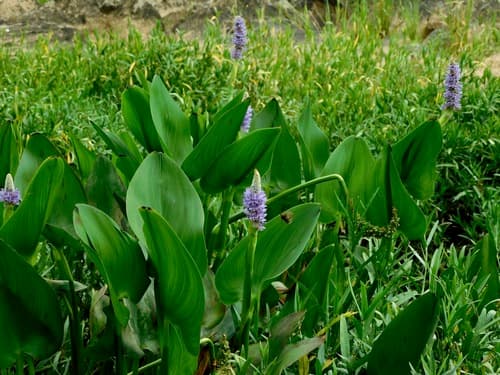
Pickerelweed grows in shallow pond and stream margins across much of the eastern and central US, sending up spikes of blue-violet flowers from June through August.
Toxicity unknown
Pickerelweed (Pontederia cordata) is not listed by the ASPCA Animal Poison Control Center (opens in new tab) or the other sources we check, so we have no verdict for it either way. Absence from those lists is not a clearance. If your pet shows symptoms after eating any plant, call the ASPCA at (888) 426-4435.
The USDA PLANTS Database (opens in new tab) does not flag Pickerelweed as toxic to livestock.
Light
part sun
Water
high
Size
12"–36" H × 12"–36" W
Bloom
Jun, Jul, Aug
Native to
AL, AR, CT, DE and 31 more states
Pollinators
bees, butterflies
Before you buy
Your city may pay you to plant this
Cities and water utilities offer rebates for replacing lawn with native and water-wise plants. We track 459 programs across 44 states, each with a link to the provider and the date we last checked it.
Find rebates in your areaPicture natives in your own yard
Upload a photo of your yard and Patch Vision shows a rendering of it planted with natives for your region, like Pickerelweed.


Browse plants for this ecoregion
Pickerel-weed is an aquatic perennial that produces tall spikes of bright blue flowers from summer through early fall. This wetland plant thrives in shallow water or consistently wet soil and forms attractive clumps with heart-shaped leaves.
Growing Pickerelweed
Grow Pickerelweed in part sun and high water. Mature plants reach 12 to 36 inches tall and spread 12 to 36 inches wide. Expect high maintenance to keep it looking intentional in a front yard.
How to care for Pickerelweed, by region
How to care for Pickerelweed where it is actually grown: year-round basics plus what to do each season, region by region, with the sources for each.
Care guidance last updated: September 2026
Cross Timbers (includes Fort Worth, TX)
Year-round
Pickerelweed (Pontederia cordata) is an easy pond and water garden plant that lives standing in water, not in dry garden soil.
- Set the pot on a shelf or a stack of bricks so about 1 to 6 inches of water covers the soil surface year round, this plant wants wet feet at all times.
- Give it 6 or more hours of direct sun for the best blue flower spikes, though it tolerates some afternoon shade during the hottest Texas summers.
- Plant it in heavy garden soil or aquatic planting media inside a mesh or solid pot, not a light potting mix with perlite that will float out, and that holds whether your yard dirt is Cross Timbers sand or Dallas area Blackland clay, since the plant lives in the water rather than your native soil.
- It spreads by rhizome and forms clumps, so give it its own pot if you share a pond with other water plants and don't want it taking over.
- It grows wild in ponds, marshes and ditches across the eastern half of North America, including parts of East Texas, so it is genuinely at home in a Texas water garden.
Fall
Fall is when pickerelweed starts winding down, and a light cleanup keeps the pond tidy heading into winter.
- Blooming slows and stops as days shorten and nights cool, usually by mid to late fall in North Texas.
- Leave seed heads in place for a while if you want to feed visiting waterfowl and songbirds, or trim them off if you'd rather not get volunteer seedlings around the pond edge.
- Cut back leaves as they yellow or collapse, but leave the rootstock and any remaining green growth alone.
- No need to move the pot before a typical Fort Worth winter, established plants handle the region's normal cold snaps in the water.
Trimming back yellowing foliage in fall keeps a front-yard pond looking maintained rather than neglected as it heads into winter.
Winter
Pickerelweed goes fully dormant in winter, dying back to its underwater rootstock until spring.
- Foliage dies back completely in freezing weather, this is normal dormancy, not a dead plant, the rootstock survives underwater.
- Keep the crown covered by at least an inch or two of water through freezes, the water insulates the rootstock even if the surface ices over.
- Clear out mushy, collapsed foliage from the pot as it dies back, leaving it in the water can foul the pond as it decomposes.
- Skip fertilizer and heavy handling until new growth shows up in spring.
Clearing collapsed, mushy foliage out of the pond in winter keeps a front-yard water feature looking tended rather than neglected.
Spring
Spring is when pickerelweed wakes up from winter dormancy, and it's the best time to divide crowded pots.
- New leaves push up from the rootstock as water and air warm, usually by mid to late March in the Fort Worth area.
- Divide crowded clumps now if you want more plants or need to thin a pot, each piece just needs a bit of rhizome with a growing point.
- Repot into fresh aquatic soil every couple of years in spring, since the plant uses up nutrients in its container over time.
- Watch water levels closely, spring rain and evaporation both swing fast here, so keep the crown covered by at least an inch of water.
Summer
Summer is peak bloom, with spikes of blue purple flowers held above the leaves from June into September.
- Flower spikes keep coming through the hottest months as long as the plant stays in full sun and standing water.
- Snip spent flower spikes at the base if you want a tidier look, this isn't required for rebloom but keeps the pond looking kept up.
- Watch for algae or duckweed building up around the pot in hot weather, thin it out so it doesn't shade the leaves.
- Check water depth over the crown at least weekly, Fort Worth summer heat evaporates pond water fast.
Snipping off spent flower spikes keeps a front-yard pond or water feature looking tended and intentional to anyone passing by, rather than left to go to seed.
Sources: Lady Bird Johnson Wildflower Center, Pontederia cordata (Pickerelweed)
Texas Blackland Prairies (includes Dallas, TX)
Year-round
Pickerelweed (Pontederia cordata) is an easy pond and water garden plant that lives standing in water, not in dry garden soil.
- Set the pot on a shelf or a stack of bricks so about 1 to 6 inches of water covers the soil surface year round, this plant wants wet feet at all times.
- Give it 6 or more hours of direct sun for the best blue flower spikes, though it tolerates some afternoon shade during the hottest Texas summers.
- Plant it in heavy garden soil or aquatic planting media inside a mesh or solid pot, not a light potting mix with perlite that will float out, and that holds whether your yard dirt is Cross Timbers sand or Dallas area Blackland clay, since the plant lives in the water rather than your native soil.
- It spreads by rhizome and forms clumps, so give it its own pot if you share a pond with other water plants and don't want it taking over.
- It grows wild in ponds, marshes and ditches across the eastern half of North America, including parts of East Texas, so it is genuinely at home in a Texas water garden.
Fall
Fall is when pickerelweed starts winding down, and a light cleanup keeps the pond tidy heading into winter.
- Blooming slows and stops as days shorten and nights cool, usually by mid to late fall in North Texas.
- Leave seed heads in place for a while if you want to feed visiting waterfowl and songbirds, or trim them off if you'd rather not get volunteer seedlings around the pond edge.
- Cut back leaves as they yellow or collapse, but leave the rootstock and any remaining green growth alone.
- No need to move the pot before a typical Dallas winter, established plants handle the region's normal cold snaps in the water.
Trimming back yellowing foliage in fall keeps a front-yard pond looking maintained rather than neglected as it heads into winter.
Winter
Pickerelweed goes fully dormant in winter, dying back to its underwater rootstock until spring.
- Foliage dies back completely in freezing weather, this is normal dormancy, not a dead plant, the rootstock survives underwater.
- Keep the crown covered by at least an inch or two of water through freezes, the water insulates the rootstock even if the surface ices over.
- Clear out mushy, collapsed foliage from the pot as it dies back, leaving it in the water can foul the pond as it decomposes.
- Skip fertilizer and heavy handling until new growth shows up in spring.
Clearing collapsed, mushy foliage out of the pond in winter keeps a front-yard water feature looking tended rather than neglected.
Spring
Spring is when pickerelweed wakes up from winter dormancy, and it's the best time to divide crowded pots.
- New leaves push up from the rootstock as water and air warm, usually by mid to late March in the Dallas area.
- Divide crowded clumps now if you want more plants or need to thin a pot, each piece just needs a bit of rhizome with a growing point.
- Repot into fresh aquatic soil every couple of years in spring, since the plant uses up nutrients in its container over time.
- Watch water levels closely, spring rain and evaporation both swing fast here, so keep the crown covered by at least an inch of water.
Summer
Summer is peak bloom, with spikes of blue purple flowers held above the leaves from June into September.
- Flower spikes keep coming through the hottest months as long as the plant stays in full sun and standing water.
- Snip spent flower spikes at the base if you want a tidier look, this isn't required for rebloom but keeps the pond looking kept up.
- Watch for algae or duckweed building up around the pot in hot weather, thin it out so it doesn't shade the leaves.
- Check water depth over the crown at least weekly, Dallas summer heat evaporates pond water fast.
Snipping off spent flower spikes keeps a front-yard pond or water feature looking tended and intentional to anyone passing by, rather than left to go to seed.
Sources: Lady Bird Johnson Wildflower Center, Pontederia cordata (Pickerelweed)
In an HOA neighborhood
Pickerelweed takes more care to keep looking intentional in a front yard. Maintenance level: high. Consider it for backyard or mid-zone beds rather than the street edge.
Works well in: backyard only.
- Requires standing water or bog conditions
- May appear unkempt in typical yard settings
- Limited to specialized wetland gardens
Wildlife value
The blue flower spikes attract bees and butterflies throughout the summer blooming period. Seeds provide food for waterfowl and other wetland wildlife.
Common questions
- When does pickerelweed bloom?
- Pickerelweed produces upright spikes of blue-violet flowers from June through August.
- What pollinators visit pickerelweed flowers?
- Bees and butterflies are the main visitors, foraging on the nectar-rich blue-violet flower spikes.
- What growing conditions does pickerelweed need?
- It grows best in shallow standing water or saturated soil, such as pond edges and slow streams, with part sun to full sun exposure.
- Does pickerelweed die back in winter?
- Yes, it is an herbaceous perennial that dies back to its rootstock in fall and regrows from the water or mud each spring.
- Is Pickerelweed toxic to livestock?
- The USDA PLANTS Database does not flag Pickerelweed as toxic to livestock.
- Is Pickerelweed HOA-friendly?
- Pickerelweed takes more care to look intentional in a front yard. Consider it for backyard or mid-zone beds rather than the street edge.
These answers were drafted with an AI model from this plant's data. Verify care details with a local expert.
Native range data from vouchered herbarium specimen records and regional native plant society lists. Pollinator and host plant associations compiled from GBIF, iNaturalist, and published ecological literature.
If something looks wrong
Common plant problems, and what to check first
These come up on almost any plant. Each guide lists the likely causes in the order they are worth ruling out, with one thing to check before you act on any of them, and links to the source it came from.
- It is dying right after planting
- Leaves turning yellow
- Wilting even though I watered it
- Brown crispy leaf tips
- Bugs on the plant
Ready to grow Pickerelweed? Add it to your garden in Pollinator Patch to track it and get season-by-season care guidance.