Purple Cliffbrake Fern
Pellaea atropurpurea
Last reviewed: October 2026
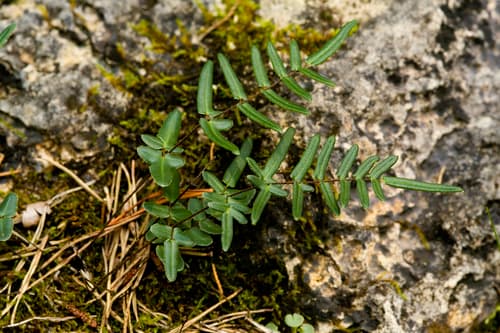
Purple cliffbrake is a small evergreen fern with wiry, dark purple-black stems that tucks into limestone rock crevices and ledges, thriving in part shade with low water once established.
Toxicity unknown
Purple Cliffbrake Fern (Pellaea atropurpurea) is not listed by the ASPCA Animal Poison Control Center (opens in new tab) or the other sources we check, so we have no verdict for it either way. Absence from those lists is not a clearance. If your pet shows symptoms after eating any plant, call the ASPCA at (888) 426-4435.
Light
part shade
Water
low
Size
9"–12" H × 12"–24" W
Bloom
N/A
Native to
AL, AR, AZ, CA and 41 more states
Before you buy
Your city may pay you to plant this
Cities and water utilities offer rebates for replacing lawn with native and water-wise plants. We track 459 programs across 44 states, each with a link to the provider and the date we last checked it.
Find rebates in your areaPicture natives in your own yard
Upload a photo of your yard and Patch Vision shows a rendering of it planted with natives for your region, like Purple Cliffbrake Fern.


Browse plants for this ecoregion
Purple-stem cliffbrake is a compact native fern with blue-green fronds and distinctive purple-black stems. This drought-tolerant fern thrives in rocky, well-draining soils and maintains its attractive foliage year-round.
Growing Purple Cliffbrake Fern
Grow Purple Cliffbrake Fern in part shade and low water. Mature plants reach 9 to 12 inches tall and spread 12 to 24 inches wide. Expect low maintenance to keep it looking intentional in a front yard.
How to care for Purple Cliffbrake Fern, by region
How to care for Purple Cliffbrake Fern where it is actually grown: year-round basics plus what to do each season, region by region, with the sources for each.
Care guidance last updated: October 2026
Central Corn Belt Plains (includes Chicago, IL)
Year-round
Purple cliffbrake is an evergreen fern that grows in fissures of dry limestone bluffs. In Illinois it occurs naturally only in the southern half of the state, well south of the Chicago area, so a Chicago planting is a garden or rock garden fern rather than a native planting here. Its documented range reaches north into Minnesota, Wisconsin, and Michigan, so it is winter hardy through Chicago's cold winters.
- Give it full to nearly full sun and a gritty, sharply drained soil. It grows naturally in bare limestone cracks, so the heavy clay common around Chicago needs extra grit or crushed rock mixed in before planting.
- Work crushed limestone or dolomitic lime chips into the soil. This fern needs an alkaline, calcium rich substrate, which sets it apart from most of the ferns native to wooded parts of Illinois.
- Let the top few inches of soil dry out between waterings once it is established. It handles drought well and is more likely to rot from sitting in wet soil than to suffer from underwatering.
- Because its natural Illinois range is limestone bluffs well south of the Chicago area, plan on managing its drainage and lime needs by hand rather than counting on the surrounding yard to provide them.
Fall
Fall in the Chicago area brings cooler, wetter weather, which suits this fern better than summer's heat. It stays evergreen, so there is little seasonal dieback to manage, but fall is a reasonable second window to plant or divide it before winter.
- Fall is a second good planting window, after spring. Cooler air and steadier rain help new plants establish roots before winter.
- Watch drainage as fall rains pick up. This is the same rot risk as summer storms, just from a different source.
- Do not cut back the fronds for winter. This fern keeps its foliage year round and does not need a fall cutback like many perennials.
- If you added mulch for a summer planting, pull it back slightly from the crown so the base is not sitting in damp material heading into winter.
Winter
Purple cliffbrake stays evergreen through the Chicago winter, and its documented range reaches into Minnesota, Wisconsin, and Michigan, so the cold itself is not a concern here. The bigger risk is wet soil that freezes and thaws repeatedly around the crown.
- No winter protection is needed for cold alone. Its native range extends well north of Chicago into colder parts of the upper Midwest.
- Make sure the planting site sheds meltwater. Repeated freeze and thaw cycles in soggy soil are harder on this fern than a hard freeze in well drained ground.
- Leave the evergreen fronds as they are. They will look slightly duller than in summer but should stay green through the season.
- Hold off on any pruning until spring, when you can see clearly which fronds were actually damaged by winter weather.
Because it stays green through winter in a tidy, low clump, it reads as an intentional planting in a front rock garden or bed edge at a time of year when most neighboring plants are bare.
Spring
Spring is a good window to plant or divide purple cliffbrake in the Chicago area, while temperatures are still cool and rainfall is more reliable than in midsummer. Established plants stay evergreen through winter, so spring is mostly about cleanup and new plantings rather than watching for regrowth.
- Plant new ferns in spring once the ground has thawed and is workable, so roots can settle in before summer heat arrives.
- Water regularly while roots are getting established, even though this fern is drought tolerant once mature.
- Trim off any fronds that browned or shattered over winter to tidy the clump and make room for new growth.
- Avoid working compost or rich topsoil into the planting area. Extra fertility works against a fern that is adapted to bare rock.
Summer
Chicago summers bring more heat and humidity than the dry limestone bluffs this fern is adapted to. Good drainage matters most in this season, since heavy summer rain on top of Chicago's clay soil is the biggest risk to the plant.
- Keep it in full sun if possible. It tolerates part shade but the color and form stay best with strong light.
- Do not add supplemental water beyond what rain provides unless there is a real drought. Overwatering in summer heat is the most common way this fern fails.
- Check that the planting spot drains well after heavy summer storms. Standing water for more than a few hours around the crown can cause rot.
- Leave the evergreen fronds in place through summer. This fern does not go dormant or dieback the way many prairie wildflowers do.
Sources: Lady Bird Johnson Wildflower Center, Pellaea atropurpurea plant profile (state distribution list, drought tolerance, soil needs), Mother Earth Gardener, Fern Habitats in Illinois (purple cliffbrake restricted to limestone outcrops in the southern half of Illinois) (community tip)
Southwestern Appalachians (includes Chattanooga, TN)
Year-round
Purple cliffbrake is a small fern that likes dry, rocky, limy ground in sun or part shade.
- Plant it in sun or part shade.
- It prefers dry, alkaline soil, like crevices in limestone.
- Once settled it tolerates drought and needs little care.
- Use it in a rock garden or between stones.
Fall
Fall is quiet, so leave the fronds in place.
- The fronds are evergreen, so do not cut them off.
- Brush off heavy leaf litter that smothers the clump.
- Skip fertilizer.
Winter
In winter the old fronds stay put and shelter the clump.
- Leave withered fronds on the plant.
- Keep the spot dry rather than soggy.
- Trim dead fronds only after new growth starts.
Spring
Spring is a good time to plant, and sharp drainage matters most.
- Tuck it into gritty soil or rock crevices.
- Avoid rich, soggy beds.
- Water new plants until they root in.
Summer
Summer needs very little, so let the soil dry between waterings.
- Established plants tolerate dry soil.
- Water only during long dry spells.
- Do not let water pool around the clump.
Sources: Native Plant Trust: Pellaea atropurpurea, Minnesota Wildflowers: Purple Cliff Brake
In an HOA neighborhood
Purple Cliffbrake Fern is an HOA-friendly choice. Maintenance level: low. Tidiness: 4 out of 5.
Works well in: front yard, foundation, street edge, mid zone.
Wildlife value
As a fern, it does not attract pollinators but provides shelter and nesting material for small wildlife and birds.
Common questions
- Does purple cliffbrake produce flowers?
- No. Purple cliffbrake is a fern, so it reproduces by spores released from its fronds rather than by flowering, and it does not have a bloom season.
- What kind of site does purple cliffbrake need?
- It grows best tucked into rocky crevices and ledges, especially on limestone, with sharp drainage and part shade rather than deep shade or full sun exposure.
- Is purple cliffbrake evergreen?
- Yes. Its leathery, blue-green fronds and dark stipes typically persist through winter, which is why it is sometimes called a wintergreen fern.
- How much water does purple cliffbrake need?
- Very little once established. It is adapted to dry, rocky sites and can suffer from root rot if kept consistently wet or planted in poorly drained soil.
- Is Purple Cliffbrake Fern HOA-friendly?
- Purple Cliffbrake Fern is generally an HOA-friendly choice in the right placement, with low maintenance.
These answers were drafted with an AI model from this plant's data. Verify care details with a local expert.
Native range data from the World Checklist of Vascular Plants (Kew). Pollinator and host plant associations compiled from GBIF, iNaturalist, and published ecological literature.
If something looks wrong
Common plant problems, and what to check first
These come up on almost any plant. Each guide lists the likely causes in the order they are worth ruling out, with one thing to check before you act on any of them, and links to the source it came from.
- It is dying right after planting
- Leaves turning yellow
- Wilting even though I watered it
- Brown crispy leaf tips
- Bugs on the plant
Ready to grow Purple Cliffbrake Fern? Add it to your garden in Pollinator Patch to track it and get season-by-season care guidance.