Wild Red Columbine
Aquilegia canadensis
Last reviewed: October 2026
Wild columbine is a woodland forb that blooms from April through June with nodding red and yellow flowers, thriving in part shade and average to dry soil.
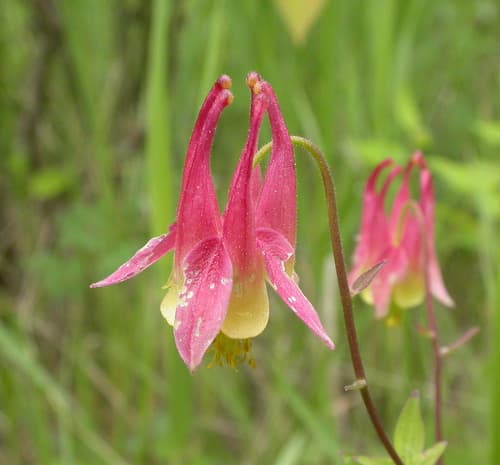
Toxicity unknown
Wild Red Columbine (Aquilegia canadensis) is not listed by the ASPCA Animal Poison Control Center (opens in new tab) or the other sources we check, so we have no verdict for it either way. Absence from those lists is not a clearance. If your pet shows symptoms after eating any plant, call the ASPCA at (888) 426-4435.
Light
part shade
Water
medium
Size
12"–36" H × 12"–24" W
Bloom
Apr, May, Jun
Native to
AL, AR, CT, DE and 32 more states
Pollinators
bees, hummingbirds, butterflies, moths
Deer
Resistant (per Prairie Moon Nursery)
Before you buy
Your city may pay you to plant this
Cities and water utilities offer rebates for replacing lawn with native and water-wise plants. We track 459 programs across 44 states, each with a link to the provider and the date we last checked it.
Find rebates in your areaPicture natives in your own yard
Upload a photo of your yard and Patch Vision shows a rendering of it planted with natives for your region, like Wild Red Columbine.


Browse plants for this ecoregion
Wild columbine is a charming native perennial with distinctive red and yellow nodding flowers that bloom from April through June. This compact plant forms neat clumps of delicate, blue-green foliage that works well in partially shaded garden areas. The plant goes dormant in winter, leaving behind attractive seed pods if not cut back.
Growing Wild Red Columbine
Grow Wild Red Columbine in part shade and medium water. Mature plants reach 12 to 36 inches tall and spread 12 to 24 inches wide. Expect low maintenance to keep it looking intentional in a front yard.
How to care for Wild Red Columbine, by region
How to care for Wild Red Columbine where it is actually grown: year-round basics plus what to do each season, region by region, with the sources for each.
Care guidance last updated: August 2026
Acadian Plains and Hills (includes Bangor)
Year-round
Wild columbine is a genuine native of the Acadian Plains and Hills of interior and downeast Maine, at home on rocky slopes, ledges, cliffs, and river-shore outcrops. It is a tough, cold-hardy woodland perennial that carries nodding red-and-yellow flowers in late spring and feeds returning hummingbirds.
- Native across all of Maine including the cold Acadian interior. BONAP county maps show it present and native statewide, and Go Botany lists it for Maine growing on cliffs, river-shore outcrops, rocky slopes, and rich woods, which are common here around Bangor.
- Hardy to USDA zone 3, so it shrugs off the harsh winters of the Acadian region without protection.
- Give it part shade to dappled sun and sharp drainage. It thrives in the thin, gravelly, acidic soils of glaciated Maine and dislikes soggy ground.
- It is a hummingbird plant. The red-and-yellow nodding flowers are timed to the return of ruby-throated hummingbirds in spring (Lady Bird Johnson Wildflower Center).
- Not on the ASPCA toxic plant list, so it is a low-worry choice for yards with dogs or cats.
Fall
Fall is a rest-and-tidy season for columbine in northern Maine. The plant pulls back to a low rosette of leaves that often stays green into the cold, and any seed you did not want dropped can be cleaned up now.
- Cut back flopped or browned flower stalks now if you want a clean bed going into winter. The low basal rosette can stay as-is.
- Leave the semi-evergreen rosette in place. It often holds green under the first snows and helps the plant restart fast in spring.
- Fall is a good planting window. Set out new plants a few weeks before hard frost so roots settle before the ground freezes in the Acadian region.
- A light mulch of shredded leaves over the crown protects it through freeze-thaw cycles without smothering the rosette.
- Collect ripe seed now if you want to control where it spreads, rather than letting every pod scatter.
Cutting back the flopped flower stalks in fall gives the bed a deliberate, cared-for edge through the off-season and helps it avoid reading as neglected, which is what keeps a native front yard clearly HOA-friendly.
Winter
Winter is easy. Wild columbine is fully hardy to the deep cold of the Acadian Plains and Hills and needs no fuss. The low leaf rosette rides out the season under snow and greens up again as soon as the thaw arrives.
- No winter protection required. It is hardy to USDA zone 3, well below the winter lows around Bangor (USDA PLANTS Database).
- Snow cover is a plus. A steady blanket of snow insulates the rosette better than any mulch, so leave it be.
- Leave dry seed heads you skipped standing if you like. They add winter texture and drop a little more seed.
- Hold off on any cleanup until spring warms. Cutting or disturbing the frozen crown now risks the plant more than helps it.
- Nothing to water or feed. The plant is fully dormant and self-sufficient through the cold.
A quick fall cutback done earlier means the winter bed already reads as tidy and intentional, so you can leave a few seed heads for texture without the yard looking unkempt to HOA-conscious neighbors.
Spring
Spring is columbine's moment. As the snow melts and the ground thaws around Bangor, the basal leaves push up and the nodding red-and-yellow flowers open just as ruby-throated hummingbirds return in May.
- Do not rush spring cleanup. Wait until nights are reliably above freezing before clearing old leaves, since late frosts are common in the Acadian region into May.
- Leave the flowers to feed early hummingbirds and native bees. Bloom usually runs mid-May into June this far north (Lady Bird Johnson Wildflower Center).
- Direct-sow or scatter seed now if you want more plants. Columbine self-sows freely on gravelly ground and seedlings settle in where drainage is sharp.
- Skip heavy feeding. It evolved for the thin, acidic soils here, so a light topdress of leaf mold is plenty.
- Watch for leaf miner squiggles on the foliage. They are cosmetic and the plant blooms fine regardless, so no spray is needed.
Summer
By summer the flowers fade and columbine turns its energy to setting seed. In the Acadian region it takes summer heat and dry ledges in stride, then the foliage may go a little ragged in the hottest stretch.
- Let some seed pods ripen and split if you want the plant to spread. The dry upright pods rattle out seed that fills in cracks and slopes.
- For a tidier look, snip the spent flower stalks after bloom. This keeps the clump neat and can nudge a few fresh leaves.
- Give it a deep drink only during a true drought. On the thin soils around Bangor it is drought-tolerant once established and dislikes staying wet.
- If the foliage gets shabby by late summer, you can cut the whole plant back by a third to force a flush of clean new leaves.
- No fertilizer needed. Extra nitrogen makes it floppy and short-lived.
Snipping the spent flower stalks after bloom keeps the clump reading as intentional and cared-for through summer, which is the tidy, HOA-friendly look neighbors expect from a front bed.
Sources: Go Botany, Native Plant Trust: Aquilegia canadensis, native to Maine, habitat and range, USDA PLANTS Database: Aquilegia canadensis profile (native to ME), Lady Bird Johnson Wildflower Center: Aquilegia canadensis, hummingbird pollinator, ASPCA Animal Poison Control Center toxic plant database (columbine not listed)
Arkansas Valley (includes McAlester, OK)
Year-round
Wild columbine is native to the Arkansas Valley, the forested band of sandstone ridges and rocky wooded slopes running between the Ouachita Mountains and the Ozarks. It grows on shaded bluffs, ravine slopes, and rocky woodland edges, the kind of terrain common around McAlester and Poteau.
- Best spot is part shade to shade, think the north or east side of a house or under established trees
- Rocky or sandy loam that drains well suits it better than heavy bottomland clay
- It self seeds into small colonies over time once it has a spot it likes
- Red columbine serves as a larval host plant for the Columbine Duskywing butterfly, per the Xerces Society
A tidy woodland perennial with nodding red and yellow blooms, reads as an intentional shade garden choice rather than an overgrown look.
Fall
Fall is a solid planting and dividing window for wild columbine in the Arkansas Valley, after summer heat eases and before the ground turns cold.
- Cooler soil gives new roots time to settle in without heat stress working against them
- Keep new plantings lightly watered through fall so roots establish before winter
- If the plant put out fresh growth after summer dormancy, leave it alone, it is building energy for spring
- A light leaf mulch layer over the root zone mimics its natural woodland floor habitat
Winter
Wild columbine sits dormant underground through winter in the Arkansas Valley and needs almost no attention until new growth appears in late winter.
- Skip watering unless there is an extended dry stretch with no rain or snow at all
- Leave fallen leaves over the planting area, they insulate the crown the way forest litter would naturally
- Watch for a low rosette of new leaves in late winter, that is the first sign of the growing season starting
- Keep foot traffic and heavy mulch off the exact crown so new shoots aren't smothered
Spring
Spring brings the bloom flush for wild columbine in the Arkansas Valley, generally March through May depending on the year.
- Nodding red and yellow flowers appear on tall stems well above the mounded leaves
- Hummingbirds returning in spring rely on columbine as one of the earlier nectar sources available
- Deadhead spent flowers if you want to extend bloom, or leave some to set seed for more plants next year
- Clean up any winter damaged foliage once fresh growth is visible at the base
Summer
Summer heat sends wild columbine into dormancy in the Arkansas Valley. The foliage dies back and that is expected, not a sign of a dying plant.
- Expect the leaves to yellow and disappear by mid summer, especially once temperatures climb and rain slows down
- Hold off on watering a dormant plant, wet soil around an inactive crown invites rot
- Mark the spot so it doesn't get disturbed or overplanted while it is out of sight
- Shade loving companions like woodland phlox or native ferns can hold the space visually
Sources: USDA Forest Service, Aquilegia canadensis species review (Fire Effects Information System), Xerces Society, plants for pollinators and host plant associations, Prairie Moon Nursery, Aquilegia canadensis growing guide, Missouri Botanical Garden Plant Finder, Aquilegia canadensis, Native Plant Society of Texas, Aquilegia canadensis profile (community tip), Prairie Nursery, Wild Columbine growing guide
Atlantic Coastal Pine Barrens (includes Riverhead, NY)
Year-round
Wild columbine is native to the Riverhead, NY area's woodland and rocky habitat and grows best in part shade with well-drained soil.
- Wild columbine is right at home in the Riverhead, NY area's rocky woodlands, wooded bluffs, and limestone outcrops.
- Plant it in part shade to shade with well-drained soil. It tolerates rocky, thin soil better than rich garden beds.
- The red and yellow nodding flowers are a favorite of ruby-throated hummingbirds and are one of the earliest nectar sources they find in spring.
- It's a short-lived perennial that readily self-seeds, so a planting tends to look different (and often bigger) year to year.
- Leaf miners sometimes trail through the foliage. It looks messy but rarely harms the plant.
Fall
Fall around Riverhead, NY is for seed collection and light cleanup, not a hard cutback, for wild columbine.
- Fall is a good time to sow collected seed directly into a prepared bed. Wild columbine seed benefits from a cold winter outdoors before it germinates in spring.
- Leave the basal rosette of leaves in place through fall. It often stays semi-evergreen and photosynthesizes into cooler weather.
- No need to cut the plant back hard for winter. Light cleanup of any fully dead stalks is enough.
- This is also a good window to transplant or divide clumps before the ground freezes.
Winter
Wild columbine is winter-hardy around Riverhead, NY and needs no special care through the cold months.
- Wild columbine is fully cold-hardy through winter here and needs no covering or protection.
- The basal foliage rosette may persist through mild winter stretches, going dormant only in the coldest weeks.
- Skip winter watering. Dormant plants in native soil don't need it.
- A layer of fallen leaves left over the crown acts as natural mulch and won't smother the plant.
Spring
Spring is bloom season for wild columbine around Riverhead, NY, with nodding red and yellow flowers opening on tall stems.
- Spring is when wild columbine puts on its show, usually blooming from March or April into May depending on how far north you are.
- No fertilizer needed. Established plants in native soil bloom fine without feeding.
- Divide or transplant seedlings in early spring while they're small, if you want to spread a patch to a new bed.
- Deadheading isn't required, but if you want fewer volunteers next year, snip spent flower stalks before seed pods dry and split open.
The red and yellow blooms read as a tidy, intentional woodland flower from the street, not a weedy patch.
Summer
Wild columbine's bloom is done by summer around Riverhead, NY; foliage may fade in heat and that's expected.
- After flowering wraps up, the foliage can look tired or go semi-dormant in hot, dry stretches. That's normal, not a sign of a dying plant.
- Water during extended dry spells, especially for plants in their first year. Established columbine handles average summer conditions without extra watering.
- Leave some seed pods on the plant if you want it to self-sow for next year's patch.
- Cut back ragged summer foliage to the base if it's browning. Fresh basal leaves often return before fall.
Tired summer foliage can look unkempt from the sidewalk. Cutting it back to fresh basal growth keeps the bed looking cared for.
Sources: Lady Bird Johnson Wildflower Center - Aquilegia canadensis, USDA Forest Service FEIS - Aquilegia canadensis
Blue Ridge (includes Gettysburg, PA)
Year-round
Wild columbine is native to the Gettysburg, PA area's woodland and rocky habitat and grows best in part shade with well-drained soil.
- Wild columbine is right at home in the Gettysburg, PA area's rocky woodlands, wooded bluffs, and limestone outcrops.
- Plant it in part shade to shade with well-drained soil. It tolerates rocky, thin soil better than rich garden beds.
- The red and yellow nodding flowers are a favorite of ruby-throated hummingbirds and are one of the earliest nectar sources they find in spring.
- It's a short-lived perennial that readily self-seeds, so a planting tends to look different (and often bigger) year to year.
- Leaf miners sometimes trail through the foliage. It looks messy but rarely harms the plant.
Fall
Fall around Gettysburg, PA is for seed collection and light cleanup, not a hard cutback, for wild columbine.
- Fall is a good time to sow collected seed directly into a prepared bed. Wild columbine seed benefits from a cold winter outdoors before it germinates in spring.
- Leave the basal rosette of leaves in place through fall. It often stays semi-evergreen and photosynthesizes into cooler weather.
- No need to cut the plant back hard for winter. Light cleanup of any fully dead stalks is enough.
- This is also a good window to transplant or divide clumps before the ground freezes.
Winter
Wild columbine is winter-hardy around Gettysburg, PA and needs no special care through the cold months.
- Wild columbine is fully cold-hardy through winter here and needs no covering or protection.
- The basal foliage rosette may persist through mild winter stretches, going dormant only in the coldest weeks.
- Skip winter watering. Dormant plants in native soil don't need it.
- A layer of fallen leaves left over the crown acts as natural mulch and won't smother the plant.
Spring
Spring is bloom season for wild columbine around Gettysburg, PA, with nodding red and yellow flowers opening on tall stems.
- Spring is when wild columbine puts on its show, usually blooming from March or April into May depending on how far north you are.
- No fertilizer needed. Established plants in native soil bloom fine without feeding.
- Divide or transplant seedlings in early spring while they're small, if you want to spread a patch to a new bed.
- Deadheading isn't required, but if you want fewer volunteers next year, snip spent flower stalks before seed pods dry and split open.
The red and yellow blooms read as a tidy, intentional woodland flower from the street, not a weedy patch.
Summer
Wild columbine's bloom is done by summer around Gettysburg, PA; foliage may fade in heat and that's expected.
- After flowering wraps up, the foliage can look tired or go semi-dormant in hot, dry stretches. That's normal, not a sign of a dying plant.
- Water during extended dry spells, especially for plants in their first year. Established columbine handles average summer conditions without extra watering.
- Leave some seed pods on the plant if you want it to self-sow for next year's patch.
- Cut back ragged summer foliage to the base if it's browning. Fresh basal leaves often return before fall.
Tired summer foliage can look unkempt from the sidewalk. Cutting it back to fresh basal growth keeps the bed looking cared for.
Sources: Lady Bird Johnson Wildflower Center - Aquilegia canadensis, USDA Forest Service FEIS - Aquilegia canadensis
Boston Mountains (includes Fayetteville)
Year-round
Wild columbine is a shade-loving native wildflower that fits right into the rocky, wooded slopes of the Boston Mountains and feeds hummingbirds in spring.
- Plant it in part shade to shade on a slope, bluff edge, or under oak-hickory canopy where it gets morning light and afternoon shade.
- It likes the thin, rocky, well-drained acidic soil this ecoregion already has, so skip heavy amending and do not let it sit in wet ground.
- The red-and-yellow spring flowers are built for hummingbirds, which drink the nectar from the long spurs.
- It is a short-lived perennial that reseeds itself, so let a few seed pods ripen and drop to keep the patch going year to year.
Fall
Fall is a good time to let seeds drop and to plant new columbine so roots settle before winter.
- Scatter or let the ripe seed fall now; columbine seed germinates better after a cold winter spell, which the Boston Mountains provide.
- Fall is a solid planting window for new plants, giving roots time to settle in the rocky soil before the ground gets cold.
- You can leave the dried stems standing for winter interest or cut them back once they brown.
If you cut back the spent stems in fall, edge the bed and clear the loose debris so the cleanup reads as intentional tidying rather than a bed that was let go, which keeps front-yard plantings looking cared for.
Winter
Winter is easy; the plant goes dormant and handles the real cold of the Boston Mountains on its own.
- Columbine is fully hardy for this ecoregion's zone 6b to 7a winters and needs no protection to survive the cold.
- The cold actually helps next year's seed, so leaving seed heads through winter can boost spring seedlings.
- No watering or feeding is needed while it is dormant; just let it rest.
If you prefer a clean winter look, cut the browned stems to the ground and keep the bed edge crisp so the dormant patch still reads as an intended planting through the bare months.
Spring
Spring is bloom time, so let the flowers open for the hummingbirds and give the plant a little water if the season turns dry.
- Red and yellow flowers open across spring, usually starting as early as March, right when hummingbirds are moving through northwest Arkansas.
- Pull competing weeds by hand around the crown while the soil is soft, since columbine has a shallow caudex that does not like being crowded.
- Water only if spring runs dry; the rocky slopes here drain fast, but established plants rarely need much.
Summer
Summer is when the plant fades back in the heat, and you decide whether to let it reseed or tidy it up.
- After flowering, foliage can look tired in humid Ozark summers and may get leaf-miner squiggles; trim damaged leaves and the plant pushes fresh growth.
- Leave some seed pods on to ripen and self-sow if you want more plants, since this is a short-lived perennial that depends on reseeding.
- Keep it in the shadier, cooler part of the yard; full afternoon sun on a south slope will stress it during peak heat.
If you want the bed to read as intentional through summer, snip the spent flower stalks and any browned leaves so the patch looks kept rather than neglected, which keeps it looking cared for to neighbors and any HOA reviewer.
Sources: USDA Forest Service FEIS species review, Aquilegia canadensis, Lady Bird Johnson Wildflower Center, Aquilegia canadensis
Central Appalachians (includes Johnstown, PA)
Year-round
Wild columbine is native to the Johnstown, PA area's woodland and rocky habitat and grows best in part shade with well-drained soil.
- Wild columbine is right at home in the Johnstown, PA area's rocky woodlands, wooded bluffs, and limestone outcrops.
- Plant it in part shade to shade with well-drained soil. It tolerates rocky, thin soil better than rich garden beds.
- The red and yellow nodding flowers are a favorite of ruby-throated hummingbirds and are one of the earliest nectar sources they find in spring.
- It's a short-lived perennial that readily self-seeds, so a planting tends to look different (and often bigger) year to year.
- Leaf miners sometimes trail through the foliage. It looks messy but rarely harms the plant.
Fall
Fall around Johnstown, PA is for seed collection and light cleanup, not a hard cutback, for wild columbine.
- Fall is a good time to sow collected seed directly into a prepared bed. Wild columbine seed benefits from a cold winter outdoors before it germinates in spring.
- Leave the basal rosette of leaves in place through fall. It often stays semi-evergreen and photosynthesizes into cooler weather.
- No need to cut the plant back hard for winter. Light cleanup of any fully dead stalks is enough.
- This is also a good window to transplant or divide clumps before the ground freezes.
Winter
Wild columbine is winter-hardy around Johnstown, PA and needs no special care through the cold months.
- Wild columbine is fully cold-hardy through winter here and needs no covering or protection.
- The basal foliage rosette may persist through mild winter stretches, going dormant only in the coldest weeks.
- Skip winter watering. Dormant plants in native soil don't need it.
- A layer of fallen leaves left over the crown acts as natural mulch and won't smother the plant.
Spring
Spring is bloom season for wild columbine around Johnstown, PA, with nodding red and yellow flowers opening on tall stems.
- Spring is when wild columbine puts on its show, usually blooming from March or April into May depending on how far north you are.
- No fertilizer needed. Established plants in native soil bloom fine without feeding.
- Divide or transplant seedlings in early spring while they're small, if you want to spread a patch to a new bed.
- Deadheading isn't required, but if you want fewer volunteers next year, snip spent flower stalks before seed pods dry and split open.
The red and yellow blooms read as a tidy, intentional woodland flower from the street, not a weedy patch.
Summer
Wild columbine's bloom is done by summer around Johnstown, PA; foliage may fade in heat and that's expected.
- After flowering wraps up, the foliage can look tired or go semi-dormant in hot, dry stretches. That's normal, not a sign of a dying plant.
- Water during extended dry spells, especially for plants in their first year. Established columbine handles average summer conditions without extra watering.
- Leave some seed pods on the plant if you want it to self-sow for next year's patch.
- Cut back ragged summer foliage to the base if it's browning. Fresh basal leaves often return before fall.
Tired summer foliage can look unkempt from the sidewalk. Cutting it back to fresh basal growth keeps the bed looking cared for.
Sources: Lady Bird Johnson Wildflower Center - Aquilegia canadensis, USDA Forest Service FEIS - Aquilegia canadensis
Central Corn Belt Plains (includes Chicago)
Year-round
Wild columbine is native to the Chicago area's woodland and rocky habitat and grows best in part shade with well-drained soil.
- Wild columbine is right at home in the Chicago area's rocky woodlands, wooded bluffs, and limestone outcrops.
- Plant it in part shade to shade with well-drained soil. It tolerates rocky, thin soil better than rich garden beds.
- The red and yellow nodding flowers are a favorite of ruby-throated hummingbirds and are one of the earliest nectar sources they find in spring.
- It's a short-lived perennial that readily self-seeds, so a planting tends to look different (and often bigger) year to year.
- Leaf miners sometimes trail through the foliage. It looks messy but rarely harms the plant.
Fall
Fall around Chicago is for seed collection and light cleanup, not a hard cutback, for wild columbine.
- Fall is a good time to sow collected seed directly into a prepared bed. Wild columbine seed benefits from a cold winter outdoors before it germinates in spring.
- Leave the basal rosette of leaves in place through fall. It often stays semi-evergreen and photosynthesizes into cooler weather.
- No need to cut the plant back hard for winter. Light cleanup of any fully dead stalks is enough.
- This is also a good window to transplant or divide clumps before the ground freezes.
Winter
Wild columbine is winter-hardy around Chicago and needs no special care through the cold months.
- Wild columbine is fully cold-hardy through winter here and needs no covering or protection.
- The basal foliage rosette may persist through mild winter stretches, going dormant only in the coldest weeks.
- Skip winter watering. Dormant plants in native soil don't need it.
- A layer of fallen leaves left over the crown acts as natural mulch and won't smother the plant.
Spring
Spring is bloom season for wild columbine around Chicago, with nodding red and yellow flowers opening on tall stems.
- Spring is when wild columbine puts on its show, usually blooming from March or April into May depending on how far north you are.
- No fertilizer needed. Established plants in native soil bloom fine without feeding.
- Divide or transplant seedlings in early spring while they're small, if you want to spread a patch to a new bed.
- Deadheading isn't required, but if you want fewer volunteers next year, snip spent flower stalks before seed pods dry and split open.
The red and yellow blooms read as a tidy, intentional woodland flower from the street, not a weedy patch.
Summer
Wild columbine's bloom is done by summer around Chicago; foliage may fade in heat and that's expected.
- After flowering wraps up, the foliage can look tired or go semi-dormant in hot, dry stretches. That's normal, not a sign of a dying plant.
- Water during extended dry spells, especially for plants in their first year. Established columbine handles average summer conditions without extra watering.
- Leave some seed pods on the plant if you want it to self-sow for next year's patch.
- Cut back ragged summer foliage to the base if it's browning. Fresh basal leaves often return before fall.
Tired summer foliage can look unkempt from the sidewalk. Cutting it back to fresh basal growth keeps the bed looking cared for.
Sources: Lady Bird Johnson Wildflower Center - Aquilegia canadensis, USDA Forest Service FEIS - Aquilegia canadensis
Central Irregular Plains (includes Kansas City, MO)
Year-round
Wild columbine is native to the Central Irregular Plains around Kansas City, but not out on the open tallgrass prairie. It lives in the wooded strips along the streams, on shaded limestone ledges, and in rocky ravines that cut through this grassland-and-forest mosaic. In a Kansas City yard it wants that same setup: a shady, well drained spot rather than a hot, flat, clay-heavy bed.
- Give it part shade and drainage. The claypan soils common around Kansas City hold water, so plant it on a slope, a raised spot, or near a wall where it will not sit wet.
- If your soil is heavy clay, work in grit or coarse sand and plant a little high. Columbine rots in dense, soggy ground.
- It is a short-lived perennial that keeps itself going by reseeding, so leave a few seed heads to drop.
- The spring flowers feed returning ruby-throated hummingbirds and native bees per the Lady Bird Johnson Wildflower Center.
- Not on the ASPCA toxic plant list, which makes it an easy pick for a front yard with pets.
Fall
Fall settles columbine down for the year around Kansas City. Seed has already dropped and the plant slows. Cooler, damper fall weather makes this a good window to plant new columbine and to neaten a front-yard bed before winter, and the roots have time to settle into that claypan ground.
- Fall is a good time to add new plants. Set them a little high in heavy clay so the crown stays above sitting water.
- Tidy off flopped or browned leaves up front, but you can leave a bit of low foliage on the crown.
- Pull heavy matted leaves off the rosettes so they do not smother over a wet Kansas City winter.
A light fall cleanup of the browned foliage keeps a front-yard native bed looking intentional and maintained, which is the read most HOA-conscious homeowners want going into winter rather than risking a tidiness complaint.
Winter
Over a Kansas City winter columbine dies back to a small low rosette or to the crown. The freeze-and-thaw cycles on heavy claypan soil are hard on plants that sit wet, so drainage is what carries columbine through. A crown that stays soggy through a thaw is the main winter risk, not the cold.
- Keep mulch light over the crowns. A wet, heavy mulch on clay traps moisture and can rot the plant.
- Make sure winter melt drains away from the planting instead of pooling at the base.
- Leave the small green rosette alone. Holding a little foliage through winter is normal for columbine and it will take off again in spring.
Leaving the low winter rosette rather than cutting the bed to bare soil keeps the front planting looking cared-for through the dormant months so it does not read as an abandoned patch.
Spring
In the Kansas City area columbine wakes up early and blooms from April into May, matching the return of ruby-throated hummingbirds. Spring is usually damp here, which columbine likes, but the same rain that helps it can pool in claypan soil, so drainage still matters even in the growing season.
- Let spring rain do the watering. Only add water in a dry spell, and never let the crown sit in a puddle after a storm.
- Hold off on fertilizer. Lean soil gives you a sturdier plant than a fed one, which tends to flop.
- Watch for volunteer seedlings from last year near the parent plant. Move the small rosettes now while the soil is soft if you want to spread them.
Summer
Kansas City summers turn hot and can bake a claypan bed hard. After bloom, columbine may brown off or go partly dormant, especially in a sunnier spot. That is the plant conserving itself, not dying. Shade and a little moisture keep the lacy foliage looking better through the worst of the heat.
- During a summer drought, soak it deeply now and then rather than sprinkling daily. Deep, spaced watering suits its rocky-woodland roots.
- Cut back tattered or leaf-mined foliage by half and it will refresh once nights cool down.
- Leave some seed pods to ripen and scatter. Summer reseeding is how a patch keeps going since each plant is short-lived.
Sources: Missouri Botanical Garden Plant Finder: Aquilegia canadensis, US Forest Service FEIS species review: Aquilegia canadensis, ASPCA Toxic and Non-Toxic Plants (dogs list, columbine not listed), Lady Bird Johnson Wildflower Center: Aquilegia canadensis
Cross Timbers (includes Fort Worth)
Year-round
Red columbine is a woodland wildflower that finds its footing on the rocky, limestone edged ground where the Cross Timbers meets the Edwards Plateau.
- It needs thin, well drained soil over rock, sandy loam, or limestone, plus light to moderate shade, since it gets outcompeted in rich, wet flatland soil (bplant.org).
- Its Texas range is a disjunct population centered on the Edwards Plateau, and the Lady Bird Johnson Wildflower Center lists it as suited to landscaping in North Central Texas, which includes Cross Timbers counties like Tarrant (Lady Bird Johnson Wildflower Center).
- The nodding red and yellow flowers are one of the most important early nectar sources for ruby throated hummingbirds in eastern North America, and the plant is a caterpillar host for the columbine duskywing (US Forest Service).
- Columbine is considered only mildly toxic to dogs and cats if ingested, with symptoms like vomiting or diarrhea, and the ASPCA does not list it among its higher toxicity plants.
Fall
Fall is a low key season since the plant is often already dormant or close to it by now.
- New basal growth can appear if temperatures cool and moisture picks up, but don't expect fresh bloom.
- This is a good time to let self sown seedlings establish in the rocky or gravelly ground they need, rather than clearing them out as weeds.
- Avoid rich compost or heavy mulch piled on the crown, since the plant prefers lean, well drained soil year round (bplant.org).
Winter
Winter is quiet, with the plant holding as a low basal rosette or going fully dormant.
- Foliage may persist as a small evergreen-ish rosette in mild winters or die back completely in harder freezes.
- No pruning is needed. Old flower stalks can be cut back if they look ragged, but it's cosmetic only.
- Established plants tolerate cold well within their range, since the species extends as far north as Quebec and Manitoba (US Forest Service).
Spring
Spring is peak bloom, when columbine's nodding red flowers open right as hummingbirds return.
- Flowering typically runs from spring into early summer, with the red and yellow spurred blooms appearing on wiry stems.
- This is the main show for ruby throated hummingbirds, which time their spring migration to coincide with columbine bloom (US Forest Service).
- Avoid overwatering, since the plant is adapted to thin, well drained rocky soil and doesn't tolerate soggy ground.
The red and yellow spring blooms read as a deliberate, curated wildflower planting rather than a weedy patch.
Summer
Summer heat pushes columbine into dormancy once bloom finishes, which is normal rather than plant failure.
- After flowering wraps up the foliage often yellows and dies back as summer heat sets in, especially without consistent shade.
- Deadheading spent blooms can extend bloom slightly, but many gardeners let seed pods form since the plant self sows readily.
- Light shade through the hottest part of the day helps the foliage hold on longer into summer (bplant.org).
Sources: Red Columbine (Aquilegia canadensis) - bplant.org, Aquilegia canadensis (Eastern red columbine) - Lady Bird Johnson Wildflower Center, Red or Eastern Columbine (Aquilegia canadensis L.) - US Forest Service, ASPCA Animal Poison Control Center plant database
Driftless Area (includes Galena, IL)
Year-round
Wild columbine is native to the Galena, IL area's woodland and rocky habitat and grows best in part shade with well-drained soil.
- Wild columbine is right at home in the Galena, IL area's rocky woodlands, wooded bluffs, and limestone outcrops.
- Plant it in part shade to shade with well-drained soil. It tolerates rocky, thin soil better than rich garden beds.
- The red and yellow nodding flowers are a favorite of ruby-throated hummingbirds and are one of the earliest nectar sources they find in spring.
- It's a short-lived perennial that readily self-seeds, so a planting tends to look different (and often bigger) year to year.
- Leaf miners sometimes trail through the foliage. It looks messy but rarely harms the plant.
Fall
Fall around Galena, IL is for seed collection and light cleanup, not a hard cutback, for wild columbine.
- Fall is a good time to sow collected seed directly into a prepared bed. Wild columbine seed benefits from a cold winter outdoors before it germinates in spring.
- Leave the basal rosette of leaves in place through fall. It often stays semi-evergreen and photosynthesizes into cooler weather.
- No need to cut the plant back hard for winter. Light cleanup of any fully dead stalks is enough.
- This is also a good window to transplant or divide clumps before the ground freezes.
Winter
Wild columbine is winter-hardy around Galena, IL and needs no special care through the cold months.
- Wild columbine is fully cold-hardy through winter here and needs no covering or protection.
- The basal foliage rosette may persist through mild winter stretches, going dormant only in the coldest weeks.
- Skip winter watering. Dormant plants in native soil don't need it.
- A layer of fallen leaves left over the crown acts as natural mulch and won't smother the plant.
Spring
Spring is bloom season for wild columbine around Galena, IL, with nodding red and yellow flowers opening on tall stems.
- Spring is when wild columbine puts on its show, usually blooming from March or April into May depending on how far north you are.
- No fertilizer needed. Established plants in native soil bloom fine without feeding.
- Divide or transplant seedlings in early spring while they're small, if you want to spread a patch to a new bed.
- Deadheading isn't required, but if you want fewer volunteers next year, snip spent flower stalks before seed pods dry and split open.
The red and yellow blooms read as a tidy, intentional woodland flower from the street, not a weedy patch.
Summer
Wild columbine's bloom is done by summer around Galena, IL; foliage may fade in heat and that's expected.
- After flowering wraps up, the foliage can look tired or go semi-dormant in hot, dry stretches. That's normal, not a sign of a dying plant.
- Water during extended dry spells, especially for plants in their first year. Established columbine handles average summer conditions without extra watering.
- Leave some seed pods on the plant if you want it to self-sow for next year's patch.
- Cut back ragged summer foliage to the base if it's browning. Fresh basal leaves often return before fall.
Tired summer foliage can look unkempt from the sidewalk. Cutting it back to fresh basal growth keeps the bed looking cared for.
Sources: Lady Bird Johnson Wildflower Center - Aquilegia canadensis, USDA Forest Service FEIS - Aquilegia canadensis
Eastern Corn Belt Plains (includes Columbus)
Year-round
Wild columbine is native to the Columbus area's woodland and rocky habitat and grows best in part shade with well-drained soil.
- Wild columbine is right at home in the Columbus area's rocky woodlands, wooded bluffs, and limestone outcrops.
- Plant it in part shade to shade with well-drained soil. It tolerates rocky, thin soil better than rich garden beds.
- The red and yellow nodding flowers are a favorite of ruby-throated hummingbirds and are one of the earliest nectar sources they find in spring.
- It's a short-lived perennial that readily self-seeds, so a planting tends to look different (and often bigger) year to year.
- Leaf miners sometimes trail through the foliage. It looks messy but rarely harms the plant.
Fall
Fall around Columbus is for seed collection and light cleanup, not a hard cutback, for wild columbine.
- Fall is a good time to sow collected seed directly into a prepared bed. Wild columbine seed benefits from a cold winter outdoors before it germinates in spring.
- Leave the basal rosette of leaves in place through fall. It often stays semi-evergreen and photosynthesizes into cooler weather.
- No need to cut the plant back hard for winter. Light cleanup of any fully dead stalks is enough.
- This is also a good window to transplant or divide clumps before the ground freezes.
Winter
Wild columbine is winter-hardy around Columbus and needs no special care through the cold months.
- Wild columbine is fully cold-hardy through winter here and needs no covering or protection.
- The basal foliage rosette may persist through mild winter stretches, going dormant only in the coldest weeks.
- Skip winter watering. Dormant plants in native soil don't need it.
- A layer of fallen leaves left over the crown acts as natural mulch and won't smother the plant.
Spring
Spring is bloom season for wild columbine around Columbus, with nodding red and yellow flowers opening on tall stems.
- Spring is when wild columbine puts on its show, usually blooming from March or April into May depending on how far north you are.
- No fertilizer needed. Established plants in native soil bloom fine without feeding.
- Divide or transplant seedlings in early spring while they're small, if you want to spread a patch to a new bed.
- Deadheading isn't required, but if you want fewer volunteers next year, snip spent flower stalks before seed pods dry and split open.
The red and yellow blooms read as a tidy, intentional woodland flower from the street, not a weedy patch.
Summer
Wild columbine's bloom is done by summer around Columbus; foliage may fade in heat and that's expected.
- After flowering wraps up, the foliage can look tired or go semi-dormant in hot, dry stretches. That's normal, not a sign of a dying plant.
- Water during extended dry spells, especially for plants in their first year. Established columbine handles average summer conditions without extra watering.
- Leave some seed pods on the plant if you want it to self-sow for next year's patch.
- Cut back ragged summer foliage to the base if it's browning. Fresh basal leaves often return before fall.
Tired summer foliage can look unkempt from the sidewalk. Cutting it back to fresh basal growth keeps the bed looking cared for.
Sources: Lady Bird Johnson Wildflower Center - Aquilegia canadensis, USDA Forest Service FEIS - Aquilegia canadensis
Eastern Great Lakes Lowlands (includes Rochester, NY)
Year-round
Wild columbine is native to the Rochester, NY area's woodland and rocky habitat and grows best in part shade with well-drained soil.
- Wild columbine is right at home in the Rochester, NY area's rocky woodlands, wooded bluffs, and limestone outcrops.
- Plant it in part shade to shade with well-drained soil. It tolerates rocky, thin soil better than rich garden beds.
- The red and yellow nodding flowers are a favorite of ruby-throated hummingbirds and are one of the earliest nectar sources they find in spring.
- It's a short-lived perennial that readily self-seeds, so a planting tends to look different (and often bigger) year to year.
- Leaf miners sometimes trail through the foliage. It looks messy but rarely harms the plant.
Fall
Fall around Rochester, NY is for seed collection and light cleanup, not a hard cutback, for wild columbine.
- Fall is a good time to sow collected seed directly into a prepared bed. Wild columbine seed benefits from a cold winter outdoors before it germinates in spring.
- Leave the basal rosette of leaves in place through fall. It often stays semi-evergreen and photosynthesizes into cooler weather.
- No need to cut the plant back hard for winter. Light cleanup of any fully dead stalks is enough.
- This is also a good window to transplant or divide clumps before the ground freezes.
Winter
Wild columbine is winter-hardy around Rochester, NY and needs no special care through the cold months.
- Wild columbine is fully cold-hardy through winter here and needs no covering or protection.
- The basal foliage rosette may persist through mild winter stretches, going dormant only in the coldest weeks.
- Skip winter watering. Dormant plants in native soil don't need it.
- A layer of fallen leaves left over the crown acts as natural mulch and won't smother the plant.
Spring
Spring is bloom season for wild columbine around Rochester, NY, with nodding red and yellow flowers opening on tall stems.
- Spring is when wild columbine puts on its show, usually blooming from March or April into May depending on how far north you are.
- No fertilizer needed. Established plants in native soil bloom fine without feeding.
- Divide or transplant seedlings in early spring while they're small, if you want to spread a patch to a new bed.
- Deadheading isn't required, but if you want fewer volunteers next year, snip spent flower stalks before seed pods dry and split open.
The red and yellow blooms read as a tidy, intentional woodland flower from the street, not a weedy patch.
Summer
Wild columbine's bloom is done by summer around Rochester, NY; foliage may fade in heat and that's expected.
- After flowering wraps up, the foliage can look tired or go semi-dormant in hot, dry stretches. That's normal, not a sign of a dying plant.
- Water during extended dry spells, especially for plants in their first year. Established columbine handles average summer conditions without extra watering.
- Leave some seed pods on the plant if you want it to self-sow for next year's patch.
- Cut back ragged summer foliage to the base if it's browning. Fresh basal leaves often return before fall.
Tired summer foliage can look unkempt from the sidewalk. Cutting it back to fresh basal growth keeps the bed looking cared for.
Sources: Lady Bird Johnson Wildflower Center - Aquilegia canadensis, USDA Forest Service FEIS - Aquilegia canadensis
Edwards Plateau (includes San Antonio)
Year-round
Wild Columbine is one of the few Eastern wildflowers with a real foothold in the Hill Country, tucked into shaded limestone ledges instead of open sun.
- It wants part shade to shade and well drained soil, in the Hill Country that usually means a spot tucked under trees or against a rock ledge rather than open lawn.
- Texas has a disjunct native population of this species on the Edwards Plateau, growing in rocky woods and on limestone ledges and outcrops, separate from its main range further east (Lady Bird Johnson Wildflower Center; USDA Forest Service).
- The red and yellow flowers are a nectar source for ruby throated hummingbirds and are the only larval host plant for the Columbine Duskywing butterfly, which can't survive without it (USDA Forest Service).
- Wild Columbine is not on the ASPCA toxic plant list (ASPCA Animal Poison Control Center plant database).
Fall
Fall is a light cleanup season, tidy up old foliage and let any self sown seedlings settle in before winter.
- Cut back tattered summer foliage in fall if it hasn't already died back on its own.
- Seedlings from earlier self sowing will often show up now and are best left in place through winter rather than transplanted.
- This is also a fine time to divide or move an established clump if it's outgrown its spot among the rocks.
a fall cleanup of old foliage keeps the bed reading as intentional rather than neglected going into winter.
Winter
Winter is dormant and low maintenance, the plant is just waiting out the cold in its rocky, shaded spot.
- The plant dies back to a basal rosette or goes fully dormant, there's no watering or feeding needed.
- It's cold hardy well into the Hill Country's winter range and doesn't need mulching or covering in most years.
- It's a short lived perennial for many gardeners, so don't be surprised if an older plant doesn't return, as long as it self seeded the planting should carry on.
Spring
Spring is bloom season, and deadheading spent flowers as they fade will stretch the show for weeks.
- Flowers open in spring and can carry into early summer if you keep deadheading spent blooms, which pushes new buds along the stem.
- This is when hummingbirds arrive and start using the flowers as an early nectar source.
- If you want the plant to reseed and fill in a bed, leave some flowers to go to seed instead of deadheading every one.
deadheading through spring keeps the bed looking tended and full instead of leggy, which reads as intentional to a neighbor walking by.
Summer
Summer is when the plant goes dormant and rests, so it's a season to leave it be rather than fuss over it.
- After bloom the foliage can go dormant or ragged in Hill Country summer heat, this is normal for the species and not a sign of a problem.
- Native plants are noticeably more resistant to leaf miner damage than hybrid columbines, so a few cosmetic squiggly trails on the leaves rarely need treatment.
- Water sparingly and let the shaded, rocky spot it prefers do the work of keeping roots cool.
if the foliage looks tired in high summer, a light trim of the ragged leaves keeps the bed looking cared for until fall growth returns.
Sources: Aquilegia canadensis (Eastern red columbine) - Lady Bird Johnson Wildflower Center, Aquilegia canadensis, red columbine - USDA Forest Service, Aquilegia canadensis - Native Plant Society of Texas, ASPCA Toxic and Non-Toxic Plant Search, Eastern Red Columbine, Aquilegia canadensis - Wisconsin Horticulture Extension, All About Columbine - Iowa State University Extension
Erie Drift Plain (includes Buffalo, NY)
Year-round
Wild columbine is native to the Buffalo, NY area's woodland and rocky habitat and grows best in part shade with well-drained soil.
- Wild columbine is right at home in the Buffalo, NY area's rocky woodlands, wooded bluffs, and limestone outcrops.
- Plant it in part shade to shade with well-drained soil. It tolerates rocky, thin soil better than rich garden beds.
- The red and yellow nodding flowers are a favorite of ruby-throated hummingbirds and are one of the earliest nectar sources they find in spring.
- It's a short-lived perennial that readily self-seeds, so a planting tends to look different (and often bigger) year to year.
- Leaf miners sometimes trail through the foliage. It looks messy but rarely harms the plant.
Fall
Fall around Buffalo, NY is for seed collection and light cleanup, not a hard cutback, for wild columbine.
- Fall is a good time to sow collected seed directly into a prepared bed. Wild columbine seed benefits from a cold winter outdoors before it germinates in spring.
- Leave the basal rosette of leaves in place through fall. It often stays semi-evergreen and photosynthesizes into cooler weather.
- No need to cut the plant back hard for winter. Light cleanup of any fully dead stalks is enough.
- This is also a good window to transplant or divide clumps before the ground freezes.
Winter
Wild columbine is winter-hardy around Buffalo, NY and needs no special care through the cold months.
- Wild columbine is fully cold-hardy through winter here and needs no covering or protection.
- The basal foliage rosette may persist through mild winter stretches, going dormant only in the coldest weeks.
- Skip winter watering. Dormant plants in native soil don't need it.
- A layer of fallen leaves left over the crown acts as natural mulch and won't smother the plant.
Spring
Spring is bloom season for wild columbine around Buffalo, NY, with nodding red and yellow flowers opening on tall stems.
- Spring is when wild columbine puts on its show, usually blooming from March or April into May depending on how far north you are.
- No fertilizer needed. Established plants in native soil bloom fine without feeding.
- Divide or transplant seedlings in early spring while they're small, if you want to spread a patch to a new bed.
- Deadheading isn't required, but if you want fewer volunteers next year, snip spent flower stalks before seed pods dry and split open.
The red and yellow blooms read as a tidy, intentional woodland flower from the street, not a weedy patch.
Summer
Wild columbine's bloom is done by summer around Buffalo, NY; foliage may fade in heat and that's expected.
- After flowering wraps up, the foliage can look tired or go semi-dormant in hot, dry stretches. That's normal, not a sign of a dying plant.
- Water during extended dry spells, especially for plants in their first year. Established columbine handles average summer conditions without extra watering.
- Leave some seed pods on the plant if you want it to self-sow for next year's patch.
- Cut back ragged summer foliage to the base if it's browning. Fresh basal leaves often return before fall.
Tired summer foliage can look unkempt from the sidewalk. Cutting it back to fresh basal growth keeps the bed looking cared for.
Sources: Lady Bird Johnson Wildflower Center - Aquilegia canadensis, USDA Forest Service FEIS - Aquilegia canadensis
Flint Hills (includes Manhattan)
Year-round
Wild columbine is a shade-loving Flint Hills native that belongs in the wooded draws and shady limestone ledges around your yard, not out in the open burned prairie.
- Give it part shade to shade with rocky, well-drained, limestone-based soil that stays a little moist, which matches the wooded stream draws and shaded ledges of the Flint Hills (Lady Bird Johnson Wildflower Center).
- Water new plants their first summer to get them rooted, then back off, since established columbine handles the dry, thin, cherty soils here on its own.
- The nodding red and yellow flowers are built for ruby-throated hummingbirds and are also worked by bumble bees, per Kansas Wildflowers (Kansas Biological Survey and K-State).
- It is not on the ASPCA toxic plant list, and it self-sows freely, so let a few seed heads ripen where you want more or snip them off to keep it in bounds.
Fall
Fall is a quiet season for wild columbine in the Flint Hills, and it is a good time to move seed around or tidy the bed.
- If you want more plants, scatter ripe seed now in shady, rocky spots, since the cold winter gives it the chilling it needs to sprout in spring.
- Leave the low rosette of leaves in place going into winter, because columbine holds its foliage and does not need a hard cutback.
- Pull competing weeds and top up mulch on the thin limestone soil so the crowns are protected through the cold Flint Hills winter.
A quick fall tidy of spent stems and a fresh edge on the bed keeps the planting looking cared-for through winter and helps it read as intentional to an HOA.
Winter
Wild columbine mostly rides out the Flint Hills winter as a small evergreen-ish rosette, so there is very little to do.
- Do not cut it to the ground, since the low leaves often stay green or bronzed through winter and feed the plant early next spring.
- Keep it clear of prescribed late-winter and early-spring prairie burns, because this is a shaded-draw plant, not fire-managed open prairie.
- In zone 6a to 6b around Manhattan it is fully hardy, so a light mulch over the rocky soil is all the winter cover it needs.
The tidy little rosette and any seed stalks you left read as a deliberate, low-mess winter planting, which helps a front yard avoid looking overgrown to an HOA.
Spring
Spring is when wild columbine does its main show, blooming in April and May right as the hummingbirds return to the Flint Hills.
- Expect flowers in April and May in the Manhattan area, timed to feed early ruby-throated hummingbirds and bumble bees (Kansas Wildflowers, Kansas Biological Survey and K-State).
- This is a wooded-draw plant, so keep it out of the path of prescribed spring prairie burns and away from open, sun-baked spots.
- A thin layer of leaf litter or mulch over the rocky soil keeps the roots cool and holds the spring moisture columbine likes.
- Hold off on any cutting now, since the foliage is feeding the plant and setting up this year's bloom.
Summer
By summer the flowers are done and the plant coasts through the Flint Hills heat, so your main job is deciding how much it should self-seed.
- After bloom, leave a few seed heads to ripen if you want new plants in your shady draws, or snip them off to keep columbine from spreading past where you want it.
- In the hot, dry stretch of a Manhattan-area summer, give it an occasional deep soak in the shadiest, rockiest spots, but do not keep the soil soggy.
- The leaves may get pale, ragged mines from columbine leaf miner, which looks worse than it is, so you can shear tired foliage back and let fresh leaves flush.
- Finches and buntings eat the ripe seeds, so a few standing seed heads double as summer bird food (Lady Bird Johnson Wildflower Center).
If the leaf-mined or shabby foliage sits along a sidewalk or bed edge, a light midsummer shearing reads as intentional upkeep and keeps a front bed from looking neglected to an HOA.
Sources: Lady Bird Johnson Wildflower Center, Aquilegia canadensis native range and habitat, Kansas Wildflowers, Wild columbine, Kansas Biological Survey and K-State
Huron/Erie Lake Plains (includes Toledo)
Year-round
Wild columbine is native to the Toledo area's woodland and rocky habitat and grows best in part shade with well-drained soil.
- Wild columbine is right at home in the Toledo area's rocky woodlands, wooded bluffs, and limestone outcrops.
- Plant it in part shade to shade with well-drained soil. It tolerates rocky, thin soil better than rich garden beds.
- The red and yellow nodding flowers are a favorite of ruby-throated hummingbirds and are one of the earliest nectar sources they find in spring.
- It's a short-lived perennial that readily self-seeds, so a planting tends to look different (and often bigger) year to year.
- Leaf miners sometimes trail through the foliage. It looks messy but rarely harms the plant.
Fall
Fall around Toledo is for seed collection and light cleanup, not a hard cutback, for wild columbine.
- Fall is a good time to sow collected seed directly into a prepared bed. Wild columbine seed benefits from a cold winter outdoors before it germinates in spring.
- Leave the basal rosette of leaves in place through fall. It often stays semi-evergreen and photosynthesizes into cooler weather.
- No need to cut the plant back hard for winter. Light cleanup of any fully dead stalks is enough.
- This is also a good window to transplant or divide clumps before the ground freezes.
Winter
Wild columbine is winter-hardy around Toledo and needs no special care through the cold months.
- Wild columbine is fully cold-hardy through winter here and needs no covering or protection.
- The basal foliage rosette may persist through mild winter stretches, going dormant only in the coldest weeks.
- Skip winter watering. Dormant plants in native soil don't need it.
- A layer of fallen leaves left over the crown acts as natural mulch and won't smother the plant.
Spring
Spring is bloom season for wild columbine around Toledo, with nodding red and yellow flowers opening on tall stems.
- Spring is when wild columbine puts on its show, usually blooming from March or April into May depending on how far north you are.
- No fertilizer needed. Established plants in native soil bloom fine without feeding.
- Divide or transplant seedlings in early spring while they're small, if you want to spread a patch to a new bed.
- Deadheading isn't required, but if you want fewer volunteers next year, snip spent flower stalks before seed pods dry and split open.
The red and yellow blooms read as a tidy, intentional woodland flower from the street, not a weedy patch.
Summer
Wild columbine's bloom is done by summer around Toledo; foliage may fade in heat and that's expected.
- After flowering wraps up, the foliage can look tired or go semi-dormant in hot, dry stretches. That's normal, not a sign of a dying plant.
- Water during extended dry spells, especially for plants in their first year. Established columbine handles average summer conditions without extra watering.
- Leave some seed pods on the plant if you want it to self-sow for next year's patch.
- Cut back ragged summer foliage to the base if it's browning. Fresh basal leaves often return before fall.
Tired summer foliage can look unkempt from the sidewalk. Cutting it back to fresh basal growth keeps the bed looking cared for.
Sources: Lady Bird Johnson Wildflower Center - Aquilegia canadensis, USDA Forest Service FEIS - Aquilegia canadensis
Interior Plateau (includes Cincinnati)
Year-round
Wild columbine is native to the Cincinnati area's woodland and rocky habitat and grows best in part shade with well-drained soil.
- Wild columbine is right at home in the Cincinnati area's rocky woodlands, wooded bluffs, and limestone outcrops.
- Plant it in part shade to shade with well-drained soil. It tolerates rocky, thin soil better than rich garden beds.
- The red and yellow nodding flowers are a favorite of ruby-throated hummingbirds and are one of the earliest nectar sources they find in spring.
- It's a short-lived perennial that readily self-seeds, so a planting tends to look different (and often bigger) year to year.
- Leaf miners sometimes trail through the foliage. It looks messy but rarely harms the plant.
Fall
Fall around Cincinnati is for seed collection and light cleanup, not a hard cutback, for wild columbine.
- Fall is a good time to sow collected seed directly into a prepared bed. Wild columbine seed benefits from a cold winter outdoors before it germinates in spring.
- Leave the basal rosette of leaves in place through fall. It often stays semi-evergreen and photosynthesizes into cooler weather.
- No need to cut the plant back hard for winter. Light cleanup of any fully dead stalks is enough.
- This is also a good window to transplant or divide clumps before the ground freezes.
Winter
Wild columbine is winter-hardy around Cincinnati and needs no special care through the cold months.
- Wild columbine is fully cold-hardy through winter here and needs no covering or protection.
- The basal foliage rosette may persist through mild winter stretches, going dormant only in the coldest weeks.
- Skip winter watering. Dormant plants in native soil don't need it.
- A layer of fallen leaves left over the crown acts as natural mulch and won't smother the plant.
Spring
Spring is bloom season for wild columbine around Cincinnati, with nodding red and yellow flowers opening on tall stems.
- Spring is when wild columbine puts on its show, usually blooming from March or April into May depending on how far north you are.
- No fertilizer needed. Established plants in native soil bloom fine without feeding.
- Divide or transplant seedlings in early spring while they're small, if you want to spread a patch to a new bed.
- Deadheading isn't required, but if you want fewer volunteers next year, snip spent flower stalks before seed pods dry and split open.
The red and yellow blooms read as a tidy, intentional woodland flower from the street, not a weedy patch.
Summer
Wild columbine's bloom is done by summer around Cincinnati; foliage may fade in heat and that's expected.
- After flowering wraps up, the foliage can look tired or go semi-dormant in hot, dry stretches. That's normal, not a sign of a dying plant.
- Water during extended dry spells, especially for plants in their first year. Established columbine handles average summer conditions without extra watering.
- Leave some seed pods on the plant if you want it to self-sow for next year's patch.
- Cut back ragged summer foliage to the base if it's browning. Fresh basal leaves often return before fall.
Tired summer foliage can look unkempt from the sidewalk. Cutting it back to fresh basal growth keeps the bed looking cared for.
Sources: Lady Bird Johnson Wildflower Center - Aquilegia canadensis, USDA Forest Service FEIS - Aquilegia canadensis
Interior River Valleys and Hills (includes Peoria, IL)
Year-round
Wild columbine is native to the Peoria, IL area's woodland and rocky habitat and grows best in part shade with well-drained soil.
- Wild columbine is right at home in the Peoria, IL area's rocky woodlands, wooded bluffs, and limestone outcrops.
- Plant it in part shade to shade with well-drained soil. It tolerates rocky, thin soil better than rich garden beds.
- The red and yellow nodding flowers are a favorite of ruby-throated hummingbirds and are one of the earliest nectar sources they find in spring.
- It's a short-lived perennial that readily self-seeds, so a planting tends to look different (and often bigger) year to year.
- Leaf miners sometimes trail through the foliage. It looks messy but rarely harms the plant.
Fall
Fall around Peoria, IL is for seed collection and light cleanup, not a hard cutback, for wild columbine.
- Fall is a good time to sow collected seed directly into a prepared bed. Wild columbine seed benefits from a cold winter outdoors before it germinates in spring.
- Leave the basal rosette of leaves in place through fall. It often stays semi-evergreen and photosynthesizes into cooler weather.
- No need to cut the plant back hard for winter. Light cleanup of any fully dead stalks is enough.
- This is also a good window to transplant or divide clumps before the ground freezes.
Winter
Wild columbine is winter-hardy around Peoria, IL and needs no special care through the cold months.
- Wild columbine is fully cold-hardy through winter here and needs no covering or protection.
- The basal foliage rosette may persist through mild winter stretches, going dormant only in the coldest weeks.
- Skip winter watering. Dormant plants in native soil don't need it.
- A layer of fallen leaves left over the crown acts as natural mulch and won't smother the plant.
Spring
Spring is bloom season for wild columbine around Peoria, IL, with nodding red and yellow flowers opening on tall stems.
- Spring is when wild columbine puts on its show, usually blooming from March or April into May depending on how far north you are.
- No fertilizer needed. Established plants in native soil bloom fine without feeding.
- Divide or transplant seedlings in early spring while they're small, if you want to spread a patch to a new bed.
- Deadheading isn't required, but if you want fewer volunteers next year, snip spent flower stalks before seed pods dry and split open.
The red and yellow blooms read as a tidy, intentional woodland flower from the street, not a weedy patch.
Summer
Wild columbine's bloom is done by summer around Peoria, IL; foliage may fade in heat and that's expected.
- After flowering wraps up, the foliage can look tired or go semi-dormant in hot, dry stretches. That's normal, not a sign of a dying plant.
- Water during extended dry spells, especially for plants in their first year. Established columbine handles average summer conditions without extra watering.
- Leave some seed pods on the plant if you want it to self-sow for next year's patch.
- Cut back ragged summer foliage to the base if it's browning. Fresh basal leaves often return before fall.
Tired summer foliage can look unkempt from the sidewalk. Cutting it back to fresh basal growth keeps the bed looking cared for.
Sources: Lady Bird Johnson Wildflower Center - Aquilegia canadensis, USDA Forest Service FEIS - Aquilegia canadensis
Middle Atlantic Coastal Plain (includes Philadelphia)
Year-round
Wild columbine is native to the Philadelphia area's woodland and rocky habitat and grows best in part shade with well-drained soil.
- Wild columbine is right at home in the Philadelphia area's rocky woodlands, wooded bluffs, and limestone outcrops.
- Plant it in part shade to shade with well-drained soil. It tolerates rocky, thin soil better than rich garden beds.
- The red and yellow nodding flowers are a favorite of ruby-throated hummingbirds and are one of the earliest nectar sources they find in spring.
- It's a short-lived perennial that readily self-seeds, so a planting tends to look different (and often bigger) year to year.
- Leaf miners sometimes trail through the foliage. It looks messy but rarely harms the plant.
Fall
Fall around Philadelphia is for seed collection and light cleanup, not a hard cutback, for wild columbine.
- Fall is a good time to sow collected seed directly into a prepared bed. Wild columbine seed benefits from a cold winter outdoors before it germinates in spring.
- Leave the basal rosette of leaves in place through fall. It often stays semi-evergreen and photosynthesizes into cooler weather.
- No need to cut the plant back hard for winter. Light cleanup of any fully dead stalks is enough.
- This is also a good window to transplant or divide clumps before the ground freezes.
Winter
Wild columbine is winter-hardy around Philadelphia and needs no special care through the cold months.
- Wild columbine is fully cold-hardy through winter here and needs no covering or protection.
- The basal foliage rosette may persist through mild winter stretches, going dormant only in the coldest weeks.
- Skip winter watering. Dormant plants in native soil don't need it.
- A layer of fallen leaves left over the crown acts as natural mulch and won't smother the plant.
Spring
Spring is bloom season for wild columbine around Philadelphia, with nodding red and yellow flowers opening on tall stems.
- Spring is when wild columbine puts on its show, usually blooming from March or April into May depending on how far north you are.
- No fertilizer needed. Established plants in native soil bloom fine without feeding.
- Divide or transplant seedlings in early spring while they're small, if you want to spread a patch to a new bed.
- Deadheading isn't required, but if you want fewer volunteers next year, snip spent flower stalks before seed pods dry and split open.
The red and yellow blooms read as a tidy, intentional woodland flower from the street, not a weedy patch.
Summer
Wild columbine's bloom is done by summer around Philadelphia; foliage may fade in heat and that's expected.
- After flowering wraps up, the foliage can look tired or go semi-dormant in hot, dry stretches. That's normal, not a sign of a dying plant.
- Water during extended dry spells, especially for plants in their first year. Established columbine handles average summer conditions without extra watering.
- Leave some seed pods on the plant if you want it to self-sow for next year's patch.
- Cut back ragged summer foliage to the base if it's browning. Fresh basal leaves often return before fall.
Tired summer foliage can look unkempt from the sidewalk. Cutting it back to fresh basal growth keeps the bed looking cared for.
Sources: Lady Bird Johnson Wildflower Center - Aquilegia canadensis, USDA Forest Service FEIS - Aquilegia canadensis
Mississippi Alluvial Plain (includes Memphis, TN)
Year-round
Wild columbine is a native wildflower for the Mississippi Valley Loess Plains around Memphis, at home on the region's loess bluffs and rocky, well-drained slopes.
- Confirmed native to the Memphis area and requires zero supplemental water after establishment, per University of Tennessee Extension's Tennessee Smart Yards program.
- Grows on steep hillsides of thin loess over limestone bedrock, matching the wind-deposited loess bluffs that define this ecoregion along the Mississippi River.
- Prefers well-drained, sandy or rocky soil and part shade, suited to bluff-top and slope plantings rather than flat, poorly drained ground.
- Spring flowers draw hummingbirds and support local pollinators year after year once established.
- Deer and rabbits mostly avoid it thanks to its bitter foliage.
Fall
Fall needs little from established wild columbine around Memphis.
- No fertilizer needed for established plants heading into fall.
- A good time to divide crowded clumps or move self-seeded volunteers to a preferred spot on the slope.
- Leave any remaining green foliage in place to help the plant store energy for next spring.
- General bed cleanup is all that's needed otherwise.
Winter
Wild columbine goes dormant over the mild Memphis-area winter and needs no attention.
- The plant dies back above ground for winter, typical for this species in the mid-South.
- No watering or feeding needed during dormancy.
- Leave dried stems standing for winter interest, or clear them for a tidier look. Either works fine for the plant.
- Mark the location on a slope planting if you tend to forget where dormant perennials sit.
A bare winter bed on a slope is normal for this species and not a sign of neglect.
Spring
Spring is bloom season for wild columbine on the loess bluffs around Memphis.
- Flowers open in spring, an early source of nectar for hummingbirds arriving in the Memphis area.
- Keep soil from drying out completely during active bloom, especially on fast-draining bluff soils.
- Hold off on cutting back until flowering is finished for the season.
- Watch for self-sown seedlings nearby if you'd like the patch to spread naturally along a slope.
Spring bloom on a slope or bluff planting reads as intentional, not overgrown.
Summer
Summer heat around Memphis slows wild columbine after its spring bloom.
- Cut spent flower stalks to the base once bloom ends to tidy the plant and limit self-seeding if that's not the goal.
- Foliage often fades in Memphis summer heat and humidity. This is normal dormancy, not disease.
- Established plants need zero supplemental water through summer, per University of Tennessee Extension.
- Leave a few seed pods if you want the plant to self-seed for next year.
Cutting back faded summer growth keeps a visible slope planting looking maintained.
Sources: Aquilegia canadensis (Tennessee Smart Yards, University of Tennessee Extension), Species: Aquilegia canadensis (USDA Forest Service Fire Effects Information System), Eastern Columbine (Aquilegia canadensis): Grow, Care Guide (Gardenia.net) (community tip)
North Central Appalachians (includes Williamsport, PA)
Year-round
Wild columbine is native to this part of Pennsylvania and grows well in the partly shaded, rocky terrain typical around Williamsport in USDA zone 6b. It is a compact, tidy plant that supports hummingbirds, bees, and the columbine duskywing butterfly, whose caterpillars feed only on this plant.
- Give it part shade and well drained soil, the rocky slopes and forest edges common around Williamsport suit it well.
- Skip the fertilizer and avoid heavy wet clay, rich soggy soil leads to weak stems and a rotted crown.
- It is a larval host plant for the columbine duskywing butterfly, so caterpillar nibbling on the leaves is normal, not a pest problem.
- It is not on the ASPCA toxic plant list for dogs or cats.
Its neat, low clumping habit reads as an intentional planting rather than a wild patch, a good fit for a front foundation bed.
Fall
As nights cool toward Williamsport's average first frost around mid October, wild columbine's foliage naturally fades for the season, and there is little active care needed.
- Foliage yellowing and dieback in fall is normal dormancy, not a sign of disease.
- Leave fallen leaves at the base of the plant rather than raking it bare, columbine duskywing caterpillars overwinter in that leaf litter.
- Skip a hard cutback now, wait for late winter or early spring cleanup instead.
Tuck the leaf litter under a thin layer of mulch at the base so the bed still reads as tended rather than left unraked.
Winter
Wild columbine goes fully dormant through Williamsport's zone 6b winter and established plants handle the cold without any protection.
- The plant dies back to the ground and reliably returns in spring, winter lows in zone 6b are well within its cold tolerance.
- Leave the dormant crown and its leaf litter undisturbed, any overwintering columbine duskywing caterpillars are sheltering there until spring.
- If you are planting new columbine, wait for spring once the ground has thawed rather than working frozen or waterlogged winter soil.
Spring
Spring is bloom time for wild columbine in the Williamsport area, generally from late April into June, close to the average last frost for zone 6b.
- Nodding red and yellow flowers open from roughly late April through June and draw in hummingbirds and bees.
- If you see caterpillars chewing the leaf undersides, leave them, they are likely columbine duskywing larvae, which feed only on this plant.
- Hold off dividing or moving the plant until new growth is a few inches tall, the root system is thin and resents disturbance.
- Do not add fertilizer at planting time, overly rich soil produces floppy weak stems.
A blooming columbine patch in spring reads as a deliberate planting, not an unmown corner, which helps in a visible front bed.
Summer
Once bloom finishes in Williamsport's warm, humid summer, wild columbine's foliage can look ragged, so a light cleanup keeps the bed tidy through the rest of the season.
- Cut spent flower stalks and tired foliage back to the ground after bloom ends, usually by July.
- Water during dry stretches but let the soil dry between waterings, wet crowns in summer heat are prone to rot.
- Leave a few seed pods in place if you want the patch to fill in on its own next year.
A midsummer cutback keeps the plant from looking overgrown in a visible bed.
Sources: USDA PLANTS Database: Aquilegia canadensis, Pennsylvania Native Plant Society: Aquilegia canadensis, USDA Forest Service: Columbine Duskywing (Erynnis lucilius), ASPCA Toxic and Non-Toxic Plant List (Dogs), National Weather Service State College: Frost/Freeze Dates, NC State Extension Gardener Plant Toolbox: Aquilegia canadensis
North Central Hardwood Forests (includes Minneapolis, MN)
Year-round
Wild columbine is a true native of the North Central Hardwood Forests around Minneapolis and up through Eau Claire and Wausau, and it is one of the easiest natives to keep looking tidy in a cool northern yard.
- It is native across almost all of Minnesota, including the North Shore, Duluth, and Itasca County, and grows in the northern hardwood and hardwood-conifer forests of central and northern Wisconsin (Minnesota Wildflowers, USDA Forest Service FEIS).
- In the wild it lives on rocky woods, wooded slopes, bluffs, and gravelly glacial soils, so it is happy in the sandy and rocky ground left behind by the glaciers here.
- Give it part shade to dappled light and soil that drains well. It does not want rich, soggy ground. Too much full sun in an open Minneapolis yard can stunt it.
- The nodding red and yellow flowers are a top nectar source for the ruby-throated hummingbird when it returns in May, and the leaves are the main food for the caterpillars of the columbine duskywing butterfly (USDA Forest Service, Lady Bird Johnson Wildflower Center).
- Columbine is a short-lived perennial that self-sows, so a small planting slowly fills in on its own over a few years.
Fall
Fall is a decision point between a wildlife-friendly winter and a tidier front-yard look.
- You can cut columbine down to a few inches after the first hard frost, or leave the stems standing. Both are fine for the plant.
- Leaving some standing is better for the butterfly. Columbine duskywing caterpillars spend winter in the leaf litter at the base of the plant, so a light layer of fallen leaves is shelter, not mess (USDA Forest Service).
- Fall is a good time to move seedlings that popped up in the wrong spot while the soil is still workable, usually September into early October before it freezes.
- No winter mulch or protection is needed. This plant is fully cold-hardy for the Minneapolis and Wausau winter and handles deep frost and snow with no help.
- Skip fall fertilizer. Columbine prefers lean soil and richer ground just makes it floppy.
If your street expects tidy beds, a fall cutback to a few inches keeps things looking intentional. If you would rather leave stems up for the caterpillars, a clean edge along the bed makes the same yard read as a deliberate choice instead of a violation.
Winter
Winter is a rest period. Columbine needs the cold and asks nothing of you.
- This is a native of the northern forests, so the long snowy winter around Minneapolis and Eau Claire is exactly what it is built for. Reliable snow cover actually protects the crown.
- There is nothing to water, cover, or protect. Deep frost is not a threat to a plant this cold-hardy.
- If you left stems and leaf litter in place, that is where the next generation of columbine duskywing butterflies is overwintering, so leave that corner undisturbed until spring (USDA Forest Service).
- Standing seed pods you left up feed finches and other seed-eating birds through the lean winter months (Lady Bird Johnson Wildflower Center).
- Hold off on any cleanup until spring. Cutting and raking now just removes the shelter and does the plant no favors.
Spring
Spring is the main planting and cleanup window here, but wait for the late Minnesota thaw before you do much.
- The ground around Minneapolis and Eau Claire stays frozen and wet late, so hold off on planting plugs until early to mid May once the soil has drained and warmed.
- New leaves push up early, often while nights are still cold. That is normal for a plant this cold-hardy, and a late frost will not hurt it.
- If you left last year's stems standing over winter, cut them back now to make room for fresh growth. A light rake to clear matted leaves helps the crown dry out.
- The red and yellow flowers open in May and June, right when the ruby-throated hummingbird comes back, so a spring planting still feeds birds its first year.
- Water new plugs during dry spells the first spring while roots settle into the sandy soil. Established plants rarely need it.
A quick spring cleanup of old stems and matted leaves reads as intentional and cared-for from the street, which keeps a front-yard planting looking deliberate rather than neglected.
Summer
After the flowers fade, columbine mostly takes care of itself through the short northern summer.
- Blooming winds down by early July. The foliage stays green and low, so it works as a quiet filler under shrubs or at a shady edge.
- Leaf miners often draw pale squiggly lines on the leaves in summer. It looks worse than it is and does not harm the plant. You can snip the worst leaves if you want it neater.
- To let it self-sow, leave the upright seed pods alone and they will drop seed into the sandy soil for new plants next year.
- To keep it from spreading, cut the seed pods off before they split open in mid to late summer.
- Leave a few leaves standing where you can. They are the food source for columbine duskywing caterpillars through summer (USDA Forest Service).
Sources: Minnesota Wildflowers, Aquilegia canadensis (Red Columbine), USDA Forest Service FEIS, Aquilegia canadensis, Lady Bird Johnson Wildflower Center, Aquilegia canadensis, USDA Forest Service, Columbine Duskywing (Erynnis lucilius), Wisconsin Horticulture (UW-Madison Extension), Eastern Red Columbine
Northeastern Coastal Zone (includes New York City)
Year-round
Wild columbine is a graceful, cold-hardy native for the New York City area, with dangling red and yellow blooms in spring that hummingbirds love.
- Plant in part shade in moist, well-drained soil. It grows naturally on wooded slopes and rocky ledges, and prefers a woodland-edge spot over full, hot sun (U.S. Forest Service).
- It is short-lived, usually around 7 years, but self-seeds generously, so a planting tends to renew itself over time (Missouri Botanical Garden).
- Its spring blooms are an important early nectar source for ruby-throated hummingbirds, and it is a larval host plant for the columbine duskywing butterfly.
- Columbine (Aquilegia) is mildly toxic if eaten, causing vomiting and diarrhea; the seeds are the most concentrated part. The bitter taste means pets rarely eat enough to be seriously harmed, but keep an eye on curious puppies (University of Vermont Extension, Potentially Harmful Perennials). ASPCA poison hotline: (888) 426-4435.
Fall
The plant quietly goes dormant. If it self-seeded, you may see young seedlings appear.
- Cut back any tattered foliage, or leave it for now and clean up in spring.
- A light mulch helps first-year plants and new seedlings through their first winter.
- No fertilizer needed.
Winter
Dormant under cold and snow. Established plants are reliably winter hardy.
- Established plants are winter hardy in the New York City area and need no special protection (U.S. Forest Service).
- Clear old foliage before new growth begins in early spring.
- Do not water dormant plants.
Spring
This is the big show. Nodding red and yellow flowers open in spring, right when hummingbirds arrive.
- Blooms run April through June. No pruning needed to see flowers.
- Keep soil evenly moist, not soggy, especially for young plants (North Carolina Extension Gardener Plant Toolbox).
- Volunteer seedlings from last year often appear now. Thin or transplant the extras while they are small.
Thinning volunteer seedlings keeps a shade bed reading as tended rather than a spreading patch.
Summer
Bloom finishes by early summer, and the foliage carries on quietly in the shade.
- Deadhead if you want to limit self-seeding, or leave seed pods to let the planting renew itself (Missouri Botanical Garden).
- Small tan trails on the leaves are leaf miner damage. It is cosmetic and rarely harms the plant, so no treatment is needed (Wisconsin Horticulture Extension).
- Water during dry spells. It prefers consistent moisture over drought.
Sources: U.S. Forest Service, Aquilegia canadensis, Missouri Botanical Garden Plant Finder, Aquilegia canadensis, University of Vermont Extension, Potentially Harmful Perennials, North Carolina Extension Gardener Plant Toolbox, Aquilegia canadensis, Wisconsin Horticulture Extension, Eastern Red Columbine
Northeastern Highlands (includes Montpelier, VT)
Year-round
Wild columbine (Aquilegia canadensis) is native to Vermont and grows well in Montpelier's zone 4b to 5a climate. It is a short-lived native perennial with fern-like blue-green foliage and nodding red-and-yellow blooms on wiry stems. It does best in part shade to shade with soil that stays lightly moist but drains well, and it tolerates Montpelier's cold winters without extra protection once established.
- Plant in part shade to shade. Full sun all day can stunt growth and scorch the leaves.
- Use well-drained soil that is not too rich. Sandy or loamy soil works better than a heavily amended bed.
- Grows 1 to 2 feet tall with an airy, mounding habit.
- Hardy through Montpelier's zone 4b to 5a winters with no extra protection once established.
Fall
In Montpelier, columbine goes fully dormant as nights cool toward the average first frost around late September. Fall is a light-touch season, mostly cleanup plus a choice about how many seed pods to let mature.
- Let a few seed pods ripen and split open in early fall if you want the patch to self-seed. Remove the rest to limit spread.
- Cut back yellowing foliage after frost, or leave the low rosette of leaves in place through fall.
- No fertilizer needed. The plant is finishing its growing season, not starting one.
A light fall cleanup keeps the bed neat as the rest of the garden goes dormant.
Winter
Wild columbine is dormant through Montpelier's winter. In zone 4b to 5a it usually dies back to a low rosette or disappears above ground entirely. It does not need covering, but a layer of fallen leaves or mulch over the crown helps it come through the cold in good shape.
- Leave any low rosette of leaves in place. Wait until spring growth starts to cut it back.
- A light layer of leaf mulch over the crown is enough winter protection for Montpelier's zone 4b to 5a cold.
- No watering or feeding needed while the plant is dormant.
A mulched, dormant bed reads as intentional and tidy through winter rather than neglected.
Spring
In Montpelier, wild columbine breaks dormancy in mid to late April and typically opens its first blooms in May, timed close to when ruby-throated hummingbirds return from migration. New growth handles a late frost without harm.
- New fern-like foliage emerges mid to late April as the ground thaws.
- Bloom typically opens in May and lasts about six weeks, overlapping hummingbird arrival.
- Established plants shrug off a late frost near the average last-frost date around May 12.
- Skip heavy fertilizer at spring green-up. Rich soil produces weak, floppy stems.
Early, tidy color for a front bed before most perennials wake up.
Summer
By midsummer in Montpelier, columbine has finished blooming and enters a semi-dormant rest. This is the main season to deadhead and watch for leafminer trails on the leaves. Too much water now, while the plant is resting, can rot the crown.
- Deadhead spent flower stalks once bloom fades in June to keep the bed tidy, or leave a few seed heads to let the plant self-seed.
- Watch for pale winding trails on the leaves from columbine leafminer. Wild columbine resists it better than nursery cultivars, but pick off badly mined leaves.
- Cut tattered foliage back hard after bloom. Fresh leaves regrow through summer.
- Let the soil dry between waterings in summer. A wet crown while the plant is semi-dormant can rot.
Deadheading and a hard cutback after bloom keep the front bed looking maintained through midsummer.
Sources: Lady Bird Johnson Wildflower Center: Aquilegia canadensis plant profile, USDA PLANTS Database: Aquilegia canadensis profile, USDA Plant Hardiness Zone Map, University of Illinois Extension: Columbine, Garden Beauty and the Battle with Leafminers, New York Botanical Garden Plant Talk: Columbine Timed for Hummingbirds
Northern Allegheny Plateau (includes Binghamton, NY)
Year-round
Wild columbine is native to the Binghamton, NY area's woodland and rocky habitat and grows best in part shade with well-drained soil.
- Wild columbine is right at home in the Binghamton, NY area's rocky woodlands, wooded bluffs, and limestone outcrops.
- Plant it in part shade to shade with well-drained soil. It tolerates rocky, thin soil better than rich garden beds.
- The red and yellow nodding flowers are a favorite of ruby-throated hummingbirds and are one of the earliest nectar sources they find in spring.
- It's a short-lived perennial that readily self-seeds, so a planting tends to look different (and often bigger) year to year.
- Leaf miners sometimes trail through the foliage. It looks messy but rarely harms the plant.
Fall
Fall around Binghamton, NY is for seed collection and light cleanup, not a hard cutback, for wild columbine.
- Fall is a good time to sow collected seed directly into a prepared bed. Wild columbine seed benefits from a cold winter outdoors before it germinates in spring.
- Leave the basal rosette of leaves in place through fall. It often stays semi-evergreen and photosynthesizes into cooler weather.
- No need to cut the plant back hard for winter. Light cleanup of any fully dead stalks is enough.
- This is also a good window to transplant or divide clumps before the ground freezes.
Winter
Wild columbine is winter-hardy around Binghamton, NY and needs no special care through the cold months.
- Wild columbine is fully cold-hardy through winter here and needs no covering or protection.
- The basal foliage rosette may persist through mild winter stretches, going dormant only in the coldest weeks.
- Skip winter watering. Dormant plants in native soil don't need it.
- A layer of fallen leaves left over the crown acts as natural mulch and won't smother the plant.
Spring
Spring is bloom season for wild columbine around Binghamton, NY, with nodding red and yellow flowers opening on tall stems.
- Spring is when wild columbine puts on its show, usually blooming from March or April into May depending on how far north you are.
- No fertilizer needed. Established plants in native soil bloom fine without feeding.
- Divide or transplant seedlings in early spring while they're small, if you want to spread a patch to a new bed.
- Deadheading isn't required, but if you want fewer volunteers next year, snip spent flower stalks before seed pods dry and split open.
The red and yellow blooms read as a tidy, intentional woodland flower from the street, not a weedy patch.
Summer
Wild columbine's bloom is done by summer around Binghamton, NY; foliage may fade in heat and that's expected.
- After flowering wraps up, the foliage can look tired or go semi-dormant in hot, dry stretches. That's normal, not a sign of a dying plant.
- Water during extended dry spells, especially for plants in their first year. Established columbine handles average summer conditions without extra watering.
- Leave some seed pods on the plant if you want it to self-sow for next year's patch.
- Cut back ragged summer foliage to the base if it's browning. Fresh basal leaves often return before fall.
Tired summer foliage can look unkempt from the sidewalk. Cutting it back to fresh basal growth keeps the bed looking cared for.
Sources: Lady Bird Johnson Wildflower Center - Aquilegia canadensis, USDA Forest Service FEIS - Aquilegia canadensis
Northern Lakes and Forests (includes Marquette, MI)
Year-round
Wild columbine is a native wildflower in Michigan's Upper Peninsula, at home in the Northern Lakes and Forests region's woodlands and rocky ground.
- Sold and grown as a native plant by Upper Peninsula native plant nurseries in the Marquette area (Designs By Nature / Upper Peninsula Native Plants).
- Grows 2 to 3 feet tall with red and yellow nodding flowers from April through June.
- Adapts to full sun through full shade and medium to dry soil, including clay, loam, or sandy sites typical of glacial terrain in the UP.
- Hummingbirds and long-tongued bees visit the tubular flowers, a reliable early-season nectar source this far north.
- Deer and rabbits tend to avoid it, useful where browsing pressure is high near wooded lots.
Fall
Fall needs little from wild columbine plants established in the Upper Peninsula.
- Established clumps need no fertilizer or extra watering going into fall.
- This is a good time to divide crowded clumps or relocate self-seeded volunteers before ground freeze.
- Leave some foliage in place if it's still green. It helps the plant store energy for winter.
- Skip any heavy mulching right at the crown. A light natural leaf litter layer is enough protection for winter.
Winter
Wild columbine goes fully dormant through Upper Peninsula winters and is reliably cold hardy there.
- The plant dies back above ground and relies on natural snow cover for insulation through harsh UP winters.
- No watering, feeding, or protection needed during dormancy.
- Avoid walking or piling snow removal debris directly on top of dormant crowns if you know where they're planted.
- New growth won't appear until spring warms up, so a bare bed in winter is expected, not a problem.
A dormant, bare winter bed is normal for this species, not a sign of a dead planting.
Spring
Spring brings wild columbine into bloom in the Upper Peninsula, often the first hummingbird flower of the season.
- Flowers typically open in April through June, timed with the return of migrating hummingbirds to the UP.
- Keep young plants watered if spring is dry. Established clumps handle normal spring rainfall on their own.
- No cutting back needed now. Let the full bloom cycle finish first.
- Watch for self-sown seedlings near mature plants and thin or transplant them if you want a tidier bed.
Spring bloom reads as an intentional, cared-for planting near an entryway or foundation bed.
Summer
Summer in the Upper Peninsula is cleanup time for wild columbine once flowering ends.
- Cut spent flower stems to the base after bloom to keep the plant looking neat and to limit self-seeding if you don't want more volunteers.
- Foliage can look tired by midsummer. Cutting it back hard often brings fresh new leaves.
- Short UP summers mean this plant won't need supplemental water once it's established in normal soil.
- Leave a few seed heads if you want to collect seed or let the patch spread naturally.
Cutting back tired summer foliage keeps the bed looking tended rather than overgrown.
Sources: Columbine - Aquilegia canadensis (Designs By Nature / Upper Peninsula Native Plants, Marquette MI), Columbine - Aquilegia Canadensis L. (Michigan State University Extension)
Northern Piedmont (includes Poughkeepsie, NY)
Year-round
Wild columbine is native to the Poughkeepsie, NY area's woodland and rocky habitat and grows best in part shade with well-drained soil.
- Wild columbine is right at home in the Poughkeepsie, NY area's rocky woodlands, wooded bluffs, and limestone outcrops.
- Plant it in part shade to shade with well-drained soil. It tolerates rocky, thin soil better than rich garden beds.
- The red and yellow nodding flowers are a favorite of ruby-throated hummingbirds and are one of the earliest nectar sources they find in spring.
- It's a short-lived perennial that readily self-seeds, so a planting tends to look different (and often bigger) year to year.
- Leaf miners sometimes trail through the foliage. It looks messy but rarely harms the plant.
Fall
Fall around Poughkeepsie, NY is for seed collection and light cleanup, not a hard cutback, for wild columbine.
- Fall is a good time to sow collected seed directly into a prepared bed. Wild columbine seed benefits from a cold winter outdoors before it germinates in spring.
- Leave the basal rosette of leaves in place through fall. It often stays semi-evergreen and photosynthesizes into cooler weather.
- No need to cut the plant back hard for winter. Light cleanup of any fully dead stalks is enough.
- This is also a good window to transplant or divide clumps before the ground freezes.
Winter
Wild columbine is winter-hardy around Poughkeepsie, NY and needs no special care through the cold months.
- Wild columbine is fully cold-hardy through winter here and needs no covering or protection.
- The basal foliage rosette may persist through mild winter stretches, going dormant only in the coldest weeks.
- Skip winter watering. Dormant plants in native soil don't need it.
- A layer of fallen leaves left over the crown acts as natural mulch and won't smother the plant.
Spring
Spring is bloom season for wild columbine around Poughkeepsie, NY, with nodding red and yellow flowers opening on tall stems.
- Spring is when wild columbine puts on its show, usually blooming from March or April into May depending on how far north you are.
- No fertilizer needed. Established plants in native soil bloom fine without feeding.
- Divide or transplant seedlings in early spring while they're small, if you want to spread a patch to a new bed.
- Deadheading isn't required, but if you want fewer volunteers next year, snip spent flower stalks before seed pods dry and split open.
The red and yellow blooms read as a tidy, intentional woodland flower from the street, not a weedy patch.
Summer
Wild columbine's bloom is done by summer around Poughkeepsie, NY; foliage may fade in heat and that's expected.
- After flowering wraps up, the foliage can look tired or go semi-dormant in hot, dry stretches. That's normal, not a sign of a dying plant.
- Water during extended dry spells, especially for plants in their first year. Established columbine handles average summer conditions without extra watering.
- Leave some seed pods on the plant if you want it to self-sow for next year's patch.
- Cut back ragged summer foliage to the base if it's browning. Fresh basal leaves often return before fall.
Tired summer foliage can look unkempt from the sidewalk. Cutting it back to fresh basal growth keeps the bed looking cared for.
Sources: Lady Bird Johnson Wildflower Center - Aquilegia canadensis, USDA Forest Service FEIS - Aquilegia canadensis
Ouachita Mountains (includes Broken Bow, OK)
Year-round
Wild columbine grows naturally in the Ouachita Mountains on rocky, shaded slopes and along wooded stream bluffs, the same terrain covering most of this ecoregion. Documented in McCurtain County by a vascular flora survey of the Little River National Wildlife Refuge (Oklahoma Biological Survey). It likes dappled shade under oaks and hickories, thin rocky soil, and a spot that stays a little moist without staying wet.
- Plant it on a slope or near the shaded north or east side of the house where it gets morning sun and afternoon shade
- Give it rocky, well drained soil. It does not want heavy clay that holds water around the crown
- It is short lived but reseeds itself readily once established, so a few plants can turn into a patch over a couple years
- Red columbine is a larval host plant for the Columbine Duskywing butterfly, per the Xerces Society
Reads as a tidy woodland perennial with nodding red and yellow flowers, not a wild or weedy look, good for a shaded foundation bed.
Fall
Fall is a good time to plant or divide wild columbine in the Ouachita Mountains, once the worst summer heat has broken and before the ground gets cold.
- Cooler soil temperatures let new roots establish before winter without the plant fighting heat stress
- Water new plantings in well and keep the soil lightly moist through fall while roots take hold
- If foliage regrew after summer dormancy, leave it in place, it is feeding the crown for next spring
- A light layer of leaf litter mulch mimics the forest floor conditions this plant is used to
Winter
Wild columbine is dormant below ground through winter in the Ouachita Mountains and needs little attention until new growth starts in late winter or early spring.
- No need to water a dormant planting unless the region goes through an unusually dry winter stretch
- Leave leaf litter over the crown, it insulates the roots the same way it would in a natural woodland
- Watch for the first rosette of new leaves low to the ground in late winter, that is the signal growth is starting again
- Avoid walking or piling mulch heavily over the exact crown location so you don't smother new shoots
Spring
Spring is bloom season for wild columbine in the Ouachita Mountains, usually running from March into May. The nodding red and yellow flowers show up on tall thin stems above the mounded foliage.
- Flowers open over several weeks, so deadheading spent blooms can stretch the show a little longer
- Hummingbirds arriving back in the region use columbine as an early nectar source
- Let a few seed heads mature and drop if you want the patch to fill in on its own
- New foliage can look a little ragged after winter, trim off any tattered leaves from last year once new growth starts
Summer
Once the heat sets in, wild columbine usually goes dormant and dies back to the ground in the Ouachita Mountains. This is normal, not a plant in trouble.
- Foliage yellows and disappears by mid to late summer in most years, especially in a dry spell
- Skip supplemental water once it goes dormant, the crown can rot if the soil stays wet with no leaves pulling moisture up
- Mark where it is planted so you don't accidentally dig it up or plant something else in the same spot
- Nearby shade plants like ferns or heuchera can fill the visual gap while columbine is dormant
Sources: Vascular Flora of the Little River National Wildlife Refuge, McCurtain County, Oklahoma, USDA Forest Service, Aquilegia canadensis species review (Fire Effects Information System), Xerces Society, plants for pollinators and host plant associations, Missouri Botanical Garden Plant Finder, Aquilegia canadensis, Native Plant Society of Texas, Aquilegia canadensis profile (community tip), Prairie Moon Nursery, Aquilegia canadensis growing guide
Ozark Highlands (includes Springfield, MO)
Year-round
Wild columbine is a true Ozark Highlands native. Around Springfield it lives on rocky wooded slopes, dolomite and limestone ledges, and shaded bluffs where thin, cherty, slightly acidic soil keeps the ground cool but sharply drained. Give it dappled shade under oaks or on a north-facing slope and it will nod out red and yellow bell flowers in April that hummingbirds work all spring.
- Plant it in part shade to shade on well drained rocky or gravelly ground. It hates soggy feet, so a slope or a spot near a wall or ledge suits it best.
- Skip the heavy compost. Ozark columbine is used to lean, rocky soil, and rich beds make it flop and rot.
- It is a short-lived perennial that reseeds gently. Leave a few seed heads and you will have a slow-spreading patch that fills in the gaps on its own.
- The red and yellow flowers are a spring nectar stop for ruby-throated hummingbirds and native bees per the Lady Bird Johnson Wildflower Center.
- Not on the ASPCA toxic plant list, so it is a low-worry choice for a front yard where dogs or cats roam.
Fall
Fall is easy for Ozark columbine. Seeds have already scattered across the rocky slope and the clump slows down for the year. This is a good time to tidy the front-yard planting and to add new plants, since cool, damp Springfield falls let the roots settle before winter.
- Plant new columbine now if you want more. Roots knit into rocky soil over the cool fall and the plant blooms the next spring.
- Trim off flopped or browned foliage if it looks messy up front, but you can leave a little standing for the crown's protection.
- Rake heavy leaf litter off the crowns. A deep mat of oak leaves on thin Ozark soil can smother the low rosettes over winter.
A quick fall trim of the browned, flopped foliage keeps a front-yard columbine reading as intentional and cared-for, which is the look most HOA-conscious neighbors and boards want to see instead of a violation letter.
Winter
Ozark columbine mostly disappears in winter, holding a small low rosette of leaves close to the ground or dying back to the crown. On rocky Springfield slopes the sharp drainage is what carries it through cold, wet spells, since a crown sitting in soggy soil is the main thing that kills it.
- Do not mulch heavily over the crowns. A thin layer is fine, but a wet blanket of mulch on rocky ground can rot the plant in winter.
- Leave the low green rosette alone. It is normal for columbine to keep a little foliage through an Ozark winter.
- Make sure winter runoff drains away from the planting. Standing water at the crown during a thaw is the real risk, not the cold itself.
Leaving the tidy little winter rosette in place, rather than cutting everything to bare dirt, keeps the front bed looking planted and intentional through the off season so it does not read as neglected.
Spring
Spring is columbine's moment in the Ozarks. Plants leaf out in March and throw their red and yellow nodding flowers from April into May, right when ruby-throated hummingbirds return. On rocky Springfield-area slopes the cool, moist spring keeps them blooming longer before summer dries the ground out.
- Let the soil stay lightly moist through bloom. Spring rain usually handles this on a wooded slope, so only water in a dry stretch.
- Do not fertilize. New growth on lean Ozark soil comes up sturdy on its own, and feeding it just makes floppy stems.
- If you want more plants, this is the season last year's seedlings appear near the parent. Leave them or move the small rosettes while the ground is soft.
Summer
After bloom, Ozark columbine settles into a quiet fern-like clump. Springfield summers can bake a thin rocky slope, so the leaves may brown at the edges or go dormant if it gets too dry. That is normal, not death. The lacy foliage holds up best where afternoon shade and a little moisture linger.
- Water deeply during a summer drought if the leaves wilt and crisp. A slow soak every week or two on rocky ground beats a daily sprinkle.
- If the foliage gets ratty or leaf-mined, cut it back by half and fresh leaves push out once the heat eases.
- Leave some green seed pods to ripen and drop. Ozark columbine counts on summer reseeding to keep a patch going since each plant lives only a few years.
Sources: Missouri Botanical Garden Plant Finder: Aquilegia canadensis, Lady Bird Johnson Wildflower Center: Aquilegia canadensis, ASPCA Toxic and Non-Toxic Plants (dogs list, columbine not listed), US Forest Service FEIS species review: Aquilegia canadensis
Piedmont (includes Atlanta, GA)
Year-round
Wild columbine is a native woodland wildflower for the Piedmont around Atlanta, at home on the region's rocky slopes and forest edges.
- Native to the Georgia Piedmont, where it grows in open or lightly shaded woods, rocky slopes, and bluffs (Georgia Native Plant Society native plant list for the Piedmont).
- Give it well-drained, sandy or rocky soil and part shade to part sun. It also tolerates more sun in the Piedmont's cooler months.
- Nodding red and yellow flowers bloom in spring and draw hummingbirds, an easy way to add movement to a bed without extra watering once established.
- Deer and rabbits mostly leave it alone thanks to its bitter foliage, a plus for an unfenced HOA-conscious front yard.
- It self-seeds readily in loose soil, so expect volunteer seedlings nearby the following year.
Fall
Fall is a quiet, low-maintenance season for wild columbine in the Piedmont.
- Established plants need little attention in fall beyond a general bed cleanup.
- If foliage returned after summer dormancy, leave it in place. It helps the plant store energy for next spring.
- Fall is a good time to divide crowded clumps or move self-seeded volunteers to where you want them.
- Skip fertilizer. A light layer of compost in spring is usually all this plant needs for the year.
Winter
Wild columbine goes dormant over winter in the Piedmont and needs nothing from you.
- The plant dies back to a basal rosette or disappears above ground in winter. This is expected, not a loss.
- No watering or feeding needed during dormancy.
- Leave any standing dried stems as winter structure if you like, or clear them for a neater look. Either is fine for the plant.
- Mark the spot if you tend to forget where dormant perennials are planted, so it isn't disturbed by winter digging.
A bare winter spot is normal for this species and not a maintenance issue if a neighbor asks.
Spring
Spring is bloom season for wild columbine in the Piedmont, and the main job is just watching it flower.
- Flowers open in mid to late spring and keep going for several weeks, feeding early hummingbirds returning to the Atlanta area.
- Keep soil evenly moist while the plant is actively blooming, especially if spring rain is light.
- No pruning needed yet. Let the full flower show play out before any cutting back.
- New seedlings from last year's self-seeding may pop up nearby. Leave them in place if you want the patch to fill in.
Full bloom looks tidy and intentional from the street, a good season to leave it visible near the front walk.
Summer
By summer the flowers are done and columbine foliage starts to fade in Piedmont heat.
- Cut spent flower stalks to the base once bloom finishes. This tidies the plant and can prompt a light rebloom.
- Foliage often yellows or goes dormant in the heat of an Atlanta summer. This is normal, not a sign of disease.
- If you want it to self-seed, leave a few seed pods on the plant before cutting the rest back.
- Once foliage fully declines, cut it to the ground. New leaves typically return in fall or the following spring.
Cutting back faded summer foliage keeps the bed looking maintained rather than neglected.
Sources: Native Plants for the Georgia Piedmont (Georgia Native Plant Society) (community tip), Red or Eastern Columbine (Aquilegia canadensis) Plant of the Week (US Forest Service), Eastern Columbine (Aquilegia canadensis): Grow, Care Guide (Gardenia.net) (community tip), Columbine Care (Plant Addicts) (community tip)
Ridge and Valley (includes Harrisburg, PA)
Year-round
Wild columbine is native to the Harrisburg, PA area's woodland and rocky habitat and grows best in part shade with well-drained soil.
- Wild columbine is right at home in the Harrisburg, PA area's rocky woodlands, wooded bluffs, and limestone outcrops.
- Plant it in part shade to shade with well-drained soil. It tolerates rocky, thin soil better than rich garden beds.
- The red and yellow nodding flowers are a favorite of ruby-throated hummingbirds and are one of the earliest nectar sources they find in spring.
- It's a short-lived perennial that readily self-seeds, so a planting tends to look different (and often bigger) year to year.
- Leaf miners sometimes trail through the foliage. It looks messy but rarely harms the plant.
Fall
Fall around Harrisburg, PA is for seed collection and light cleanup, not a hard cutback, for wild columbine.
- Fall is a good time to sow collected seed directly into a prepared bed. Wild columbine seed benefits from a cold winter outdoors before it germinates in spring.
- Leave the basal rosette of leaves in place through fall. It often stays semi-evergreen and photosynthesizes into cooler weather.
- No need to cut the plant back hard for winter. Light cleanup of any fully dead stalks is enough.
- This is also a good window to transplant or divide clumps before the ground freezes.
Winter
Wild columbine is winter-hardy around Harrisburg, PA and needs no special care through the cold months.
- Wild columbine is fully cold-hardy through winter here and needs no covering or protection.
- The basal foliage rosette may persist through mild winter stretches, going dormant only in the coldest weeks.
- Skip winter watering. Dormant plants in native soil don't need it.
- A layer of fallen leaves left over the crown acts as natural mulch and won't smother the plant.
Spring
Spring is bloom season for wild columbine around Harrisburg, PA, with nodding red and yellow flowers opening on tall stems.
- Spring is when wild columbine puts on its show, usually blooming from March or April into May depending on how far north you are.
- No fertilizer needed. Established plants in native soil bloom fine without feeding.
- Divide or transplant seedlings in early spring while they're small, if you want to spread a patch to a new bed.
- Deadheading isn't required, but if you want fewer volunteers next year, snip spent flower stalks before seed pods dry and split open.
The red and yellow blooms read as a tidy, intentional woodland flower from the street, not a weedy patch.
Summer
Wild columbine's bloom is done by summer around Harrisburg, PA; foliage may fade in heat and that's expected.
- After flowering wraps up, the foliage can look tired or go semi-dormant in hot, dry stretches. That's normal, not a sign of a dying plant.
- Water during extended dry spells, especially for plants in their first year. Established columbine handles average summer conditions without extra watering.
- Leave some seed pods on the plant if you want it to self-sow for next year's patch.
- Cut back ragged summer foliage to the base if it's browning. Fresh basal leaves often return before fall.
Tired summer foliage can look unkempt from the sidewalk. Cutting it back to fresh basal growth keeps the bed looking cared for.
Sources: Lady Bird Johnson Wildflower Center - Aquilegia canadensis, USDA Forest Service FEIS - Aquilegia canadensis
South Central Plains (includes Beaumont)
Year-round
Wild Columbine also grows in the Piney Woods, but in the rich hardwood floodplain pockets rather than the acidic pine uplands that dominate the region.
- It needs part shade to shade and organically rich, moist but well drained soil, in the Piney Woods that means shaded hardwood floodplain woods, not open pine flatwoods.
- Its native range covers rich, deciduous upland and floodplain woods with circumneutral soil pH east of the 100th meridian, which includes river bottom hardwood pockets within the Piney Woods (USDA Forest Service).
- The red and yellow flowers feed ruby throated hummingbirds and are the sole larval host plant for the Columbine Duskywing butterfly (USDA Forest Service).
- Wild Columbine is not on the ASPCA toxic plant list (ASPCA Animal Poison Control Center plant database).
Fall
Fall is a light tidy up season, clear old foliage and let self sown seedlings settle in before the first cold snap.
- Cut back any foliage that hasn't already died down on its own.
- Self sown seedlings from spring often appear now and establish best if left undisturbed through winter.
- Fall is also a good window to divide or relocate an established clump in the shaded, moist soil it prefers.
a fall cleanup keeps the shaded bed reading as intentional rather than neglected heading into winter.
Winter
Winter is dormant and mostly hands off, the plant just waits out the cold in its shaded, moist spot.
- The plant dies back to a basal rosette or goes fully dormant, no watering or feeding is needed.
- It's cold hardy well beyond the mild winters typical of the Piney Woods and doesn't need mulching or covering most years.
- It's often short lived as an individual plant, but a bed that's been allowed to self seed should keep coming back on its own.
Spring
Spring brings the bloom, and regular deadheading keeps flowers coming for weeks in the humid Piney Woods spring.
- Flowers open in spring, deadheading spent blooms encourages new buds and can stretch bloom time into early summer.
- This is when hummingbirds start visiting for nectar.
- Leave a portion of the flowers to set seed if you want the planting to spread naturally in a shaded bed.
regular deadheading through spring keeps a shaded bed looking tended rather than overgrown.
Summer
Summer heat and humidity can push the foliage into dormancy, which is expected rather than a problem.
- The plant often goes semi dormant or ragged after bloom in the humid Piney Woods summer, this is typical for the species.
- Native plants handle leaf miners far better than hybrid columbines, so light cosmetic leaf damage usually isn't worth treating.
- Keep it in the moist, shaded floodplain type soil it prefers rather than a dry, sunny spot.
trimming back ragged summer foliage keeps a shaded bed looking maintained until it fills back in.
Sources: Aquilegia canadensis, red columbine - USDA Forest Service, Aquilegia canadensis (Eastern red columbine) - Lady Bird Johnson Wildflower Center, ASPCA Toxic and Non-Toxic Plant Search, Native Red Columbine - Penn State Extension, Adams County Master Gardener, All About Columbine - Iowa State University Extension, Eastern Red Columbine, Aquilegia canadensis - Wisconsin Horticulture Extension
Southeastern Plains (includes Tallahassee)
Year-round
Wild columbine is native to the Tallahassee area's woodland and rocky habitat and grows best in part shade with well-drained soil.
- In the Tallahassee area, wild columbine is a rare native limited to a few limestone woodland sites in the Florida Panhandle (Jackson, Liberty, and Washington counties), not a plant you'll find growing wild across most yards in the region.
- It grows in partly shaded woodland with limestone-influenced, well-drained soil, similar to the karst terrain around Florida Caverns State Park.
- Give it morning sun and afternoon shade. Full Florida summer sun is too harsh for it here.
- The nodding red and yellow flowers draw ruby-throated hummingbirds and native bees as soon as they open in spring.
- It self-seeds gently in the right conditions but is short-lived, so let a few seed heads mature each year to keep a patch going.
Fall
Fall around Tallahassee is for seed collection and light cleanup, not a hard cutback, for wild columbine.
- Fall is a good time to sow collected seed directly into a prepared bed. Wild columbine seed benefits from a cold winter outdoors before it germinates in spring.
- Leave the basal rosette of leaves in place through fall. It often stays semi-evergreen and photosynthesizes into cooler weather.
- No need to cut the plant back hard for winter. Light cleanup of any fully dead stalks is enough.
- This is also a good window to transplant or divide clumps before the ground freezes.
Winter
Wild columbine is winter-hardy around Tallahassee and needs no special care through the cold months.
- Wild columbine is fully cold-hardy through winter here and needs no covering or protection.
- The basal foliage rosette may persist through mild winter stretches, going dormant only in the coldest weeks.
- Skip winter watering. Dormant plants in native soil don't need it.
- A layer of fallen leaves left over the crown acts as natural mulch and won't smother the plant.
Spring
Spring is bloom season for wild columbine around Tallahassee, with nodding red and yellow flowers opening on tall stems.
- Spring is when wild columbine puts on its show, usually blooming from March or April into May depending on how far north you are.
- No fertilizer needed. Established plants in native soil bloom fine without feeding.
- Divide or transplant seedlings in early spring while they're small, if you want to spread a patch to a new bed.
- Deadheading isn't required, but if you want fewer volunteers next year, snip spent flower stalks before seed pods dry and split open.
The red and yellow blooms read as a tidy, intentional woodland flower from the street, not a weedy patch.
Summer
Wild columbine's bloom is done by summer around Tallahassee; foliage may fade in heat and that's expected.
- After flowering wraps up, the foliage can look tired or go semi-dormant in hot, dry stretches. That's normal, not a sign of a dying plant.
- Water during extended dry spells, especially for plants in their first year. Established columbine handles average summer conditions without extra watering.
- Leave some seed pods on the plant if you want it to self-sow for next year's patch.
- Cut back ragged summer foliage to the base if it's browning. Fresh basal leaves often return before fall.
Tired summer foliage can look unkempt from the sidewalk. Cutting it back to fresh basal growth keeps the bed looking cared for.
Sources: Atlas of Florida Plants - Aquilegia canadensis, Florida Native Plant Society - Aquilegia canadensis, Lady Bird Johnson Wildflower Center - Aquilegia canadensis, USDA Forest Service FEIS - Aquilegia canadensis
Southeastern Wisconsin Till Plains (includes Milwaukee, WI)
Year-round
Wild columbine (Aquilegia canadensis) is native to Wisconsin and grows well in Milwaukee's zone 5b to 6a climate, which runs slightly milder than inland Wisconsin thanks to Lake Michigan. It is a short-lived native perennial with fern-like foliage and nodding red-and-yellow blooms on wiry stems, doing best in part shade to shade with soil that stays lightly moist but drains well.
- Plant in part shade to shade. Full sun all day can stunt growth and scorch the leaves.
- Use well-drained soil that is not too rich. Sandy or loamy soil works better than a heavily amended bed.
- Grows 1 to 2 feet tall with an airy, mounding habit.
- Hardy through Milwaukee's zone 5b to 6a winters with no extra protection once established.
Fall
Milwaukee's lake-moderated fall gives columbine a longer stretch before the average first frost in mid-October compared to inland Wisconsin. Fall is mostly cleanup, plus a choice about how many seed pods to let mature.
- Let a few seed pods ripen and split in early fall if you want the patch to self-seed. Remove the rest to control spread.
- Cut back yellowing foliage after frost, or leave the low rosette of leaves through fall.
- No fertilizer needed this late in the growing season.
A light fall cleanup keeps the bed neat as the season winds down.
Winter
Wild columbine is dormant through Milwaukee's winter. In zone 5b to 6a it usually holds a low rosette of leaves or dies back above ground. It does not need covering, but a layer of fallen leaves or mulch over the crown helps it come through the cold in good shape.
- Leave any low rosette of leaves in place. Wait until spring growth starts to cut it back.
- A light layer of leaf mulch over the crown is enough winter protection for Milwaukee's zone 5b to 6a cold.
- No watering or feeding needed while the plant is dormant.
A mulched, dormant bed reads as intentional and tidy through winter rather than neglected.
Spring
In Milwaukee, wild columbine breaks dormancy by mid-April, a bit earlier than inland Wisconsin because Lake Michigan moderates spring temperatures. Bloom typically opens in May and lasts about six weeks, timed close to when ruby-throated hummingbirds return.
- New fern-like foliage emerges by mid-April as the soil warms.
- Bloom opens in May, timed close to spring hummingbird arrival.
- Established plants tolerate a late frost near the average last-frost date in mid-May without damage.
- Skip heavy fertilizer at spring green-up. Rich soil produces weak, floppy stems.
Early, tidy color for a front bed before most perennials wake up.
Summer
By midsummer in Milwaukee, columbine has finished blooming and rests in a semi-dormant state. This is the season to deadhead, watch for columbine leafminer, and go easy on water so the crown does not sit wet.
- Deadhead spent flower stalks once bloom fades in June, or leave a few seed heads to let the plant self-seed.
- Watch for pale winding trails on the leaves from columbine leafminer. Wild columbine resists it better than nursery cultivars, but remove badly mined leaves.
- Cut tattered foliage back hard after bloom. Fresh leaves regrow through summer.
- Let the soil dry between waterings. A wet crown in midsummer heat can rot.
Deadheading and a midsummer cutback keep the front bed looking maintained.
Sources: Lady Bird Johnson Wildflower Center: Aquilegia canadensis plant profile, USDA PLANTS Database: Aquilegia canadensis profile, USDA Plant Hardiness Zone Map, University of Illinois Extension: Columbine, Garden Beauty and the Battle with Leafminers, New York Botanical Garden Plant Talk: Columbine Timed for Hummingbirds
Southern Michigan/Northern Indiana Drift Plains (includes Lansing, MI)
Year-round
Wild columbine is a native wildflower for the Southern Michigan / Northern Indiana Drift Plains around Lansing, suited to the region's woodland edges and rocky or well-drained ground.
- Native to Michigan's woodlands and rocky sites, documented by Michigan State University Extension's native plant guide for the state.
- Prefers part sun to part shade and adapts to medium to dry soil, including clay, loam, or sand common on glacial drift plains.
- Red and yellow spring flowers draw hummingbirds and native bees to a Lansing-area yard.
- Deer and rabbits generally pass it over, a plus in suburban lots bordering wooded areas.
- Reaches about 1 to 3 feet tall, fitting well into a foundation bed or woodland-edge planting.
Fall
Fall is a light-touch season for established wild columbine around Lansing.
- No fertilizer needed. A light layer of compost the following spring is enough for the year.
- Fall is a fine time to divide overcrowded clumps or move self-seeded volunteers to a new spot.
- Leave any remaining green foliage in place to keep feeding the plant's roots before dormancy.
- General bed cleanup is all that's needed otherwise.
Winter
Wild columbine goes dormant for winter around Lansing and is well suited to the region's cold.
- The plant dies back above ground for winter. This is normal and not a sign of trouble.
- No watering or winter protection is needed for established plants.
- Mark the location if you tend to forget where dormant perennials sit, so it isn't disturbed by snow removal or digging.
- New growth returns on its own once the ground warms in spring.
A bare bed over winter is expected for this species, not a dead planting.
Spring
Spring is bloom time for wild columbine on the Southern Michigan drift plains.
- Expect flowers from April into June, drawing early hummingbirds and bees around Lansing.
- Water new plantings if spring turns dry. Established clumps usually manage on typical spring rain.
- Hold off on any cutting back until the full bloom period wraps up.
- Self-sown seedlings from prior years may appear nearby. Thin them out if a tidier look is the goal.
Spring flowering reads as a deliberate, well-kept planting near the front of the house.
Summer
Summer maintenance for wild columbine on the drift plains is mostly cutting back after bloom.
- Trim spent flower stalks to the base once blooming ends to keep the plant looking neat.
- Foliage may yellow or thin in summer heat. Cutting it back can encourage fresh new growth.
- No regular watering needed for established plants unless Lansing sees an extended dry spell.
- Leave a handful of seed pods on the plant if you want it to self-seed for next year.
A quick post-bloom trim keeps the bed looking maintained through summer.
Sources: Columbine - Aquilegia Canadensis L. (Michigan State University Extension), Red or Eastern Columbine (Aquilegia canadensis) Plant of the Week (US Forest Service), Columbine Care (Plant Addicts) (community tip), Eastern Columbine (Aquilegia canadensis): Grow, Care Guide (Gardenia.net) (community tip)
Southwestern Appalachians (includes Chattanooga, TN)
Year-round
Wild columbine is a native wildflower for the Southwestern Appalachians around Chattanooga, well matched to the region's rocky cliffs and wooded bluffs.
- Native to the Southern Appalachian region including Tennessee, growing on cliffs, wooded bluffs above creeks, and in rocky rich woods (US Forest Service).
- Prefers well-drained, sandy or rocky soil, which fits the thin soils over sandstone and limestone common in the Chattanooga area.
- Nodding red and yellow flowers bloom in spring and attract hummingbirds returning to the region.
- Deer and rabbits tend to leave it alone, useful on lots backing up to wooded ridges.
- Grows well in light to moderate shade at woodland edges, including rock outcrop areas typical of this ecoregion.
Fall
Fall requires little upkeep for established wild columbine around Chattanooga.
- No fertilizer needed for established plants heading into fall.
- Good time to divide crowded clumps or relocate self-seeded volunteers on rocky or sloped ground.
- Leave any green foliage in place to help the plant store energy before winter dormancy.
- A general bed cleanup is all that's needed otherwise.
Winter
Wild columbine goes dormant over the mild Chattanooga-area winter and needs no attention.
- The plant dies back above ground for winter, typical for this species this far south.
- No watering or feeding needed during dormancy.
- Leave dried stems standing for winter interest, or clear them for a tidier look. Either works fine for the plant.
- Mark the location if you tend to forget where dormant perennials are planted.
A bare winter bed is normal for this species and not a maintenance issue.
Spring
Spring brings wild columbine into bloom on Chattanooga's wooded slopes and bluffs.
- Flowers open in spring and continue for several weeks, an early nectar source for returning hummingbirds.
- Keep soil from drying out completely while plants are actively flowering, especially on thin rocky soils that drain fast.
- Hold off on cutting back until the bloom period is finished.
- Watch for self-sown seedlings on nearby bare soil if you'd like the patch to spread.
Spring bloom looks like an intentional planting rather than an overgrown patch.
Summer
Summer heat in Chattanooga slows wild columbine down after its spring bloom.
- Cut spent flower stalks to the base once bloom finishes to tidy the plant and limit unwanted spread.
- Foliage often fades in summer heat, especially on sun-exposed rocky sites. This is a normal dormancy response, not disease.
- Requires zero supplemental water after establishment in the Chattanooga area, per University of Tennessee Extension.
- Leave a few seed pods if you want the plant to self-seed for next year.
Trimming back faded summer foliage keeps the planting looking tended.
Sources: Red or Eastern Columbine (Aquilegia canadensis) Plant of the Week (US Forest Service), Aquilegia canadensis (Tennessee Smart Yards, University of Tennessee Extension), Eastern Columbine (Aquilegia canadensis): Grow, Care Guide (Gardenia.net) (community tip)
Texas Blackland Prairies (includes Dallas, TX)
Year-round
Wild columbine is a native, part shade perennial that comes back on its own for years once it settles into a North Texas bed.
- Give it part shade to filtered light, not full sun all day, or growth stays stunted
- Keep soil evenly moist the first year, established plants tolerate short dry spells but do best with regular water
- It is a larval host plant for the columbine duskywing moth, so a little leaf nibbling in season is the plant doing its job, not a problem
- Let a few seed pods mature and split open each year, this is how the patch renews itself without you buying new plants
Fall
Fall is for tidying up and letting the plant reseed itself. In heavy black clay, give it a slightly raised spot for drainage; in the sandier soils west of the metro it will need water more often through dry spells even into fall.
- Let mature seed pods split open and scatter seed nearby, this is how new plants fill in over the following years
- In October or November, thin out crowded seedlings and move volunteers to bare spots in the bed
- In heavy black clay soils, plant or transplant on a slight mound or amend the hole for drainage so the crown does not sit in standing water; in the sandier, faster draining soils west of the metro check soil moisture more often since it dries out quicker
- Skip heavy fertilizing this time of year, the plant is settling in for winter, not pushing new growth
Moving volunteer seedlings into neat clusters in fall keeps the bed looking planned rather than scattered when a neighbor or HOA walks by.
Winter
Wild columbine dies back to a low rosette or disappears above ground in winter and returns on its own once the weather warms.
- Leave the crown undisturbed, do not dig or divide it while it is dormant
- Keep the 2 to 3 inch mulch layer in place, it helps protect roots during hard freezes and occasional Arctic outbreaks
- Skip watering unless there is an extended stretch with no rain and mild temperatures
- Do not be alarmed by little or no visible foliage in January, new leaves return by early spring
A mulched, low winter bed reads as tended rather than neglected, especially if neighboring yards look bare too.
Spring
Spring is peak season for wild columbine, with nodding red and yellow flowers over lacy blue green leaves from around April into June.
- Expect bloom from April through June, with flowers hanging on slender stems above the foliage
- Keep soil consistently moist through bloom, do not let it dry out for long stretches during flowering
- Deadhead spent blooms if you want a neater look, but leave a handful of pods on the plant to mature and drop seed for next year
- Thin pale squiggly trails on the leaves are leaf miner damage, it is cosmetic and does not need spraying or removal
The nodding red and yellow flowers read as a deliberate cottage garden planting during peak bloom, not a volunteer weed, which helps in a front bed neighbors can see.
Summer
Once bloom winds down by early summer, columbine foliage often yellows and thins out through the hottest weeks and that is normal, not a sign the plant is dying.
- Cut back yellowing or tattered foliage to the base once flowering finishes, usually by late June
- Keep a 2 to 3 inch mulch layer over the roots to buffer soil temperature through 100 degree afternoons
- Water deeply about once a week during July and August dry stretches, the crown should not go bone dry for days at a time
- Do not expect much new top growth in the hardest weeks of summer, the plant is conserving energy, not failing
Cutting the spent foliage back cleanly at the base in early summer keeps the bed from looking ragged during the slow, hot months, rather than leaving brown stubs standing.
Sources: Lady Bird Johnson Wildflower Center: Aquilegia canadensis
Western Allegheny Plateau (includes Pittsburgh)
Year-round
Wild columbine is native to the Pittsburgh area's woodland and rocky habitat and grows best in part shade with well-drained soil.
- Wild columbine is right at home in the Pittsburgh area's rocky woodlands, wooded bluffs, and limestone outcrops.
- Plant it in part shade to shade with well-drained soil. It tolerates rocky, thin soil better than rich garden beds.
- The red and yellow nodding flowers are a favorite of ruby-throated hummingbirds and are one of the earliest nectar sources they find in spring.
- It's a short-lived perennial that readily self-seeds, so a planting tends to look different (and often bigger) year to year.
- Leaf miners sometimes trail through the foliage. It looks messy but rarely harms the plant.
Fall
Fall around Pittsburgh is for seed collection and light cleanup, not a hard cutback, for wild columbine.
- Fall is a good time to sow collected seed directly into a prepared bed. Wild columbine seed benefits from a cold winter outdoors before it germinates in spring.
- Leave the basal rosette of leaves in place through fall. It often stays semi-evergreen and photosynthesizes into cooler weather.
- No need to cut the plant back hard for winter. Light cleanup of any fully dead stalks is enough.
- This is also a good window to transplant or divide clumps before the ground freezes.
Winter
Wild columbine is winter-hardy around Pittsburgh and needs no special care through the cold months.
- Wild columbine is fully cold-hardy through winter here and needs no covering or protection.
- The basal foliage rosette may persist through mild winter stretches, going dormant only in the coldest weeks.
- Skip winter watering. Dormant plants in native soil don't need it.
- A layer of fallen leaves left over the crown acts as natural mulch and won't smother the plant.
Spring
Spring is bloom season for wild columbine around Pittsburgh, with nodding red and yellow flowers opening on tall stems.
- Spring is when wild columbine puts on its show, usually blooming from March or April into May depending on how far north you are.
- No fertilizer needed. Established plants in native soil bloom fine without feeding.
- Divide or transplant seedlings in early spring while they're small, if you want to spread a patch to a new bed.
- Deadheading isn't required, but if you want fewer volunteers next year, snip spent flower stalks before seed pods dry and split open.
The red and yellow blooms read as a tidy, intentional woodland flower from the street, not a weedy patch.
Summer
Wild columbine's bloom is done by summer around Pittsburgh; foliage may fade in heat and that's expected.
- After flowering wraps up, the foliage can look tired or go semi-dormant in hot, dry stretches. That's normal, not a sign of a dying plant.
- Water during extended dry spells, especially for plants in their first year. Established columbine handles average summer conditions without extra watering.
- Leave some seed pods on the plant if you want it to self-sow for next year's patch.
- Cut back ragged summer foliage to the base if it's browning. Fresh basal leaves often return before fall.
Tired summer foliage can look unkempt from the sidewalk. Cutting it back to fresh basal growth keeps the bed looking cared for.
Sources: Lady Bird Johnson Wildflower Center - Aquilegia canadensis, USDA Forest Service FEIS - Aquilegia canadensis
Western Corn Belt Plains (includes St. Joseph, MO)
Year-round
Wild columbine is native to the Western Corn Belt Plains around St. Joseph, but you find it in a very specific place: the wooded loess bluffs and rocky ravines along the Missouri River, not the deep, flat, farmed prairie soil. The US Forest Service records it on steep loess-over-limestone hillsides and gravelly moraine, which is exactly the bluff country here. In a yard, give it a shaded, sharply drained spot rather than a rich, flat bed.
- Plant it in part shade on the best-draining ground you have. Deep loess prairie soil is rich and moisture-holding, so a slope, a berm, or a spot near a wall suits columbine better than a flat bed.
- Do not enrich the soil. This plant is built for thin, rocky, bluff-side ground, and the deep fertile loess of farm country can make it flop and rot if it also stays damp.
- It is short-lived but reseeds, so leave a few seed heads and let it drift into the well-drained edges on its own.
- The spring flowers are a nectar source for ruby-throated hummingbirds and native bees per the Lady Bird Johnson Wildflower Center.
- Not on the ASPCA toxic plant list, so it is a low-worry native for a front yard with dogs or cats.
Fall
Fall calms columbine down around St. Joseph. Seed has scattered and the plant winds down for the year. Cool, damp fall weather is a good window to plant new columbine on a well drained spot and to tidy a front-yard bed before winter, giving roots time to settle into the loess before the cold.
- Add new plants now, setting them high on a slope or berm so the crown does not sit in moisture-holding loess.
- Neaten flopped or browned foliage up front, but a little low growth on the crown can stay.
- Clear heavy matted leaves off the rosettes so they are not smothered over a damp winter.
A light fall trim of the spent, flopped foliage keeps a front-yard native planting reading as intentional and maintained going into winter, the look that keeps HOA-conscious neighbors comfortable and heads off a tidiness letter.
Winter
Through a St. Joseph winter columbine dies back to a small low rosette or to the crown. On rich loess soil the freeze-and-thaw cycles push water around, so sharp drainage is what carries the plant through. A crown that stays wet during a thaw is the real winter risk here, not the cold itself.
- Keep winter mulch thin over the crowns. Heavy, wet mulch on loess holds too much moisture and can rot the plant.
- Direct winter melt away from the planting so water does not pool at the base.
- Leave the small green rosette in place. Holding a bit of foliage through winter is normal and it will resume growth in spring.
Keeping the neat little winter rosette rather than cutting the bed to bare dirt keeps the front yard looking planted and cared-for through the dormant season instead of reading as neglected.
Spring
Along the St. Joseph loess bluffs, columbine leafs out early and blooms from April into May, right as ruby-throated hummingbirds move back through the Missouri River corridor. Spring is moist here, which the plant enjoys, but rich loess can stay wet, so keeping the crown on well drained ground still matters.
- Let spring rain water it and step in only during a dry stretch. Do not let the crown sit in wet loess after a storm.
- Skip fertilizer. On rich prairie-belt soil an unfed columbine stands up better than a fed, floppy one.
- Look for seedlings near last year's plants. Move the small rosettes now while the ground is soft if you want to spread the patch to a drier edge.
Summer
St. Joseph summers get hot and humid, and a columbine on a sunnier loess bank may brown off or go partly dormant after bloom. That is the plant riding out the heat, not dying. On a shaded bluff-like spot with steady moisture the lacy foliage stays presentable longer into summer.
- In a summer dry spell, water deeply and less often rather than a daily splash. Deep watering matches its rocky, bluff-side roots.
- Trim leaf-mined or ragged foliage back by half and fresh leaves return as the heat breaks.
- Let some seed pods ripen and drop so the short-lived plants replace themselves through summer reseeding.
Sources: US Forest Service FEIS species review: Aquilegia canadensis (loess-over-limestone hillsides, gravelly moraine), Missouri Botanical Garden Plant Finder: Aquilegia canadensis, ASPCA Toxic and Non-Toxic Plants (dogs list, columbine not listed), Lady Bird Johnson Wildflower Center: Aquilegia canadensis
In an HOA neighborhood
Wild Red Columbine is an HOA-friendly choice. Maintenance level: low. Tidiness: 4 out of 5.
Works well in: front yard, foundation, mid zone.
- May self-seed moderately in favorable conditions
Wildlife value
Host plant for columbine duskywing moth.
The tubular flowers are specifically adapted to attract hummingbirds with their red color and shape, while also providing nectar for native bees. Seeds are eaten by various songbirds and small mammals.
Common questions
- When does wild columbine bloom?
- Aquilegia canadensis typically flowers from April through June, with peak bloom often in May.
- What pollinators visit wild columbine?
- The tubular red and yellow flowers of Aquilegia canadensis attract hummingbirds and long-tongued bees, which can reach the nectar at the base of the spurs.
- What light and soil conditions does wild columbine prefer?
- It grows best in part shade with medium moisture but adapts to fuller sun or drier, rocky soil once established, often on slopes and open woodland edges.
- Is wild columbine easy to grow in a home garden?
- Yes. It self-seeds readily in woodland gardens and rock gardens, and it tolerates a range of light and soil moisture once it is settled in.
- Is Wild Red Columbine HOA-friendly?
- Wild Red Columbine is generally an HOA-friendly choice in the right placement, with low maintenance.
These answers were drafted with an AI model from this plant's data. Verify care details with a local expert.
Native range data from vouchered herbarium specimen records and regional native plant society lists. Pollinator and host plant associations compiled from GBIF, iNaturalist, and published ecological literature.
If something looks wrong
Common plant problems, and what to check first
These come up on almost any plant. Each guide lists the likely causes in the order they are worth ruling out, with one thing to check before you act on any of them, and links to the source it came from.
- It is dying right after planting
- Leaves turning yellow
- Wilting even though I watered it
- Brown crispy leaf tips
- Bugs on the plant
Ready to grow Wild Red Columbine? Add it to your garden in Pollinator Patch to track it and get season-by-season care guidance.