Blue Lobelia
Lobelia siphilitica
Last reviewed: September 2026
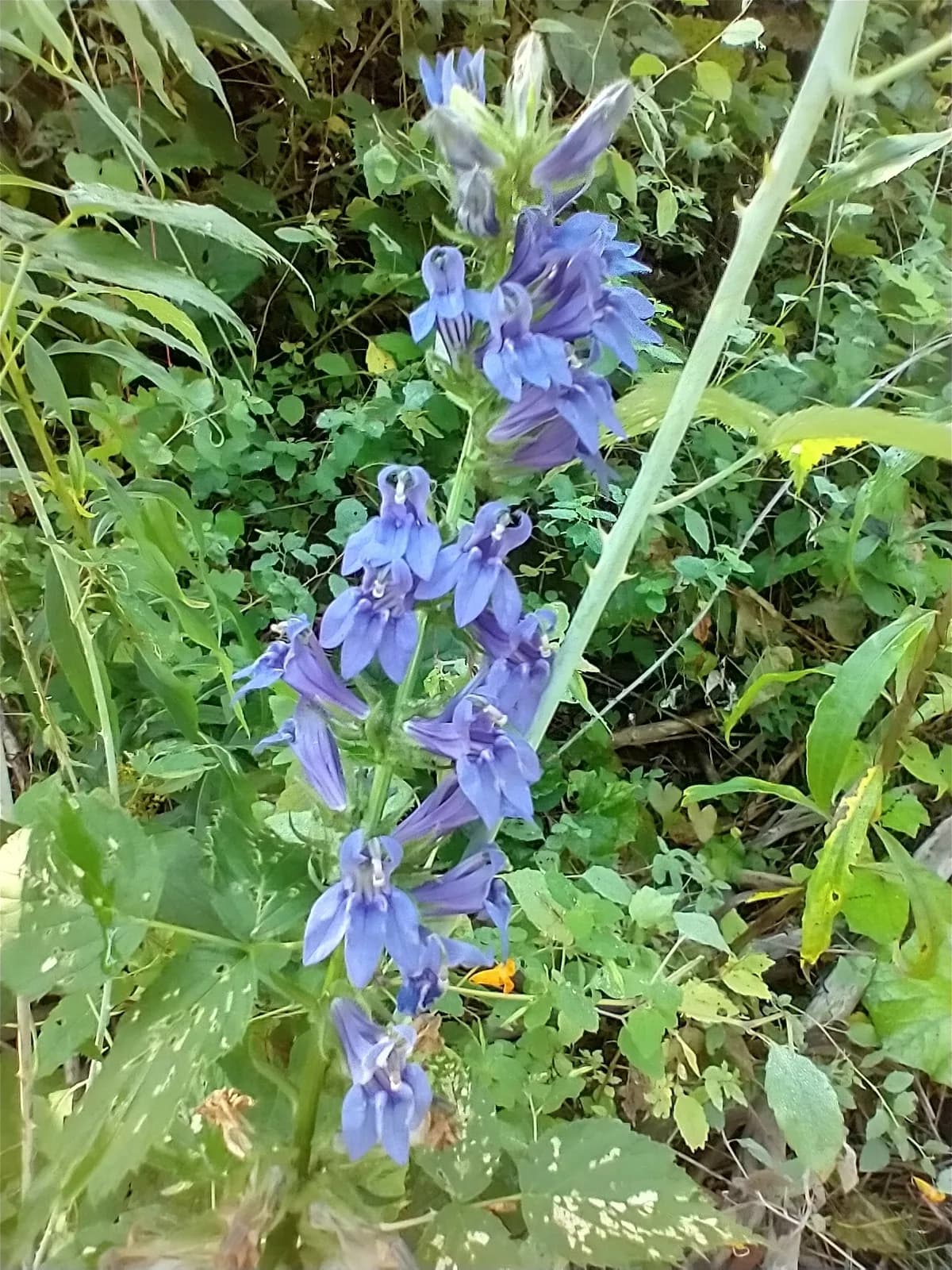
Blue Lobelia is a moisture loving forb that blooms from July through September with spikes of vivid blue flowers. It thrives in wet meadows, streambanks and rain gardens with part sun to part shade.
Toxicity unknown
Blue Lobelia (Lobelia siphilitica) is not listed by the ASPCA Animal Poison Control Center (opens in new tab) or the other sources we check, so we have no verdict for it either way. Absence from those lists is not a clearance. If your pet shows symptoms after eating any plant, call the ASPCA at (888) 426-4435.
Light
part sun
Water
high
Size
12"–36" H × 12"–18" W
Bloom
Jul, Aug, Sep
Native to
AL, AR, CO, CT and 34 more states
Pollinators
bees, hummingbirds
Deer
Resistant (per Prairie Moon Nursery)
Before you buy
Your city may pay you to plant this
Cities and water utilities offer rebates for replacing lawn with native and water-wise plants. We track 459 programs across 44 states, each with a link to the provider and the date we last checked it.
Find rebates in your areaPicture natives in your own yard
Upload a photo of your yard and Patch Vision shows a rendering of it planted with natives for your region, like Blue Lobelia.


Browse plants for this ecoregion
Blue lobelia produces tall spikes of brilliant blue flowers from summer through early fall, creating striking vertical accents in the garden. This native perennial thrives in consistently moist soil and partial sun conditions. The plant forms neat clumps with lance-shaped green leaves that complement the showy flower displays.
Growing Blue Lobelia
Grow Blue Lobelia in part sun and high water. Mature plants reach 12 to 36 inches tall and spread 12 to 18 inches wide. Expect moderate maintenance to keep it looking intentional in a front yard.
How to care for Blue Lobelia, by region
How to care for Blue Lobelia where it is actually grown: year-round basics plus what to do each season, region by region, with the sources for each.
Care guidance last updated: October 2026
Cross Timbers (includes Fort Worth, TX)
Year-round
Great blue lobelia is a moisture-loving perennial that belongs in the wet, low spots of a north-central Texas yard, not the dry high ground. In the Cross Timbers it grows wild along creek edges, seeps, and shaded stream banks. Give it steady moisture and afternoon shade and it rewards you with tall spikes of true-blue flowers in late summer when most other blooms have quit.
- It is native to Texas and grows in moist stream banks, seeps, and bottomland openings, so it fits the shaded, wet parts of the Cross Timbers rather than the dry uplands (Lady Bird Johnson Wildflower Center).
- It has almost no drought tolerance and wants soil kept moist to wet at all times, so plant it near a downspout, low swale, rain garden, or a spot you water often (Lady Bird Johnson Wildflower Center).
- It takes sun, part shade, or shade, and part shade is the safest bet in Texas heat to keep the roots from drying out (Lady Bird Johnson Wildflower Center).
- Bumblebees are the main pollinator because they are strong enough to pry the tubular flowers open, so it earns its keep as a pollinator plant (USDA Forest Service).
- All parts contain lobeline alkaloids that are toxic if eaten in quantity, and the ASPCA lists Lobelia as toxic to dogs, cats, and horses, so keep it away from pets and children who nibble plants (Lady Bird Johnson Wildflower Center, ASPCA Animal Poison Control Center).
The upright blue spikes read as an intentional, tidy accent in a moist bed or rain garden, which keeps a wet low spot looking cared-for rather than neglected.
Fall
Fall is peak bloom for great blue lobelia in the Cross Timbers, with blue spikes carrying into October. Let some flowers go to seed if you want new plants, then let the plant start easing toward dormancy. Keep watering until the weather cools and rain takes over.
- Flowering continues into fall, often through September and October, so leave the spikes up to feed late bumblebees (Lady Bird Johnson Wildflower Center, USDA Forest Service).
- Leave a few spent flower spikes to drop seed if you want the patch to spread, since this plant reseeds in moist ground.
- Keep soil moist into early fall, then ease off watering as temperatures drop and fall rain arrives.
- You can cut back faded stems once bloom finishes, or leave them standing for winter structure and self-seeding.
Leaving a few tidy seed spikes standing looks deliberate and keeps the bed from reading as unfinished going into winter.
Winter
In winter great blue lobelia dies back to a low basal rosette or to the ground and rests. This is normal and not a sign the plant is dead. Do very little now, just make sure the crown does not sit bone dry through a mild Cross Timbers winter.
- The plant goes dormant in winter and the top growth dies back, so bare stems or a small ground-level rosette are expected and healthy.
- Do not dig it up thinking it died, the roots are alive and will push new growth in spring.
- Give it a little water during long dry winter stretches so the crown does not fully dry out, since it never truly tolerates drought (Lady Bird Johnson Wildflower Center).
- Hold off on heavy cleanup until late winter so any standing stems can keep dropping seed.
Spring
Spring is planting and establishing season for great blue lobelia in the Cross Timbers. Set out new plants once hard frost has passed and keep the soil damp while the low rosette of leaves gets going. This is a plant that lives or dies on moisture, so the whole spring job is making sure it never dries out.
- Plant new starts in early to mid spring in a low, moist, part-shade spot and water them in well so the roots settle before summer heat (Lady Bird Johnson Wildflower Center).
- Keep the soil damp all spring, never letting it fully dry, since this plant has no drought tolerance (Lady Bird Johnson Wildflower Center).
- Watch for the low cluster of leaves to send up new growth, and thin or divide crowded clumps now while the plant is small and easy to move.
- A two inch layer of mulch around the base helps hold spring moisture and keeps the shallow roots cool.
Summer
Summer is the hardest season for this plant in north-central Texas because the heat dries soil fast and it cannot take drought. Water deeply and often, keep it in afternoon shade, and it will build toward its late-summer flower show. The blooms usually open from July onward.
- Water often and deeply through summer heat, aiming to keep the soil constantly moist, because dry soil will wilt and can kill this plant (Lady Bird Johnson Wildflower Center).
- Afternoon shade protects it from Fort Worth summer sun and slows the soil from drying out (Lady Bird Johnson Wildflower Center).
- Blue flower spikes begin opening in mid to late summer, roughly July into fall, giving bumblebees late-season nectar (Lady Bird Johnson Wildflower Center, USDA Forest Service).
- Refresh mulch if it has thinned, since bare soil around the roots dries out fastest in July and August heat.
Sources: Lady Bird Johnson Wildflower Center, Lobelia siphilitica, USDA Forest Service, Great Blue Lobelia plant of the week, ASPCA Animal Poison Control, Lobelia
East Central Texas Plains (includes College Station, TX)
Year-round
Great blue lobelia is native to the wet, low ground of the Post Oak Savanna, growing in bottomland forest openings and soggy meadows around the College Station area. It wants moisture and some shade, not dry sandy uplands. Give it a wet low spot and it delivers tall blue flower spikes in late summer and fall.
- It is native to wet prairies, openings in bottomland forests, and soggy meadows, which fits the moist low ground of the East Central Texas Plains (USDA Forest Service, Lady Bird Johnson Wildflower Center).
- It has no drought tolerance and needs soil kept moist to wet, so plant it in a swale, rain garden, creek edge, or near a downspout rather than dry sand (Lady Bird Johnson Wildflower Center).
- Part shade suits it best in the Texas heat, though it takes full sun where soil stays wet (Lady Bird Johnson Wildflower Center).
- Bumblebees are the main pollinator, strong enough to pry open the tubular flowers, so it is a valuable late-season pollinator plant (USDA Forest Service).
- All parts contain lobeline alkaloids and are toxic if eaten in quantity, and the ASPCA lists Lobelia as toxic to dogs, cats, and horses, so keep it away from pets and small children (Lady Bird Johnson Wildflower Center, ASPCA Animal Poison Control Center).
Its clean vertical blue spikes make a moist low corner or rain garden look like an intentional planting rather than a wet problem spot.
Fall
Fall brings peak bloom in the Post Oak Savanna, with blue spikes carrying into October. Let some flowers set seed if you want the patch to spread, keep watering until it cools, then let the plant ease toward its winter rest.
- Bloom carries into fall, often through September and October, feeding late-season bumblebees (Lady Bird Johnson Wildflower Center, USDA Forest Service).
- Leave a few spent spikes to drop seed if you want more plants in moist ground.
- Keep soil moist into early fall, then ease off watering as temperatures drop and rain returns.
- Cut back faded stems after bloom, or leave them standing for winter structure and self-seeding.
Leaving a few neat seed spikes standing looks intentional and keeps the bed from reading as unfinished going into winter.
Winter
Great blue lobelia rests through winter in the Post Oak Savanna, dying back to a low rosette or the ground. This is normal, not a dead plant. Do little now, just keep the crown from drying out completely during mild dry spells.
- The plant goes dormant and the top growth dies back, so bare stems or a small ground-level rosette are expected and healthy.
- Do not dig it up thinking it died, the roots are alive and regrow in spring.
- Water lightly during long dry winter stretches so the crown does not fully dry out, since it never tolerates drought (Lady Bird Johnson Wildflower Center).
- Hold heavy cleanup until late winter so standing stems can finish dropping seed.
Spring
Spring is planting and establishing time in the Post Oak Savanna. Set out new great blue lobelia after frost risk passes and keep the soil damp while roots take hold. Because this plant lives on moisture, the spring job is simply never letting it dry out.
- Plant new starts in early to mid spring in a moist, part-shade low spot and water them in well (Lady Bird Johnson Wildflower Center).
- Keep the soil damp all spring, since sandy Post Oak soils drain fast and this plant has no drought tolerance (Lady Bird Johnson Wildflower Center).
- Divide crowded clumps now while the plant is a low rosette and easy to move.
- Mulch around the base to slow moisture loss from fast-draining ground and keep roots cool.
Summer
Summer is the make-or-break season here because sandy Post Oak soil dries fast and this plant cannot take drought. Water often, keep it in afternoon shade, and it builds toward blue flower spikes that open from mid summer on.
- Water deeply and often to keep the soil constantly moist, because dry soil will wilt and can kill this plant (Lady Bird Johnson Wildflower Center).
- Afternoon shade protects it from summer sun and slows the fast-draining soil from drying out (Lady Bird Johnson Wildflower Center).
- Blue flower spikes begin in mid to late summer, feeding bumblebees when little else blooms (Lady Bird Johnson Wildflower Center, USDA Forest Service).
- Keep mulch topped up, since bare sandy soil dries fastest in the July and August heat.
Sources: USDA Forest Service, Great Blue Lobelia plant of the week, Lady Bird Johnson Wildflower Center, Lobelia siphilitica, ASPCA Animal Poison Control, Lobelia
Eastern Corn Belt Plains (includes Columbus, OH)
Year-round
A moisture lover that suits rain gardens and wet spots.
- It prefers wet to moist soil and partial sun. Full sun works only if the soil stays consistently moist.
- Use fertile, loamy soil.
- It suits rain gardens and areas near ponds or streams.
- Maintenance is rated low.
Fall
Late blooms and seeds feed wildlife.
- Bloom runs through October and seed displays run from August to November.
- The plant has been known to self seed, so expect seedlings.
- Nectar and pollen mainly draw bumblebees and other long-tongued bees.
Winter
Dormant and hardy.
- The plant is hardy in USDA zones 4a through 9b.
- Plan to divide clumps next spring if you want more plants.
- Slugs and snails can return with new growth, so watch for them in spring.
Spring
Spring is division time.
- The plant forms clumps that may be divided in spring.
- Snails and slugs may damage the foliage, so check new growth.
- Keep the soil moist as it wakes up.
Summer
Flowers start in July, so keep the soil wet.
- Keep the soil consistently moist, especially if the plant is in full sun.
- Flowers bloom from July to October.
- Flowers are attractive to hummingbirds and butterflies.
Sources: NC State Extension Plant Toolbox, Lobelia siphilitica
Erie Drift Plain (includes Buffalo, NY)
Year-round
Great blue lobelia loves damp soil and blooms with blue flowers from midsummer into fall.
- Keep the soil moist, this plant does not handle drought.
- It does well in part shade, and full sun if the soil stays wet.
- Divide clumps in spring to make more plants.
Fall
Fall brings the last blooms and, if you want, seed to collect or scatter.
- Blooms can last into October.
- Seed can be gathered from mid-September on.
- Water if autumn turns dry.
Winter
In winter the plant rests under snow and needs no care.
- No watering is needed while the ground is frozen.
- Leave the base of the plant in place.
- Mulch can stay to protect the roots.
Spring
Spring is the time to divide clumps and get the soil damp for the season.
- Divide crowded clumps in spring.
- Keep new shoots watered when rain is scarce.
- Watch for slugs on tender young leaves.
Summer
Summer needs steady water, since dry soil is the main risk.
- Water whenever the soil begins to dry out.
- Mulch to hold moisture.
- Blooms begin in July.
Sources: Lady Bird Johnson Wildflower Center: Lobelia siphilitica, NC State Extension Plant Toolbox: Lobelia siphilitica
Huron/Erie Lake Plains (includes Detroit, MI)
Year-round
Great blue lobelia is a moisture-loving perennial that puts up tall blue flower spikes in late summer. In the Detroit area the whole job is keeping its roots damp and giving it a little afternoon shade in the hottest spots. It is short-lived on its own but reseeds, so you can let it fill in gaps.
- At planting, work a couple inches of compost into the hole and keep the soil steadily damp for the first full season while roots settle in.
- Once established it still wants consistent moisture. Water deeply whenever the top inch of soil goes dry, and do not let it bake out in July and August.
- Lay 2 to 3 inches of shredded bark or leaf mulch over the roots to hold water in, but keep the mulch pulled back an inch from the base of the stems.
- It is toxic to dogs, cats, and horses if eaten, per the ASPCA Animal Poison Control Center plant database, so keep an eye on pets that chew plants and call (888) 426-4435 if any is swallowed.
Fall
Fall is when the plant finishes blooming and sets seed. The one decision is how much to cut back now versus leave standing, and letting some seed drop is how you keep this short-lived plant coming back.
- Let the last spikes ripen and drop seed if you want new plants, since this one is short-lived and reseeding is how it persists in the bed.
- Once frost blackens the foliage, you can cut stems down to a few inches for a tidy look, or leave a few standing for winter interest and to self-sow.
- Do not smother the low basal rosette with heavy mulch or fallen leaves. Keep mulch light right over the crown so it does not rot over winter.
A fall cutback of the blackened stems makes the bed read as intentional and maintained heading into winter, which is what keeps a front yard clear of a violation letter.
Winter
Winter is a rest period. The plant dies back to a small green rosette at the soil line and rides out Detroit's cold and snow with almost no help from you.
- No watering is needed once the plant is dormant. Winter precipitation and snowmelt cover it.
- A light, loose winter mulch protects the crown through freeze and thaw swings, but keep it airy so the basal rosette does not sit wet and rot.
- Leave any stems you kept standing until spring, then clear them once new growth starts. Avoid stepping on or compacting the crown while the bed is frozen.
Spring
Spring is for cleanup and setting up the moisture the plant will lean on all year. New growth is a low rosette at the base, so clear away last year's stems carefully and mark where the plant sits.
- After the ground thaws, cut away any old dead stalks left standing and gently rake off matted leaves so the new basal rosette gets light and air.
- Refresh mulch to 2 to 3 inches now, before the summer heat, to bank moisture in the soil for the dry stretch ahead.
- This is the best window to divide an older clump or move seedlings that popped up in the wrong spot, since cool damp spring soil helps them re-root.
Summer
Summer is watering season. Detroit summers can turn hot and dry in July and August, and this plant will wilt and drop buds if it dries out, so keeping the soil damp is the whole task.
- Water deeply once or twice a week during dry, hot spells, more if the plant sits in full sun, aiming to keep the root zone from ever fully drying.
- In a hot, exposed front bed, a little afternoon shade helps it hold up. If it flops in the heat, that is usually a thirst signal, not a soil problem.
- Flower spikes open from late summer, so leave them alone and let them bloom out. Snapping off a spent spike here and there keeps it looking neat.
- If tall stems lean after a summer storm, slip a thin stake behind the main spike rather than tying the whole clump tight.
A quick pass to snap off finished flower spikes keeps the front bed reading as tended and cared for, which is the look that avoids an HOA complaint.
Sources: ASPCA Animal Poison Control lobelia listing, Missouri Botanical Garden Lobelia siphilitica, Prairie Moon Nursery Lobelia siphilitica, Prairie Nursery Great Blue Lobelia, Lady Bird Johnson Wildflower Center Lobelia siphilitica
Piedmont (includes Atlanta, GA)
Year-round
Great blue lobelia wants moist soil and a bit of shade. Keep it watered in Atlanta and it will give tall blue flowers late in the year.
- Give it part shade, and full sun only if the soil stays consistently moist.
- Lady Bird Johnson Wildflower Center says it is not at all drought tolerant, so water it when conditions are dry.
- It likes fertile, loamy soil with plenty of organic matter and does well in rain gardens.
- It is hardy in zones 4 to 9, so Atlanta is within its range.
- Clumps can be divided in spring and it may self-seed.
Fall
Blooms carry into fall. Keep watering and let some seed form if you want more plants.
- Bloom runs through October, so keep the soil moist while flowers last.
- It may self-seed, so leave some seed heads if you want new plants.
- Seed needs about 2 months of moist cold before it sprouts, so fall-sown seed gets that chill naturally.
Winter
Winter is quiet. The plant rests and Atlanta cold is well within its range.
- It is hardy to zone 4, so Atlanta winters are mild for it.
- Leave the clump in place and plan any division for spring.
- Water during long dry spells so the soil does not dry hard.
Spring
Spring is the time to divide clumps and get the soil ready.
- Divide clumps in spring if they have grown crowded.
- Work in compost to boost organic matter, since it likes rich soil.
- Watch for slugs and snails on new foliage, which NC State says can damage it.
Summer
Summer is when water matters most. It blooms from midsummer on, so do not let it dry out.
- It is not at all drought tolerant, so water it during dry or hot stretches.
- Mulch helps hold in moisture during Atlanta heat.
- Blue flowers open from mid-summer into early fall and attract bumblebees and long-tongued bees.
- Afternoon shade helps in hot spots.
Sources: NC State Extension Plant Toolbox: Lobelia siphilitica, Lady Bird Johnson Wildflower Center: Lobelia siphilitica
South Central Plains (includes Beaumont, TX)
Year-round
Great blue lobelia is right at home in the wet woods and swamp edges of the East Texas Piney Woods around Beaumont. It grows naturally in shaded bottomlands, stream banks, and marshes here. Give it moist ground and dappled shade and it thanks you with tall blue flower spikes in late summer and fall.
- It is native to open wet woods, stream banks, marshes, swamp forest, and floodplains, which is exactly the wet, shaded ground of the Piney Woods (USDA Forest Service, Lady Bird Johnson Wildflower Center).
- It has no drought tolerance and wants soil kept moist to wet, an easy fit in the high-rainfall Beaumont area, so give it a low or shaded spot that stays damp (Lady Bird Johnson Wildflower Center).
- It handles sun, part shade, or full shade, and the dappled shade of a wooded yard suits it well (Lady Bird Johnson Wildflower Center).
- Bumblebees are its main pollinator, prying open the tubular blue flowers for nectar, so it is a strong late-season pollinator plant (USDA Forest Service).
- All parts contain lobeline alkaloids and are toxic if eaten in quantity, and the ASPCA lists Lobelia as toxic to dogs, cats, and horses, so keep it away from pets and small children (Lady Bird Johnson Wildflower Center, ASPCA Animal Poison Control Center).
In a shaded, moist front bed the upright blue spikes read as a deliberate woodland accent, keeping a damp corner looking cared-for.
Fall
Fall is peak bloom in the Piney Woods, with blue spikes carrying into October. Let some flowers set seed if you want the patch to spread in the moist woodland floor, keep the ground damp, then let the plant ease toward winter rest.
- Bloom continues into fall, often through September and October, feeding late bumblebees (Lady Bird Johnson Wildflower Center, USDA Forest Service).
- Leave a few spent spikes to drop seed, which reseeds readily in the moist woodland floor.
- Keep soil moist into early fall, then ease off watering as temperatures cool and rain continues.
- Cut back faded stems after bloom, or leave them for winter structure and self-seeding.
A few tidy seed spikes left standing look deliberate and keep a shaded bed from reading as neglected into winter.
Winter
Great blue lobelia rests through the mild Piney Woods winter, dying back to a low rosette or the ground. This is normal and not a dead plant. Do very little now, just keep the crown from sitting bone dry in a rare dry spell.
- The plant goes dormant and top growth dies back, so bare stems or a small ground-level rosette are expected and healthy.
- Do not dig it up assuming it died, the roots are alive and regrow in spring.
- East Texas winter rain usually keeps the crown damp, but water lightly if a long dry stretch hits, since it never tolerates drought (Lady Bird Johnson Wildflower Center).
- Wait until late winter for heavy cleanup so standing stems can finish dropping seed.
Spring
Spring is planting and establishing season in the Piney Woods. Set out new great blue lobelia after frost risk passes into moist, shaded ground and keep it damp while roots take hold. With Beaumont's spring rain this is usually an easy start.
- Plant new starts in early to mid spring in a moist, part-shade or shaded spot and water them in well (Lady Bird Johnson Wildflower Center).
- Spring rain in East Texas usually keeps the soil damp, but check that low spots drain enough to avoid standing rot while staying moist (Lady Bird Johnson Wildflower Center).
- Divide crowded clumps now while the plant is a low rosette and easy to lift.
- A layer of leaf mulch mimics its natural woodland floor and holds moisture around the roots.
Summer
Summer in the Piney Woods is warm and often wet, which suits this moisture-loving plant, but dry spells still hit hard since it has no drought tolerance. Keep the soil moist, give it shade, and it builds toward blue flower spikes from mid summer on.
- Keep the soil constantly moist through summer, watering during any dry stretch, because this plant cannot survive drying out (Lady Bird Johnson Wildflower Center).
- Shade or part shade protects it from the hottest sun and helps hold soil moisture (Lady Bird Johnson Wildflower Center).
- Blue flower spikes open in mid to late summer, feeding bumblebees through the season (Lady Bird Johnson Wildflower Center, USDA Forest Service).
- Keep a leaf-mulch layer in place to hold moisture between the frequent East Texas summer rains.
Sources: USDA Forest Service, Great Blue Lobelia plant of the week, Lady Bird Johnson Wildflower Center, Lobelia siphilitica, ASPCA Animal Poison Control, Lobelia
Texas Blackland Prairies (includes Dallas, TX)
Year-round
Great blue lobelia is a genuine Blackland Prairie native, growing wild in moist prairie swales and bottomland openings around Dallas. It wants the wet, low, clay-soil spots in your yard, not the dry high ground. Give it steady moisture and it sends up tall blue flower spikes in late summer and fall.
- It is native to moist Blackland prairies, wet prairies, and bottomland forest openings, so the Dallas-area Blackland Prairie is one of its true home ranges (USDA Forest Service, Lady Bird Johnson Wildflower Center).
- It grows in clay, loam, or sand as long as the soil stays moist to wet, and it has no drought tolerance, so plant it in a low swale, rain garden, or near a downspout (Lady Bird Johnson Wildflower Center).
- Part shade suits it best in Texas heat, though it will take full sun if the soil stays reliably wet (Lady Bird Johnson Wildflower Center).
- Bumblebees are its main pollinator, prying open the tubular blue flowers for nectar, so it is a strong late-season pollinator plant (USDA Forest Service).
- All parts contain lobeline alkaloids and are toxic if eaten in quantity, and the ASPCA lists Lobelia as toxic to dogs, cats, and horses, so site it away from pets and small children (Lady Bird Johnson Wildflower Center, ASPCA Animal Poison Control Center).
Its upright blue spikes give a wet low corner or rain garden a clean, intentional vertical accent that reads as a managed planting, not a weedy patch.
Fall
Fall is the big bloom season for great blue lobelia on the Blackland Prairie, with blue spikes carrying into October. Let some seed drop if you want more plants, keep watering until the weather cools, then let it head toward dormancy.
- Bloom continues into fall, often through September and October, feeding late bumblebees (Lady Bird Johnson Wildflower Center, USDA Forest Service).
- Leave a few spent spikes to drop seed if you want the patch to spread in moist ground.
- Keep soil moist into early fall, then ease off watering as temperatures drop and rain returns.
- Cut back faded stems after bloom, or leave them for winter structure and self-seeding.
A few tidy seed spikes left standing look deliberate and keep the bed from reading as neglected heading into winter.
Winter
Great blue lobelia rests in winter, dying back to a low rosette or to the ground. This is normal on the Blackland Prairie and not a sign of trouble. Do almost nothing, just keep the crown from going bone dry in a mild winter.
- The plant goes dormant and top growth dies back, so bare stems or a small ground-level rosette are expected and healthy.
- Do not dig it up assuming it died, the roots are alive and will regrow in spring.
- Give a little water in long dry winter stretches so the crown does not fully dry out, since it never tolerates drought (Lady Bird Johnson Wildflower Center).
- Wait until late winter for heavy cleanup so standing stems can finish dropping seed.
Spring
Spring is when you plant and establish great blue lobelia in Blackland Prairie clay. Get new plants in once frost risk passes and keep the heavy clay soil damp while roots take hold. The whole spring task is keeping moisture steady so it is ready for summer.
- Plant new starts in early to mid spring in a low, moist, part-shade spot and water them in well (Lady Bird Johnson Wildflower Center).
- Blackland clay holds water well, which suits this plant, but keep it evenly moist and never let it bake dry in spring wind (Lady Bird Johnson Wildflower Center).
- Divide crowded clumps now while the plant is a low rosette and easy to lift and replant.
- Mulch around the base to hold spring moisture and keep the shallow roots cool as the days warm.
Summer
Summer heat around Dallas dries even heavy clay, and this plant cannot take drought, so summer is all about water and shade. Keep the soil moist and give it afternoon shade, and it builds toward its blue flower spikes that open from mid summer on.
- Water deeply and often through summer to keep the soil constantly moist, since dry soil will wilt and can kill this plant (Lady Bird Johnson Wildflower Center).
- Afternoon shade shields it from Dallas summer sun and slows soil drying (Lady Bird Johnson Wildflower Center).
- Blue flower spikes start opening in mid to late summer, giving bumblebees late-season nectar (Lady Bird Johnson Wildflower Center, USDA Forest Service).
- Keep mulch topped up, because bare clay cracks and dries fast in July and August.
Sources: USDA Forest Service, Great Blue Lobelia plant of the week, Lady Bird Johnson Wildflower Center, Lobelia siphilitica, ASPCA Animal Poison Control, Lobelia
In an HOA neighborhood
Blue Lobelia is an HOA-friendly choice. Maintenance level: moderate. Tidiness: 4 out of 5.
Works well in: front yard, foundation, street edge, mid zone.
- Requires consistent moisture to maintain appearance
Wildlife value
The tubular blue flowers are particularly attractive to hummingbirds and also support various native bees. This plant provides valuable late-season nectar when many other flowers have finished blooming.
Common questions
- When does Blue Lobelia bloom?
- Blue Lobelia typically flowers from July through September, producing tall spikes of blue tubular flowers in mid to late summer.
- What pollinators visit Blue Lobelia?
- Bees and hummingbirds are the main visitors, drawn to the tubular blue flowers for nectar throughout the summer bloom period.
- How much water does Blue Lobelia need?
- This plant prefers consistently moist to wet soil and does best along streambanks, in rain gardens, or in low spots that stay damp through the growing season.
- How much sun does Blue Lobelia need?
- It grows well in part sun to part shade, though it can also handle full sun if the soil stays consistently moist.
- Is Blue Lobelia a perennial?
- Yes, it is a herbaceous perennial forb that dies back to the ground each winter and regrows from its base in spring.
- Is Blue Lobelia HOA-friendly?
- Blue Lobelia is generally an HOA-friendly choice in the right placement, with moderate maintenance.
These answers were drafted with an AI model from this plant's data. Verify care details with a local expert.
Native range data from vouchered herbarium specimen records and regional native plant society lists. Pollinator and host plant associations compiled from GBIF, iNaturalist, and published ecological literature.
If something looks wrong
Common plant problems, and what to check first
These come up on almost any plant. Each guide lists the likely causes in the order they are worth ruling out, with one thing to check before you act on any of them, and links to the source it came from.
- It is dying right after planting
- Leaves turning yellow
- Wilting even though I watered it
- Brown crispy leaf tips
- Bugs on the plant
Ready to grow Blue Lobelia? Add it to your garden in Pollinator Patch to track it and get season-by-season care guidance.