Tall Coneflower
Rudbeckia laciniata
Last reviewed: August 2026
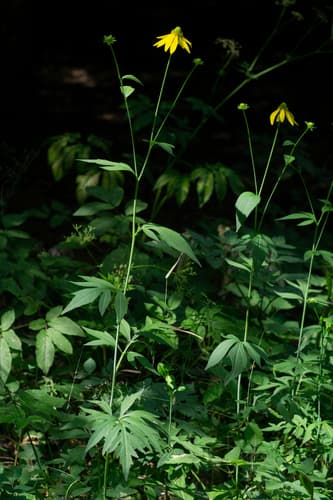
Tall Coneflower is a tall herbaceous perennial forb that blooms from July through September, with drooping yellow petals around a green-yellow center, growing well in full sun to part shade with medium to moist soil.
Toxicity unknown
Tall Coneflower (Rudbeckia laciniata) is not listed by the ASPCA Animal Poison Control Center (opens in new tab) or the other sources we check, so we have no verdict for it either way. Absence from those lists is not a clearance. If your pet shows symptoms after eating any plant, call the ASPCA at (888) 426-4435.
The USDA PLANTS Database (opens in new tab) does not flag Tall Coneflower as toxic to livestock.
Light
full sun
Water
medium
Size
36"–72" H × 12"–24" W
Bloom
Jul, Aug, Sep
Native to
AL, AR, AZ, CO and 35 more states
Pollinators
bees, butterflies, beetles
Deer
Resistant (per Prairie Moon Nursery)
Before you buy
Your city may pay you to plant this
Cities and water utilities offer rebates for replacing lawn with native and water-wise plants. We track 452 programs across 44 states, each with a link to the provider and the date we last checked it.
Find rebates in your areaBrowse plants for this ecoregion
Tall coneflower is a robust native perennial that produces bright yellow daisy-like flowers from July through September. This prairie plant can reach up to 6 feet tall and spreads moderately to form attractive clumps over time.
Growing Tall Coneflower
Grow Tall Coneflower in full sun and medium water. Mature plants reach 36 to 72 inches tall and spread 12 to 24 inches wide. Expect low maintenance to keep it looking intentional in a front yard.
How to care for Tall Coneflower, by region
How to care for Tall Coneflower where it is actually grown: year-round basics plus what to do each season, region by region, with the sources for each.
Care guidance last updated: July 2026
Cross Timbers (includes Fort Worth, TX)
Year-round
Tall coneflower is a native prairie forb that grows tall and spreads by rhizomes to form a loose colony, so give it room and expect it to wander a bit rather than stay in a tidy clump.
- Space plants 2 to 3 feet apart since it spreads underground and fills in over a few seasons
- Full sun to light afternoon shade, and give it consistently moist, well drained soil rather than letting it dry out for long stretches
- Expect 3 to 6 feet of height, so plant it behind shorter front-yard plants or along a fence line, not right at the walkway
- It is a caterpillar host plant for the silvery checkerspot butterfly, so some chewed leaves in summer are a sign it is doing its job, not a problem to spray
This is a tall, spreading plant, not a compact bedding plant, so it reads best planted in a defined bed or against a fence rather than loose in an open front lawn.
Fall
Fall is bloom cleanup and division time for tall coneflower, and a good season to control how far it has spread.
- Leave the last flush of seed heads standing into October and November so goldfinches and other songbirds can feed on the seed
- Divide crowded clumps in October or November if the colony has spread past where you want it, replanting divisions elsewhere or sharing them
- Pull or cut back any rhizome shoots that have wandered into the lawn or a neighboring bed
- Cut the bulk of the stalks down to about 12 to 18 inches once frost blackens the foliage, typically after the mid November first frost
Dividing and edging the spread in fall keeps the bed's footprint defined heading into winter, which matters more for curb appeal than any single bloom.
Winter
Winter is a rest period for tall coneflower; the top growth goes dormant and there is little to do except leave the stubble in place.
- Leave cut stems at 12 to 18 inches standing through winter rather than cutting to the ground, since hollow stems shelter overwintering native bees
- North Texas winters are mild with brief hard freezes and occasional severe Arctic outbreaks; established plants handle both without extra protection
- Do not fertilize or water on a schedule in winter; let rainfall handle it unless there is an extended dry spell
- This plant is not listed on the ASPCA's toxic plant lists for dogs or cats, though that reflects an absence of a listing rather than a tested safety claim, and some older poisonous-plant references note mild toxicity risk to livestock and horses if eaten in quantity, which matters less in a front-yard setting than on grazing land
Standing stubble reads as intentional winter structure if kept to a neat, even height rather than left sprawling.
Spring
Spring is the best time to plant tall coneflower here so its roots settle in before the hard North Texas summer.
- Plant in March or April, after the mid March last frost date, while soil is still cool and rain is more reliable
- In heavy black clay, plant it slightly high on a low mound or work in compost first so water does not pool at the crown; in the sandier soils west of the metro it will drain faster and need more frequent watering while it settles in
- Water two to three times a week for the first month if spring rain is light, then taper off as the clump establishes
- New growth is fast once it starts, so mark the spot if you are planting near a walkway to avoid crowding it out later
Summer
Summer is when tall coneflower blooms and also when North Texas heat puts the most stress on it, especially a newly planted one.
- Blooms July through September with clusters of yellow, drooping-petaled flowers on tall stems
- Water deeply once or twice a week during 100F-plus stretches in July and August, more often for plants in their first summer
- Check leaves for the silvery checkerspot caterpillar's chewed patches; this is normal host-plant activity and does not need treatment
- Deadhead spent blooms if you want a tidier look and a longer bloom window, though leaving some seed heads feeds finches later in the season
Deadheading through summer keeps the bloom stalks from looking ragged if the bed faces the street.
Sources: Lady Bird Johnson Wildflower Center, Rudbeckia laciniata, Illinois Wildflowers, Cutleaf Coneflower insect associations, NC State Extension Gardener Plant Toolbox, Rudbeckia laciniata, ASPCA Toxic and Non-Toxic Plant List, Dogs, Cornell Department of Animal Science, Plants Poisonous to Livestock FAQ
Texas Blackland Prairies (includes Dallas, TX)
Year-round
Tall coneflower is a native prairie forb that grows tall and spreads by rhizomes to form a loose colony, so give it room and expect it to wander a bit rather than stay in a tidy clump.
- Space plants 2 to 3 feet apart since it spreads underground and fills in over a few seasons
- Full sun to light afternoon shade, and give it consistently moist, well drained soil rather than letting it dry out for long stretches
- Expect 3 to 6 feet of height, so plant it behind shorter front-yard plants or along a fence line, not right at the walkway
- It is a caterpillar host plant for the silvery checkerspot butterfly, so some chewed leaves in summer are a sign it is doing its job, not a problem to spray
This is a tall, spreading plant, not a compact bedding plant, so it reads best planted in a defined bed or against a fence rather than loose in an open front lawn.
Fall
Fall is bloom cleanup and division time for tall coneflower, and a good season to control how far it has spread.
- Leave the last flush of seed heads standing into October and November so goldfinches and other songbirds can feed on the seed
- Divide crowded clumps in October or November if the colony has spread past where you want it, replanting divisions elsewhere or sharing them
- Pull or cut back any rhizome shoots that have wandered into the lawn or a neighboring bed
- Cut the bulk of the stalks down to about 12 to 18 inches once frost blackens the foliage, typically after the mid November first frost
Dividing and edging the spread in fall keeps the bed's footprint defined heading into winter, which matters more for curb appeal than any single bloom.
Winter
Winter is a rest period for tall coneflower; the top growth goes dormant and there is little to do except leave the stubble in place.
- Leave cut stems at 12 to 18 inches standing through winter rather than cutting to the ground, since hollow stems shelter overwintering native bees
- North Texas winters are mild with brief hard freezes and occasional severe Arctic outbreaks; established plants handle both without extra protection
- Do not fertilize or water on a schedule in winter; let rainfall handle it unless there is an extended dry spell
- This plant is not listed on the ASPCA's toxic plant lists for dogs or cats, though that reflects an absence of a listing rather than a tested safety claim, and some older poisonous-plant references note mild toxicity risk to livestock and horses if eaten in quantity, which matters less in a front-yard setting than on grazing land
Standing stubble reads as intentional winter structure if kept to a neat, even height rather than left sprawling.
Spring
Spring is the best time to plant tall coneflower here so its roots settle in before the hard North Texas summer.
- Plant in March or April, after the mid March last frost date, while soil is still cool and rain is more reliable
- In heavy black clay, plant it slightly high on a low mound or work in compost first so water does not pool at the crown; in the sandier soils west of the metro it will drain faster and need more frequent watering while it settles in
- Water two to three times a week for the first month if spring rain is light, then taper off as the clump establishes
- New growth is fast once it starts, so mark the spot if you are planting near a walkway to avoid crowding it out later
Summer
Summer is when tall coneflower blooms and also when North Texas heat puts the most stress on it, especially a newly planted one.
- Blooms July through September with clusters of yellow, drooping-petaled flowers on tall stems
- Water deeply once or twice a week during 100F-plus stretches in July and August, more often for plants in their first summer
- Check leaves for the silvery checkerspot caterpillar's chewed patches; this is normal host-plant activity and does not need treatment
- Deadhead spent blooms if you want a tidier look and a longer bloom window, though leaving some seed heads feeds finches later in the season
Deadheading through summer keeps the bloom stalks from looking ragged if the bed faces the street.
Sources: Lady Bird Johnson Wildflower Center, Rudbeckia laciniata, Illinois Wildflowers, Cutleaf Coneflower insect associations, NC State Extension Gardener Plant Toolbox, Rudbeckia laciniata, ASPCA Toxic and Non-Toxic Plant List, Dogs, Cornell Department of Animal Science, Plants Poisonous to Livestock FAQ
Want these tasks as reminders timed to your yard? Pollinator Patch turns this guidance into a season-by-season care plan for the plants you actually grow.
In an HOA neighborhood
Tall Coneflower takes more care to keep looking intentional in a front yard. Maintenance level: low. Consider it for backyard or mid-zone beds rather than the street edge.
Works well in: backyard only.
- Extremely tall height appears too wild for front yards
- Can look messy when stems die back in fall
- May spread beyond intended boundaries
Wildlife value
Host plant for silvery checkerspot butterfly.
The flowers attract bees, butterflies, and beetles throughout the summer blooming period. Seeds provide food for birds in fall and winter.
Common questions
- When does Tall Coneflower bloom?
- Tall Coneflower typically flowers from July through September, producing yellow ray flowers with a green-yellow central disk.
- What pollinators visit Tall Coneflower?
- Bees, butterflies, and beetles regularly visit the flowers for pollen and nectar during the summer bloom period.
- How much water does Tall Coneflower need?
- It grows best with medium moisture but tolerates consistently wet soil, which reflects its frequent presence along streambanks and low, damp meadows.
- What light conditions suit Tall Coneflower?
- It performs well in full sun and also tolerates part sun to part shade, especially where afternoon shade helps retain soil moisture.
- How tall does Tall Coneflower get?
- This forb is one of the taller Rudbeckia species, often reaching several feet in height in a single growing season under favorable moisture and light.
- Is Tall Coneflower toxic to livestock?
- The USDA PLANTS Database does not flag Tall Coneflower as toxic to livestock.
- Is Tall Coneflower HOA-friendly?
- Tall Coneflower takes more care to look intentional in a front yard. Consider it for backyard or mid-zone beds rather than the street edge.
These answers were drafted with an AI model from this plant's data. Verify care details with a local expert.
Native range data from vouchered herbarium specimen records and regional native plant society lists. Pollinator and host plant associations compiled from GBIF, iNaturalist, and published ecological literature.
If something looks wrong
Common plant problems, and what to check first
These come up on almost any plant. Each guide lists the likely causes in the order they are worth ruling out, with one thing to check before you act on any of them, and links to the source it came from.
- It is dying right after planting
- Leaves turning yellow
- Wilting even though I watered it
- Brown crispy leaf tips
- Bugs on the plant
Ready to grow Tall Coneflower? Add it to your garden in Pollinator Patch to track it and get season-by-season care guidance.
Planning a bed around it? Start a free plan with this plant
Not sure where to start? Take the 2-minute yard quiz