New Jersey-tea
Ceanothus americanus
Last reviewed: October 2026
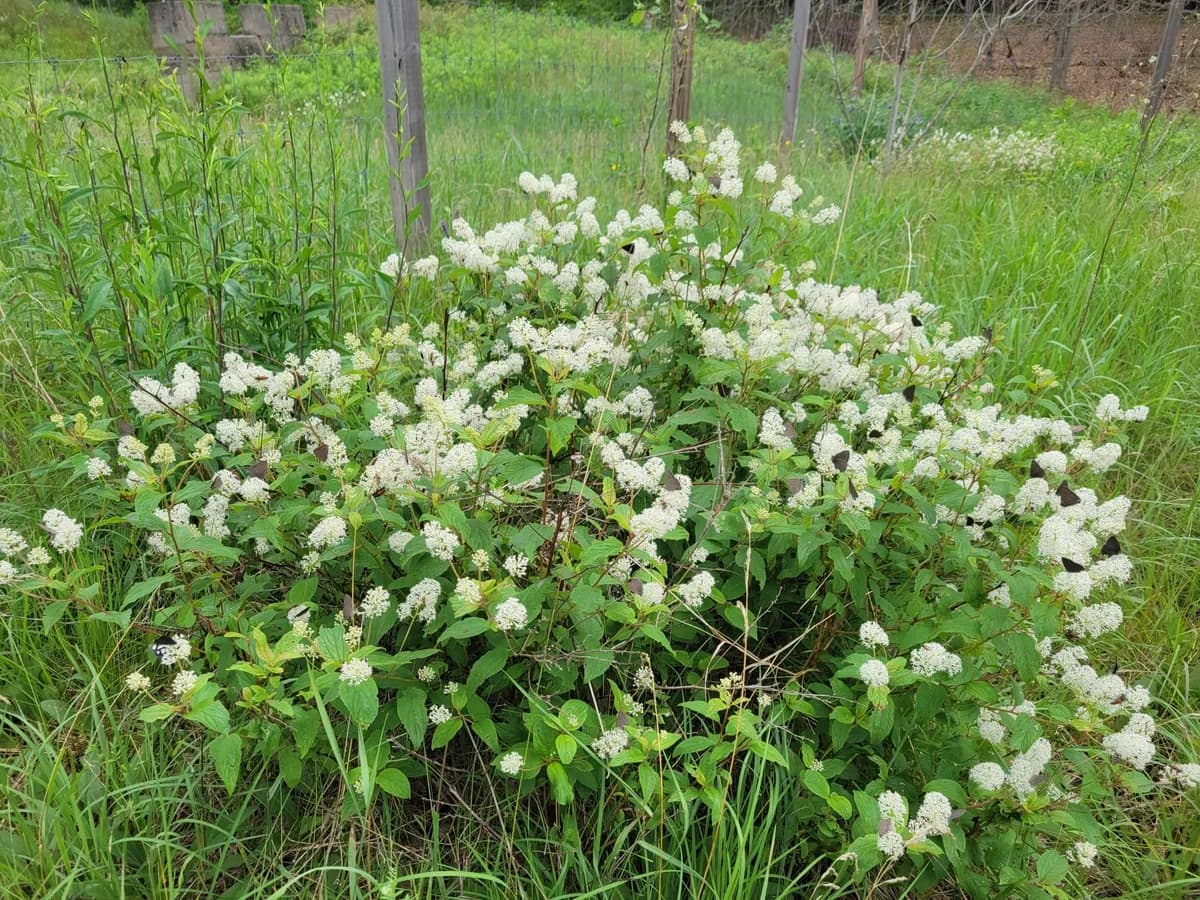
Ceanothus americanus, or New Jersey-tea, is a low, rounded shrub that produces small clusters of white flowers in June and July. It grows well in part sun with average to dry soil in woodland edges and open ground.
Toxicity unknown
New Jersey-tea (Ceanothus americanus) is not listed by the ASPCA Animal Poison Control Center (opens in new tab) or the other sources we check, so we have no verdict for it either way. Absence from those lists is not a clearance. If your pet shows symptoms after eating any plant, call the ASPCA at (888) 426-4435.
The USDA PLANTS Database (opens in new tab) does not flag New Jersey-tea as toxic to livestock.
Light
full sun
Water
medium
Size
24"–48" H × 24"–48" W
Bloom
Jun, Jul
Native to
AL, AR, CT, DE and 31 more states
Pollinators
bees, butterflies, beetles
Before you buy
Your city may pay you to plant this
Cities and water utilities offer rebates for replacing lawn with native and water-wise plants. We track 459 programs across 44 states, each with a link to the provider and the date we last checked it.
Find rebates in your areaPicture natives in your own yard
Upload a photo of your yard and Patch Vision shows a rendering of it planted with natives for your region, like New Jersey-tea.


Browse plants for this ecoregion
New Jersey-tea is a compact native shrub that produces clusters of small white flowers in summer. It has a naturally rounded form and grows to a manageable 2-4 feet in both height and width, making it suitable for smaller garden spaces.
Growing New Jersey-tea
Grow New Jersey-tea in full sun and medium water. Mature plants reach 24 to 48 inches tall and spread 24 to 48 inches wide. Expect low maintenance to keep it looking intentional in a front yard.
How to care for New Jersey-tea, by region
How to care for New Jersey-tea where it is actually grown: year-round basics plus what to do each season, region by region, with the sources for each.
Care guidance last updated: August 2026
Arkansas Valley (includes McAlester, OK)
Year-round
New Jersey tea is native to the oak hickory woodlands and prairie openings of the Arkansas Valley around McAlester and Poteau. It bridges the gap between the drier Central Great Plains to the west and the wetter Ouachita Mountains to the east, and it fits a sunny front bed or a wooded lot edge equally well.
- Native to oak savanna, woodland edges, and mesic to dry prairie openings across the Arkansas Valley, per the Lady Bird Johnson Wildflower Center native plant database and USFS Fire Effects Information System.
- Grows 2 to 3 feet tall and wide, compact rounded shrub habit.
- Adapts to both full sun prairie openings and the light shade of oak hickory woodland edges typical of this region.
- Host plant for the spring azure butterfly and the specialist mottled duskywing skipper, per the Lady Bird Johnson Wildflower Center and Xerces Society host plant data.
- Not on the ASPCA toxic plant list for dogs, cats, or horses.
Compact rounded form under 3 feet works as a tidy foundation shrub, not a wild-looking patch.
Fall
Fall slows growth and ripens seed pods around McAlester and Poteau. It is also a workable second planting window if spring did not happen.
- Seed capsules ripen and split open in fall, feeding some ground foraging birds.
- Fall planting works if done at least six weeks before first frost so roots settle before winter.
- No pruning needed in fall, wait for late winter dormancy instead.
- Leaves may yellow and drop before the surrounding oak and hickory canopy, this is normal for the species.
Winter
New Jersey tea goes fully dormant through Arkansas Valley winters and can look like a bundle of bare sticks. That is expected, the root system keeps working underground.
- Deciduous, expect bare stems from first hard freeze through late winter.
- Prune or cut back hard in late winter before new growth starts, it resprouts vigorously from the base.
- No winter watering needed once the plant is established.
- Tolerates the region's occasional ice events without cover, consistent with a native range that extends north into Minnesota and Quebec.
Bare winter stems stay low and tidy rather than becoming a tall thicket, so it stays neutral for curb appeal.
Spring
Spring is the best planting window around McAlester and Poteau, while soil is still cool and rainfall is more dependable than in July and August.
- Plant in early to mid spring once hard freeze risk has passed so roots can establish before summer heat.
- New leaves emerge light green with a slightly fuzzy underside.
- Water once or twice a week if spring rain is light, taper off as the plant establishes.
- Skip heavy fertilizer, this is a nitrogen fixing shrub and rich soil pushes weak, leggy growth.
Summer
Summer brings the small white flower clusters and the hot, sometimes dry stretches typical of the Arkansas Valley. Established plants handle the heat without extra watering.
- White flower clusters bloom early to mid summer and draw bees and small butterflies.
- Deep taproot lets established plants ride out summer dry spells without supplemental water.
- Skip piling mulch against the base, this species does better with drier soil right at the crown.
- Deadheading is optional, spent blooms are not showy enough to matter for curb appeal.
Modest white blooms keep this looking like a neat green shrub through summer rather than a showy flower bed.
Sources: Lady Bird Johnson Wildflower Center Native Plant Database, Ceanothus americanus, USFS Fire Effects Information System, Ceanothus americanus species review, Missouri Botanical Garden Plant Finder, Ceanothus americanus, Prairie Nursery, New Jersey Tea growing guide
Atlantic Coastal Pine Barrens (includes Riverhead, NY)
Year-round
New Jersey tea is a low native shrub well suited to the sandy soils of the Atlantic Coastal Pine Barrens near Riverhead.
- It's a compact shrub, usually 2 to 3 feet, that fits a foundation bed or a native border.
- It wants full sun and sandy, fast-draining soil, exactly the conditions found in pine barrens habitat.
- Once established, it's drought tolerant and needs very little watering, a good match for barrens soil.
- It's a documented nectar and host plant for native bees and butterflies, per the Xerces Society and Wildflower Center.
Fall
Fall is quiet for New Jersey tea as seed pods mature in the pine barrens.
- Seed capsules develop and dry through fall, which is expected.
- No fall feeding or heavy pruning needed.
- Leaves fade and drop as the season cools.
- Fall planting can work if done a few weeks before the first hard frost.
Winter
New Jersey tea dies back above ground through cold pine barrens winters but survives on its roots.
- Top growth dying back after a hard freeze is normal, and it's a species tied to fire and disturbance recovery in barrens habitat.
- It resprouts vigorously from the base in spring, even after significant winter dieback.
- Winter is a good time for structural pruning while branches are bare.
- No winter watering needed for an established plant.
Spring
Spring is planting season for New Jersey tea in the pine barrens area, with slow early growth.
- Plant in spring so roots can establish in the sandy soil before summer.
- Expect gradual leaf-out rather than a fast spring flush.
- Skip fertilizer entirely. This plant is adapted to the lean, sandy soil typical of pine barrens.
- Trim off winter-damaged tips early in the season.
Summer
Summer is bloom season, with New Jersey tea producing rounded white flower clusters.
- The white blooms are the year's highlight and draw in bees and butterflies.
- It handles Long Island summer heat and sandy, dry soil conditions well once established.
- Extra watering is rarely needed even in dry summer stretches, thanks to its deep root system.
- The compact form stays tidy through the season without staking.
A tidy, white-flowering shrub in summer reads as intentional and well-kept from the street.
Sources: Lady Bird Johnson Wildflower Center - Ceanothus americanus, US Forest Service FEIS - Ceanothus americanus species review, North Carolina Extension Gardener Plant Toolbox - Ceanothus americanus, USDA PLANTS Database - Ceanothus americanus
Blue Ridge (includes Gettysburg, PA)
Year-round
New Jersey tea is a low native shrub suited to the dry, open woods and glades along the Blue Ridge foothills.
- It's a compact shrub, typically 2 to 3 feet, that fits a foundation bed or native border.
- It wants full sun and well-drained soil, similar to the ridge and foothill sites in this region.
- Once established, it's drought tolerant and doesn't need regular watering.
- It's a documented nectar and host plant for native bees and butterflies, per the Xerces Society.
Fall
Fall is a quiet season for New Jersey tea as seed pods mature and growth slows.
- Seed capsules develop and dry through fall, which is expected.
- No fall feeding or heavy pruning is needed.
- Leaves fade and drop as the season cools.
- Fall planting can work if done a few weeks before the first hard frost.
Winter
New Jersey tea dies back above ground through cold winters near the Blue Ridge foothills but survives on its roots.
- Top growth dying back after a hard freeze is expected. The root crown carries it through winter.
- It resprouts vigorously in spring, even after a hard cutback.
- Winter is a good time for structural pruning while branches are bare.
- No winter watering needed for an established plant.
Spring
Spring is planting season for New Jersey tea near Gettysburg, with slow initial growth.
- Plant in spring so roots can establish before summer heat.
- Expect gradual leaf-out rather than a fast spring flush.
- Skip fertilizer. Lean, well-drained soil suits this plant best.
- Trim off winter-damaged tips early in the season.
Summer
Summer is bloom season, with New Jersey tea producing rounded white flower clusters.
- The white blooms are the standout feature of the year and draw bees and butterflies.
- It handles summer heat and short dry spells well once established.
- Extra watering usually isn't needed except during a prolonged dry spell.
- The compact form stays tidy through the season without staking.
A neat, white-blooming shrub in summer reads as intentional and well-kept from the curb.
Sources: Lady Bird Johnson Wildflower Center - Ceanothus americanus, USDA PLANTS Database - Ceanothus americanus, US Forest Service FEIS - Ceanothus americanus species review, North Carolina Extension Gardener Plant Toolbox - Ceanothus americanus
Boston Mountains (includes Fayetteville)
Year-round
New Jersey tea is a tough, deep-rooted native shrub that fits the Boston Mountains oak-hickory woods, wood edges, and rocky glades and feeds a lot of native bees and butterflies.
- Give it full sun to part shade in the acidic cherty or rocky Ozark soil it already likes; good drainage matters more than rich soil.
- Once established its deep woody roots handle the dry ridges well, so water new plants their first year and then mostly leave it alone.
- It is a strong nectar plant for native bees and a larval host for Spring Azure, Summer Azure, and the Mottled Duskywing butterflies here.
- New Jersey tea is not on the ASPCA toxic plant list, so it is a low-worry choice around dogs and cats.
Fall
In fall the plant winds down and sets seed, and you can mostly let it be.
- Leave the seed pods and stems standing; turkey and quail eat the seed and the structure shelters insects over winter.
- Hold off on cutting back now, since hard pruning belongs in late winter or early spring right before new growth.
- No feeding is needed in the lean, rocky Ozark soil it is adapted to.
If a front-yard bed needs to look kept, a light edging and removing stray leaf litter around the shrub signals intentional care without cutting the plant back too early.
Winter
Winter is quiet; the shrub is dormant and hardy through real Ozark cold, with yellowish twigs that stand out in the bare season.
- It is fully cold hardy in the Boston Mountains, roughly USDA zones 6b to 7a, so no winter protection is needed.
- The bright young twigs give a bit of winter interest, so you can leave the frame standing until the late-winter cutback.
- Deer may browse the twigs in winter, which the plant tolerates and regrows from in spring.
Leaving a neat, upright winter silhouette reads as an intentional planting rather than a dead shrub, which keeps a front yard tidy-looking until the early-spring cutback.
Spring
Early spring is the time to cut it back hard, since New Jersey tea flowers on new wood that grows fresh each year.
- In late winter or very early spring, before new growth pushes, cut stems back to about 6 to 12 inches; it resprouts strongly from the base.
- A gentler option is to remove about a third of the oldest stems to the ground for a tidier shape with a bit less bloom.
- This is also the window to set out new plants while the soil is moist, since deep roots make older plants hard to move.
A clean early-spring cutback reads as intentional care and keeps the shrub from looking overgrown, which helps avoid a violation letter over a messy front-yard planting.
Summer
Summer is bloom season, when the white flower clusters feed native bees and butterflies through the humid Ozark months.
- Let it bloom and leave the flowers for pollinators; this is when Spring Azure and Summer Azure butterflies and many native bees work the plant.
- Established shrubs shrug off dry spells thanks to deep roots, so skip heavy watering unless a new plant is wilting during a long drought.
- Watch for minor leaf spot or powdery mildew in humid weather; it is cosmetic and does not need spraying.
Sources: Lady Bird Johnson Wildflower Center, Ceanothus americanus (native to AR and OK, woodland and glade habitat), USDA PLANTS Database, Ceanothus americanus profile (CEAM), ASPCA Animal Poison Control Center, toxic and non-toxic plant list (New Jersey tea not listed), Missouri Botanical Garden Plant Finder, Ceanothus americanus culture, The Morton Arboretum, New Jersey tea
Central Appalachians (includes Johnstown, PA)
Year-round
New Jersey tea is a low native shrub found in the dry, open woods and clearings of the Central Appalachians.
- It's a compact shrub, usually 2 to 3 feet, that fits a foundation bed or native border.
- It wants full sun and well-drained soil, similar to upland woodland edges common at these elevations.
- Once established, it's drought tolerant and needs little watering.
- It's a documented nectar and host plant for native bees and butterflies, per the Xerces Society.
Fall
Fall is quiet for New Jersey tea as seed pods mature and leaves fade at these elevations.
- Seed capsules develop and dry through fall, which is expected.
- No fall feeding or heavy pruning is needed.
- Leaves fade and drop earlier here than in lower elevations, as mountain fall arrives sooner.
- Fall planting can work if done well before the first hard frost.
Winter
New Jersey tea dies back above ground through cold Central Appalachian winters but survives on its roots.
- Top growth dying back after a hard freeze is normal at these elevations. The root crown carries it through.
- It resprouts vigorously in spring, even after a hard cutback.
- Winter is a good time for structural pruning while branches are bare.
- No winter watering needed for an established plant.
Spring
Spring is planting time for New Jersey tea in the Central Appalachians, with slow early growth.
- Plant in spring so roots can establish before summer heat.
- Expect gradual leaf-out rather than a quick flush, especially at higher elevations.
- Skip fertilizer. Lean, well-drained soil is what this plant wants.
- Trim off winter-damaged tips early in the season.
Summer
Summer is bloom season for New Jersey tea, with rounded white flower clusters.
- The white blooms are the year's highlight and draw bees and butterflies.
- It handles the shorter, cooler mountain summers here well once established.
- Extra watering usually isn't needed except during a prolonged dry stretch.
- The compact form stays tidy through the season without staking.
A neat, white-blooming shrub in summer reads as tended, not overgrown, from the street.
Sources: Lady Bird Johnson Wildflower Center - Ceanothus americanus, USDA PLANTS Database - Ceanothus americanus, US Forest Service FEIS - Ceanothus americanus species review, North Carolina Extension Gardener Plant Toolbox - Ceanothus americanus
Central Corn Belt Plains (includes Chicago)
Year-round
New Jersey tea is a small native shrub native to the prairie and savanna remnants of the Chicago area.
- It's a compact shrub, typically 2 to 3 feet tall, that fits foundation beds or the edge of a native planting.
- It wants full sun and fast-draining soil, similar to Chicago-area prairie and savanna sites.
- It's drought tolerant once established and doesn't need regular irrigation.
- It supports native bees and butterflies as a nectar and host plant, per the Xerces Society and Wildflower Center.
Fall
Fall is a low-maintenance season for New Jersey tea as it sets seed and winds down.
- Seed pods mature and dry through fall, which is a normal part of the cycle.
- No feeding or heavy pruning needed in fall. Let the plant go dormant naturally.
- Leaves fade and drop as the season cools.
- Fall planting is fine if done several weeks before the first hard frost.
Winter
New Jersey tea goes dormant and often dies back above ground through Chicago winters.
- Top growth dying back after a hard freeze is normal. The root crown survives and resprouts in spring.
- Winter is a good window for structural pruning since the branching is easy to see.
- This species is known for resprouting vigorously after being cut back or damaged.
- No watering needed in winter for an established plant.
Spring
Spring is the time to plant New Jersey tea and watch it slowly leaf out.
- Plant in spring to give roots a full growing season to establish before winter.
- Growth is gradual in spring. This isn't a shrub that leaps out of the ground.
- Hold off on fertilizer. Lean soil is what it's adapted to.
- Clean up any winter-damaged branch tips early in the season.
Summer
Summer brings on the white flower clusters that make New Jersey tea stand out.
- Rounded white blooms cover the shrub and draw in bees and butterflies through the Chicago-area summer.
- It handles summer heat and short dry spells well once established.
- Extra watering is rarely needed except during extended drought.
- The plant keeps a neat, rounded shape through the season without pruning.
A compact shrub full of white blooms in summer reads as intentional and tidy from the sidewalk.
Sources: Lady Bird Johnson Wildflower Center - Ceanothus americanus, USDA PLANTS Database - Ceanothus americanus, US Forest Service FEIS - Ceanothus americanus species review, North Carolina Extension Gardener Plant Toolbox - Ceanothus americanus
Central Great Plains (includes Oklahoma City, OK)
Year-round
New Jersey tea is a low, rounded native shrub that fits the mixed grass prairie and Cross Timbers edge around Oklahoma City, Lawton, Enid, and Ponca City. It stays under three feet tall, so it works in a foundation bed or a front yard border without looking like a wild patch. Deep roots make it tough once it settles in, and it does not need irrigation after its first year.
- Native to mixed grass prairie, oak savanna, and dry rocky hillsides across central Oklahoma, per the Lady Bird Johnson Wildflower Center native plant database.
- Grows 2 to 3 feet tall and wide, rounded shrub habit, small enough for a front bed.
- Needs full sun to light shade and well drained sandy, rocky, or loam soil.
- Host plant for the spring azure butterfly and the specialist mottled duskywing skipper, per the Lady Bird Johnson Wildflower Center and Xerces Society host plant data.
- Not on the ASPCA toxic plant list for dogs, cats, or horses.
Stays low and rounded at 2 to 3 feet, reads as a tidy shrub rather than a wild patch, works well near a front entry or foundation line.
Fall
Fall is a light maintenance season for New Jersey tea in central Oklahoma. Growth slows, seed pods form, and the plant starts hardening off for winter.
- Seed capsules ripen and split open, feeding some ground foraging birds.
- Fall is a second good planting window if you missed spring, plant at least six weeks before first frost.
- No pruning needed in fall, wait until late winter dormancy instead.
- Leaves may yellow and drop earlier than nearby trees, this is normal for the species.
Winter
New Jersey tea is fully dormant through Oklahoma City winters and can look like bare sticks. That is normal, the root system is doing the work underground.
- Deciduous, expect bare stems from first hard freeze through late winter.
- Prune to shape or cut back hard in late winter before new growth starts, it resprouts vigorously from the base.
- No winter watering needed once established.
- Tolerates the region's occasional ice and cold snaps without cover, per its native range extending into Minnesota and Quebec.
Bare winter stems are low and tidy, not a tall unkempt thicket, so it does not draw complaints during dormancy.
Spring
Spring is when New Jersey tea leafs out and starts pushing new growth after winter dormancy. This is the best time to plant it in the Oklahoma City area, while soil is still cool and rain is more reliable than summer.
- Plant in early spring once the threat of hard freeze has passed so roots can establish before summer heat.
- New leaves emerge light green and slightly fuzzy on the underside.
- Water a new planting once or twice a week if spring rain is light, taper off once established.
- Avoid heavy fertilizer. This is a nitrogen fixing shrub and rich soil can push weak, leggy growth.
Summer
Summer brings the small white flower clusters that give this shrub its wild snowball nickname, followed by dry heat that the plant is built to handle. Established plants in the Oklahoma City area rarely need supplemental water once summer sets in.
- White flower clusters bloom in early to mid summer and draw bees and small butterflies.
- Deep taproot lets established plants ride out drought and heat without extra watering.
- Skip heavy mulch piled against the base, this species prefers drier soil at the crown.
- Deadheading is optional, spent flowers are not showy enough to matter for curb appeal.
Blooms are white and modest, not showy, so this reads as a neat green shrub most of the season rather than a bright flower bed.
Sources: Lady Bird Johnson Wildflower Center Native Plant Database, Ceanothus americanus, USDA PLANTS Database, Ceanothus americanus profile, Prairie Nursery, New Jersey Tea growing guide, Missouri Botanical Garden Plant Finder, Ceanothus americanus, USFS Fire Effects Information System, Ceanothus americanus species review
Central Irregular Plains (includes Kansas City, MO)
Year-round
New Jersey tea is a true tallgrass prairie native for the Central Irregular Plains around Kansas City. This is the old Osage prairie and claypan country, and the shrub grew here on dry upland prairies and prairie edges long before the suburbs did. It makes a neat 2 to 3 foot mound that fits a front bed without ever getting rangy, and its white early-summer flowers are a magnet for prairie bees.
- This shrub is native to the tallgrass prairies of the Central Irregular Plains, where it grows on dry upland prairie and open ground throughout the region (Missouri Botanical Garden Plant Finder and USDA Forest Service FEIS species review).
- Give it full sun and well-drained ground. On heavy claypan prairie soils, plant it on a slope or a slightly raised spot so water drains away from that deep taproot (Missouri Botanical Garden Plant Finder).
- It is a strong pollinator plant here, feeding native bees and serving as a larval host for spring azure and mottled duskywing butterflies (Lady Bird Johnson Wildflower Center).
- New Jersey tea is not on the ASPCA toxic plant list, so it is a low-worry choice around pets (ASPCA Animal Poison Control Center plant database).
Fall
Fall is a solid planting window on the Kansas City prairie and a good time to neaten up a mature shrub. After a long dry summer on claypan soil the plant can look a bit spent, and a light cleanup keeps a front-yard planting looking cared-for.
- Fall planting suits this shrub since cooler weather and fall rain help the taproot dig in without summer stress (Missouri Botanical Garden Plant Finder).
- Give it only a light shape-up now. Save any real cutting back for late winter dormancy so you do not trigger tender growth before frost.
- Let the brown seed capsules stand into fall for quail and turkey to forage (USDA Forest Service FEIS species review).
A light fall cleanup of ragged stems keeps the shrub reading as intentional from the sidewalk, which is the simplest way to keep a prairie-native front yard clear of a violation letter.
Winter
Through Kansas City winters New Jersey tea stands as a bare, low, twiggy mound and comes back reliably every spring from its woody prairie root. Late winter is the best time for a real pruning, and the plant is fully hardy here with no protection needed.
- Prune in late winter while the shrub is dormant if you want it tighter. It resprouts hard from the root, the same trait that lets it survive prairie fire (USDA Forest Service FEIS species review).
- No winter protection is needed. It is cold hardy through Central Irregular Plains winters and needs no wrap or heavy mulch.
- Expect it to look like bare twigs until spring. That is normal dormancy for this deciduous native, not a dead plant.
A late-winter cutback leaves a clean, deliberate outline through the dormant season, so the bare shrub looks pruned on purpose instead of forgotten.
Spring
Spring is establishment season on the Kansas City prairie. New Jersey tea leafs out from its deep root and sets buds for early summer. The main thing to watch here is drainage, because heavy claypan prairie soil holds spring water and this shrub wants it to move through.
- Plant in early spring and, on claypan soils, work in some grit or set the crown a touch high so spring rain drains away from the roots (Missouri Botanical Garden Plant Finder).
- Water a first-year plant weekly if spring is dry, then taper off. Once established it runs on prairie rainfall alone.
- Do not fertilize. It fixes its own nitrogen and is adapted to lean prairie soil, so feeding just weakens the plant (USDA Forest Service FEIS species review).
- Early spring is the moment for any shaping cuts, since it flowers on the current season's growth and bounces back fast.
Summer
Early summer brings the white bloom to Kansas City yards, and the prairie pollinators show up right on cue. Through the hot, dry stretch of a Central Irregular Plains summer, an established New Jersey tea basically takes care of itself.
- Look for white flower clusters from late spring into midsummer, feeding native bees and butterflies across the prairie growing season (Lady Bird Johnson Wildflower Center).
- Hold off on watering an established shrub in summer. It is deeply drought tolerant and far happier dry than sitting in wet claypan soil (Missouri Botanical Garden Plant Finder).
- No need to spray for pests. The plant is a larval host for spring azure and mottled duskywing butterflies, so let the caterpillars do their thing (Lady Bird Johnson Wildflower Center).
- Leave spent blooms in place to form seed capsules that quail and turkey feed on later in the season (USDA Forest Service FEIS species review).
Sources: Missouri Botanical Garden Plant Finder, Ceanothus americanus, USDA Forest Service FEIS species review, Ceanothus americanus, Lady Bird Johnson Wildflower Center, Ceanothus americanus, ASPCA Animal Poison Control Center plant database
Cross Timbers (includes Fort Worth)
Year-round
New Jersey tea is a low, rounded native shrub that fits right into the oak woodland and prairie mix of the Cross Timbers.
- It wants full sun to light shade and well drained sandy loam or rocky soil, and it handles drought well once its deep roots are established (Lady Bird Johnson Wildflower Center).
- In Texas it's documented growing in east and northeast Texas prairies, savannas, and open woods, and the Cross Timbers oak savanna mosaic is exactly that habitat type (Native Plant Society of Texas).
- Its white flower clusters draw metallic green sweat bees, bumble bees, and small resin bees, and the Xerces Society lists it as having special value to native bees. It's also a caterpillar host for the spring azure, summer azure, and mottled duskywing butterflies (Xerces Society).
- New Jersey tea is not on the ASPCA toxic plant list for dogs, cats, or horses.
Fall
Fall is a light maintenance season, mostly just letting the shrub wind down on its own.
- Leaves may take on a bronze or yellow cast before dropping, and this is normal rather than a sign of stress.
- Skip pruning now. Cutting a fire adapted shrub like this back in fall removes wood it needs to resprout from next season (US Forest Service Fire Effects Information System).
- Good time to check mulch depth, since it helps buffer the first hard freezes.
Winter
Winter is when this shrub goes fully dormant and needs the least attention of the year.
- It drops its leaves and the woody stems sit bare through the coldest months.
- Any structural pruning, if needed, is best done in late winter before spring growth starts.
- It resprouts vigorously from the rootstock even after being top killed by fire or hard freeze, so don't assume a dieback means it's gone (US Forest Service Fire Effects Information System).
Spring
Spring is when New Jersey tea leafs out slowly, so give it room before assuming it didn't survive winter.
- New growth can be late to emerge from the woody base, often not until things really warm up.
- Avoid heavy fertilizer. As a nitrogen fixing shrub it doesn't need rich soil and can get leggy if overfed (Missouri Botanical Garden Plant Finder).
- This is a good time to plant new nursery stock since roots establish best before summer heat hits.
Summer
Summer brings the fragrant white bloom clusters that make this shrub a pollinator magnet.
- Flowering typically runs late spring into early summer, covering the plant in dense white clusters.
- Once established the deep root system makes it very drought tolerant, so extra watering usually isn't needed except in prolonged dry spells (Lady Bird Johnson Wildflower Center).
- Deadheading isn't necessary. Let the seed capsules form since they feed birds later in the season.
The white summer bloom reads as a tidy, deliberate flowering shrub rather than an overgrown patch, which keeps it easy on curb appeal.
Sources: Ceanothus americanus (New Jersey tea) - Lady Bird Johnson Wildflower Center, Ceanothus herbaceus - Native Plant Society of Texas, New Jersey Tea - Xerces Society pollinator plant profile, ASPCA Toxic and Non-Toxic Plant List (Dogs), Ceanothus americanus - US Forest Service Fire Effects Information System, Ceanothus americanus - Missouri Botanical Garden Plant Finder
Driftless Area (includes Galena, IL)
Year-round
New Jersey tea is a low native shrub that belongs in the dry prairies and oak savannas around the Driftless Area.
- It stays small, usually 2 to 3 feet tall, so it works well as a foundation plant or in a native bed border.
- It's built for dry, well-drained soil in full sun, the kind of ground common on Driftless hillsides and savanna edges.
- Established plants get by on rainfall alone and don't need regular watering.
- It's a well-documented host and nectar plant for native bees and butterflies in Midwest prairie systems, per the Xerces Society.
Fall
Fall is quiet for New Jersey tea after its summer bloom, with seed pods forming and leaves fading.
- Seed capsules develop and dry out through fall, which is normal for the plant.
- No fall fertilizing or major pruning needed. Let it head into dormancy on its own schedule.
- Leaves turn color and drop as the growing season winds down.
- This is a fine time to plant if you missed spring, as long as there's a few weeks before hard frost.
Winter
New Jersey tea dies back above ground in cold Driftless Area winters but survives on its deep root system.
- The top growth can look dead after a hard freeze. That's expected. The root crown is what carries the plant through winter.
- It resprouts strongly from the base in spring, a trait tied to its fire and cold tolerance.
- Winter is a good time for structural pruning since you can see the branching clearly.
- No winter watering is needed for an established plant.
Spring
Spring is planting and leaf-out time for New Jersey tea in the Driftless Area.
- Plant in spring while the soil is workable and cool, giving roots a full season to establish.
- New leaves emerge slowly at first. This shrub isn't a fast spring grower.
- Avoid rich garden soil or added fertilizer. It performs best in the same lean soil it grows in naturally.
- A light prune of winterkill in early spring helps shape the plant.
Summer
Summer brings New Jersey tea's white flower clusters, a highlight of the prairie bloom season.
- Clusters of small white flowers cover the shrub and are a strong draw for bees and butterflies.
- It handles Midwest summer heat and dry spells well once its roots are established.
- No regular watering needed in summer unless there's an extended drought.
- The rounded, tidy form holds up well through the growing season without staking or support.
The compact rounded shape and clean white bloom read as an intentional planting, not an overgrown patch.
Sources: Lady Bird Johnson Wildflower Center - Ceanothus americanus, US Forest Service FEIS - Ceanothus americanus species review, USDA PLANTS Database - Ceanothus americanus, North Carolina Extension Gardener Plant Toolbox - Ceanothus americanus
East Central Texas Plains (includes College Station)
Year-round
New Jersey tea is a compact native shrub whose favorite habitat, oak savanna, is exactly what the Post Oak Savanna region is built on.
- It grows in full sun to part shade on well drained sandy loam or rocky soil, tolerating the acidic sandy soils typical of this region once roots are established (Lady Bird Johnson Wildflower Center).
- Its documented Texas range covers east and northeast Texas prairies, savannas, and open post oak woods, which lines up directly with the Post Oak Savanna ecoregion (Native Plant Society of Texas).
- The white flower clusters are a magnet for native bees and the Xerces Society names it as a plant with special value to native bees, plus a host for the spring azure, summer azure, and mottled duskywing butterflies (Xerces Society).
- New Jersey tea is not on the ASPCA toxic plant list for dogs, cats, or horses.
Fall
Fall is a quiet season for this shrub as it starts shutting down for winter.
- Leaves often shift to bronze or yellow before dropping, which is normal seasonal behavior, not decline.
- Hold off on pruning. This is a fire adapted shrub, and cutting it back now removes wood it needs to resprout from later (US Forest Service Fire Effects Information System).
- A light mulch refresh now helps buffer root temperature swings heading into the region's cooler months.
Winter
Winter dormancy means bare stems and very little maintenance need.
- The shrub drops its leaves and sits dormant through the mild Post Oak Savanna winters.
- Late winter, just before new growth starts, is the right window for any structural pruning if the shape needs cleaning up.
- Its deep rootstock resprouts vigorously even after being top killed by hard freeze, so bare stems in late winter don't necessarily mean the plant is dead (US Forest Service Fire Effects Information System).
Spring
Spring growth can be slow to start, especially after a cold winter, so patience matters before writing a plant off.
- Leaf out often lags behind other shrubs in the bed, sometimes not showing green until well into spring.
- Skip heavy feeding. It fixes its own nitrogen and rich fertilizer just encourages weak, floppy growth (Missouri Botanical Garden Plant Finder).
- Spring is a solid window for planting new stock, since the plant establishes roots before the region's hot, humid summer sets in.
Summer
Summer is bloom season, when the shrub covers itself in fragrant white flower clusters that pollinators find fast.
- Flowers appear in dense white clusters typically from late spring through early summer.
- Established plants handle this region's hot, humid summers well thanks to a deep root system, so extra watering is rarely needed outside of extended drought (Lady Bird Johnson Wildflower Center).
- Leave the spent flower clusters in place. The seed capsules that follow are a food source for birds later in the year.
The dense white summer bloom gives the shrub a tidy, intentional look from the street rather than reading as scrub.
Sources: Ceanothus americanus (New Jersey tea) - Lady Bird Johnson Wildflower Center, Ceanothus herbaceus - Native Plant Society of Texas, New Jersey Tea - Xerces Society pollinator plant profile, ASPCA Toxic and Non-Toxic Plant List (Dogs), Ceanothus americanus - Missouri Botanical Garden Plant Finder, Ceanothus americanus - US Forest Service Fire Effects Information System
Eastern Corn Belt Plains (includes Columbus)
Year-round
New Jersey tea is a compact native shrub suited to the dry, open woods and prairie edges around Columbus.
- It's a low shrub, usually 2 to 3 feet, that fits well into a foundation bed or native border.
- It wants full sun and well-drained soil, similar to open upland woods common to this ecoregion.
- Once established it's drought tolerant and doesn't need regular watering.
- It's a documented nectar and host plant for native bees and butterflies, per the Xerces Society.
Fall
Fall is a resting period for New Jersey tea after its summer bloom.
- Seed capsules form and dry through fall. This is normal, not a concern.
- No fall feeding or major pruning needed. Let the plant go dormant naturally.
- Leaves fade and drop as temperatures cool.
- Fall planting works if done a few weeks before the first hard frost.
Winter
New Jersey tea dies back to the ground in cold Ohio winters but survives on its root system.
- Top growth looking dead after a hard freeze is expected. The root crown pulls the plant through.
- It resprouts vigorously in spring, even after a hard cutback.
- Winter is a good time to do structural pruning while the branching is visible.
- No winter watering needed for an established plant.
Spring
Spring is planting time for New Jersey tea, with slow, steady leaf-out.
- Plant in spring so roots can establish before summer heat.
- Growth is gradual at first. Don't expect a fast spring flush.
- Skip fertilizer. This plant prefers lean, well-drained soil over rich garden beds.
- Trim winter-damaged tips early in spring to clean up the form.
Summer
Summer brings New Jersey tea's white flower clusters into full bloom.
- The rounded white blooms are the plant's showiest feature and draw bees and butterflies.
- It tolerates Ohio summer heat and short dry spells well once established.
- Extra watering usually isn't necessary except in extended drought.
- The compact, rounded form holds up through the season without staking.
A tidy mound of white bloom in summer reads as deliberate and cared-for from the street.
Sources: Lady Bird Johnson Wildflower Center - Ceanothus americanus, USDA PLANTS Database - Ceanothus americanus, North Carolina Extension Gardener Plant Toolbox - Ceanothus americanus, US Forest Service FEIS - Ceanothus americanus species review
Eastern Great Lakes Lowlands (includes Rochester, NY)
Year-round
New Jersey tea is a low native shrub suited to the dry, open sites around the Eastern Great Lakes lowlands near Rochester.
- It's a compact shrub, typically 2 to 3 feet, that fits a foundation bed or native border.
- It needs full sun and well-drained soil, and doesn't do well in heavy, wet clay near the lake.
- Once established, it's drought tolerant and needs little watering.
- It's a documented nectar and host plant for native bees and butterflies, per the Xerces Society.
Fall
Fall is quiet for New Jersey tea as seed pods mature near the Great Lakes lowlands.
- Seed capsules form and dry through fall, which is normal.
- No fall feeding or heavy pruning is needed.
- Leaves fade and drop as the season cools.
- Fall planting can work if done well before the first hard frost.
Winter
New Jersey tea dies back above ground through cold winters near the lake but survives on its roots.
- Top growth dying back after a hard freeze is expected. The root crown pulls it through winter.
- It resprouts strongly in spring, even after a hard cutback.
- Winter is a good time for structural pruning while branches are bare.
- No winter watering needed for an established plant.
Spring
Spring is planting time for New Jersey tea near Rochester, with slow initial growth.
- Plant in spring so roots can establish before summer heat.
- Expect gradual leaf-out rather than a fast spring flush.
- Skip fertilizer and avoid rich, heavily amended soil.
- Prune off winter-damaged tips early in the season.
Summer
Summer brings New Jersey tea's white flower clusters into bloom.
- The rounded white blooms are the highlight of the year and attract bees and butterflies.
- It handles summer heat and short dry periods well once established.
- Watering beyond rainfall is rarely needed except during a long dry spell.
- The compact form stays neat through the season without staking.
A tidy, white-blooming shrub in summer reads as intentional and cared-for from the street.
Sources: Lady Bird Johnson Wildflower Center - Ceanothus americanus, USDA PLANTS Database - Ceanothus americanus, US Forest Service FEIS - Ceanothus americanus species review, North Carolina Extension Gardener Plant Toolbox - Ceanothus americanus
Erie Drift Plain (includes Buffalo)
Year-round
New Jersey tea is a low native shrub that fits the dry, open sites found around the Erie Drift Plain near Buffalo.
- It stays small, around 2 to 3 feet, and works in a foundation bed or a native border.
- It needs full sun and well-drained soil, and doesn't tolerate heavy, wet clay well.
- Once established, it's drought tolerant and needs little watering.
- It's a documented nectar and host plant for native bees and butterflies, per the Xerces Society.
Fall
Fall is quiet for New Jersey tea as seed pods mature near the lake plain.
- Seed capsules form and dry through fall, which is normal.
- No fall feeding or heavy pruning is needed.
- Leaves fade and drop as the season cools.
- Fall planting can work if done well before the first hard frost.
Winter
New Jersey tea dies back above ground through cold winters near Lake Erie but survives on its roots.
- Top growth dying back after a hard freeze is expected. The root crown pulls it through winter.
- It resprouts strongly in spring, even after a hard cutback.
- Winter is a good time for structural pruning while branches are bare.
- No winter watering needed for an established plant.
Spring
Spring is planting time for New Jersey tea near Buffalo, with slow initial growth.
- Plant in spring so roots have time to establish before summer.
- Expect gradual leaf-out rather than a fast spring flush.
- Skip fertilizer and avoid rich, heavily amended soil.
- Prune off winter-damaged tips early in the season.
Summer
Summer brings New Jersey tea's white flower clusters into bloom.
- The rounded white blooms are the highlight of the year and attract bees and butterflies.
- It handles summer heat and short dry periods well once established.
- Watering beyond rainfall is rarely needed except during a long dry spell.
- The compact form stays neat through the season without staking.
A tidy, white-blooming shrub in summer reads as intentional and cared-for from the street.
Sources: Lady Bird Johnson Wildflower Center - Ceanothus americanus, USDA PLANTS Database - Ceanothus americanus, US Forest Service FEIS - Ceanothus americanus species review, North Carolina Extension Gardener Plant Toolbox - Ceanothus americanus
Flint Hills (includes Manhattan)
Year-round
New Jersey tea is a tough, low shrub of the Flint Hills tallgrass prairie that handles thin rocky limestone soil, drought, and fire, and gives you clean white flower clusters in early summer.
- Plant it in full sun in the shallow, rocky, cherty soil that is normal for the Manhattan area. It is native to the rocky tallgrass and mixed-grass prairies of eastern Kansas and does not want rich, wet, or heavily amended beds (Kansas Wildflowers and Grasses).
- Water a new plant through its first summer, then leave it alone. A deep taproot makes it very drought tolerant once established, which is why it survives on the dry limestone slopes of the Flint Hills.
- It fixes its own nitrogen, so skip the fertilizer. Expect a slow, compact 2 to 3 foot mound rather than fast top growth.
- It is not on the ASPCA toxic plant list, so it is a calm choice for a front yard with dogs, cats, or kids (ASPCA Animal Poison Control Center plant database).
Fall
Fall is a quiet season for New Jersey tea, mostly about letting it harden off and deciding how tidy you want it to look going into winter.
- Stop any supplemental watering as the weather cools so the shrub hardens off for a Flint Hills winter. It is fully hardy in the Manhattan area, roughly zone 6a to 6b.
- You can leave the seed heads and stems standing for winter interest and for the birds, or do a light tidy trim now if you prefer a neater curb line.
- Hold the real structural cutback for late winter. On this fire-adapted prairie shrub the hard reset belongs to the spring burn window, not fall.
- If you want more plants, collect the ripe capsules now. Seed needs a cold, moist winter to sprout, so sowing outdoors in fall lets nature do that for you.
If your street reads as manicured, a light fall tidy of stray stems keeps the plant looking intentional through leaf-drop, while a full cutback can wait for late winter.
Winter
In winter the shrub is a bare, twiggy low mound, and late winter is when you do the hard cutback that stands in for the prairie burn.
- Late winter, roughly February into early March in the Manhattan area, is the time for a hard cutback to a few inches if you want a dense, well-shaped plant. This mimics the spring prescribed burns that reset New Jersey tea on Flint Hills prairie, and it resprouts strongly from the crown (USDA Forest Service FEIS).
- You can skip the cutback and just remove dead or broken twigs. The plant is hardy through a normal Flint Hills winter and will not need protection.
- Do the work before the buds swell so the new spring shoots come up clean and even.
- Bare twiggy stems are normal in winter and are not a sign of a dead plant, so wait for spring resprouting before deciding anything is wrong.
A clean late-winter cutback to a low, even mound reads as deliberate maintenance rather than neglect, which keeps a front-yard planting looking intentional and avoids a violation letter.
Spring
Spring is the setup season, and on prairie New Jersey tea it is also the season of the burn or the hard cutback that keeps the shrub low and dense.
- This is the plant's real management moment. On tallgrass prairie New Jersey tea is a fire-adapted shrub that gets top-killed by the prescribed spring burns of the Flint Hills, then resprouts vigorously from its rootstock, so a late-winter or very early spring cut to a few inches does the same job in a yard.
- In the Manhattan area, do that cutback in March before new growth pushes, so the fresh shoots that carry the early-summer flowers come up clean.
- Set new plants out in spring while the soil is still cool and moist, and pick the sunniest, rockiest, best-drained spot you have.
- Keep spring watering light. This is a dry-prairie shrub and soggy spring soil is harder on it than drought.
A tidy few-inch cutback in March reads as intentional seasonal care and keeps the shrub from looking ragged as neighbors green up, which is the calm, HOA-friendly way to manage it in a front yard.
Summer
Early summer is the show, with fluffy white flower clusters that pull in native bees and butterflies across the Flint Hills.
- Expect bloom in the Manhattan area from about May into June, small white puffs that carry a lot of pollinator traffic for their size.
- It is a strong pollinator and wildlife plant. The flowers feed native bees, small butterflies, and wasps, and the foliage is a caterpillar host for the spring azure and the declining mottled duskywing (Xerces Society, Lady Bird Johnson Wildflower Center).
- Do not water in a normal Flint Hills summer once the plant is established. Its taproot carries it through hot, dry stretches better than most shrubs.
- Leave the spent flower heads if you want the reddish seed capsules and self-sowing. It stays slow to spread, so volunteer seedlings are easy to pull where you do not want them.
Sources: Kansas Wildflowers and Grasses, New Jersey tea, native to the east half of Kansas in rocky tallgrass and mixed-grass prairies, ASPCA toxic plant database, New Jersey tea (Ceanothus americanus) is not listed as toxic to dogs, cats, or horses, Missouri Botanical Garden Plant Finder, Ceanothus americanus culture, hardiness, and seed handling, USDA Forest Service Fire Effects Information System, Ceanothus americanus resprouts from the root crown after top-kill by fire, Xerces Society pollinator plant guidance, Ceanothus americanus supports native bees and is a larval host for the mottled duskywing, Lady Bird Johnson Wildflower Center, Ceanothus americanus (New Jersey tea) native status, bloom, and wildlife value
Huron/Erie Lake Plains (includes Toledo)
Year-round
New Jersey tea is a low native shrub that fits the dry, open sites found around the Lake Erie plains near Toledo.
- It's a compact shrub, typically 2 to 3 feet, good for a foundation planting or native bed.
- It needs full sun and well-drained soil, and doesn't do well in heavy, wet clay.
- Once established, it's drought tolerant and needs very little watering.
- It's a documented native bee and butterfly plant across the Great Lakes region, per the Xerces Society.
Fall
Fall is quiet for New Jersey tea as seed pods mature and growth slows.
- Seed capsules develop and dry through fall, which is normal.
- No fall feeding or heavy pruning is needed.
- Leaves fade and drop as the season cools near Lake Erie.
- Fall planting can work if done well before the first hard frost.
Winter
New Jersey tea dies back above ground through cold winters near the lake but survives on its roots.
- Top growth dying back after a hard freeze is expected. The root crown survives.
- It resprouts strongly in spring, even after significant winter dieback.
- Winter is a good time for structural pruning while the branches are bare.
- No winter watering is needed for an established plant.
Spring
Spring is when to plant New Jersey tea near Toledo, with slow initial leaf-out.
- Plant in spring to give the roots time to establish before summer.
- Expect gradual growth in spring rather than a fast flush.
- Skip fertilizer and avoid heavy, rich soil amendments.
- Prune off any winter-damaged tips early in the season.
Summer
Summer is bloom season, with New Jersey tea putting on rounded white flower clusters.
- The white blooms are the standout feature of the year and bring in bees and butterflies.
- It handles summer heat and short dry periods well once established.
- Watering beyond rainfall usually isn't needed except in a long dry spell.
- The neat, rounded shape holds up through the season without staking.
A compact white-flowering shrub in summer reads as tidy and intentional from the street.
Sources: Lady Bird Johnson Wildflower Center - Ceanothus americanus, USDA PLANTS Database - Ceanothus americanus, US Forest Service FEIS - Ceanothus americanus species review, North Carolina Extension Gardener Plant Toolbox - Ceanothus americanus
Interior Plateau (includes Cincinnati)
Year-round
New Jersey tea is a low native shrub native to the dry, open woods and limestone glades around Cincinnati.
- It's a small shrub, usually 2 to 3 feet, that works well in a foundation bed or the front of a native planting.
- It wants full sun and well-drained soil, similar to the limestone-influenced upland sites in this region.
- Once established, it tolerates drought well and doesn't need regular watering.
- It's a documented nectar and host plant for native bees and butterflies, per the Xerces Society.
Fall
Fall is a resting season for New Jersey tea as seed pods mature and growth slows.
- Seed capsules form and dry through fall, which is normal.
- No fall feeding or heavy pruning needed.
- Leaves fade and drop as the season cools.
- Fall planting works if done several weeks before the first hard frost.
Winter
New Jersey tea dies back above ground through cold winters here but survives on its deep root system.
- Dead-looking top growth after a hard freeze is expected. The root crown carries it through.
- It resprouts vigorously in spring, even after being cut back hard.
- Winter is a good time for structural pruning while the branches are bare.
- No winter watering needed for an established plant.
Spring
Spring is planting time for New Jersey tea, with a slow start to leaf growth.
- Plant in spring to give the roots a full season to establish.
- Growth is gradual at first, not a fast spring flush.
- Skip fertilizer. Lean, well-drained soil suits this plant best.
- Trim off winter-damaged tips early in the season.
Summer
Summer is bloom time, with New Jersey tea producing rounded white flower clusters.
- The white blooms stand out and are a strong draw for bees and butterflies.
- It handles Ohio Valley summer heat and dry spells well once established.
- Extra watering usually isn't needed except during extended drought.
- The compact form stays neat through the season without staking.
A tidy, white-blooming shrub in summer reads as intentional and well-kept from the curb.
Sources: Lady Bird Johnson Wildflower Center - Ceanothus americanus, USDA PLANTS Database - Ceanothus americanus, North Carolina Extension Gardener Plant Toolbox - Ceanothus americanus, US Forest Service FEIS - Ceanothus americanus species review
Interior River Valleys and Hills (includes Peoria, IL)
Year-round
New Jersey tea is a low native shrub at home in the dry, sandy uplands and river valley bluffs around Peoria.
- It stays small, around 2 to 3 feet, so it fits well in a foundation bed or along a walkway.
- It needs full sun and well-drained soil, the kind found on valley bluffs and upland prairie sites in this region.
- Once established, it tolerates drought and doesn't need routine watering.
- It's a documented native bee and butterfly plant across the Midwest, per the Xerces Society and Wildflower Center.
Fall
Fall is quiet for New Jersey tea as it finishes setting seed and starts to fade.
- Seed capsules mature and dry through fall. This is expected, not a problem.
- No fall fertilizing or major pruning needed.
- Leaves fade and drop as the season winds down.
- Fall planting can work too, as long as it's done well before the first hard frost.
Winter
New Jersey tea dies back above ground through cold winters here but survives on its root system.
- Dead-looking top growth after a hard freeze is normal. The root crown carries it through winter.
- It resprouts strongly from the base come spring, even after being cut hard.
- Winter is a good time for structural pruning since you can see the bare branches clearly.
- No winter watering needed for an established plant.
Spring
Spring is planting season for New Jersey tea, with slow, steady leaf-out.
- Plant in spring so the roots settle in before summer heat arrives.
- Expect gradual growth. This shrub takes its time in spring.
- Skip fertilizer. It's built for lean, well-drained soil, not rich garden beds.
- Trim off any winter-damaged tips early in the season to clean up its shape.
Summer
Summer is bloom time, with New Jersey tea covered in small white flower clusters.
- The white blooms are the showiest feature of the year and pull in bees and butterflies.
- It handles Illinois summer heat and dry periods well once its roots are established.
- Watering is rarely needed in summer except during a long drought.
- The rounded form stays neat through the season without any extra care.
A compact, white-flowered shrub in summer looks deliberate and well-kept from the street.
Sources: Lady Bird Johnson Wildflower Center - Ceanothus americanus, USDA PLANTS Database - Ceanothus americanus, US Forest Service FEIS - Ceanothus americanus species review, North Carolina Extension Gardener Plant Toolbox - Ceanothus americanus
Middle Atlantic Coastal Plain (includes Philadelphia)
Year-round
New Jersey tea is a low native shrub, and its common name traces right back to this Mid-Atlantic coastal plain region.
- It's a compact shrub, typically 2 to 3 feet, that works well in a foundation bed or native border.
- It wants full sun and well-drained, sandy or loamy soil, matching the coastal plain sites where it's long grown wild.
- Once established, it's drought tolerant and needs little supplemental watering.
- It's a documented nectar and host plant for native bees and butterflies, per the Xerces Society and Wildflower Center.
Fall
Fall is a quiet season for New Jersey tea as seed pods mature and leaves fade.
- Seed capsules develop and dry through fall, which is expected.
- No fall feeding or heavy pruning needed.
- Leaves fade and drop as the season cools.
- Fall planting can work if done a few weeks before the first hard frost.
Winter
New Jersey tea dies back above ground through cold winters here but survives on its roots.
- Top growth dying back after a hard freeze is normal. The root crown pulls it through winter.
- It resprouts vigorously in spring, even after a hard cutback.
- Winter is a good time for structural pruning while branches are bare.
- No winter watering needed for an established plant.
Spring
Spring is planting season for New Jersey tea around Philadelphia, with slow early growth.
- Plant in spring so roots have time to establish before summer heat and humidity.
- Expect gradual leaf-out rather than a fast spring flush.
- Skip fertilizer. Sandy, well-drained soil is what this plant wants.
- Trim off winter-damaged tips early in the season.
Summer
Summer is bloom season, with New Jersey tea covered in rounded white flower clusters.
- The white blooms are the year's highlight and draw in bees and butterflies.
- It handles Mid-Atlantic summer heat and humidity well once established.
- Watering beyond rainfall usually isn't needed except in a long dry spell.
- The compact form stays neat through the season without staking.
A tidy, white-flowering shrub in summer reads as intentional and well-kept from the curb.
Sources: Lady Bird Johnson Wildflower Center - Ceanothus americanus, USDA PLANTS Database - Ceanothus americanus, North Carolina Extension Gardener Plant Toolbox - Ceanothus americanus, US Forest Service FEIS - Ceanothus americanus species review
Mississippi Alluvial Plain (includes Memphis, TN)
Year-round
New Jersey tea is a listed native option for the Mississippi Valley Loess Plains, and it is a low-maintenance shrub once it settles in.
- It is included among native plant picks for this ecoregion, which runs along the Mississippi River bluffs through western Tennessee (bplant.org regional plant data).
- This shrub stays small, generally around 3 feet, so it fits best near the front of a bed rather than as a hedge.
- It fixes its own nitrogen through root nodules, so avoid fertilizing, and give it well-drained soil since the loess (windblown silt) soils here can hold moisture longer than the sandy prairie soils this species is adapted to further north.
- Full sun to part shade both work, with more sun generally producing a fuller bloom.
- Summer flower clusters bring in native bees, and the plant hosts Spring Azure and Summer Azure butterfly caterpillars (US Forest Service FEIS species review).
Fall
Fall is a good planting window here, with little cleanup needed afterward.
- Fall planting gives the taproot a season to establish before next summer's heat and humidity.
- This deciduous shrub does not offer much fall color, since it is grown mainly for its early summer flowers.
- Skip fertilizing in fall. As a nitrogen fixer, it does not need the boost and late feeding can push growth that will not harden off before frost.
- Leave stems and seed heads standing through fall rather than cutting back. Save any hard pruning for early spring.
Winter
No winter protection is needed. Wait until early spring to prune.
- New Jersey tea is winter hardy in the Memphis area and needs no wrapping or mulching for cold protection.
- Hold off on cutting stems back until early spring, since flowers form on new wood.
- Bare, low stems through winter are expected for this small deciduous shrub.
- Winter is often when deer browsing pressure on woody stems is worst, since other food is scarce. Fencing tends to work better than repellent sprays.
Spring
Prune early, before growth starts, since flowers form on new stems.
- Cut stems back in late winter or early spring if a more compact shrub is the goal. New growth will carry that year's blooms (Gardener's Path growing guide).
- Expect this shrub to leaf out later than most others nearby in spring. That is typical, not a sign of a problem.
- Pick a well-drained spot. The loess soils around Memphis hold more moisture than the sandy sites this species naturally grows in, so avoid low or poorly drained areas of the yard.
- Cage young plants for the first spring or two if deer are active in the area, since new growth is a preferred browse.
Summer
Summer brings the flowers, and established shrubs need little supplemental watering.
- Once its taproot is established, this shrub tolerates Memphis-area summer heat and dry spells well (US Forest Service FEIS species review).
- White flower clusters bloom in early to midsummer and draw in a range of native bees.
- No fertilizer needed at any point in the season, since it fixes its own nitrogen.
- If leaves yellow between the veins during a humid, wet stretch, look at drainage first rather than assuming a feeding issue.
Sources: Mississippi Valley Loess Plains - bplant.org, Ceanothus americanus, New Jersey tea - US Forest Service FEIS species review, How to Grow and Care for New Jersey Tea - Gardener's Path
Mississippi Valley Loess Plains (includes Memphis, TN)
Year-round
New Jersey tea is listed as a native option for the Mississippi Alluvial Plain, though it does best on the drier, better-drained ground within this floodplain region.
- It appears among recommended native plants for the Mississippi Alluvial Plain ecoregion (Plant Wild regional native plant list), but it should go on a well-drained spot rather than low, flood-prone ground.
- This shrub is small, typically around 3 feet, so it works best near the front of a bed.
- It fixes its own nitrogen and prefers leaner, well-drained soil. Avoid the heavier, poorly drained clay common in low areas of this floodplain region.
- Full sun to part shade both work, with fuller sun generally producing a better bloom.
- Summer flower clusters support native bees, and the plant hosts Spring Azure and Summer Azure butterfly caterpillars (US Forest Service FEIS species review).
Fall
Fall planting works well on well-drained ground, and cleanup is minimal.
- Plant in fall on the highest, best-drained spot available to give the taproot a full season to establish before next summer.
- Fall color is minimal since this deciduous shrub is grown mainly for its summer flowers.
- Skip fall fertilizing. It fixes its own nitrogen and extra feeding this late can push growth that will not harden off before frost.
- Leave seed heads and stems standing through fall rather than cutting back. Save pruning for early spring.
Winter
No winter protection needed. Save pruning for early spring.
- New Jersey tea is winter hardy through this region's winters and needs no covering.
- Hold off on any hard pruning until early spring, since new wood carries the flowers.
- Bare stems through winter are normal for this small deciduous shrub.
- If deer pressure is a known issue, winter browsing on woody stems tends to be heaviest when other food is scarce. Fencing is more reliable than repellent sprays.
Spring
Prune before spring growth starts, and pick higher, well-drained ground when planting.
- Cut stems back in late winter or early spring for a fuller shrub. Flowers form on new growth (Gardener's Path growing guide).
- It tends to leaf out later than other shrubs in spring, which is normal for this species.
- In this floodplain region, choose the highest, best-drained spot available. Spring wet periods on low ground are one of the more common ways this shrub fails here.
- Fence or cage young plants through their first spring or two if deer browsing is a known issue on the property.
Summer
Summer heat suits this shrub well as long as it is not sitting in wet, low ground.
- Once established on well-drained ground, its deep taproot handles summer heat and dry stretches without extra watering (US Forest Service FEIS species review).
- White flower clusters open in early to midsummer and draw in native bees.
- Skip fertilizer. It fixes its own nitrogen and does not need feeding.
- Yellowing leaves between the veins during a wet summer usually points to a drainage problem, which is a bigger risk on this floodplain's lower ground than in most other regions.
Sources: 20 Native Plants for the Mississippi Alluvial Plain Ecoregion - Plant Wild, Ceanothus americanus, New Jersey tea - US Forest Service FEIS species review, How to Grow and Care for New Jersey Tea - Gardener's Path
North Central Appalachians (includes Williamsport, PA)
Year-round
New Jersey tea is a compact native shrub for Williamsport, PA gardens that blooms on new wood, prefers dry well-drained soil, and supports several butterfly species.
- New Jersey tea (Ceanothus americanus) is native to Pennsylvania, including the Williamsport area, and stays low, usually 2 to 3 feet tall.
- It fixes its own nitrogen and does best in well-drained, sandy or rocky soil in part to full sun; rich garden soil or heavy watering can weaken it.
- Flowers form on new wood each year, so the whole plant is cut back hard to 6 to 12 inches in late winter, before spring growth starts, to keep it blooming well.
- It is a larval host plant for the Spring Azure, Summer Azure, and Mottled Duskywing butterflies, and its flowers draw a wide range of pollinators.
- New Jersey tea is not on the ASPCA's toxic plant lists for dogs or cats, though letting any pet chew on plant material can still cause stomach upset.
- In Williamsport's USDA zone 6b climate, the plant is winter-hardy once established but is sensitive to soggy soil and overwatering, especially as a young shrub.
Fall
Fall in Williamsport, with an average first frost between October 11 and 20, is when New Jersey tea winds down for dormancy.
- As nights cool, the deciduous leaves yellow and drop. This is normal and not a sign of a problem.
- Williamsport's average first frost falls between October 11 and October 20, closing out a growing season of roughly 158 frost-free days.
- Early fall, before the first frost, is a reasonable window to plant a new New Jersey tea shrub so roots can settle before winter, but avoid planting late in the season.
- Do not prune in fall. Cutting back now removes stems the plant relies on over winter; the hard cutback waits for late winter instead.
- Taper off watering as the plant goes dormant. Wet soil combined with cold is harder on this species than dry soil.
Fall leaf drop can look untidy for a week or two against a mulched bed; a quick rake of the dropped leaves keeps a front-yard planting looking kept up while the shrub itself is left alone until late winter.
Winter
Winter in Williamsport's USDA zone 6b is dormant season for New Jersey tea and the window for its one major prune of the year.
- Williamsport sits in USDA hardiness zone 6b, with an average annual minimum temperature of -5 to 0 degrees Fahrenheit, and established New Jersey tea is winter-hardy in that range.
- Late winter, before new growth starts, is the time to cut the entire plant back to 6 to 12 inches. This hard prune is what keeps flowering strong since blooms only form on new wood.
- The shrub will look like a low stub right after this cutback. That is expected. It resprouts vigorously once the growing season starts.
- Skip winter watering beyond natural precipitation. Soil that stays wet and cold around the roots is harder on this plant than dry cold.
- Check for winter dieback on any stems before the prune; cutting back to live wood as part of the same late-winter job is normal maintenance, not a separate step.
The late-winter hard prune leaves a neat, low cluster of stems near the ground rather than a tangle of bare branches, which reads as intentional and tidy from the street even before spring growth fills back in.
Spring
Spring in Williamsport, PA, with an average last frost between April 21 and May 1, is prune-and-planting season for New Jersey tea.
- If the late-winter cutback did not happen yet, finish it before new leaves emerge: cut all stems back to 6 to 12 inches so this year's blooms form on fresh growth.
- Williamsport's average last frost falls between April 21 and May 1, so hold off transplanting or setting out new New Jersey tea shrubs until after that window.
- New leaves and stems push out through April and May; go easy on watering during this stretch since the plant is adapted to drier soil and can struggle in wet spring ground.
- Keep the shrub in part to full sun. It will look sparse right after the hard prune but fills back in quickly as the growing season starts.
- Skip the fertilizer. As a nitrogen-fixing native it does not need feeding, and extra nitrogen can push weak, floppy growth.
Right after the late-winter prune the shrub reads as a tidy, low clump from the street rather than an overgrown patch, so spring is a fine time for it to sit near a front walkway.
Summer
Summer in Williamsport brings New Jersey tea into bloom and its peak wildlife activity, with little watering needed once the shrub is established.
- White flower clusters typically open in late spring into early summer and can continue into July, drawing bees, other pollinators, and butterflies.
- Established plants are genuinely drought-tolerant thanks to a deep taproot; in most Williamsport summers, an established shrub needs no supplemental watering beyond real dry spells.
- Overwatering in summer is a bigger risk than underwatering. Soil that stays wet and humid around the roots can cause problems for this plant.
- Caterpillars of the Spring Azure, Summer Azure, or Mottled Duskywing may be feeding on the foliage this season. Chewed leaves are a sign the plant is doing its job as a host plant, not a pest problem to treat.
- No pruning is needed in summer. The next cutback waits until late winter.
Sources: Ceanothus americanus, Lady Bird Johnson Wildflower Center, ASPCA Toxic and Non-Toxic Plant List, Dogs, ASPCA Toxic and Non-Toxic Plant List, Cats, Ceanothus americanus New Jersey Tea, Prairie Moon Nursery, Frost Dates for Williamsport, PA, Almanac.com (community tip)
North Central Hardwood Forests (includes Minneapolis, MN)
Year-round
New Jersey tea is a tough little native shrub that truly belongs in the woods and sandplains around Minneapolis, Eau Claire, and Wausau. Plant it in a sunny, sandy, well-drained spot and it will mostly take care of itself.
- It is genuinely native to this cool northern ecoregion, not a plant from somewhere warm. It is a major understory shrub in the jack pine and scrub oak woods of northern Wisconsin and grows through the central and northern Minnesota sandplain, per the USDA Forest Service and Minnesota Wildflowers.
- This is a small, tidy shrub, usually only 2 to 3 feet tall and about as wide, with clusters of white flowers in early summer. That compact, rounded shape reads as a deliberate planting.
- It likes full sun to part shade and dry, sandy or rocky soil that drains fast. It does not want wet feet, so keep it out of low spots that stay soggy.
- The roots run deep and the plant fixes its own nitrogen, so it does not need rich soil or fertilizer. That deep root also makes it very drought tolerant once it is settled in.
- It feeds pollinators and is a host plant for the Spring Azure, Summer Azure, and Mottled Duskywing butterflies, per the Lady Bird Johnson Wildflower Center.
- Safe around pets. Ceanothus is not on the ASPCA toxic plant list for dogs, cats, or horses.
Fall
Fall is mostly about leaving it alone. Skip the hard cleanup, let the plant harden off before the first hard freeze, and do not plant this late.
- Do not plant New Jersey tea in fall here. A shrub set out in September or October will not have time to root before the ground freezes, and it will likely heave and die over winter. Wait for next spring.
- Stop any watering by late September so the plant slows down and hardens off ahead of the first hard frosts, which often arrive in October around Eau Claire and the Twin Cities.
- You can leave the seed pods and stems standing. They add a little winter interest and the standing stems help catch and hold snow, which insulates the roots.
- If you want to prune, it is fine to wait until spring. There is no need to cut it down for winter.
- A light layer of leaves or wood mulch over the root zone is fine, but keep it pulled back from the base of the stems so the crown does not stay wet.
If you prefer a neater look for fall, a light trim of the outer stems keeps the shrub looking cared-for and intentional, which helps a native planting avoid a violation letter while still leaving the crown intact for winter.
Winter
Winter is a non-event for this shrub. It is a true native of these cold woods, so the deep freeze and heavy snow around Minneapolis and Wausau do it no harm.
- Cold hardiness is not a worry. New Jersey tea is native right here and handles the deep frost and long winters of USDA zones 3b to 4b with no protection needed.
- The reliable snow cover in this region actually helps. It blankets the low shrub and insulates the roots through the coldest stretches, so you do not need to wrap or mound it.
- If rabbits or deer browse the bare stems over winter, do not worry. This plant resprouts vigorously from its root crown come spring, per the USDA Forest Service.
- Leave the plant standing through winter. There is nothing to do now, and the stems help trap protective snow.
- Hold all pruning until spring, when you can cut back to live wood after it starts to leaf out.
Spring
Spring comes late up here, so wait for the ground to warm before you plant. New Jersey tea leafs out slowly, so do not panic if it looks bare into May.
- The best planting window in the Minneapolis and Eau Claire area is mid-May into early June, once the frost is truly done and the soil has warmed. Planting too early into cold, wet spring soil just makes the roots sit and sulk.
- This shrub is one of the last to wake up. Bare stems in April and early May are normal. Scratch a twig with your thumbnail. Green underneath means it is alive and just waiting for warmth.
- Do your pruning now, before new growth pushes out. You can cut it back hard, even close to the ground, and it will resprout strongly from the root crown. It flowers on new wood, so a spring cut does not cost you blooms.
- Water a new plant well through its first spring so the deep root can establish. An established one rarely needs help.
- Skip the fertilizer. It makes its own nitrogen and rich soil only makes it floppy.
A clean spring cutback and a tidy edge around the shrub reads as intentional care to neighbors and helps a native planting avoid a violation letter before the growing season starts.
Summer
Early to midsummer is when New Jersey tea earns its spot, covered in puffs of white flowers that pull in bees and butterflies. It handles the dry sandy soils of this region with almost no help.
- Expect bloom from about mid-June through July in the Minneapolis and Wausau area. The short northern summer means one strong flush rather than a long drawn-out season.
- This is peak butterfly season for it. Watch for the small Spring Azure and Summer Azure butterflies and the Mottled Duskywing, all of which use it as a host plant, per the Lady Bird Johnson Wildflower Center.
- It shrugs off dry spells thanks to that deep taproot. In a normal summer you will not need to water an established plant even during a July dry stretch.
- Leave the seed heads and old flower clusters alone. They do not hurt the plant and cutting now removes food and shelter for insects.
- No fertilizing and no rich mulch piled on the crown. Sandy, lean soil is exactly what it wants.
Sources: USDA Forest Service FEIS, Ceanothus americanus (northern WI jack pine/scrub oak dominant, nitrogen fixer, sandy soils), Minnesota Wildflowers, New Jersey tea (native; central and northern MN counties incl. Anoka Sandplain, Cass, Aitkin), Lady Bird Johnson Wildflower Center, Ceanothus americanus (native range MN/WI; host plant for Spring Azure, Summer Azure, Mottled Duskywing), ASPCA, Toxic and Non-Toxic Plant List (Ceanothus not listed as toxic to dogs, cats, or horses), UW-Madison Arboretum, New Jersey Tea plant profile (upper Midwest culture)
Northeastern Coastal Zone (includes New York City)
Year-round
New Jersey tea is a small, cold-hardy native shrub for the New York City area, with clusters of white flowers in late spring. Pick its spot carefully; it does not like being moved.
- Plant in full sun to part sun in well-drained soil. It has a deep taproot that makes it drought tolerant once established, but it is very sensitive to overwatering and poor drainage (North Carolina Extension Gardener Plant Toolbox).
- The deep taproot also makes it very difficult to transplant once established, so choose a permanent spot for young plants.
- It is a nitrogen-fixing shrub, so it thrives in average or even poor, sandy soil without added fertilizer.
- It is a larval host plant for the mottled duskywing and spring and summer azure butterflies (North Carolina Extension Gardener Plant Toolbox).
- New Jersey tea is not toxic to dogs or cats.
Fall
The shrub winds down for the year. Nothing to do but let it be.
- No pruning now. Save that for very early spring, since this shrub flowers on new wood.
- A light mulch can help a young shrub through its first winter.
- Leaves drop as the shrub goes dormant.
Winter
The shrub rests bare through the cold. Established plants are reliably winter hardy.
- Established plants are winter hardy in the New York City area and need no special protection (Lady Bird Johnson Wildflower Center).
- Late winter, just before new growth, is your pruning window if the shrub needs shaping.
- Do not water dormant plants.
Spring
This is the pruning window. New Jersey tea flowers on new wood, so prune before growth starts.
- Prune in very early spring, before new growth begins. It blooms on new stems (North Carolina Extension Gardener Plant Toolbox).
- A mature shrub that has gotten leggy can be cut back hard, even to the ground, to renew vigorous growth.
- Do not water heavily. Good drainage matters more than extra moisture for this plant.
An early-spring shaping prune keeps this small shrub compact and rounded rather than leggy.
Summer
White flower clusters bloom in late spring into early summer, then the shrub settles in for the season.
- Established plants are drought tolerant and need little water. Overwatering is more likely to harm this plant than underwatering.
- No fertilizer needed. It fixes its own nitrogen.
- Butterfly larvae may be using the foliage, so avoid pruning mid-season.
Sources: Lady Bird Johnson Wildflower Center, North Carolina Extension Gardener Plant Toolbox, Ceanothus americanus, ASPCA Animal Poison Control Center, Toxic and Non-Toxic Plants
Northeastern Highlands (includes Montpelier, VT)
Year-round
New Jersey tea is a low, tough native shrub that fits well in a Montpelier, VT yard once you know two things: it blooms on new wood, so all pruning happens in late winter, and its deep taproot means it wants to be planted once and left alone.
- This species is confirmed native to Vermont by the Lady Bird Johnson Wildflower Center's native plant database, so it is a genuine native choice for a Montpelier, VT garden, not just a plant that happens to survive here.
- Deciduous shrub that flowers on new wood each year, so the entire pruning job is done in late winter to very early spring, before new growth starts, never after the summer bloom.
- Prefers well-drained, medium-dry soil and develops a deep taproot that makes it drought-tolerant once established, but also hard to move, so choose the final spot in the Montpelier yard before planting.
- Genuine wildlife value: it is a larval host plant for spring azure, summer azure, and mottled duskywing butterflies, and its flowers are a documented nectar source for native bees, plus turkeys and quail eat the seed.
- Hardy to USDA zone 3, which comfortably covers Montpelier's zone 4b to 5a winters, so an established plant needs no special winter protection.
Fall
Fall is quiet for New Jersey tea in Montpelier, VT: seed set, leaf drop, and no pruning as the shrub heads into dormancy.
- Seed capsules follow the summer bloom and are a food source for wild turkey and quail through fall.
- Leaves drop as this deciduous shrub goes dormant, that is normal and not a sign of a problem.
- Skip pruning now, cutting in fall can push tender new growth that will not harden off before Montpelier's average first frost around September 20, and it also removes wood needed for next year's bloom.
- No fertilizer in fall, this nitrogen-fixing shrub is fine in lean soil going into winter.
- A first- or second-year plant benefits from a couple inches of mulch at the base before the ground freezes, an established plant generally does not need it.
Leaving the seed heads up through fall keeps food available for birds and still reads as an intentional native planting rather than an unkempt yard.
Winter
Winter is full dormancy for New Jersey tea, and Montpelier, VT's cold is well within what this shrub tolerates once established.
- New Jersey tea is rated hardy to USDA zone 3, and Montpelier's zone 4b to 5a winter lows sit well within that range, so an established plant needs no wrapping or winter mulch.
- A plant in its first winter still benefits from a couple inches of mulch at the base for insulation.
- This is a fully dormant, leafless shrub through winter, there is nothing to water or feed.
- Save the pruning job for the tail end of winter, before new growth starts and before Montpelier's frost-free window opens in late May.
- If the shrub sits near a driveway or walkway, avoid piling plowed, salt-laden snow directly on the root zone.
A neatly pruned late-winter silhouette, instead of an overgrown tangle of old wood, keeps a bare deciduous shrub looking like an intentional planting through the dormant months.
Spring
Spring is the pruning window for New Jersey tea in Montpelier, VT, and the start of the growing season once the region's late frost date passes.
- Because it flowers on new wood, this is the only window for pruning: late winter into very early spring, finished before new leaves push out.
- Montpelier's average last spring frost lands around May 30, so hold off moving or transplanting a young plant until after that date.
- Once buds break, stop pruning for the season, cutting new wood now removes the flower buds forming for summer bloom.
- A newly planted shrub still needs regular watering through its first Montpelier spring while the taproot establishes, an established plant does not.
- No fertilizer needed, it is a nitrogen-fixing shrub that does best in naturally lean soil.
A shrub cut back to shape in late winter, rather than left as a tangle of old wood, reads as tended from the street even before leaves return.
Summer
Summer is bloom season for New Jersey tea around Montpelier, VT, and the shrub is mostly hands-off once established.
- Fragrant white flower clusters open roughly June through August in this climate.
- Vermont summers usually bring enough rain that an established plant needs no supplemental watering, save it for a dry stretch of two or more weeks.
- The flowers draw native bees and butterflies, including the spring and summer azures that use this plant as a caterpillar host, plus hummingbirds.
- Skip pruning entirely in summer, cutting now removes the wood that carries next year's flower buds.
- A first-year plant still benefits from closer attention to soil moisture since its deep taproot is not fully developed yet.
Sources: Ceanothus americanus, Lady Bird Johnson Wildflower Center native plant database, New Jersey Tea Plant Guide, USDA NRCS, Ceanothus americanus New Jersey Tea, Prairie Moon Nursery, Montpelier, VT frost dates and growing season (community tip)
Northern Allegheny Plateau (includes Binghamton, NY)
Year-round
New Jersey tea is a low native shrub suited to the dry, open woods and clearings of the Southern Tier uplands.
- It's a compact shrub, typically 2 to 3 feet, that works in a foundation bed or native border.
- It needs full sun and well-drained soil, similar to the plateau's upland woodland edges.
- Once established, it's drought tolerant and needs very little watering.
- It's a documented nectar and host plant for native bees and butterflies, per the Xerces Society.
Fall
Fall is a quiet season for New Jersey tea as seed pods mature and growth slows.
- Seed capsules form and dry through fall, which is normal.
- No fall feeding or heavy pruning needed.
- Leaves fade and drop as the season cools in the Southern Tier.
- Fall planting can work if done a few weeks before the first hard frost.
Winter
New Jersey tea dies back above ground through cold winters here but survives on its roots.
- Top growth looking dead after a hard freeze is expected. The root crown pulls it through.
- It resprouts vigorously in spring, even after a hard cutback.
- Winter is a good time for structural pruning while the branches are bare.
- No winter watering needed for an established plant.
Spring
Spring is planting time for New Jersey tea, with slow early growth.
- Plant in spring so roots can establish before summer.
- Growth is gradual at first, not a fast spring flush.
- Skip fertilizer. Lean, well-drained soil suits this plant best.
- Trim winter-damaged tips early in the season.
Summer
Summer is bloom season, with New Jersey tea producing white flower clusters.
- The rounded white blooms are the year's highlight and draw bees and butterflies.
- It handles summer heat and short dry spells well once established.
- Extra watering usually isn't needed except during a long dry stretch.
- The compact shape stays tidy through the season without staking.
A neat white-blooming shrub in summer reads as intentional and well-kept from the curb.
Sources: Lady Bird Johnson Wildflower Center - Ceanothus americanus, USDA PLANTS Database - Ceanothus americanus, US Forest Service FEIS - Ceanothus americanus species review, North Carolina Extension Gardener Plant Toolbox - Ceanothus americanus
Northern Lakes and Forests (includes Marquette, MI)
Year-round
In the Upper Peninsula, New Jersey tea grows naturally in sandy openings and dry woodland edges, and it is a solid low shrub for a similar spot in a yard.
- This is a small shrub, usually around 3 feet tall, so it fits well in a foreground planting rather than as a screen or hedge.
- It is native to sandy, dry sites in the Upper Peninsula and adapts poorly to consistently wet or heavy clay soil (Michigan State University Extension native plant guide).
- Full sun to light shade works best. In the UP's shorter growing season, more sun generally means better flowering.
- It fixes nitrogen on its own through root nodules, so it does not need fertilizer, even in the region's sandy, lower-fertility soils.
- White flower clusters bloom in summer and support native bees, plus it is a larval host plant for Spring Azure and Summer Azure butterflies (US Forest Service FEIS species review).
Fall
Fall cleanup is minimal. Leave stems and seed heads standing through the UP's long winter.
- This deciduous shrub drops its leaves with little fall color, so do not expect a big show before the UP's early frosts.
- Skip fall fertilizing. It fixes its own nitrogen and extra feeding this late in the season can encourage tender growth that will not harden off before frost.
- Leave old flower stems standing rather than cutting back now. Pruning is best saved for early spring, right before new growth starts.
- Fall is also a fine time to plant if soil is well-drained and sandy, giving roots a head start before the ground freezes.
Winter
This shrub handles Upper Peninsula winters fine on its own. No wrapping or extra protection needed.
- New Jersey tea is hardy well into the coldest parts of Michigan and needs no winter covering.
- Hold off on any pruning until early spring. Cutting stems back now removes wood that would otherwise help protect the crown through the coldest months.
- Bare, low stems through winter are normal for this small deciduous shrub.
- If deer are a known problem on the property, winter is when browsing pressure on woody stems is highest since other food is scarce.
Spring
Expect this shrub to leaf out late in the Upper Peninsula's short spring, and prune before it does.
- New Jersey tea flowers on new wood, so any hard pruning to control size should happen in early spring before growth starts (Gardener's Path growing guide).
- It can be one of the last shrubs in a UP yard to show green in spring. That is normal for this species, not a sign of winter damage.
- Plant in sandy or well-drained soil. Spring snowmelt sitting in heavy soil is one of the more common ways this shrub fails in Michigan.
- Young plants benefit from a cage or fencing through their first couple of springs since deer and rabbits browse new growth heavily.
Summer
Summer is bloom time, and this shrub's deep roots mean it rarely needs watering once established.
- White flower clusters open in summer and are a strong draw for native bees during the UP's peak growing season.
- The thick taproot makes this one of the more drought tolerant shrubs for the region's sandy soils, so skip routine watering once it is established (US Forest Service FEIS species review).
- No fertilizer needed. As a nitrogen fixer, extra feeding tends to push weak growth rather than help the plant.
- If leaves yellow between the veins during a wet summer, check drainage first. This shrub does not tolerate wet feet.
Sources: New Jersey tea - Ceanothus americanus - MSU Native Plants and Ecosystem Services, Ceanothus americanus, New Jersey tea - US Forest Service FEIS species review, How to Grow and Care for New Jersey Tea - Gardener's Path
Northern Piedmont (includes Poughkeepsie, NY)
Year-round
New Jersey tea is a low native shrub found in the dry, open woods and clearings of the Northern Piedmont.
- It's a compact shrub, usually 2 to 3 feet, that fits a foundation bed or native border.
- It wants full sun and well-drained soil, similar to the piedmont's upland woodland edges.
- Once established, it's drought tolerant and needs little watering.
- It's a documented nectar and host plant for native bees and butterflies, per the Xerces Society.
Fall
Fall is quiet for New Jersey tea as seed pods mature and leaves fade.
- Seed capsules develop and dry through fall, which is expected.
- No fall feeding or heavy pruning needed.
- Leaves fade and drop as the season cools.
- Fall planting can work if done well before the first hard frost.
Winter
New Jersey tea dies back above ground through cold Hudson Valley winters but survives on its roots.
- Top growth dying back after a hard freeze is normal. The root crown pulls it through.
- It resprouts vigorously in spring, even after a hard cutback.
- Winter is a good time for structural pruning while branches are bare.
- No winter watering needed for an established plant.
Spring
Spring is planting time for New Jersey tea in the Hudson Valley, with slow early growth.
- Plant in spring so roots can establish before summer heat.
- Expect gradual leaf-out rather than a quick flush.
- Skip fertilizer. Lean, well-drained soil is what this plant wants.
- Trim off winter-damaged tips early in the season.
Summer
Summer is bloom season for New Jersey tea, with rounded white flower clusters.
- The white blooms are the year's highlight and bring in bees and butterflies.
- It handles Hudson Valley summer heat and short dry spells well once established.
- Extra watering usually isn't needed except during a long dry stretch.
- The compact form stays tidy through the season without staking.
A neat white-blooming shrub in summer reads as deliberate and cared for from the street.
Sources: Lady Bird Johnson Wildflower Center - Ceanothus americanus, USDA PLANTS Database - Ceanothus americanus, US Forest Service FEIS - Ceanothus americanus species review, North Carolina Extension Gardener Plant Toolbox - Ceanothus americanus
Ouachita Mountains (includes Broken Bow, OK)
Year-round
New Jersey tea grows as a natural understory shrub in the oak hickory pine woods of the Ouachita Mountains around Broken Bow. It fits along a wooded lot edge or a partly shaded bed and stays compact enough for a front yard.
- Documented as a dominant native understory shrub in Ouachita Mountains woodlands, per USFS Fire Effects Information System and the Arkansas Native Plant Society.
- Grows 2 to 3 feet tall, rounded form, fits under open tree canopy or in full sun clearings.
- Prefers well drained rocky or sandy soil typical of Ouachita Mountain slopes, tolerates both dry and moist sites.
- Host plant for the spring azure butterfly and the specialist mottled duskywing skipper, per the Lady Bird Johnson Wildflower Center and Xerces Society host plant data.
- Not on the ASPCA toxic plant list for dogs, cats, or horses.
Low rounded shrub form under 3 feet reads as tidy woodland edge planting, not overgrown brush.
Fall
Fall slows growth and ripens seed capsules. It is also a solid second planting window in the Ouachita Mountains foothills if spring did not work out.
- Seed capsules ripen and split open in fall, some ground foraging birds use them.
- Fall planting works if done at least six weeks before first frost, giving roots time to settle in cooling soil.
- No fall pruning needed, hold off until late winter dormancy.
- Expect earlier leaf drop than surrounding oak and hickory canopy trees, this is normal.
Winter
Winter dormancy leaves bare stems through the Ouachita Mountains cold season. The plant resprouts reliably from its base once warm weather returns.
- Deciduous, expect bare woody stems from first hard freeze until late winter.
- Prune or cut back hard in late winter before new growth starts, this species resprouts vigorously from the crown.
- No winter watering needed once the plant is established.
- Handles the region's occasional ice storms without special protection, consistent with its native range extending north into Minnesota and Quebec.
Low bare stems in winter stay tidy against a wooded lot edge, not a tall unkempt thicket.
Spring
Spring planting works well in the Ouachita Mountains foothills, where cool wet soil helps roots settle before the humid summer arrives.
- Plant in early to mid spring once hard freeze risk passes, roots establish faster in cool moist soil.
- New leaves emerge light green with a slightly fuzzy underside.
- Water new plantings weekly if spring rain is light, this region usually has enough natural rainfall to limit extra watering.
- Skip rich fertilizer, this nitrogen fixing shrub does better in lean rocky soil than amended beds.
Summer
Summer brings small white flower clusters and the humid heat typical of the Ouachita Mountains. Established plants handle both the humidity and dry spells between rain without much help.
- White flower clusters bloom early to mid summer and attract bees and small butterflies.
- Deep taproot handles the area's periodic dry spells between summer rain events.
- Good air flow around the base matters more here than in drier regions, avoid crowding with dense groundcover given the higher regional humidity.
- Deadheading is optional, the blooms are not showy enough to affect curb appeal.
Modest white blooms keep the look neat and green rather than showy, fits a low key front bed near a wooded lot line.
Sources: USFS Fire Effects Information System, Ceanothus americanus species review, Arkansas Native Plant Society, Ceanothus americanus, Missouri Botanical Garden Plant Finder, Ceanothus americanus, Prairie Nursery, New Jersey Tea growing guide, Lady Bird Johnson Wildflower Center Native Plant Database, Ceanothus americanus
Ozark Highlands (includes Springfield, MO)
Year-round
New Jersey tea is a small, tough native shrub that belongs on the rocky, sun-baked uplands of the Ozark Highlands around Springfield. It grows on glades, dry open woods, and thin acidic soils over chert and dolomite, which is exactly where a lot of Ozark yards sit. Expect a rounded 2 to 3 foot shrub with clouds of tiny white flowers in early summer. It stays low, tidy, and drought-proof once its deep red taproot is down.
- This shrub is native to the Ozark Highlands, where it turns up on glades and dry rocky woods across the region (Missouri Botanical Garden Plant Finder and USDA Forest Service FEIS species review).
- Plant it in full sun to part shade on your worst dry, gravelly spot. It actually prefers the shallow rocky soil that Ozark glades are made of and hates wet feet.
- The flowers feed native bees and it is a larval host for spring azure and mottled duskywing butterflies, so a couple of these shrubs pull real pollinators into a front yard (Lady Bird Johnson Wildflower Center).
- New Jersey tea is not on the ASPCA toxic plant list, so it is a low-worry pick for yards with dogs, cats, or horses (ASPCA Animal Poison Control Center plant database).
Fall
Fall is a good, gentle time to plant in the Ozarks, and it is also when a mature New Jersey tea can look a little tired after a dry summer on glade soil. A light cleanup keeps a front-yard shrub reading as cared-for heading into winter.
- Fall planting works well here since cooler air and fall rain let the taproot establish without summer heat stress (Missouri Botanical Garden Plant Finder).
- Do a light shape-up if branches look ragged, but keep it minimal. Hard pruning is better saved for late winter when the plant is fully dormant.
- Let the seed capsules stand. Quail and turkey work them over, which is part of why this shrub earns its place in an Ozark native planting (USDA Forest Service FEIS species review).
A quick fall tidy-up of any straggly branches keeps the shrub reading as intentional and cared-for from the curb, which is the easiest way to stay clear of a violation letter over a native planting.
Winter
New Jersey tea drops its leaves and stands as a low twiggy shrub through Ozark winters. It is fully cold hardy here, and late winter is the one time real pruning pays off. On native glades its twigs are winter deer browse, so some nibbling is normal.
- Prune in late winter while the shrub is dormant if you want to keep it compact. It resprouts strongly from the woody root, so you cannot really hurt it (USDA Forest Service FEIS species review).
- Do not worry about winter cold. It is hardy well below Ozark winter lows and needs no wrapping or mulching to survive.
- Some twig browsing from deer over winter is normal and the plant regrows in spring, so there is no need to fence a mature shrub (USDA Forest Service FEIS species review).
Cutting the shrub back in late winter gives it a clean, deliberate silhouette for the dormant months, so a bare native shrub reads as pruned-on-purpose rather than neglected.
Spring
Spring is planting and wake-up time for New Jersey tea in the Ozarks. New growth pushes from that deep red root, and the flower buds start forming for an early-summer show. On thin rocky glade-type soil around Springfield, this is when a young plant needs a little help getting established before the dry heat arrives.
- Plant new shrubs in early spring so the deep taproot can settle in before Ozark summer dries the soil out (Missouri Botanical Garden Plant Finder).
- Water a first-year plant about once a week if spring rain is light. After year one, the rocky-upland root system handles drought on its own and you can back off.
- Skip the fertilizer. This is a nitrogen-fixer built for poor Ozark soils, and rich feeding just makes it floppy (USDA Forest Service FEIS species review).
- If you want a fuller shape, a light tip prune in early spring is fine. It resprouts vigorously, which is why it shrugs off both browsing and fire on native glades.
Summer
Early summer is the payoff. Around Springfield, New Jersey tea covers itself in frothy white flower clusters from late spring into midsummer, right when Ozark glades are buzzing. This is peak pollinator season for the shrub, and it needs almost nothing from you.
- Expect white bloom from roughly May into July, feeding native bees and butterflies through the hot months (Lady Bird Johnson Wildflower Center).
- Do not water an established plant during a normal Ozark dry spell. It is deeply drought tolerant and rot-prone in soggy soil, so dry is the safe default (Missouri Botanical Garden Plant Finder).
- Leave the spent flowers alone if you like the look. They dry to small brown seed capsules that turkey and quail pick at later in the season.
- No pest spraying needed. The flowers are working hard for spring azure and duskywing butterflies that use this plant as a larval host (Lady Bird Johnson Wildflower Center).
Sources: Missouri Botanical Garden Plant Finder, Ceanothus americanus, USDA Forest Service FEIS species review, Ceanothus americanus, Lady Bird Johnson Wildflower Center, Ceanothus americanus, ASPCA Animal Poison Control Center plant database
Piedmont (includes Atlanta, GA)
Year-round
New Jersey tea is a small native shrub that does well in the Piedmont's clay and rocky soils once it's established.
- This shrub tops out around 3 feet tall and works well at the front of a bed or along a woodland edge, not as a backdrop plant.
- It fixes its own nitrogen through root nodules, so it does not need fertilizer and actually prefers leaner soil (Missouri Botanical Garden Plant Finder).
- Give it full sun to light shade and well-drained soil. It handles clay better than most shrubs once roots are established, but hates sitting in water.
- The taproot runs deep and thick, which is why New Jersey tea is drought tolerant but also why it should be planted in its permanent spot rather than moved later (US Forest Service FEIS species review).
- White flower clusters in early summer draw in bees and butterflies, and the plant is a larval host for Spring Azure and Summer Azure butterflies (US Forest Service FEIS species review).
Fall
Fall is a good time to plant, and there is little cleanup work to do.
- Fall planting gives New Jersey tea a full season to grow roots before next summer's heat, which matters for a plant this dependent on deep roots.
- Leaves drop with little fanfare since this is a deciduous shrub, no notable fall color to expect.
- Skip fertilizing in fall. Because it fixes its own nitrogen, extra fertilizer can actually push soft growth that struggles over winter (Missouri Botanical Garden Plant Finder).
- Leave seed heads and stems standing through fall. They provide some winter interest and habitat value without any extra work.
Winter
Leave it alone over winter and save any hard pruning for early spring instead.
- New Jersey tea is winter hardy well beyond Piedmont Georgia's zone range, so no wrapping or covering is needed.
- Hold off on cutting stems back now. Wait until late winter or early spring, closer to when new growth starts, since this shrub flowers on new wood (Gardener's Path growing guide).
- Bare stems in winter are normal for this deciduous shrub and are not a sign of a problem.
- If deer pressure is heavy in your area, winter is when browsing damage shows up most since other food sources are scarce. A simple fence works better than repellent sprays for repeat offenders.
Spring
Cut it back hard in early spring and new growth will carry that season's flowers.
- New Jersey tea blooms on new wood, so late winter or early spring is the time to cut stems back if you want a fuller, more compact shrub (Gardener's Path growing guide).
- It is slow to leaf out. Do not assume a plant is dead in early spring just because it looks bare while neighboring shrubs have already greened up.
- Young plants can get browsed hard by deer and rabbits in spring. A simple wire cage for the first year or two is worth it.
- Full sun to part shade spots in the Piedmont's Georgia red clay both work, but good drainage matters more than sun exposure at this stage.
A hard spring cutback looks like bare stems for a few weeks. If a front-facing bed matters for curb appeal, prune the back half one year and the front half the next so it is never fully bare.
Summer
Summer heat and dry spells are when this shrub's deep root system earns its keep.
- Once established, New Jersey tea rarely needs supplemental water even during a Georgia summer dry spell, thanks to its thick taproot (US Forest Service FEIS species review).
- White flower clusters open in early to midsummer and are one of the better bee plants for this window.
- Watch for chlorotic yellowing between leaf veins in soils that stay consistently wet. That is usually a drainage problem, not a nutrient one.
- Deadheading spent flower clusters is optional. Leaving them does not hurt the plant and some gardeners like the look of the dried seed heads.
Sources: Ceanothus americanus, New Jersey tea - US Forest Service FEIS species review, Ceanothus americanus - Missouri Botanical Garden Plant Finder, How to Grow and Care for New Jersey Tea - Gardener's Path
Ridge and Valley (includes Harrisburg, PA)
Year-round
New Jersey tea is a low native shrub found in the dry, open woods and valley clearings of the Ridge and Valley region.
- It's a compact shrub, typically 2 to 3 feet, that fits a foundation bed or native border.
- It wants full sun and well-drained soil, matching valley floor and ridge-edge sites in this region.
- Once established, it's drought tolerant and needs little watering.
- It's a documented nectar and host plant for native bees and butterflies, per the Xerces Society.
Fall
Fall is a quiet season for New Jersey tea as seed pods mature and leaves fade.
- Seed capsules develop and dry through fall, which is expected.
- No fall feeding or heavy pruning needed.
- Leaves fade and drop as the season cools.
- Fall planting can work if done a few weeks before the first hard frost.
Winter
New Jersey tea dies back above ground through cold winters here but survives on its roots.
- Top growth dying back after a hard freeze is normal. The root crown carries it through winter.
- It resprouts vigorously in spring, even after a hard cutback.
- Winter is a good time for structural pruning while branches are bare.
- No winter watering needed for an established plant.
Spring
Spring is planting time for New Jersey tea around Harrisburg, with slow early growth.
- Plant in spring so roots can establish before summer heat.
- Expect gradual leaf-out rather than a fast spring flush.
- Skip fertilizer. Lean, well-drained soil is what this plant wants.
- Trim off winter-damaged tips early in the season.
Summer
Summer is bloom season, with New Jersey tea covered in rounded white flower clusters.
- The white blooms are the year's highlight and draw bees and butterflies.
- It handles summer heat and short dry spells well once established.
- Watering beyond rainfall usually isn't needed except in a prolonged dry spell.
- The compact form stays neat through the season without staking.
A tidy, white-flowering shrub in summer reads as intentional and well-kept from the street.
Sources: Lady Bird Johnson Wildflower Center - Ceanothus americanus, USDA PLANTS Database - Ceanothus americanus, US Forest Service FEIS - Ceanothus americanus species review, North Carolina Extension Gardener Plant Toolbox - Ceanothus americanus
South Central Plains (includes Beaumont)
Year-round
New Jersey Tea is a low, tough native shrub that fits the sandy, acidic soils of the Piney Woods and rewards you with a big flush of white summer flowers.
- It grows best in full sun to light shade and well drained sandy or rocky soil, and it handles drought once it's established because of a deep, tough root system.
- In Texas it's documented as native specifically to east and northeast Texas, the part of the state that includes the Piney Woods, where it grows in prairie openings, glades, and the edges of open woods rather than deep forest shade (USDA PLANTS Database).
- As a legume relative, it fixes nitrogen in the soil, and its flowers are a strong draw for native bees, butterflies, and beneficial wasps, it's also a caterpillar host plant for the Spring Azure, Summer Azure, and Mottled Duskywing (North Carolina State Extension Gardener Plant Toolbox).
- New Jersey Tea is not on the ASPCA toxic plant list (ASPCA Animal Poison Control Center plant database).
Fall
Fall is quiet, just let the seed heads sit and skip any pruning until late winter.
- Leave the plant alone in fall, the seed capsules that follow the flowers feed songbirds, quail, and wild turkeys.
- Do not prune now, cutting in fall removes the wood that would otherwise carry next year's blooms.
- It naturally tolerates fire and drought, so it doesn't need winterizing or extra care heading into the cooler months.
leaving the seed heads up can look unkempt to a neighbor who doesn't know the plan, a small sign explaining it's feeding winter birds helps.
Winter
Winter is dormant and mostly hands off, just wait for late winter to do the year's one big cutback.
- The shrub drops its leaves and sits dormant through winter, there's nothing to water or feed.
- Toward the very end of winter, before new growth starts, is the right window to cut the plant back to 6 to 12 inches for the year.
- An established plant that's gotten woody and bare can be renovated with one hard cut now and it will resprout from the base by summer.
Spring
Spring is the one time of year to cut this shrub back hard, before the new growth that carries the summer flowers gets going.
- New Jersey Tea blooms on new wood, so cut the whole plant back to about 6 to 12 inches from the ground in very early spring, before it leafs out.
- Skip the hard cutback and you'll get a bare, woody base and fewer flowers by summer.
- New plants can be set out in spring once the soil has warmed, in a spot with full sun and good drainage.
Summer
Summer is the payoff season, clusters of small white flowers cover the shrub and pull in pollinators all at once.
- Bloom happens in late spring into summer, in dense two inch clusters at the branch tips.
- The flowers draw native bees, butterflies, and beneficial wasps in heavy numbers, it's one of the better nectar shrubs you can plant for them.
- Once established, it needs little to no supplemental water even through a hot Piney Woods summer.
a shrub in full bloom reads as a deliberate planting, not an overgrown corner, which helps it blend into an HOA-conscious front yard.
Sources: Ceanothus americanus (New Jersey tea) - Lady Bird Johnson Wildflower Center, Ceanothus americanus - USDA PLANTS Database, Ceanothus americanus (New Jersey Tea) - NC State Extension Gardener Plant Toolbox, ASPCA Toxic and Non-Toxic Plant Search, How to Prune New Jersey Tea - PictureThis (community tip)
Southeastern Plains (includes Tallahassee)
Year-round
New Jersey tea is a small native shrub that fits right into the sandy, dry, sunny yards common around Tallahassee.
- This is a low shrub, usually 2 to 3 feet tall, so it works well near the front of a bed or along a walkway.
- It likes full sun and soil that drains fast, like sandhill or upland woods soil, and it does not want to sit wet.
- Once it's established it barely needs watering, which makes it a good fit for a low-maintenance front yard.
- It's a host and nectar plant for a range of native bees and butterflies, including several specialist bees, per the Xerces Society.
Fall
Fall is a quieter season for New Jersey tea after its summer bloom, with seed pods forming.
- Seed capsules replace the flowers and eventually split open, which is normal and not a sign of a problem.
- This is a good time to leave the plant alone. It doesn't need fall pruning or cleanup.
- Leaves may start to yellow and drop as the shrub heads toward winter dormancy.
- If you want to collect seed, fall is when the capsules mature and dry.
Winter
New Jersey tea drops its leaves and goes dormant for winter in the Tallahassee area.
- The plant dies back to a woody base but the deep root system survives, which is normal for this species.
- Winter is a fine time to do any structural pruning while you can see the branch shape clearly.
- It resprouts vigorously from the base after being cut back or damaged, including after fire, so hard winter dieback is not a concern.
- No winter watering needed. This plant is built for dry spells.
Spring
Spring is when New Jersey tea leafs out and starts setting up its white flower clusters.
- New growth is soft and a little floppy at first, so don't expect a tidy shape yet this early in the season.
- If you're planting a new one, spring is the best time so roots can establish before summer heat.
- Skip heavy fertilizer. This shrub is adapted to lean, sandy soil and rich soil can make it leggy.
- Light spring pruning of dead or winter-damaged tips helps it fill out.
Summer
Summer is bloom time for New Jersey tea, with rounded clusters of small white flowers covering the plant.
- The white flower clusters are showy and stand out against the dark green leaves, which reads as tidy and intentional from the street.
- It handles Florida summer humidity and heat well once established, but good drainage still matters more than extra water.
- Bees and butterflies are drawn to the blooms, so expect visible pollinator activity in the yard.
- Avoid overwatering during summer rain spells. Standing water around the roots is the main way to lose this plant.
Neat white blooms and a compact rounded shape read as tended, not wild, which helps with HOA-conscious yards.
Sources: Lady Bird Johnson Wildflower Center - Ceanothus americanus, USDA PLANTS Database - Ceanothus americanus, US Forest Service FEIS - Ceanothus americanus species review, North Carolina Extension Gardener Plant Toolbox - Ceanothus americanus, Florida Plant Atlas - Ceanothus americanus
Southeastern Wisconsin Till Plains (includes Milwaukee, WI)
Year-round
New Jersey tea is a low, native prairie shrub that suits Milwaukee yards well. Give it full sun to light shade and dry to medium soil that drains fast, and pick its spot with care since it grows one deep taproot and does not move well once settled.
- Give it full sun for the best flowering, though it tolerates light shade. It grows into a low, rounded shrub, usually under 3 feet tall and 3 to 5 feet wide, according to NC State Extension.
- Plant it in sandy, rocky, or medium-dry soil with good drainage. It is a nitrogen-fixing shrub that struggles in heavy clay or ground that stays wet, and it is prone to root rot when soil does not drain, per NC State Extension.
- It grows one deep taproot early on and does not move well once established, so choose its permanent spot before planting rather than after, according to Prairie Moon Nursery.
- New Jersey tea is native to Wisconsin's prairies and open woodlands, historically most common in the southern and western part of the state, according to the University of Wisconsin-Madison Arboretum.
- It is a larval host plant for Spring Azure, Summer Azure, and Mottled Duskywing butterflies, and its flowers draw bees and other pollinators, according to the Lady Bird Johnson Wildflower Center and NC State Extension.
- Milwaukee sits in USDA hardiness zone 5b to 6a. Lakeshore neighborhoods run in the warmer 6a band, while areas farther from Lake Michigan are more often 5b.
Fall
Fall is mostly hands-off. Let the leaves turn color and drop on their own, and save any pruning for when the shrub is fully dormant rather than doing it now.
- Leaves turn yellow to tan and drop through fall as the shrub goes dormant, according to NC State Extension. That color change is normal, not a sign of a problem.
- Southern Wisconsin's growing season runs roughly 160 to 170 days, per the Wisconsin State Climatology Office. Starting from Milwaukee's typical late-April last frost, that puts the average first fall freeze in early to mid October, a bit later right along the lakeshore than farther inland.
- Hold off on any hard pruning until the shrub is fully dormant in late fall or winter rather than cutting it back now.
- Leave seed capsules on the shrub if you want them left in place. Songbirds feed on the seeds into fall, according to NC State Extension.
Yellowing leaves and a few dry seed capsules read as a shrub going into normal fall dormancy, not a plant that needs cleanup.
Winter
Winter takes care of itself. This shrub is hardy well past Milwaukee's cold, so there is nothing to water, feed, or cover, just bare woody stems until spring.
- New Jersey tea is hardy to USDA zone 3, so Milwaukee's zone 5b to 6a winters are well within its range and it needs no winter covering, according to the USDA Plant Hardiness Zone Map and Prairie Moon Nursery.
- Leave the bare woody stems standing through winter rather than cutting the shrub back now. Save any pruning for late winter or very early spring, just before new growth starts, per Prairie Moon Nursery.
- Skip winter watering. The shrub is dormant, and its deep taproot handles Milwaukee's freeze and thaw swings near the lake without help.
- There is nothing to feed or fertilize this time of year. The next task is watching for new growth low on the plant before doing any spring cleanup pruning.
Bare stems through a Milwaukee winter are normal for this dormant native shrub, not a sign it needs replacing.
Spring
New Jersey tea is slow and late to wake up in a Milwaukee spring, staying bare longer than most shrubs nearby. The main task is holding off on pruning and new planting until real growth shows and the last frost has passed.
- This shrub is late to leaf out. Do not assume it died over winter just because nearby shrubs are already green while it still looks bare, according to Prairie Moon Nursery.
- Prune out dead or winter-damaged wood early in the season, before new growth pushes out. New Jersey tea blooms on new wood, so a light prune now does not cost you flowers later, per Prairie Moon Nursery.
- Milwaukee's typical last spring frost historically lands near the end of April, with recent years trending about a week earlier, according to the Wisconsin State Climatology Office. Hold off on setting out new nursery starts until after that window has safely passed.
- Established plants do not need extra water in a normal Milwaukee spring. Only water a new transplant if the soil around it dries out completely.
A bare, leafless shrub through much of April reads as normal for this plant here, not a sign it failed to survive winter.
Summer
Summer is the payoff, clusters of fragrant white flowers from late spring into midsummer that draw butterflies and bees. The main task is watching drainage and deciding whether to tidy up spent flower clusters.
- Fragrant white flower clusters appear from about late May through July in Milwaukee's growing season, per NC State Extension.
- This is when Spring Azure, Summer Azure, and Mottled Duskywing caterpillars may show up feeding on the leaves, since New Jersey tea is a larval host plant for all three, according to the Lady Bird Johnson Wildflower Center and NC State Extension. Leaf damage from caterpillars is a sign the plant is doing its job, not a problem to treat.
- Established plants handle a dry Milwaukee summer stretch on their own. Extra watering in heavy or slow-draining soil is more likely to bring on root rot or leaf spot than drought is to hurt the plant, per NC State Extension.
- Watch for powdery mildew or leaf spot in humid stretches. Both are usually cosmetic on an established plant and rarely need treatment beyond improving air flow around it, according to NC State Extension.
A tidy flush of white blooms through early summer reads as an intentional flowering shrub to most HOA-conscious neighbors.
Sources: Lady Bird Johnson Wildflower Center: Ceanothus americanus, NC State Extension Plant Toolbox: Ceanothus americanus, UW-Madison Arboretum: New Jersey Tea native plant profile, USDA Plant Hardiness Zone Map, Prairie Moon Nursery: Ceanothus americanus growing guide, Wisconsin State Climatology Office: How Longer Growing Seasons Are Reshaping Wisconsin's Gardens and Farms
Southern Coastal Plain (includes Orlando)
Year-round
New Jersey tea is a compact native shrub that grows naturally across much of central Florida's dry, sandy uplands.
- It's a small shrub, typically 2 to 3 feet, that fits into foundation plantings or the front of a bed.
- It wants full sun and well-drained sandy soil, similar to Florida sandhill habitat, and does not tolerate wet feet.
- Once established it needs very little supplemental water, which lowers maintenance in a central Florida yard.
- It supports native bees and butterflies as both a nectar source and host plant, per the Xerces Society and Wildflower Center.
Fall
Fall is a low-key season for New Jersey tea after its summer flowering push.
- Seed capsules mature and dry out, which is a normal part of the plant's cycle, not a health issue.
- There's no fall feeding or heavy pruning needed. Let the plant wind down on its own.
- Leaves may thin out a bit as growth slows heading into Florida's cooler, drier months.
- If hurricane season brings heavy rain, double check the planting site drains well.
Winter
Winter in central Florida is mild, and New Jersey tea may only partially go dormant or drop some leaves.
- Depending on how cool the winter is, the shrub may keep some leaves or lose most of them. Either is normal.
- This is a good window for structural pruning since the branch form is easier to see.
- It resprouts readily from the base if it gets knocked back by a hard freeze, so winter damage usually isn't fatal.
- Skip winter watering unless the season is unusually dry. This plant tolerates drought well.
Spring
Spring is establishment and leaf-out season for New Jersey tea in the Orlando area.
- Plant in spring so the roots have time to settle in before Florida's hot, wet summer.
- New leaves come in a fresh green and the shrub starts filling out its rounded shape.
- Hold off on fertilizer. This plant is adapted to lean soil and does better without it.
- A light shape-up prune in early spring keeps the form tidy without stressing the plant.
Summer
Summer brings the main bloom, with white flower clusters covering New Jersey tea through central Florida's rainy season.
- The rounded white flower clusters are the showiest part of the year and draw in bees and butterflies.
- Central Florida's summer rain usually covers its water needs. Extra irrigation is rarely necessary once established.
- Good drainage matters more in summer than any other season, since this plant can rot in soil that stays soggy.
- Deadheading isn't required. Spent blooms just turn into seed pods on their own.
Full white bloom clusters on a compact, rounded shrub read as neat and cared-for from the curb.
Sources: Florida Plant Atlas - Ceanothus americanus, Lady Bird Johnson Wildflower Center - Ceanothus americanus, US Forest Service FEIS - Ceanothus americanus species review, North Carolina Extension Gardener Plant Toolbox - Ceanothus americanus
Southern Michigan/Northern Indiana Drift Plains (includes Lansing, MI)
Year-round
New Jersey tea is a characteristic plant of southern Michigan's dry sand and mesic prairies, and it translates well to a home landscape with similar conditions.
- It is listed as a common species of dry sand prairies in southern and western Lower Michigan, and also shows up in the state's mesic prairies (Michigan Natural Features Inventory).
- This is a small shrub, generally around 3 feet tall, best used near the front of a bed rather than as a hedge or screen.
- It fixes its own nitrogen, so skip the fertilizer, and it actually prefers leaner, well-drained soil over rich garden soil.
- Full sun to part shade both work, but more sun generally means a fuller bloom.
- White summer flower clusters bring in native bees, and the plant hosts Spring Azure and Summer Azure butterfly caterpillars (US Forest Service FEIS species review).
Fall
Fall is a good planting window, and there is not much cleanup work to do.
- Planting in fall gives the taproot time to establish before next summer, which matters since this shrub depends on deep roots for drought tolerance.
- Leaf drop happens without much fall color since this is a deciduous shrub grown mainly for its summer flowers.
- Skip fertilizing in fall for the same reason as the rest of the year. It fixes its own nitrogen.
- Leave seed heads and stems standing into winter rather than cutting back now. Save pruning for early spring.
Winter
No winter protection needed here. Just wait until spring to prune.
- New Jersey tea is fully winter hardy in southern Michigan and does not need wrapping or mulching for cold protection.
- Hold off on cutting back stems until early spring, closer to when new growth starts, since flowers form on new wood.
- Bare stems through winter are expected for this small deciduous shrub.
- Winter is when deer browsing on woody stems tends to be worst if deer pressure is an issue on the property, since other food sources are scarce.
Spring
Prune in early spring before growth starts, since flowers form on new wood.
- Cut stems back in late winter or early spring if you want a more compact shrub. New growth will carry that year's flowers (Gardener's Path growing guide).
- This shrub is often slow to leaf out in spring compared to other yard shrubs. That is normal, not a sign it did not survive winter.
- Plant in well-drained soil. Southern Michigan's clay-heavy spots are one of the more common reasons this shrub struggles, since it is adapted to sandy prairie soil.
- Deer and rabbits will browse young plants hard in spring. Fencing for the first year or two protects new growth while roots establish.
Summer
Summer brings the white flower clusters, and established plants need little to no watering.
- The deep taproot makes this one of the more drought tolerant native shrubs for southern Michigan once it is established, which fits its native dry prairie habitat (US Forest Service FEIS species review).
- Flowers open in early to midsummer and draw in a range of native bees.
- No fertilizer needed. This nitrogen-fixing shrub tends to do worse, not better, with extra feeding.
- If leaves start yellowing between the veins during a wet stretch, check for drainage problems rather than assuming a nutrient issue.
Sources: Mesic Prairie - Michigan Natural Features Inventory, Ceanothus americanus, New Jersey tea - US Forest Service FEIS species review, How to Grow and Care for New Jersey Tea - Gardener's Path
Southwestern Appalachians (includes Chattanooga, TN)
Year-round
New Jersey tea grows naturally in dry ridge woodlands and glade openings across the Southwestern Appalachians, and it makes a low, easy-care shrub in a similar yard spot.
- It is documented in Tennessee flora as a plant of dry woodlands, woodland borders, and glady (rocky, open) sites, which matches a lot of thin-soil yards in this region (Tennessee-Kentucky Plant Atlas).
- This is a small shrub, usually topping out around 3 feet, so use it near the front of a bed rather than as a screening plant.
- It fixes its own nitrogen and prefers leaner, well-drained soil, including rocky or thin soil over Appalachian bedrock.
- Full sun to part shade both work. More sun tends to mean a fuller bloom.
- White flower clusters in early summer support native bees, and the plant is a larval host for Spring Azure and Summer Azure butterflies (US Forest Service FEIS species review).
Fall
Fall planting works well here, and cleanup afterward is minimal.
- Planting in fall gives roots a season to establish before next summer's heat, which matters given how much this shrub relies on its taproot.
- Expect little fall color. This deciduous shrub is grown mainly for its summer flowers, not autumn foliage.
- Skip fall fertilizing since it fixes its own nitrogen and late feeding can push soft growth that will not harden off before frost.
- Leave stems and seed heads standing rather than cutting back now. Save pruning for early spring.
Winter
No winter protection needed. Leave pruning for early spring.
- New Jersey tea is winter hardy throughout the Southwestern Appalachians and needs no covering or wrapping.
- Hold off on cutting stems back until closer to spring growth, since this shrub flowers on new wood.
- Bare stems through winter are normal for this small deciduous shrub and not a cause for concern.
- Deer browsing on woody stems tends to spike in winter when other food is scarce. A simple fence is more reliable than repellent sprays for repeat browsing.
Spring
Prune before growth starts in early spring, since this shrub flowers on new wood.
- Cut stems back in late winter or early spring for a more compact plant. New wood will carry the season's flowers (Gardener's Path growing guide).
- It can leaf out later than other shrubs in the yard. That is typical for this species and not a sign of dieback.
- Choose a well-drained spot, even a rocky or thin-soil one. Consistently damp clay is a more common problem for this shrub in the Southwestern Appalachians than drought.
- Deer browsing pressure is heavy in this region. Protect young plants with a cage through their first spring or two.
Summer
Summer heat is when this shrub's deep taproot pays off, with little to no watering needed once established.
- The thick taproot makes New Jersey tea drought tolerant through Tennessee's hot, humid summers once it is established (US Forest Service FEIS species review).
- White flower clusters bloom in early to midsummer and are a strong draw for native bees.
- No fertilizer needed. It fixes its own nitrogen, and extra feeding tends to weaken rather than help the plant.
- If leaves yellow between the veins after a wet summer stretch, check drainage before assuming a nutrient problem.
Sources: Ceanothus americanus - Tennessee-Kentucky Plant Atlas, Ceanothus americanus, New Jersey tea - US Forest Service FEIS species review, How to Grow and Care for New Jersey Tea - Gardener's Path
Texas Blackland Prairies (includes Dallas)
Year-round
New Jersey tea is a small, tough native shrub for the Dallas and Austin area, with clusters of white flowers in late spring. Pick its spot carefully; it does not like being moved.
- Plant in full sun to part sun in well-drained soil. It has a deep taproot that makes it drought tolerant once established, but it is very sensitive to overwatering and poor drainage (North Carolina Extension Gardener Plant Toolbox).
- The deep taproot also makes it very difficult to transplant once established, so choose a permanent spot for young plants.
- It is a nitrogen-fixing shrub, so it thrives in average or even poor soil without added fertilizer.
- It is a larval host plant for the mottled duskywing and spring and summer azure butterflies (North Carolina Extension Gardener Plant Toolbox).
- New Jersey tea is not toxic to dogs or cats.
Fall
The shrub winds down for the year. Nothing to do but let it be.
- No pruning now. Save that for very early spring, since this shrub flowers on new wood.
- No watering or feeding needed.
- Leaves may drop as the shrub is deciduous in most of its range.
Winter
The shrub rests bare through winter. Mild Blackland winters ask nothing of you.
- Established plants are cold hardy here and need no protection.
- Late winter, just before new growth, is your pruning window if the shrub needs shaping.
- Do not water dormant plants.
Spring
This is the pruning window. New Jersey tea flowers on new wood, so prune before growth starts.
- Prune in very early spring, before new growth begins. It blooms on new stems, so this is the one time of year to shape it (North Carolina Extension Gardener Plant Toolbox).
- A mature shrub that has gotten leggy can be cut back hard, even to the ground, to renew vigorous growth.
- Do not water heavily. Good drainage matters more than extra moisture for this plant.
An early-spring shaping prune keeps this small shrub compact and rounded rather than leggy.
Summer
White flower clusters bloom in late spring into early summer, then the shrub settles in for the heat.
- Established plants are drought tolerant and need little water. Overwatering is more likely to harm this plant than underwatering.
- No fertilizer needed. It fixes its own nitrogen.
- Butterfly larvae may be using the foliage, so avoid pruning mid-season.
Sources: Lady Bird Johnson Wildflower Center, North Carolina Extension Gardener Plant Toolbox, Ceanothus americanus, ASPCA Animal Poison Control Center, Toxic and Non-Toxic Plants
Western Allegheny Plateau (includes Pittsburgh)
Year-round
New Jersey tea is a compact native shrub found in the dry, open woods and hillside clearings around Pittsburgh.
- It stays small, around 2 to 3 feet, and fits into a foundation bed or a native border planting.
- It wants full sun to partial shade and well-drained soil, the kind found on plateau hillsides and open woods edges.
- Once established, it's drought tolerant and doesn't need regular watering.
- It's a documented host and nectar plant for native bees and butterflies, per the Xerces Society.
Fall
Fall is a quiet season for New Jersey tea as seed pods mature and leaves fade.
- Seed capsules form and dry through fall, which is expected.
- No fall feeding or heavy pruning is needed.
- Leaves fade and drop as the season cools in the plateau region.
- Fall planting is fine if done several weeks before the first hard frost.
Winter
New Jersey tea dies back above ground through cold Allegheny Plateau winters but survives on its roots.
- Top growth looking dead after a hard freeze is normal. The root crown pulls the plant through winter.
- It resprouts vigorously in spring, a trait tied to its fire and cold tolerance.
- Winter is a good window for structural pruning while the branching is visible.
- No winter watering needed for an established plant.
Spring
Spring is planting time for New Jersey tea in the Pittsburgh area, with slow initial growth.
- Plant in spring so roots can establish before summer heat and humidity set in.
- Expect gradual leaf-out rather than a fast spring flush.
- Skip fertilizer. This shrub does best in lean, well-drained soil.
- Prune off winter-damaged tips early in the season to shape the plant.
Summer
Summer brings on New Jersey tea's rounded white flower clusters.
- The white blooms are the plant's showiest season and pull in bees and butterflies.
- It handles Allegheny Plateau summer humidity and heat well once established.
- Watering is rarely needed beyond rainfall except in a long dry stretch.
- The compact form stays tidy through the season without staking.
A neat mound covered in white blooms reads as an intentional, tended planting from the sidewalk.
Sources: Lady Bird Johnson Wildflower Center - Ceanothus americanus, USDA PLANTS Database - Ceanothus americanus, US Forest Service FEIS - Ceanothus americanus species review, North Carolina Extension Gardener Plant Toolbox - Ceanothus americanus
Western Corn Belt Plains (includes St. Joseph, MO)
Year-round
New Jersey tea is native to the deep-loess prairie country of the Western Corn Belt Plains around St. Joseph. Out here it grew on dry upland prairies and in the loess-hill savannas in the transition between tallgrass prairie and eastern woods. In a front yard it stays a tidy 2 to 3 foot mound with white early-summer flowers, and it holds its own on the region's rich but well-drained loess soils.
- This shrub is native to the loess prairies and upland savannas of the Western Corn Belt Plains, documented on dry upland prairies of this region (University of Iowa Press Prairie Plants of Iowa and USDA Forest Service FEIS species review).
- Plant it in full sun on a well-drained loess slope. The soil here is deep and fertile, so pick a high, dry spot and never a low pocket where water sits (Missouri Botanical Garden Plant Finder).
- It is a heavy hitter for pollinators, feeding native bees and hosting spring azure and mottled duskywing butterfly larvae (Lady Bird Johnson Wildflower Center).
- New Jersey tea is not on the ASPCA toxic plant list, so it is a low-worry pick for households with pets (ASPCA Animal Poison Control Center plant database).
Fall
Fall is a good planting window on the loess uplands and a time to tidy a mature shrub before winter. After a long summer the plant can look a little worn, and a light cleanup keeps a front-yard planting looking deliberate.
- Fall planting works well here because cooler weather and fall rain help the taproot establish without summer heat (Missouri Botanical Garden Plant Finder).
- Keep any cutting light in fall. Save real pruning for late winter so you do not push tender growth ahead of frost.
- Let seed capsules stand into fall as forage for quail and turkey (USDA Forest Service FEIS species review).
A light fall cutback of scruffy stems keeps the shrub looking intentional and maintained from the curb, an easy way to keep a loess-prairie native planting clear of a violation letter.
Winter
New Jersey tea goes fully dormant through Western Corn Belt Plains winters, standing as a bare low shrub, and returns each spring from its tough woody root. Late winter is the right time for a hard prune, and the plant is completely cold hardy on the loess uplands with no protection needed.
- Prune in late winter during dormancy for a tighter shape. It resprouts vigorously from the root, the same resilience that carried it through prairie fire (USDA Forest Service FEIS species review).
- Do not bother protecting it from cold. It is hardy through St. Joseph winters and needs no wrap or heavy mulch.
- Bare twigs through winter are normal dormancy for this deciduous native, so do not assume a leafless shrub has died.
Cutting it back in late winter gives the bare shrub a clean, deliberate outline for the dormant months, so it reads as pruned on purpose rather than neglected.
Spring
Spring gets a new plant going on the loess uplands near St. Joseph. New Jersey tea breaks bud from its deep root and sets its early-summer flowers. On the region's rich loess soil the trick is to keep it lean and well-drained rather than pampered.
- Plant in early spring on a well-drained loess slope so the deep taproot settles in before summer (Missouri Botanical Garden Plant Finder).
- Water a first-year shrub weekly during dry spring weeks, then stop once it is rooted. Established plants run on rainfall.
- Do not fertilize even though the loess is fertile. This nitrogen-fixer wants lean conditions and gets floppy with too much richness (USDA Forest Service FEIS species review).
- Make any shaping cuts in early spring, since it blooms on new wood and regrows quickly.
Summer
Early summer brings the white bloom to loess-hill yards near St. Joseph, and the prairie pollinators arrive with it. Through a hot Western Corn Belt Plains summer an established shrub asks for almost nothing.
- Expect white flower clusters from late spring into midsummer, feeding native bees and butterflies through the warm season (Lady Bird Johnson Wildflower Center).
- Do not water an established plant in a normal summer. It is deeply drought tolerant and prefers dry to soggy, even on rich loess (Missouri Botanical Garden Plant Finder).
- Leave the pollinators alone and skip pest sprays. It is a larval host for spring azure and mottled duskywing butterflies (Lady Bird Johnson Wildflower Center).
- Let spent flowers form seed capsules that quail and turkey work over later in summer and fall (USDA Forest Service FEIS species review).
Sources: University of Iowa Press, Prairie Plants of Iowa, Ceanothus americanus, USDA Forest Service FEIS species review, Ceanothus americanus, Missouri Botanical Garden Plant Finder, Ceanothus americanus, Lady Bird Johnson Wildflower Center, Ceanothus americanus, ASPCA Animal Poison Control Center plant database
In an HOA neighborhood
New Jersey-tea is an HOA-friendly choice. Maintenance level: low. Tidiness: 4 out of 5.
Works well in: front yard, foundation, street edge, mid zone.
- May look sparse in winter when dormant
Wildlife value
Host plant for spring azure butterfly, mottled duskywing.
The white flower clusters are excellent for attracting bees, butterflies, and beetles during June and July bloom period. This shrub serves as a host plant for some native butterfly species.
Common questions
- When does New Jersey-tea bloom?
- Ceanothus americanus typically flowers in June and July, producing rounded clusters of small white blooms at the ends of its branches.
- What pollinators visit New Jersey-tea flowers?
- The flowers attract a range of insects, including various bees, butterflies, and beetles, which feed on the nectar and pollen.
- How much sun does Ceanothus americanus need?
- This shrub grows best in part sun, tolerating conditions from full sun to part shade, with flowering generally heaviest where it gets more light.
- How much water does New Jersey-tea require?
- It prefers medium moisture but tolerates drier soils once established, thanks to its deep root system.
- Is New Jersey-tea a shrub or a tree?
- It is a small, deciduous shrub, usually growing one to three feet tall with a rounded shape.
- Is New Jersey-tea toxic to livestock?
- The USDA PLANTS Database does not flag New Jersey-tea as toxic to livestock.
- Is New Jersey-tea HOA-friendly?
- New Jersey-tea is generally an HOA-friendly choice in the right placement, with low maintenance.
These answers were drafted with an AI model from this plant's data. Verify care details with a local expert.
Native range data from vouchered herbarium specimen records and regional native plant society lists. Pollinator and host plant associations compiled from GBIF, iNaturalist, and published ecological literature.
If something looks wrong
Common plant problems, and what to check first
These come up on almost any plant. Each guide lists the likely causes in the order they are worth ruling out, with one thing to check before you act on any of them, and links to the source it came from.
- It is dying right after planting
- Leaves turning yellow
- Wilting even though I watered it
- Brown crispy leaf tips
- Bugs on the plant
Ready to grow New Jersey-tea? Add it to your garden in Pollinator Patch to track it and get season-by-season care guidance.