Stiff Goldenrod
Solidago rigida
Last reviewed: September 2026
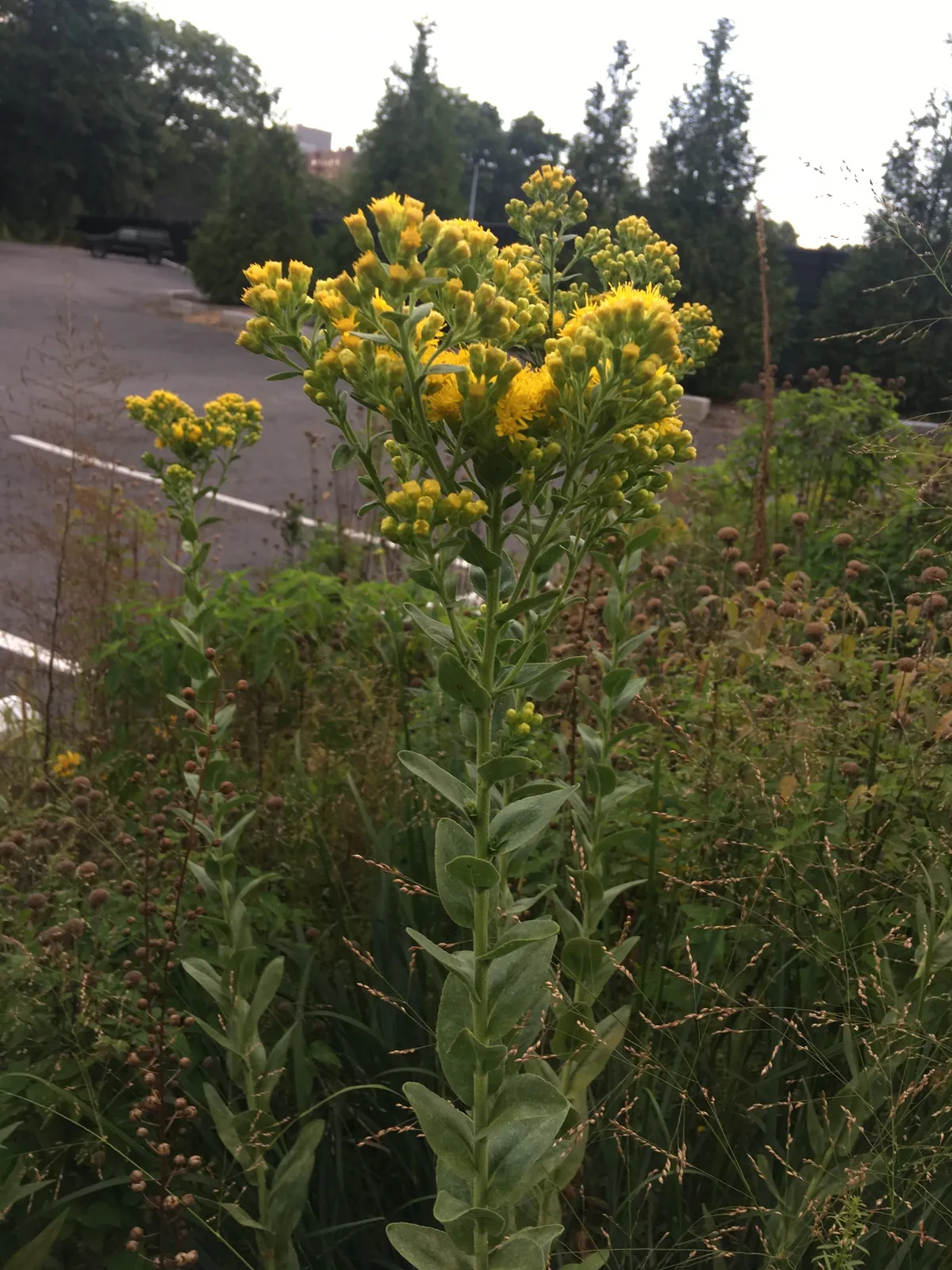
Stiff goldenrod is a full-sun prairie forb with flat-topped yellow flower clusters that bloom from June through November, drawing bees, butterflies and moths in dry to medium, well-drained soils.
Toxicity unknown
Stiff Goldenrod (Solidago rigida) is not listed by the ASPCA Animal Poison Control Center (opens in new tab) or the other sources we check, so we have no verdict for it either way. Absence from those lists is not a clearance. If your pet shows symptoms after eating any plant, call the ASPCA at (888) 426-4435.
Light
full sun
Water
low
Size
12"–36" H × 6"–12" W
Bloom
Jun, Jul, Aug, Sep, Oct, Nov
Native to
AL, AR, CO, CT and 33 more states
Pollinators
butterflies, bees, moths
Before you buy
Your city may pay you to plant this
Cities and water utilities offer rebates for replacing lawn with native and water-wise plants. We track 452 programs across 44 states, each with a link to the provider and the date we last checked it.
Find rebates in your areaBrowse plants for this ecoregion
Stiff Goldenrod is a sturdy native perennial that produces bright yellow flower clusters from summer through fall. This compact wildflower maintains an upright, well-behaved growth habit and provides reliable seasonal color in sunny, dry locations.
Growing Stiff Goldenrod
Grow Stiff Goldenrod in full sun and low water. Mature plants reach 12 to 36 inches tall and spread 6 to 12 inches wide. Expect low maintenance to keep it looking intentional in a front yard.
How to care for Stiff Goldenrod, by region
How to care for Stiff Goldenrod where it is actually grown: year-round basics plus what to do each season, region by region, with the sources for each.
Care guidance last updated: August 2026
Atlantic Coastal Pine Barrens (includes Riverhead, NY)
Year-round
Stiff goldenrod's native range reaches into New York, according to the Lady Bird Johnson Wildflower Center, though it sits at the edge of that range in the coastal Northeast and is uncommon there, per the Native Plant Trust. Long Island's sandy, well-drained soils actually match habitat the species is documented to use elsewhere near the coast.
- Grow it in full sun and well-drained, sandy soil, conditions similar to Long Island's coastal plain ground.
- Because it is uncommon in this part of its range, choose nursery-propagated plants rather than expecting to find it growing wild locally.
- Bloom is a flat-topped cluster of small yellow flowers, typically late summer into fall.
- Bees and butterflies use the flowers for nectar in the weeks before frost.
Fall
Fall bloom on eastern Long Island can run later than inland areas thanks to the ocean's moderating effect, generally late August into October or even into November in a mild year.
- The flat-topped yellow flower clusters are an important late-season nectar source for bees and butterflies.
- Deadheading spent flowers is optional, mainly useful for a tidier look in a front bed.
- The Riverhead area's average first frost lands in early to mid-November, later than most inland Northeast locations.
- Leaving some seed heads standing after bloom gives birds a food source into winter.
Deadheading spent flowers in fall keeps a front bed looking tended through Long Island's longer autumn season.
Winter
Winters on eastern Long Island are milder than most of the Northeast thanks to the surrounding ocean, though stiff goldenrod still dies back to its crown for the season.
- Cut stems back to a few inches above ground in late winter, before new growth starts in early to mid-spring.
- Leaving stems standing through winter adds structure to the bed and gives birds a seed source.
- No heavy winter mulch is typically needed given the area's comparatively mild coastal winters.
- Because this species is uncommon in the region, treat an established clump as worth protecting rather than assuming it can be replaced from the wild.
A late-winter cutback before new growth keeps the bed's winter look tidy for a front yard.
Spring
On eastern Long Island, stiff goldenrod resumes growth from the crown by late April or early May, after the area's average last frost.
- Plant nursery-grown transplants after the Riverhead area's average last frost, generally mid to late April.
- Cut back any dead stems left over from winter before new shoots come up.
- The area's sandy soils drain fast, water new plantings more often through their first season to help roots establish.
- Divide crowded clumps in spring if a planting has spread further than wanted.
Summer
Long Island's ocean-moderated summers are milder and less humid than inland parts of the Northeast, and stiff goldenrod handles the region's sandy, well-drained soils well.
- Established plants tolerate the sandy, lower-fertility soils common on eastern Long Island without extra feeding.
- Water new plantings through their first summer. Established clumps need little supplemental water outside of drought.
- No regular fertilizing is needed once the plant is settled in.
- Flower buds begin forming by late summer ahead of the fall bloom.
Sources: Lady Bird Johnson Wildflower Center, Oligoneuron rigidum var. rigidum, Native Plant Trust Go Botany, Oligoneuron rigidum (stiff flat-topped-goldenrod), USDA NRCS Plant Fact Sheet, Stiff Goldenrod (Oligoneuron rigidum)
High Plains (includes Lubbock, TX)
Year-round
Stiff goldenrod is one of the easier natives to keep going around Lubbock once it is established. It is native to Texas, so it is built for hard sun, alkaline ground and long dry stretches. On the High Plains it usually tops out around 2 to 3 feet with stout upright stems that hold themselves up instead of leaning, which is what you want in a front bed. Give it full sun and ground that drains, then water deeply and rarely. Its flat-topped yellow clusters open late in the season, when almost nothing else is in flower, and they pull in native bees, honey bees and butterflies. It does creep by underground runners and it seeds heavily, so plan on one edging pass a year to keep it inside the bed.
- Full sun, at least 6 hours, in ground that drains after a storm.
- Water deeply every 10 to 14 days the first summer, then rarely.
- Alkaline High Plains soil is fine. No lime and no acidifier needed.
- Expect 2 to 3 feet here, shorter and stiffer than in wetter regions.
- Native to Texas per the Lady Bird Johnson Wildflower Center.
- Late bloom feeds native bees and butterflies when little else flowers.
- Trim spent flower heads before seed drops to limit volunteer seedlings.
Fall
Bloom peaks now, roughly August into October, and those flat yellow clusters are the last real meal for native bees and migrating butterflies before frost. If a neighbor blames goldenrod for fall sneezing, they have the wrong plant. Goldenrod pollen is heavy and sticky and gets carried by insects, while the actual hay fever culprit is ragweed, which flowers in the same weeks and throws fine pollen into the wind. Deadhead spent clusters in October if you would rather not find seedlings across the bed next spring, because this one seeds heavily. First frost lands around early November, so tidying can wait until after that. Leave the last flush of flowers uncut until frost so late bees can still use it.
- Bloom runs roughly August through October here.
- Late flowers feed native bees, honey bees and butterflies.
- Goldenrod pollen is insect-carried, so it is not the hay fever source.
- Ragweed flowers in the same weeks and is the wind-borne allergen.
- Deadhead in October to cut down on volunteer seedlings.
- Leave the final flush of flowers standing until frost.
Deadheading the browning clusters in October keeps the bed looking tended through the shoulder season and avoids the untended look that prompts a violation letter.
Winter
The plant dies back to the ground and rides out winter as a root crown, and it handles Lubbock cold snaps without any help from you. You have a choice about the dead stems. Leaving them standing gives the bed a bit of winter structure, but a row of brown sticks out front can read as neglect. A reasonable middle path is to cut most of the clump to about 6 inches in December and leave one small patch standing in a back corner. Do not water on a schedule now, because wet dormant roots in cold ground is the one reliable way to lose this plant. Check after a windy stretch that mulch has not blown off the crown.
- Cut stems to about 6 inches in December for a tidy front bed.
- It goes fully dormant and needs no winter protection here.
- Stop supplemental water. Wet dormant roots rot.
- Top up mulch if wind has stripped it away from the crown.
- Mark the clump so you do not spade into it in early spring.
- Collect or order seed now if you want more plants next year.
A December cutback to one low even height reads as deliberate winter upkeep instead of a bed that was abandoned in fall.
Spring
Spring is planting and dividing time in Lubbock. Wait until after mid April, once the last frost has passed, so new roots get moving before June heat arrives. Dry wind is the real threat to a new planting here, more than cold, so water new plants every three or four days for the first month and lay down a couple of inches of mulch to slow evaporation. Divide crowded clumps now with a spade, keeping a fist-sized chunk of root on each piece. If a spring hailstorm shreds the leaves, cut the damaged stems back by about a third and the plant will push new growth. Hold off on fertilizer, because rich ground makes the stems long and weak.
- Plant after mid April, once frost risk has passed.
- Water new plants every 3 to 4 days for the first month.
- Mulch 2 inches deep to blunt the constant drying wind.
- Divide clumps with a spade every 3 years to control spread.
- Skip fertilizer. Lean ground keeps stems short and upright.
- After hail, trim damaged stems by a third and let it regrow.
Summer
Summer in Lubbock is when this plant earns its keep by asking for very little. An established clump can go two to three weeks between waterings, and the hard May through October thunderstorms often cover it entirely. Water in the early morning at the base rather than overhead, so leaves are not sitting wet. Flower buds set through late summer, so one deep soak during a long rainless stretch keeps the display from shriveling. If a storm snaps a stem, cut it off at the base instead of staking, because staking looks fussy in a front bed. Watch for aphids clustering on upper stems and knock them off with a hose rather than reaching for a spray.
- Soak deeply every 2 to 3 weeks only when there has been no rain.
- Water at the base in early morning, not over the leaves.
- One deep soak in early August protects the developing flower buds.
- Cut storm-broken stems off at the base rather than staking them.
- Hose aphids off instead of spraying.
- No feeding through summer. Extra nitrogen means weak stems.
Clearing storm-broken stems the same week keeps the planting reading as intentional rather than neglected, which is the look that draws a violation letter.
Sources: Lady Bird Johnson Wildflower Center: Oligoneuron rigidum (Stiff goldenrod), Xerces Society: Fall Garden Tips to Benefit Bumble Bees All Year, Missouri Botanical Garden Plant Finder: Solidago rigida, University of Illinois Extension: Autumn allergies, do not blame goldenrod
Interior Plateau (includes Cincinnati, OH)
Year-round
Stiff goldenrod is well suited to the Ohio Valley's clay soils and swings between hot humid summers and cold winters without much fuss.
- Water through the first growing season to establish, then let Cincinnati's normal rainfall take over.
- It tolerates the region's heavy clay soils. Avoid rich, amended beds, which lead to floppy stems.
- Mulch 2 to 3 inches to retain moisture and moderate the clay's temperature swings, kept off the crown.
- The most common mistake is underestimating its spread. It self seeds and spreads by rhizome, so give it room in the bed or plan to divide it.
Fall
Fall is the payoff season for stiff goldenrod across the Cincinnati area.
- Peak bloom runs September into October, a key late nectar source before frost.
- Deadhead if you want to limit self seeding in a smaller front yard bed.
- Leave seed heads instead to feed finches and other birds through fall.
- Do not cut back now. Leave the plant standing into winter.
Winter
Cincinnati gets real winter cold and occasional snow, and this plant handles it without extra care.
- Leave stems standing through winter. They shelter overwintering insects and hold up under snow.
- Cut back in late winter, just before new growth resumes in spring.
- No added winter protection is needed.
- If heavy wet snow flattens stems, leave them rather than cutting, since they still shelter insects at ground level.
A tidy late-fall cutback to 12 to 18 inches is a reasonable middle ground if a fully natural winter look would draw complaints on a visible front lot.
Spring
Cincinnati's spring cleanup window opens once the last hard frosts pass.
- Cut old stems back to a few inches once new basal growth shows, typically mid April in the Ohio Valley.
- Divide clumps every 2 to 3 years to manage spread and refresh vigor.
- Skip fertilizer. Lean clay keeps the plant from getting weak and leggy.
- Watch drainage in low, heavy clay spots, since standing spring water can rot the crown.
Summer
Cincinnati's hot, humid Ohio Valley summer is prime powdery mildew and rust season.
- Water at the soil line only, since wet foliage in this humidity invites fungal disease.
- Established plants get by on normal Cincinnati rainfall except during an extended dry spell.
- Space plants for airflow and check leaves regularly for mildew or rust.
- Growth and budding build through midsummer toward a late summer peak.
Sources: Lady Bird Johnson Wildflower Center - Oligoneuron rigidum, NC State Extension Plant Toolbox - Solidago, Xerces Society - Leave the Leaves, Missouri Botanical Garden Plant Finder - Solidago rigida
Lake Agassiz Plain (includes Fargo, ND)
Year-round
Stiff goldenrod is right at home in Fargo's prairie climate and needs almost nothing beyond a good start.
- Water deeply through the first season to establish roots, then rely on rainfall. This plant is already adapted to the region's naturally lean, dry soil.
- Skip fertilizer and rich amended soil. Fargo's native prairie ground is lean on purpose, and extra nutrients just make the stems floppy.
- Mulch lightly to hold moisture through Fargo's dry summer stretches, but do not pile it against the crown.
- The most common mistake is treating it like a garden perennial that needs regular watering and feeding. Once established it wants to be left alone.
Fall
Fall bloom is short and sweet before Fargo's early hard frosts set in.
- Expect bloom from August into September or early October, a shorter window than in milder climates because of the region's early frost.
- Leave seed heads standing for migrating and overwintering birds rather than deadheading.
- Do not cut the plant back going into fall. Standing stems catch insulating snow over winter.
- A hard frost will blacken the foliage. That is normal and not a sign of a problem.
Winter
Fargo winters are brutal, and this plant's best winter care is simply leaving it alone.
- Leave stems standing all winter. They trap insulating snow around the crown and shelter overwintering insects through temperatures that regularly drop below zero.
- Do not cut back until new growth is visible in spring, since the old stems are doing real insulating work here.
- No winter mulch is needed beyond what naturally accumulates as snow cover.
- Avoid any fall fertilizing or late watering that could push soft new growth right before a hard freeze.
Snow covered dead stems generally read as normal winter dormancy rather than neglect in this climate, so there is little curb appeal reason to cut back early.
Spring
Fargo's spring arrives late, so patience matters more than early cleanup.
- Wait until the soil has fully thawed and warmed, typically mid to late April, before cutting back last year's stems to a few inches.
- New growth is slow to show through Fargo's cool spring. Do not assume the plant is dead if it is still bare in early April.
- Divide overcrowded clumps now if needed, before the ground heats up.
- No supplemental watering is usually needed with spring snowmelt and rain.
Summer
Fargo's hot, dry continental summer is exactly the condition this plant is built for.
- Established plants get by on rainfall alone thanks to their deep root system, even through Fargo's dry July and August stretches.
- Give it full sun. This is a prairie plant and will get weak and floppy in shade.
- Watch for wind lodging in Fargo's open, breezy summer conditions. Leaner soil actually helps by keeping stems sturdier.
- Flowering builds through August into the short northern fall.
Sources: NDSU Extension - Dakota Gardener: Grow Native Plants, Lady Bird Johnson Wildflower Center - Oligoneuron rigidum, Xerces Society - Leave the Leaves, Missouri Botanical Garden Plant Finder - Solidago rigida
North Central Hardwood Forests (includes Minneapolis, MN)
Year-round
Stiff goldenrod's native range runs from Massachusetts to Saskatchewan and south to Texas and Georgia, according to the USDA NRCS plant fact sheet, a band that includes Minnesota. It grows as an erect prairie perennial with flat clusters of yellow flowers in late summer.
- Grow it in full sun and well-drained soil, it adapts to Minnesota conditions from sandy gravel to clay loam.
- Bloom generally runs from mid-August through September, a short but showy window before frost.
- Bees rely heavily on the late-season nectar, and the flowers also draw butterflies and other pollinators.
- Plants grow one to several stems, typically two to five feet tall, from a short woody crown.
Fall
Fall brings stiff goldenrod's short, bright bloom window to the Twin Cities, generally mid-August into September, right before the region's first hard frost arrives.
- The flat-topped yellow flower clusters are a major late-season nectar source for bees ahead of winter.
- Deadheading is optional and mainly cosmetic. It can tidy the plant's look for a front bed.
- Minneapolis's average first fall frost lands in early October, which typically ends the bloom for the year.
- Leaving some seed heads standing after frost gives seed-eating birds a source of food into winter.
A light deadhead of spent blooms in fall keeps the bed looking tended before frost ends the season.
Winter
Minneapolis winters are long and cold, and stiff goldenrod dies back completely to its crown. The main decision is whether to cut the stems down in fall or leave them for winter.
- Leaving the dead stems standing through winter adds structure to the bed and gives birds a seed source in the snow.
- Cut stems back to a few inches above the ground in early spring, before new growth starts around late April or early May.
- No winter mulch is required, this species is hardy through Minnesota's cold without extra protection.
- Avoid a hard fall cutback, leaving some stem height helps the crown handle repeated freeze and thaw cycles.
Leaving upright stems through winter gives the bed a deliberate winter silhouette instead of a bare, cut-down look.
Spring
Minnesota's growing season starts late. Stiff goldenrod resumes growth from the crown around early May, after the Twin Cities' average last frost.
- Plant nursery-grown transplants after the average last frost, around the first week of May in the Minneapolis area.
- Cut back any dead stems left standing from fall or winter before new shoots emerge.
- Divide crowded clumps in spring if the planting has spread further than wanted.
- No fertilizer is needed at planting, Minnesota's native prairie soils generally supply enough for this species.
Summer
Through the Twin Cities' summer, stiff goldenrod is building toward its late-summer bloom. It tolerates the region's wide range of soils without much fuss.
- Water new plantings through their first summer. Established clumps handle a typical Minnesota summer without extra watering.
- It grows in soils from sandy gravel to loam to clay, so there is little need to amend the bed.
- No regular feeding is needed through the growing season.
- Flower buds start to form by late July or early August ahead of bloom.
Sources: USDA NRCS Plant Fact Sheet, Stiff Goldenrod (Oligoneuron rigidum), Lady Bird Johnson Wildflower Center, Oligoneuron rigidum var. rigidum, Minnesota Wildflowers, Solidago rigida (Stiff Goldenrod) (community tip)
Northeastern Coastal Zone (includes New York, NY)
Year-round
Stiff goldenrod is native to New York, so it belongs in a city yard here, but the wetter richer conditions around New York City change how you have to handle it. With about 46 inches of rain a year it often reaches 4 to 5 feet and leans hard after a summer downpour. Humidity also brings leaf spot and rust that a dry-climate gardener never has to think about. The fix is simple and worth doing: cut every stem back by a third to a half in late May so the plant returns shorter and holds itself up. It also creeps by underground runners in moist ground, which matters a lot in a small bed, so divide it every two or three years. In exchange you get a heavy late-season nectar source for bumble bees and butterflies in a month when city gardens have almost nothing open.
- Full sun and the leanest, best-draining spot you have.
- Native to New York per the Lady Bird Johnson Wildflower Center.
- Expect 4 to 5 feet unless you cut it back in late spring.
- Give each plant 18 inches of elbow room for air circulation.
- Do not fertilize or bury it in compost. Rich soil means weak stems.
- Divide every 2 to 3 years to keep the runners in bounds.
- Late bloom is a major nectar source for bumble bees.
Fall
Bloom runs roughly August into October here, and this is the payoff month in a city yard where little else is flowering. Deadhead clusters as they brown, both to keep the bed looking tended and because this species self-seeds heavily and moist New York soil gives every seed a decent chance. First frost lands around mid November, so you have a long working window. If the clump has crept past where you want it, now is a good time to slice the wandering edges out with a spade and hand the divisions to a neighbor. Rake up fallen leaves around the base if the plant had leaf spot this year, because that debris carries the problem into next season. Wait until the stems are fully brown before any hard cutback.
- Bloom runs roughly August through October in this region.
- Deadhead browning clusters to limit heavy self-seeding.
- Slice runners off at the bed edge with a spade to hold the clump.
- Rake and bin fallen leaves if leaf spot showed up this year.
- Wait for full browning before cutting stems down.
- Divisions move well now, any time before mid November frost.
Deadheading as clusters brown and edging the spreading runners back keeps a small front bed reading as intentional, which is what keeps a violation letter away.
Winter
The plant goes dormant to the ground, and a zone 7b winter here is no trouble for it. In a small city yard the practical choice is to cut the stems to about 4 to 6 inches once they are fully brown, in late fall or early winter, so the bed keeps a clean line for four months. If you want to leave stems standing for wildlife, leave them in a back bed rather than the street-facing one. Do not add water. Winter here is wet enough, and a soggy dormant crown in heavy urban soil is the main way this plant dies. Keep shoveled road-salt slush out of the bed, and if a plow throws salt in, flush that spot with water in early spring. After a freeze and thaw cycle, check whether the crown has heaved out of the ground and press it back down if it has.
- Cut stems to 4 to 6 inches once they are fully brown.
- No winter watering. Wet dormant crowns rot in heavy soil.
- Keep shoveled road-salt slush out of the planting bed.
- Press heaved crowns back down after a freeze and thaw cycle.
- Leave standing stems only in a back bed, not the street-facing one.
- Plan your divisions now for a late April split.
A low even cutback before winter gives the front bed a deliberate edge through the bare months instead of a tangle of brown stems.
Spring
There are two jobs in spring around New York City. First, plant or divide in April after the last frost, and if you are digging into compacted city soil, loosen a hole twice the width of the pot so roots can spread sideways. Skip the compost and the rich amendments, because lean ground is what keeps this plant standing. Second, and this is the step most people miss, cut the whole clump back by a third to a half in late May or very early June. That one cut turns a 5-foot leaner into a roughly 3-foot plant that supports itself, and it only nudges bloom a little later. If the bed sits next to a salted sidewalk, give it one deep watering in early spring to move road salt down past the roots.
- Plant or divide in April, after mid-month frost risk passes.
- Loosen a wide hole in compacted soil, do not just dig a plug.
- Cut the clump back by a third to a half in late May.
- No compost and no fertilizer. Lean ground equals upright stems.
- Flush beds along salted sidewalks with one deep spring watering.
- Pull unwanted seedlings while they are only a few inches tall.
Summer
Muggy New York City summers are the hard season for this plant, and not because of drought. Watch the lower leaves for brown or rust-colored spots, which show up in humidity and move faster through a crowded clump. Pick off spotted leaves, put them in the trash rather than the compost, and thin a few inner stems so air can move. Water at the soil line in the morning and never with a sprinkler, because leaves staying wet overnight is what gets leaf spot going. Late summer is also when the sneezing question comes up, and goldenrod is not the cause. Its pollen is heavy and moved by insects, while ragweed flowers in the same weeks and releases the fine wind-borne pollen that actually sets off hay fever. If a thunderstorm flattens the stems, tie the clump loosely to a single stake rather than letting it sprawl across the sidewalk.
- Remove spotted or rusted lower leaves and bin them, do not compost.
- Thin crowded inner stems so air can move through the clump.
- Water at the base in the morning, never overhead.
- Goldenrod pollen is insect-carried, so it does not drive hay fever.
- Ragweed flowers in the same weeks and is the wind-borne allergen.
- After a storm, tie leaning stems loosely to one stake.
Getting leaning stems tied up and off the sidewalk the same week keeps the planting reading as intentional and heads off an overgrowth complaint.
Sources: Lady Bird Johnson Wildflower Center: Oligoneuron rigidum (Stiff goldenrod), Xerces Society: Fall Garden Tips to Benefit Bumble Bees All Year, Missouri Botanical Garden Plant Finder: Solidago rigida, University of Illinois Extension: Autumn allergies, do not blame goldenrod
Northern Glaciated Plains (includes Aberdeen, SD)
Year-round
Stiff goldenrod is a tall prairie perennial that asks for very little once it is rooted. Give it full sun and it will handle the heavy clay soils common across the Northern Glaciated Plains. It is rated hardy from USDA zone 3 to 9, so an Aberdeen area winter sits well inside its range. Plan for a plant 3 to 5 feet tall and about 2 feet wide, carrying flat yellow flower clusters in late summer. The two jobs that actually matter here are keeping the stems upright and keeping seedlings in bounds.
- Site it in full sun and space plants about 2 feet apart, since mature clumps spread 1.5 to 2.5 feet wide (Missouri Botanical Garden).
- Skip soil amendment in heavy glacial clay. This species tolerates clay and does fine in average, medium, well drained soil (Missouri Botanical Garden).
- Stiff goldenrod is native to South Dakota and the surrounding prairie states, so it is a regionally appropriate choice for this area (Lady Bird Johnson Wildflower Center).
- It does not appear on the ASPCA list of plants toxic to dogs, cats, or horses (ASPCA).
- Late summer bloom makes it one of the last heavy pollen and nectar sources of the year for native bees provisioning nests before winter (Xerces Society).
- Deer generally leave it alone, which matters on open lots at the edge of town (Missouri Botanical Garden).
At 3 to 5 feet, this belongs behind shorter plants rather than right at the curb. One row of low, tidy edging plants in front of it keeps the bed reading as HOA-friendly and intentional.
Fall
Fall is peak season for this plant and the one time it needs a real decision from you. Bloom runs from mid August into September here, closing out with the first hard frost in late September. If you want fewer volunteer seedlings next year, cut the spent flower heads off in mid September before the seed goes fluffy and blows. If you want more plants, or want to feed birds, leave the heads standing. Either way, leave the stems themselves up going into winter.
- Deadhead spent flower clusters in mid September to limit self seeding, since this species spreads by both seed and creeping roots (Missouri Botanical Garden).
- To grow more plants, collect seed in October once heads turn fluffy, then sow it outdoors that same fall. The seed needs a moist cold period before it will sprout (Lady Bird Johnson Wildflower Center).
- Leave stems standing after frost instead of cutting to the ground. Hollow stems and leaf litter shelter insects through winter (SDSU Extension).
- Fall is a workable window to divide or move a clump, but finish by early September so roots settle before the ground freezes (Missouri Botanical Garden).
- Stop supplemental watering after the first hard frost, usually late September in the Aberdeen area (USDA NRCS).
Mid September deadheading is the single move that keeps goldenrod from turning up in a neighbor's lawn next spring, which is the most common front yard complaint about goldenrods.
Winter
There is almost nothing to do for this plant in winter except protect the crown. It is rated hardy to USDA zone 3, so the cold itself is not the problem here. The real risk is repeated freezing and thawing on bare, snowless clay, which lifts young crowns right out of the ground. Spread 2 to 3 inches of loose mulch over first and second year plants after the ground freezes hard, usually late November. Leave established clumps alone and let the standing stems hold blowing snow in place.
- Rated hardy to USDA zone 3, so a zone 4a or 4b winter is well within range and no wrapping or covering is needed (Missouri Botanical Garden).
- Mulch first and second year plants with 2 to 3 inches of loose straw or shredded leaves after the ground freezes, around late November, then pull it back in early April (SDSU Extension).
- Leave the standing stems up. They trap blowing snow over the crown, which is the best insulation available in a thin snow winter (SDSU Extension).
- Keep deicing salt and salty snow off the bed when clearing the drive. Repeated salt loading damages perennial crowns in heavy clay (SDSU Extension).
- Walk the bed after a February thaw and press any lifted crowns back down before the next freeze (SDSU Extension).
Standing stems through winter can read as untidy from the street. A crisply mowed or edged strip between the bed and the sidewalk signals the look is intentional rather than neglected.
Spring
The first job in spring is to walk the bed and press any lifted crowns back into the soil. Hard freeze and thaw cycles with thin snow cover push shallow roots up out of heavy clay here, and an exposed crown dries out fast. Cut last year's stems back once daytime highs are steadily above 50 degrees, usually mid to late April around Aberdeen. Wait until after mid May, the usual last frost, to set out new plants or divisions. Stiff goldenrod is slow to break dormancy, so do not assume a bare spot has died.
- Firm any heaved crowns back down in early April, then water once to close the air pockets around the roots (SDSU Extension).
- Cut old stems to about 4 inches in mid to late April, which gives insects sheltering in the hollow stems time to leave first (SDSU Extension).
- Divide crowded clumps every 2 to 3 years in spring, once the ground has thawed, to keep the clump in check (Missouri Botanical Garden).
- Set new plants out after mid May, the usual last spring frost for the Aberdeen area, spaced about 2 feet apart (Missouri Botanical Garden).
- Hold off on fertilizer. Richer soil pushes soft, tall growth that leans over in prairie wind (Missouri Botanical Garden).
Spring cutback is the job neighbors notice. Getting the old stems down before the lawn greens up in late April keeps the bed from looking neglected through the first few mowings.
Summer
Summer is when you decide whether this plant stands up in September or leans across the walk. Cut the stems back by about a third in early June, before flower buds form, and the plant branches lower and holds its own weight. Most of the year's rain here falls May through July, so it usually needs no help until the rain shuts off. During a real August dry stretch, water deeply once a week, and only for the first couple of years. Established clumps ride out short droughts on their own.
- Cut every stem back by about one third in the first week of June. This lowers the mature height and cuts the need for staking (Missouri Botanical Garden).
- If you skip the June cut, set a hoop or grid support around the clump by late June, before stems pass 3 feet (Missouri Botanical Garden).
- Give new plantings about 1 inch of water per week through their first two summers, then let established clumps live on rainfall (USDA NRCS).
- Watch lower leaves for orange leaf rust in humid stretches. Thin crowded stems for airflow rather than reaching for a spray (Missouri Botanical Garden).
- Leave the flat flower heads alone once buds color up in August. They are a major late season nectar and pollen source for bees stocking nests before winter (Xerces Society).
A sprawling clump leaning over the sidewalk is what gets noticed, not the plant itself. The early June cutback keeps the clump upright and clear of the walkway right through bloom.
Sources: Missouri Botanical Garden Plant Finder: Solidago rigida, Lady Bird Johnson Wildflower Center: Oligoneuron rigidum (Stiff goldenrod), ASPCA Toxic and Non-Toxic Plants database, Xerces Society Pollinator-Friendly Plant Lists, USDA NRCS Plant Fact Sheet: Stiff Goldenrod (Oligoneuron rigidum var. rigidum), SDSU Extension: Native Plant Resources for South Dakota
Northern Piedmont (includes Lancaster, PA)
Year-round
Stiff goldenrod handles Lancaster County's clay-loam farmland soil well and asks for little beyond a good start.
- Water regularly the first season to establish, then let Pennsylvania's normal rainfall carry it through most of the year.
- It tolerates Lancaster's heavy clay-loam soils, but good drainage matters more than soil richness. Skip compost and fertilizer.
- Mulch 2 to 3 inches to retain moisture and suppress weeds, keeping it off the crown.
- The most common mistake is planting it in a small, tightly edged bed. It spreads by rhizome and reseeds readily and will outgrow a tight space within a few seasons.
Fall
Fall is peak color for stiff goldenrod across the Lancaster countryside.
- Expect the strongest bloom in September and October as pollinators stock up before frost.
- Deadhead spent blooms if you want to limit reseeding in a smaller yard.
- Leave some seed heads for finches and other seed eating birds instead if you are not worried about spread.
- Skip fall cutback. Leave the structure standing into winter.
Winter
Lancaster gets real winter, and stiff goldenrod is built to stand through it.
- Leave stems standing through winter. They shelter overwintering insects and hold up under Pennsylvania's snow load.
- Wait to cut back until late winter or very early spring, just before new growth starts.
- No winter protection or mulch is needed beyond the normal 2 to 3 inch layer already in place.
- If stems flatten under heavy wet snow, leave them. They still provide ground level insect habitat.
If bare winter stems draw complaints in a visible front yard, cutting back to a neat 12 to 18 inch stubble in late fall is a middle ground that still leaves some insect habitat.
Spring
Lancaster's four true seasons mean a clear spring cleanup window before the plant takes off.
- Cut back any old stems to a few inches once new growth appears at the base, typically April here.
- Divide clumps every 2 to 3 years to manage spread and keep plants vigorous.
- Watch for slug damage on tender new spring growth in Pennsylvania's damp spring weather.
- No fertilizer needed. Lean soil keeps stems from flopping later in the season.
Summer
Pennsylvania's humid summer is when to watch for the fungal issues that show up on crowded goldenrod.
- Water at the base rather than overhead to keep foliage dry in humid Lancaster summers.
- Established plants need little supplemental water beyond normal Pennsylvania rainfall except during a dry spell.
- Check for powdery mildew or rust on the leaves and thin stems for airflow if either shows up.
- Blooms build through the summer, with peak color from late summer into fall.
Sources: Lady Bird Johnson Wildflower Center - Oligoneuron rigidum, NC State Extension Plant Toolbox - Solidago, Xerces Society - Leave the Leaves, Missouri Botanical Garden Plant Finder - Solidago rigida
Ozark Highlands (includes Springfield, MO)
Year-round
Stiff goldenrod is a Missouri native that the Missouri Botanical Garden lists as occurring in open woods, glades, thickets, and prairies throughout most of the state, a good fit for the Ozark Highlands around Springfield.
- Grow it in full sun and average, well-drained soil, it adapts to everything from clay to dry, rocky Ozark ground.
- Once established it is drought tolerant, heat tolerant, and generally left alone by deer.
- Plants form dense, flat-topped clusters of small yellow flowers from late summer into early fall.
- Bees and butterflies rely on it heavily for nectar, and it has documented value as a host plant for several native moths.
Fall
Fall is the main event for stiff goldenrod around Springfield, with bloom typically running from late August into October. It is an important late nectar source as other prairie flowers fade.
- Removing spent flower clusters can encourage a bit of additional bloom and keeps the bed looking tended.
- Bees and butterflies work the flat-topped flower clusters heavily through the fall.
- Leave some seed heads standing after bloom for birds, including goldfinches, to feed on through winter.
- This is a good time to note and thin any clumps that have spread wider than wanted before spring.
Deadheading spent flower clusters in fall keeps the display looking intentional rather than scattering seed into a neighbor's bed or the lawn.
Winter
Ozark winters bring real cold, typically down through the 20s and teens Fahrenheit, so stiff goldenrod dies back fully to the crown. The main task is deciding when to cut the old stems down.
- Cut stems back to a few inches above ground in late winter, February or early March, before new shoots emerge.
- Leaving the stems up through winter gives birds a seed source and adds some structure to an otherwise bare bed.
- Springfield's average first fall frost lands in mid-October, so top growth is usually done well before winter.
- No winter protection is needed, this species is hardy through Missouri winters without mulching.
A late-winter cutback before spring growth keeps the bed's winter look tidy for a front yard.
Spring
New growth resumes from the crown in spring, usually by mid-April around Springfield after the last frost. This is the window to plant, divide, or move stiff goldenrod.
- Plant nursery-grown transplants after the Ozarks' average last frost, mid-April in most years.
- Cut back any dead stems left standing from winter before new shoots get tall enough to be in the way.
- Divide crowded clumps every few years to keep the planting in bounds along a front bed or walkway.
- Hold off on fertilizer, this species does fine in average Ozark soils without it.
Spring division keeps this spreading native perennial from outgrowing its bed line in a front yard.
Summer
Springfield's humid summers suit stiff goldenrod well. It handles the heat but can flop over and self-seed more than wanted if the soil stays rich and moist.
- Water new plantings through their first summer. Established clumps rarely need extra water even in a dry Ozark August.
- In rich, moist soil it can flop and self-sow prolifically, so lean or rocky soil keeps growth more upright and contained.
- No regular feeding is needed, it thrives in the region's naturally lean, rocky ground.
- Flower buds begin forming by late summer ahead of the fall bloom.
Sources: Lady Bird Johnson Wildflower Center, Oligoneuron rigidum var. rigidum, USDA NRCS Plant Fact Sheet, Stiff Goldenrod (Oligoneuron rigidum)
Piedmont (includes Atlanta, GA)
Year-round
Stiff goldenrod is a tough, upright prairie perennial that settles into Atlanta's clay soils and needs very little fuss once it gets going.
- Water regularly through the first growing season so roots can dig deep into Atlanta's clay, then cut back to just rain except in extended summer dry spells.
- Skip the compost and rich garden soil. Plant it in average to lean clay or loam, since fertile ground makes the stems flop over.
- Add a 2 to 3 inch mulch ring but keep it a few inches back from the base of the stems to avoid crown rot in Georgia's humid summers.
- Space plants for airflow. The most common mistake here is crowding them in a tight bed, which traps humidity and invites powdery mildew and rust.
- Give it full sun. Part shade is tolerated but plants get leggier and bloom less in Atlanta's already humid air.
Its stiff, upright clump reads as tidy and structured in a front bed, but let it self seed and it will spread. Deadhead or divide every couple years to keep the footprint controlled.
Fall
Fall is peak bloom for stiff goldenrod in Atlanta, and the point where you decide how much reseeding you want.
- Flowers peak in September and October, drawing in bees and butterflies right as other blooms fade.
- Deadhead spent flower heads before they go to seed if you want to limit self seeding in a small front bed.
- Leave some seed heads standing instead if you want goldfinches and other birds to feed through fall.
- Do not cut the plant back now. Leave the stems up for winter.
Winter
Atlanta winters are mild, so there is no rush to tidy up stiff goldenrod until late winter.
- Leave the stems standing. They shelter overwintering insects through Georgia's short, mild winter.
- Hold off on cutting back until just before new growth starts, typically late February to March here.
- No winter mulch or extra protection is needed. This plant handles Atlanta's occasional light freezes without help.
- Avoid heavy winter watering. Soggy clay in cool weather is more likely to rot the crown than cold is to kill it.
Standing dead stems can look untidy to a passing glance. If HOA appearance is a concern, cut back to a tidy 12 to 18 inch stubble instead of clearing to the ground, which still shelters insects but reads as more intentional.
Spring
Early spring in Atlanta is cleanup and division time, before the summer humidity arrives.
- Cut any stems left standing over winter down to a few inches once new growth is visible at the base, usually by mid to late March here.
- Divide clumps that are 3 or more years old to keep them vigorous and to control spreading rhizomes.
- Watch soil moisture during Atlanta's wetter spring stretch. Well drained placement matters more than watering.
- Do not fertilize. Lean soil keeps the stems from getting weak and floppy going into summer.
Summer
Atlanta's hot, humid summer is when powdery mildew and rust are most likely to show up on stiff goldenrod.
- Water at the soil line, not overhead, since wet foliage in this humidity encourages fungal disease.
- Once established, plants need little to no supplemental water except during multi-week dry heat.
- Check leaves for the white coating of powdery mildew or orange rust spots and thin crowded stems for better airflow if you see it.
- Let buds form through July into August. Flowering runs July through October here.
Sources: Lady Bird Johnson Wildflower Center - Oligoneuron rigidum, NC State Extension Plant Toolbox - Solidago, Missouri Botanical Garden Plant Finder - Solidago rigida, Xerces Society - Leave the Leaves
Ridge and Valley (includes Harrisburg, PA)
Year-round
Around Harrisburg's Susquehanna valley, stiff goldenrod adapts easily to the region's mix of clay and rocky soils.
- Water through the first season to establish, then rely on Pennsylvania's normal rainfall the rest of the year.
- It tolerates the rocky, clay based soils common in the Ridge and Valley area around Harrisburg. Avoid rich, amended beds, which cause floppy stems.
- Mulch 2 to 3 inches to conserve moisture, kept back from the crown.
- The most common mistake is underestimating how far it spreads by rhizome and seed. Give it room or plan to divide it every couple years.
Fall
Fall brings the best bloom of the year to stiff goldenrod in the Harrisburg area.
- Peak flowering runs September into October, an important late nectar source before frost.
- Deadhead if you want to control self seeding in a smaller planting.
- Otherwise, leave seed heads for birds through the fall.
- Do not cut back now. Let the structure stand into winter.
Winter
Winters around Harrisburg bring real cold and occasional heavy snow, which this plant tolerates without help.
- Leave stems standing through winter for insect shelter and structural interest in the snow.
- Cut back in late winter, just before new spring growth starts.
- No extra winter protection needed beyond normal mulch.
- Heavy wet snow may bend stems flat. Leave them rather than cutting, since they still provide ground level habitat.
A neat late-fall cutback to 12 to 18 inches is a reasonable compromise if a fully wild winter look is not welcome on a front facing lot.
Spring
Spring cleanup in the Harrisburg area follows the same rhythm as the rest of southcentral Pennsylvania.
- Cut old stems back to a few inches once new basal growth is visible, usually by mid April.
- Divide congested clumps now to keep the planting from taking over a bed.
- Hold off on fertilizer. It is not needed and encourages weak stems.
- Watch drainage in low spots near the river valley, since standing spring water can rot the crown.
Summer
Humid Susquehanna valley summers call for the same fungal watchfulness as the rest of the region.
- Water at the soil line only. Wet leaves in humid weather invite powdery mildew and rust.
- Established plants handle Harrisburg's normal summer rainfall without extra watering.
- Space plants for airflow, especially in sheltered valley spots where humidity lingers.
- Expect steady growth and budding through midsummer ahead of a September peak.
Sources: Lady Bird Johnson Wildflower Center - Oligoneuron rigidum, NC State Extension Plant Toolbox - Solidago, Missouri Botanical Garden Plant Finder - Solidago rigida, Xerces Society - Leave the Leaves
South Central Plains (includes Beaumont, TX)
Year-round
Stiff Goldenrod is an upright, clump forming perennial with flat topped clusters of small yellow flowers from late summer into fall, but it naturally prefers well drained prairie soil that is different from Beaumont's heavy clay ground.
- Sturdy stems typically reach about 2 to 5 feet, topped with a broad, flat topped cluster of small yellow flowers that opens roughly July through October
- This species naturally grows in dry prairies and dry open woods across a range that reaches into Texas, so it is working against type in Beaumont's wet, clay heavy ground
- The Beaumont area's own soil is officially classed as poorly drained with very slow permeability and 42 to 65 percent clay, so give this plant a raised bed, mounded row, or amended spot in full sun rather than a low corner of the yard
- In a spot with real drainage it rewards you with a late season bloom for pollinators after most other flowers have finished for the year
Fall
Fall is peak bloom for Stiff Goldenrod in Beaumont, when its flat topped yellow flower clusters open in earnest and draw in late season pollinators.
- Flowers typically peak from September into October, the tail end of its documented July through October bloom window
- Deadheading is not required for bloom, but cutting some spent flower heads before they set seed helps keep this self seeding species from filling in more of the bed than intended
- Leaving some flower heads standing gives late season bees and butterflies a food source, since the Wildflower Center notes this species provides special value to native bees and honey bees
- Beaumont's mild fall weather is also a reasonable window to divide overcrowded clumps, since new divisions have time to root before winter
Cutting back some spent blooms along the front of a bed keeps the fall display from reading as leggy or gone to seed near the sidewalk.
Winter
Beaumont winters are mild, so Stiff Goldenrod mostly just goes dormant rather than needing real winter protection.
- Zone 9a winters here are typically light on hard freezes, and this species naturally survives much colder conditions farther north and inland, so extra winter protection is not usually needed
- Longer basal leaves overwinter at the base of the clump even as the flowering stems die back
- Leaving dried stems and seed heads standing through winter gives birds a seed source and marks where the clump is before spring cleanup
- Cut back old stems in late winter, just before new growth starts, rather than right after fall bloom
Standing winter seed heads can read as untidy to some HOA reviewers, so a neat cut back in late winter balances wildlife value with curb appeal.
Spring
Spring is planting and establishment season for Stiff Goldenrod in Beaumont, and the main job is getting drainage sorted before the wet season builds.
- Plant new transplants in late winter to early spring once frost risk has passed for zone 9a, so roots have time to settle in before summer heat and humidity arrive
- Skip fertilizer at planting, especially nitrogen, since feeding the soil early tends to feed weeds around the young plant more than the goldenrod itself
- New growth starts as a low rosette of stiff, rough textured leaves before the flowering stems rise later in the season
- This species can self seed and spread more than expected once established, so thin or move volunteer seedlings while they are small and easy to relocate
Thinning volunteer seedlings in spring keeps a front bed looking tended rather than weedy.
Summer
Beaumont summers are hot, humid, and rain heavy, conditions that push this dry prairie plant toward stem flop and crowded, damp foliage if the bed does not get enough airflow.
- Stiff Goldenrod tolerates both dry and moist soil, but constant humidity and standing water raise the risk of floppy stems and fungal leaf issues, so spacing plants for airflow matters more here than in its native prairie range
- No supplemental fertilizer is needed through summer, matching the low input approach used at establishment
- If stems lean after heavy rain, a light stake or nearby companion plants can hold the clump upright without hiding the flat topped flower heads
- Bloom typically begins by mid to late summer, the early edge of its documented July through October window
A discreet stake keeps top heavy stems from sprawling into a walkway or sidewalk after summer storms.
Sources: USDA NRCS Plant Fact Sheet: Stiff Goldenrod (Oligoneuron rigidum), Lady Bird Johnson Wildflower Center Native Plant Database: Oligoneuron rigidum, USDA NRCS Official Series Description: BEAUMONT Series
Southeastern Plains (includes Tallahassee, FL)
Year-round
Stiff goldenrod actually prefers the sandy soils common around Tallahassee, though the region's heat and humidity call for more attention to airflow.
- Water regularly through establishment since Tallahassee's sandy soil drains fast, then cut back once roots are in and rely on the region's frequent rain.
- This plant naturally prefers sandy soil, which fits Tallahassee's ground well. Skip added compost or fertilizer.
- Mulch to help sandy soil hold moisture longer between Tallahassee's afternoon thunderstorms, keeping it off the crown.
- The most common mistake here is overwatering in humid weather, which combined with rich soil invites root rot and powdery mildew.
Fall
Fall in Tallahassee still feels like summer for a while, and that is when this plant hits its stride.
- Peak bloom is September through October, once the worst of the summer humidity starts to ease.
- Deadhead spent flowers if you want to slow down reseeding in Tallahassee's long growing season, where seedlings establish quickly.
- Leave seed heads instead if you want to feed birds through the fall.
- Hold off on cutting the plant back. Leave it standing into the mild Florida winter.
Winter
Tallahassee winters are short and mild, so there is no urgency to clean up stiff goldenrod.
- Leave stems standing. Freezes here are brief and light, so there is little winter dieback to worry about.
- Cutback can wait until as late as February, right before new growth resumes.
- Watch for basal rot if an unusually wet winter keeps sandy soil saturated for long stretches.
- No winter mulch is needed beyond what is already in place.
Because Tallahassee's growing season barely pauses, a front yard planting may look green and active most of the winter rather than fully dormant. Trim to a tidy height if a more manicured look is wanted.
Spring
Tallahassee's mild winters mean growth can start earlier here than farther north.
- New growth may appear as early as February. Cut back any old stems to a few inches once you see it at the base.
- Watch for fungal issues early, since Tallahassee's spring humidity arrives sooner than in cooler climates.
- Divide crowded clumps in early spring before summer heat sets in.
- No fertilizer needed. Sandy soil plus lean feeding keeps stems sturdy.
Summer
Tallahassee's intense heat, humidity, and daily thunderstorms make this the season to watch most closely for disease.
- Check leaves often for powdery mildew or rust. Humidity here is some of the highest anywhere this plant grows.
- Water only at the soil line, and rely on Tallahassee's regular summer rain rather than adding more.
- Space plants generously for airflow, since crowding in this climate speeds up fungal problems.
- Sandy soil drains fast, so during dry stretches between storms, established plants may need occasional deep watering.
Sources: Lady Bird Johnson Wildflower Center - Oligoneuron rigidum, NC State Extension Plant Toolbox - Solidago, Missouri Botanical Garden Plant Finder - Solidago rigida, Xerces Society - Leave the Leaves
Texas Blackland Prairies (includes Dallas, TX)
Year-round
Stiff goldenrod is a well-behaved native prairie plant that gives you low-care, late-season golden flowers for bees.
- Native to Texas and the Blackland Prairies, so it is built for local heat and heavy black clay
- Grows as a tidy upright clump 12 to 36 inches tall and does not spread by runners
- Wants full sun and very little water once it is settled in
- A top late-season nectar and pollen source for bees and migrating monarchs
- Goldenrod does not cause hay fever, ragweed blooms at the same time and is the real culprit
This is the clumping, upright kind of goldenrod, not the running kind, so it reads as an intentional and tidy front-yard planting.
Fall
Fall is peak bloom, when the flat golden clusters feed migrating monarchs and you decide whether to leave or trim the seed heads.
- Flowers peak in fall and draw bees, migrating monarchs and other butterflies
- Leave spent seed heads standing for birds and winter structure
- Or clip the spent stalks if you want a neater cool-season look
- Water is rarely needed once fall rains return
- Save a few seed heads if you want to spread plants to new spots
Trimming spent stalks in fall keeps the front yard looking tended, or you can leave them standing as intentional winter structure.
Winter
Winter is dormancy, and late winter is the time to cut last year's stalks down before new spring growth.
- The plant dies back to the ground and rests through winter
- Cut spent stalks down to a few inches in late winter before new shoots appear
- A few hard freezes are normal here and do not harm the roots
- No watering is needed while the plant is dormant
- Leave the cut clump in place, it will resprout on its own in spring
Cutting back in late winter clears old stalks so the bed looks clean heading into spring.
Spring
Spring is a good time to plant stiff goldenrod and let spring rains settle it into the clay.
- Set out new plants in spring so roots establish before summer heat
- Space clumps about 18 inches apart in full sun
- Water new plantings when the top inch of soil dries, then taper off
- Do not add rich amendments, this prairie plant is fine in lean black clay
- Pull early weeds around young clumps so they are not crowded
Even spacing in full sun keeps the clumps upright and neat looking from the street.
Summer
Summer is the heat-stress season, so mostly leave established plants alone and water only in a hard dry spell.
- Established clumps are drought tolerant and need little or no extra water
- In a long dry stretch give a deep soak every couple of weeks, not daily sips
- Let the heavy clay dry between waterings so roots do not sit wet
- Flat golden flower clusters begin opening in mid to late summer
- No fertilizer is needed, it can make growth floppy
Sources: USDA PLANTS profile, Solidago rigida (SORI), Lady Bird Johnson Wildflower Center, Oligoneuron rigidum, Xerces Society pollinator-friendly plant lists, Illinois Extension, Autumn allergies: don't blame goldenrod, University of Illinois Extension Hort Answers, Stiff Goldenrod
Western Allegheny Plateau (includes Pittsburgh, PA)
Year-round
Stiff goldenrod is native in Pennsylvania but uncommon there. It is state-listed as Endangered per Pennsylvania DCNR classifications, and the Western Pennsylvania Conservancy ties it to the region's calcareous, or limestone-influenced, grasslands, so garden plants should come from nursery-propagated stock rather than wild collection.
- Give it full sun and well-drained soil, calcium-rich or limestone-influenced ground close to its natural Pennsylvania habitat is a good match.
- The USDA plant guide places its broader native range from Massachusetts to Saskatchewan south to Texas and Georgia, a band that runs through western Pennsylvania.
- Established plants are drought tolerant and generally low maintenance once settled in.
- Bees and butterflies use the flat-topped yellow flower clusters heavily in late summer and fall.
Fall
Fall is peak bloom for stiff goldenrod around Pittsburgh, generally late August into October, offering one of the season's last strong nectar sources.
- The flat-topped yellow flower clusters draw bees and butterflies heavily through early fall.
- Deadheading spent flowers is optional and mainly for a tidier look in a front bed.
- Pittsburgh's average first frost lands in mid-October, typically ending bloom for the year.
- Leaving some seed heads standing after bloom gives birds a food source into winter.
Deadheading spent flower clusters in fall gives a front bed a tended look before the season's first frost.
Winter
Winters around Pittsburgh bring hard freezes, and stiff goldenrod dies back fully to its crown. The main task is timing the cutback of old stems.
- Cut stems back to a few inches above ground in late winter, February or March, before new growth starts.
- Leaving stems standing through winter adds structure to the bed and gives birds a seed source in the snow.
- A light mulch layer over the crown can help protect a newly planted clump through its first Pittsburgh winter.
- No mulch is needed for established plants beyond their first year or two.
A late-winter cutback before new growth keeps the bed's winter silhouette clean for a front yard.
Spring
Around Pittsburgh, stiff goldenrod resumes growth from the crown by late April or early May, after the region's average last frost.
- Plant nursery-grown transplants after Pittsburgh's average last frost, typically late April to early May.
- Cut back any dead stems left over from winter before new shoots come up.
- Choose a well-drained spot, this species does poorly in heavy, waterlogged clay.
- Divide crowded clumps in spring if the planting has spread more than wanted.
Summer
Through a western Pennsylvania summer, stiff goldenrod builds toward its late-season bloom. It prefers drier, well-drained ground over consistently wet soil.
- Water new plantings through their first summer. Established clumps tolerate typical Pittsburgh summer dry spells well.
- Avoid heavy, poorly drained clay, amend with grit or plant on a slope if that is what the site offers.
- No regular fertilizing is needed once the plant is established.
- Flower buds begin to form by late summer ahead of the fall bloom.
Sources: Western Pennsylvania Conservancy, Conservation Assessment of Calcareous Ecosystems in Pennsylvania, Edge of the Woods Native Plant Nursery, Rare Threatened and Endangered Plants of Pennsylvania (PA DCNR classifications), USDA NRCS Plant Fact Sheet, Stiff Goldenrod (Oligoneuron rigidum), Lady Bird Johnson Wildflower Center, Oligoneuron rigidum var. rigidum
Western Gulf Coastal Plain (includes Houston, TX)
Year-round
Stiff goldenrod is a native prairie wildflower in the Houston area. The Native Plant Society of Texas lists it as occurring in the Gulf Coast Prairies and Marshes region, and it grows as an upright clump of stiff stems topped with flat clusters of small yellow flowers from late summer into fall.
- Give it full sun, at least six hours of direct light a day, for the sturdiest stems and best bloom.
- Established plants handle Houston's heavy clay soils and shrug off summer dry spells once rooted in.
- It spreads slowly by rhizomes, so leave it room to fill in over a few seasons.
- Bees, butterflies including monarchs, and other pollinating insects use the flowers, and it has documented value as a host plant for several native moths.
Fall
Fall is peak season for stiff goldenrod in Houston, with flat yellow flower clusters opening from around August through October. It is one of the last strong nectar sources before winter.
- Flowers open over several weeks and draw heavy pollinator traffic, including migrating monarchs passing through the Texas coast.
- Deadheading spent flower clusters is optional. It can tidy the look and reduce self-seeding in a front bed.
- Leave some seed heads standing after bloom, birds including goldfinches feed on the seeds into winter.
- This is also a good time to mark and thin any clumps that have spread further than wanted before next spring.
Deadheading spent flowers in fall keeps the bed looking intentional rather than seeding into neighboring beds or the lawn edge.
Winter
Houston winters are mild, so stiff goldenrod stays semi-dormant rather than fully frozen back. The main winter task is deciding when to cut the old stems down before spring growth starts.
- Cut stems back to a few inches above ground in late winter, January or February, before new shoots emerge.
- Leaving stems standing through early winter gives seed-eating birds a food source and adds some structure to the bed.
- Houston's average first frost lands in early to mid-December, so growth has usually stopped well before then.
- No winter mulch is needed in this climate, the plant is hardy well beyond Houston's mild winter lows.
A clean late-winter cutback before spring growth keeps the bed's winter silhouette tidy for a front yard.
Spring
New shoots push up from the crown as nights warm, usually by March in the Houston area. Spring is the best window to plant, divide, or thin stiff goldenrod before summer heat sets in.
- Plant nursery-grown transplants after Houston's average last frost, mid-February in most years.
- If old flower stems are still standing from last season, cut them back to a few inches before new growth crowds in.
- Divide congested clumps every few years in spring to keep the planting controlled along a front bed.
- Skip fertilizer at planting time, extra nitrogen mostly feeds weeds during establishment rather than the goldenrod itself.
Dividing and edging the clump in spring keeps this naturally spreading perennial from crowding a front-yard bed line.
Summer
Through Houston's hot, humid summer, stiff goldenrod is quietly building the growth that carries into its fall bloom. It tolerates the heat well but can get floppy in rich, moist beds.
- Water new plantings through their first summer. Established clumps need little extra water outside of extreme drought.
- In rich, moist soil the plant can flop over and self-seed more than wanted, so lean or well-drained soil helps keep it upright and contained.
- No regular fertilizing is needed, Houston's clay and loam soils generally supply enough for this plant.
- Watch for the first flower buds forming by late summer as days start to shorten.
Sources: Native Plant Society of Texas, Solidago rigida plant profile, Lady Bird Johnson Wildflower Center, Oligoneuron rigidum var. rigidum, USDA NRCS Plant Fact Sheet, Stiff Goldenrod (Oligoneuron rigidum)
Want these tasks as reminders timed to your yard? Pollinator Patch turns this guidance into a season-by-season care plan for the plants you actually grow.
In an HOA neighborhood
Stiff Goldenrod is an HOA-friendly choice. Maintenance level: low. Tidiness: 3 out of 5.
Works well in: front yard, foundation, street edge, mid zone.
Wildlife value
Excellent pollinator plant that attracts butterflies, native bees, and moths during its extended bloom period. The seeds also provide food for birds in late fall and winter.
Common questions
- When does stiff goldenrod bloom?
- Stiff goldenrod typically flowers from June into November, with many populations peaking in late summer and early fall.
- What pollinators does stiff goldenrod attract?
- Its flat-topped yellow flower clusters draw bees, butterflies and moths, making it a useful late-season nectar source in prairies and gardens.
- How much water does stiff goldenrod need?
- Once established, stiff goldenrod tolerates low to medium moisture and handles dry, well-drained soils better than consistently wet sites.
- How much sun does stiff goldenrod need to flower well?
- It flowers most reliably in full sun, though it can tolerate part sun with a somewhat looser, less floriferous habit.
- Is stiff goldenrod evergreen?
- No, it is a deciduous herbaceous perennial forb that dies back to the ground each winter and regrows from its base in spring.
- Is Stiff Goldenrod HOA-friendly?
- Stiff Goldenrod is generally an HOA-friendly choice in the right placement, with low maintenance.
These answers were drafted with an AI model from this plant's data. Verify care details with a local expert.
Native range data from vouchered herbarium specimen records and regional native plant society lists. Pollinator and host plant associations compiled from GBIF, iNaturalist, and published ecological literature.
If something looks wrong
Common plant problems, and what to check first
These come up on almost any plant. Each guide lists the likely causes in the order they are worth ruling out, with one thing to check before you act on any of them, and links to the source it came from.
- It is dying right after planting
- Leaves turning yellow
- Wilting even though I watered it
- Brown crispy leaf tips
- Bugs on the plant
Ready to grow Stiff Goldenrod? Add it to your garden in Pollinator Patch to track it and get season-by-season care guidance.
Planning a bed around it? Start a free plan with this plant
Not sure where to start? Take the 2-minute yard quiz