Cardinal Flower
Lobelia cardinalis
Last reviewed: September 2026
Cardinal Flower produces spikes of scarlet red blooms from July through September and thrives in consistently moist to wet soil in part sun. It attracts hummingbirds and is a familiar sight along stream banks and wet meadows.
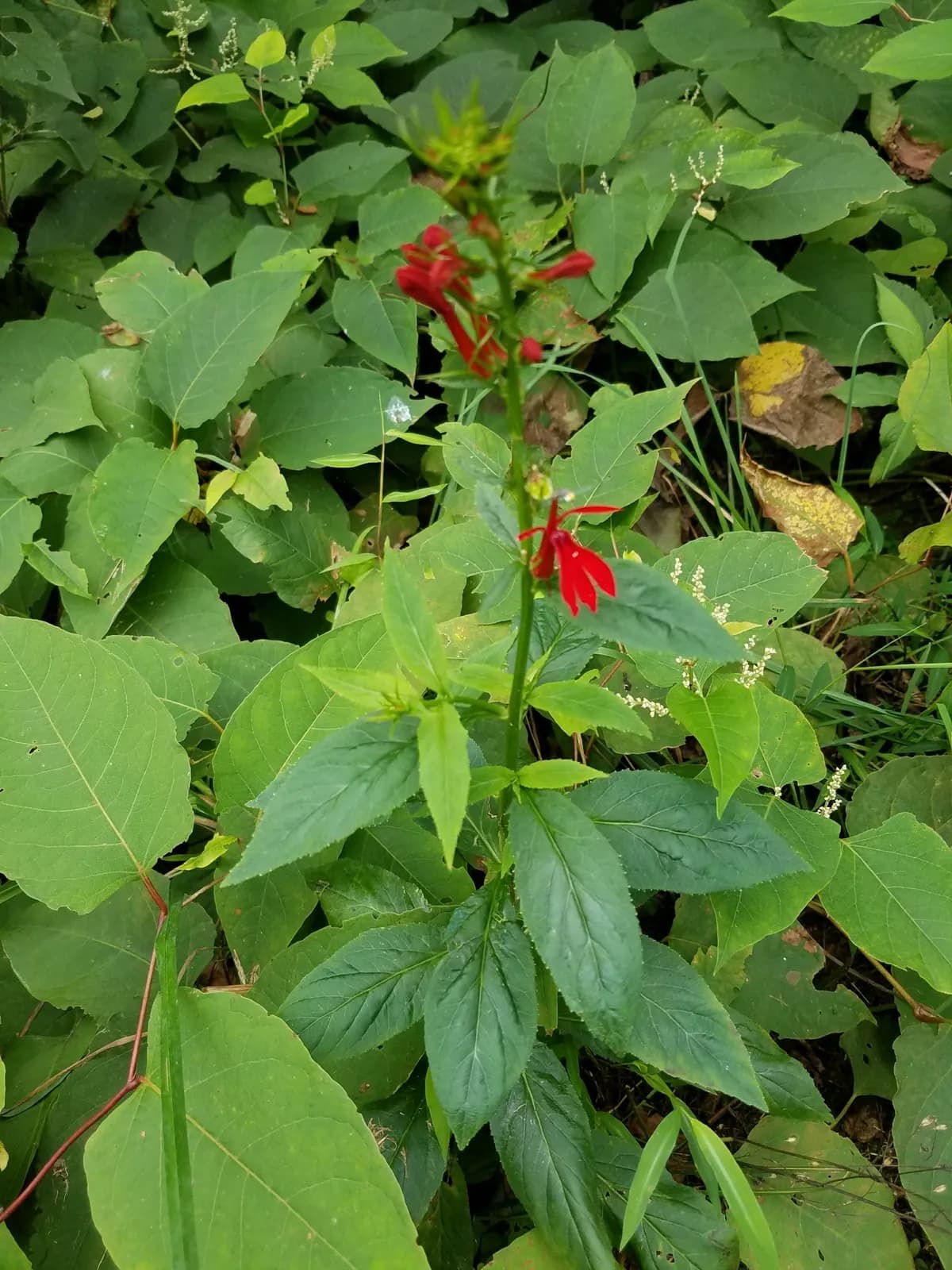
Cardinal Flower is toxic to dogs and cats.
Listed as toxic by the ASPCA Animal Poison Control Center (opens in new tab) (last reviewed 2026-05-21). If your pet has been exposed, call the ASPCA Animal Poison Control Center at (888) 426-4435and your veterinarian's emergency line.
Pollinator Patch flags toxic plants so you can choose a pet-safe native alternative for your yard.
The USDA PLANTS Database (opens in new tab) does not flag Cardinal Flower as toxic to livestock.
Light
part sun
Water
high
Size
12"–48" H × 12"–24" W
Bloom
Jul, Aug, Sep
Native to
AL, AR, AZ, CA and 37 more states
Pollinators
hummingbirds, bees, butterflies
Deer
Resistant (per Prairie Moon Nursery)
Before you buy
Your city may pay you to plant this
Cities and water utilities offer rebates for replacing lawn with native and water-wise plants. We track 452 programs across 44 states, each with a link to the provider and the date we last checked it.
Find rebates in your areaBrowse plants for this ecoregion
Scarlet lobelia produces brilliant red flower spikes that create striking vertical accents in the garden from summer through early fall. This moisture-loving native perennial thrives in partly shaded areas with consistent water and forms clumps of dark green foliage.
Growing Cardinal Flower
Grow Cardinal Flower in part sun and high water. Mature plants reach 12 to 48 inches tall and spread 12 to 24 inches wide. Expect moderate maintenance to keep it looking intentional in a front yard.
How to care for Cardinal Flower, by region
How to care for Cardinal Flower where it is actually grown: year-round basics plus what to do each season, region by region, with the sources for each.
Care guidance last updated: September 2026
Acadian Plains and Hills (includes Bangor)
Year-round
Cardinal flower is a genuine native of northern and interior Maine, including the Acadian Plains and Hills around Bangor. It grows wild along stream banks, lakeshores, marshes, and wet ditches, so it wants steady moisture and does not mind cold. The tall spikes of bright red tubular flowers are a favorite of ruby-throated hummingbirds, which are its main pollinator. Give it a low, damp, part-sun to sunny spot and it will feel right at home in this cold, wet-soiled region.
- Native across Maine including the cold interior Acadian region, growing wild on stream and river shores, lakeshores, and marshes (Go Botany, Native Plant Trust, BONAP county records).
- Plant it in the wettest, lowest part of your yard. It is a facultative wetland plant that likes soil that stays moist and even soggy, so a rain garden edge, downspout runoff area, or pond margin is ideal.
- Part sun to full sun. In the Bangor area's cooler summers full sun is fine as long as the roots stay damp.
- Hardy through the cold winters here (roughly USDA zones 3b to 5), so no special hardiness worry for zone 82.
- Toxic to dogs, cats, and horses if eaten (toxic principle lobeline) per the ASPCA Animal Poison Control Center plant database. Call ASPCA Animal Poison Control at (888) 426-4435 if a pet ingests it.
Fall
Cardinal flower is short-lived, so fall care is really about helping it reseed and getting the plant ready for a hard northern winter. Let some seed heads ripen and drop, and be careful not to smother the small basal rosette that has to survive the cold.
- Leave several spent flower spikes standing until the seed capsules ripen and split. The tiny seeds dropping nearby is how this short-lived plant renews itself year to year.
- After a hard frost, you can cut the tall bloom stalks down, but do NOT bury or mulch over the low green rosette at the base. That rosette must stay at the soil surface to overwinter.
- Skip heavy fall mulch directly on the crown. In this wet region a thick wet blanket over the rosette invites rot.
- If you want to spread it, snip a few ripe seed heads and scatter the seed on bare damp soil where you want new plants.
- Make sure the site will not sit under standing ice all winter. Moving water and damp soil are fine, but a frozen puddle over the crown can kill it.
Leaving seed stalks standing can look untidy from the curb. Cutting the tall stalks after frost while keeping the low rosette, or trimming the front-facing stalks and letting a few stand at the back, keeps the bed reading as intentional and tended and lowers the odds of a violation letter.
Winter
Winter here is long and cold, and cardinal flower survives it as a small evergreen rosette hugging the ground. The plant's real winter risk in the Acadian region is not cold air, it is wet soil freezing solid over the crown or heaving the shallow rosette out of the ground.
- The plant overwinters as a low green rosette, not as a dormant underground root, so protect that surface rosette rather than cutting everything to bare dirt.
- Once the ground freezes, lay a light, airy cover of evergreen boughs or a thin layer of loose leaves nearby (not packed on the crown) to buffer freeze-thaw cycles that can heave the rosette out of the soil.
- Avoid spots where winter runoff pools and freezes into ice over the plant. A frozen puddle sitting on the crown is a common way to lose it here.
- Do not pile heavy wet mulch or snow-plow slush directly on the crown, which can rot or crush the rosette.
- In early spring, gently press any heaved rosettes back down into the soil so the roots make contact again.
A few evergreen boughs laid as winter cover can look like stray yard debris. Arranging them in a neat, deliberate ring around the plant keeps the bed looking intentional through winter and avoids a tidiness complaint.
Spring
Spring in the Acadian region is cold and slow, so cardinal flower is one of the last plants to wake up. Do not panic if the crown looks dead into May. Leave it be, keep the soil damp as it pushes up its rosette of green leaves, and hold off on heavy mulch right over the crown.
- Be patient. In this cold region the basal rosette often does not green up until mid to late May, well after other perennials. Bare ground in April is normal, not a dead plant.
- Once you see the green rosette, gently pull back any heavy leaf litter or mulch sitting directly on the crown so it does not rot in the wet spring soil.
- Divide crowded clumps now if you want more plants. Lift the rosette, separate the offsets, and replant into moist ground right away.
- Keep the soil consistently damp as growth starts. Spring runoff and snowmelt usually handle this in low spots, but check during any dry spell.
- Self-sown seedlings from last year appear as small rosettes near the parent. Move them while small if you want them elsewhere, since the plant is short-lived and reseeding keeps it going.
Because it leafs out so late, a bare crown in a front bed can read as a dead or neglected plant. A small nursery marker or a tidy ring of mulch around the spot shows the space is intentional and cared for, which helps avoid a violation letter over a patch that looks empty.
Summer
Summer is the payoff. From roughly July into September the tall spikes of bright red flowers open and pull in ruby-throated hummingbirds. The main job now is water. In the Bangor area's warmer, drier late summer stretches, cardinal flower wilts fast if its roots dry out.
- Never let it dry out during bloom. If the soil is not naturally wet, water deeply during hot or dry weeks. This is the single most important care task for this plant.
- Expect bloom from about July through September in this region, later than in warmer states because of the short northern summer.
- The red tubular flowers are pollinated mainly by ruby-throated hummingbirds, so site it where you can watch them and skip any insecticide near the blooms (Lady Bird Johnson Wildflower Center, Xerces Society).
- A light layer of mulch around (not on) the base helps hold moisture in the soil through warm spells.
- Leaves and flowers are toxic to dogs, cats, and horses if chewed (lobeline) per the ASPCA Animal Poison Control Center, so keep pets from grazing the planting.
Sources: Go Botany, Native Plant Trust, Lobelia cardinalis (native, wet-shore habitat), ASPCA Animal Poison Control, Cardinal Flower (toxic to dogs, cats, horses), Lady Bird Johnson Wildflower Center, Lobelia cardinalis native range
Arizona/New Mexico Mountains (includes Prescott, AZ)
Year-round
Cardinal flower is documented along Oak Creek Canyon and becomes more common toward Prescott, making it a genuine but narrow fit for a wet, shaded spot in the Arizona/New Mexico Mountains.
- This is strictly a wet-site plant here, along a perennial creek, spring, or seep, it will not survive typical mountain-slope soil.
- Part shade suits it best in this region, protecting it from intense high-elevation sun while keeping roots cool and wet.
- Expect scarlet flower spikes 2 to 4 feet tall, generally blooming after summer monsoon moisture arrives.
- It persists mainly through self-seeding at reliably wet sites, since individual plants are short lived.
- Treat this as a plant for a documented streamside or spring-fed microsite, not a general dry-yard choice.
Fall
Fall is the narrow window for seed to mature before cooler mountain temperatures set in.
- Leave flower stalks standing so seed capsules can ripen after the monsoon bloom.
- Watch for an earlier frost at higher canyon elevations than in the Prescott valley itself.
- Hold off cutting back until stalks are fully browned.
- Only sites with dependable year-round water will reliably carry plants to the next season.
Winter
Winter at these elevations is cold, and only a genuinely wet, sheltered site keeps this plant alive through it.
- The plant dies back to a basal rosette, which needs a consistently wet site, not just occasional moisture, to overwinter.
- Do not expect survival at a site that only stays damp seasonally, this needs a real spring or perennial creek.
- Skip heavy mulch directly on the crown in already saturated ground.
- This stays a narrow, wet-microsite plant, not a general choice for a typical Prescott-area yard.
Spring
Spring growth depends entirely on the site holding water, since this region gets little spring rain.
- Only expect spring growth at sites with a reliable year-round water source, like a spring-fed creek or seep.
- New basal leaves appear as soil warms, generally later at higher canyon elevations.
- Clear old growth once new leaves are visible at the base.
- A partly shaded spot near flowing water gives young growth the best chance here.
Summer
Summer monsoon rains typically bring on bloom, consistent with its habit of flowering after seasonal rains begin.
- Expect bloom to follow monsoon rains, usually starting in July at wetter canyon and creekside sites.
- Keep roots constantly wet through dry pre-monsoon weeks if the site depends on supplemental water.
- Part shade protects flowers from harsh midday sun at these elevations.
- A site that dries out between storms will not carry this plant through summer.
Sources: americansouthwest.net, Wildflowers of Sedona and Oak Creek Canyon (community tip), USDA Forest Service, Cardinal Flower Plant of the Week, SEINet AZ/NM Node, Lobelia cardinalis records, Southeastern Arizona Bird Observatory, Cardinal Flower plant profile (community tip)
Arizona/New Mexico Plateau (includes Flagstaff, AZ)
Year-round
Cardinal flower turns up along springs, seeps, and canyon streams on the Arizona/New Mexico Plateau, including documented Grand Canyon area riparian sites, but it only belongs at a genuinely wet, shaded spot, not a typical dry front yard here.
- This plant needs a site with year-round moisture, like a spring-fed seep, streambank, or the edge of a pond, it will not survive typical upland desert soil.
- Give it part shade in this region. Full sun combined with the Colorado Plateau's intense elevation sun and dry air is too harsh without constant water.
- Expect 2 to 4 foot flower spikes in scarlet red, blooming after the summer monsoon arrives.
- It is a short-lived perennial here, relying on self-seeding at reliably moist sites to persist.
- This is a niche pick for a documented wet microsite, most front yards on the Plateau will not have the right conditions.
Fall
Fall is short at this elevation, so seed needs to mature quickly after the monsoon bloom before frost.
- Leave flower stalks in place so seed capsules can ripen before the Plateau's early fall frosts.
- Watch for an earlier first frost here than in lower-elevation Arizona, which can cut the bloom season short.
- Hold off cutting back until stalks have fully browned.
- At this elevation, only sites with reliable year-round water will carry a planting through to the next season.
Winter
Winter at Plateau elevations is genuinely cold, and this plant depends on a reliably wet, sheltered site to survive it.
- The plant dies back to a low basal rosette, which needs the site to stay wet, not just moist, through winter to survive.
- Do not expect this plant to persist at a site that is only seasonally damp, only spring-fed or streamside spots hold up here.
- Skip added mulch directly on the crown in already saturated soil.
- This is not a plant for a typical dry Flagstaff-area front yard, reserve it for a documented wet microsite.
Spring
Spring on the Plateau is dry, so this plant only breaks dormancy where a spring or seep keeps the ground wet year round.
- Confirm the site has stayed moist through winter before expecting spring growth, dry seeps will not support this plant.
- New basal growth appears once soil temperatures rise, typically later here than in lower desert areas.
- Clear old stalks once new growth is visible at the base.
- Spring winds on the Plateau are strong, a partly shaded, sheltered spot near water helps young growth establish.
Summer
Summer monsoon rains are typically what trigger bloom here, since this plant flowers after the rains begin.
- Bloom usually follows the arrival of monsoon moisture in July, matching wetter conditions at seeps and streambanks.
- Keep the root zone constantly wet through the dry pre-monsoon weeks if you are relying on supplemental water.
- Part shade helps protect flowers and foliage from the Plateau's intense summer sun at elevation.
- This plant will not tolerate a site that dries out between monsoon storms.
Sources: USDA Forest Service, Cardinal Flower Plant of the Week, North American Network of Small Herbaria, Lobelia cardinalis collection record, Grand Canyon, SEINet AZ/NM Node, Lobelia cardinalis records, Southeastern Arizona Bird Observatory, Cardinal Flower plant profile (community tip)
Arkansas Valley (includes McAlester, OK)
Year-round
Cardinal flower grows well in the Arkansas Valley, where the Canadian and Arkansas River bottomlands, tributary creeks, and low wet spots around McAlester and Poteau give it the steady moisture it needs. It is native to Oklahoma and fits the valley's mix of bottomland forest and riparian corridors.
- Needs consistently moist to wet soil, plant it along a creek bank, drainage swale, or pond edge.
- Prefers part shade to full sun, more sun brings more flowers but needs more consistent watering.
- Grows 2 to 4 feet tall with a narrow, upright form.
- Hummingbirds are the main pollinator, drawn to the long tubular red flowers.
- This plant is toxic to dogs, cats, and horses per the ASPCA Animal Poison Control Center plant database, with lobeline as the toxic principle.
Reads as a tidy, upright accent plant rather than a spreading wildflower patch, works well near a rain garden or drainage swale.
Fall
Fall cleanup and division for cardinal flower in the Arkansas Valley lines up with cooler weather and typically more reliable rainfall returning to the region.
- Let seed heads mature and drop before cutting back if you want the plant to self-sow along a wet edge.
- Cut flower stalks back to the basal rosette after frost.
- Divide crowded clumps every 2 to 3 years in early fall to keep plants vigorous.
- Keep the planting area moist into fall, this plant does not tolerate a dry dormancy period.
Winter
Cardinal flower spends winter as a small low rosette in the Arkansas Valley, easy to overlook this time of year.
- The basal rosette stays low and green through mild winter stretches, don't mistake it for a weed and pull it.
- No pruning needed in winter beyond the fall stalk cleanup.
- Avoid letting the root zone dry out completely during winter dry spells, occasional watering during long rainless periods helps.
- Mulch lightly around the rosette if a hard freeze is forecast, especially in an exposed bed.
Spring
Spring in the Arkansas Valley brings the plant out of dormancy and is the best window to plant new starts before summer heat and drier spells arrive.
- Plant new starts in spring once soil has warmed, giving roots time to establish before summer heat.
- Watch for a low rosette of leaves at the base of last year's stalk, that's normal new growth.
- Keep soil consistently damp during establishment, bottomland clay soils can crust and shed water fast after a dry spell.
- Skip fertilizer at planting, established clumps do fine in average to rich moist soil.
Summer
Summer bloom season for cardinal flower coincides with the Arkansas Valley's hot, sometimes dry stretches, so consistent watering matters most now.
- Flower spikes open red from the bottom up, usually starting midsummer and continuing for several weeks.
- Water deeply during dry stretches, this is the main care task for this plant in the Arkansas Valley's warmer months.
- Deadhead spent flower spikes for a tidier look, not required for rebloom.
- Hummingbirds visit through summer, avoid spraying insecticide near open blooms.
Bright red summer blooms read as intentional color near a drainage feature, not a weedy patch.
Sources: ASPCA Animal Poison Control - Cardinal Flower, Lady Bird Johnson Wildflower Center - Lobelia cardinalis, Mellow Marsh Farm - Lobelia cardinalis growing notes
Atlantic Coastal Pine Barrens (includes Riverhead, NY)
Year-round
Cardinal flower is native to the Atlantic Coastal Pine Barrens around Riverhead, growing along freshwater streams, bogs, and pond edges within the pine barrens.
- Site it in a spot that stays wet, like a pond edge, stream bank, or bog margin, since it needs steady freshwater moisture.
- It has low salt tolerance, so keep it well away from any tidal or brackish edges common on Long Island.
- Hummingbirds pollinate the bright red flower spikes, which bloom mid to late summer.
- The pine barrens' freshwater streams and kettle ponds around Riverhead provide the wet habitat this species needs.
Fall
Fall is for cutting back spent stalks before the first frost.
- Trim old flower stalks back to the basal rosette once bloom finishes, before hard frost sets in.
- Keep the wet spot watered through fall if rain slows before winter arrives.
- Collect seed now if you want to start new plants along another pond or bog edge.
Cutting back dead stalks in fall keeps the planting tidy through the colder months.
Winter
Winter is dormant; the plant survives Long Island's coastal cold as a low rosette.
- The plant is hardy through this region's winters and persists as a ground-level rosette rather than dying back completely.
- No mulch is needed over the rosette; too much cover can smother it.
- Winter rain and snowmelt usually keep the site wet enough without extra watering.
Spring
Spring brings new growth from the overwintered basal rosette.
- New leaves rise from a rosette that stayed at ground level through winter, so leave it undisturbed.
- Spring rain usually keeps a pond-edge or bog-margin planting wet enough on its own.
- This is a good time to divide an established clump before summer bloom starts.
Summer
Summer is peak bloom for tall red flower spikes along freshwater pine barrens wetlands.
- Flower stalks reach 2 to 4 feet through mid and late summer, the main display for the year.
- Sandy pine barrens soil drains fast, so check that the wet-spot planting isn't drying out between rains.
- Deadheading finished spikes can help extend blooming into early fall.
Tall red blooms along a pond edge or bog garden read as an intentional, tended feature.
Sources: USDA Forest Service Plant Guide: Cardinal Flower (Lobelia cardinalis), Go Botany: Lobelia cardinalis
Blue Ridge (includes Gettysburg, PA)
Year-round
Cardinal flower is native to the Blue Ridge foothills around Gettysburg, growing along mountain streams and wet valley bottoms.
- Site it in a spot that stays wet, like a stream bank, pond edge, or rain garden low point, since it needs steady moisture.
- It has low salt tolerance, so keep it well away from road-adjacent spots with winter salt runoff.
- Hummingbirds pollinate the tall red flower spikes, which bloom mid to late summer.
- The stream corridors along the Blue Ridge foothills near Gettysburg offer good wet habitat for this species.
Fall
Fall is for cutting back spent stalks before the first frost.
- Trim old flower stalks back to the basal rosette once bloom finishes, before hard frost hits.
- Keep the wet spot watered through fall if rain slows before winter arrives.
- Collect seed now if you want to start new plants along another wet edge.
Cutting back dead stalks in fall keeps the bed looking tidy through the colder months.
Winter
Winter is dormant; the plant survives cold winters as a low rosette under snow cover.
- The plant is hardy through this region's cold winters and persists as a ground-level rosette rather than dying back completely.
- Snow cover helps insulate the rosette from freeze-thaw swings.
- No active care is needed in winter beyond confirming the site will hold moisture again in spring.
Spring
Spring brings new growth from the overwintered basal rosette.
- New leaves rise from a rosette that stayed at ground level through winter, so leave it in place.
- Spring rain and snowmelt usually keep a stream-side planting wet enough on its own.
- This is a good time to divide an established clump before summer bloom starts.
Summer
Summer is peak bloom for tall red flower spikes along foothill streams.
- Flower stalks reach 2 to 4 feet through mid and late summer, the main display for the year.
- Check soil moisture during dry stretches since this plant wilts quickly without consistent water.
- Deadheading finished spikes can help extend blooming into early fall.
Tall red blooms along a stream or rain garden read as an intentional, tended feature.
Sources: USDA Forest Service Plant Guide: Cardinal Flower (Lobelia cardinalis), North Carolina Extension Gardener Plant Toolbox: Lobelia cardinalis
Boston Mountains (includes Fayetteville)
Year-round
Cardinal flower is a native wetland perennial for the moist, shady stream bottoms and seep-fed slopes of the Boston Mountains, and it brings hummingbirds to bright red late-summer spikes.
- Plant it in your dampest spot: a stream edge, a low swale, a seep, or a shady bottom where Ozark soil stays moist all year.
- It handles part shade to shade well here, which fits the forested hollows and north slopes around Fayetteville.
- The red tubular flowers are built for hummingbirds, so give it an open sightline rather than burying it behind taller plants.
- Keep the root zone from ever drying out; this plant will not tolerate a baked, droughty spot on acidic rocky ground.
Fall
Fall is for letting seed drop and deciding how tidy you want the spent spikes to look going into winter.
- Let some flower spikes ripen and drop seed if you want new plants next year, since cardinal flower is short-lived and reseeds to persist.
- Keep the soil moist right up until the ground cools; a dry fall is hard on the basal rosette that must survive winter.
- If you like a neater look, cut the tallest browned stems back partway but leave the low green rosette fully intact.
A light fall trim of the spent brown spikes reads as intentional upkeep and helps an HOA-conscious front yard avoid a violation letter, while you leave the low green rosette alone so the plant returns.
Winter
Winter care is simple: protect the little evergreen rosette through real Ozark cold and keep it from either drying out or drowning.
- The plant overwinters as a low basal rosette, so a light winter mulch helps it through the colder nights of zones 6b to 7a.
- Keep mulch loose and off the center of the rosette; a soggy, packed crown can rot over a wet Ozark winter.
- Do not let the spot bake dry during a mild, rainless winter stretch, but avoid standing water sitting on the crown.
The tidied clump with just a low rosette and a thin mulch collar keeps the winter bed looking cared-for, which helps an HOA-conscious yard stay off the radar until spring growth returns.
Spring
Spring is for planting and for letting last year's basal rosette wake up in the still-cool, still-wet Ozark soil.
- Set out new plants or divisions once hard frost has passed; spring moisture in the hollows helps them root before summer heat.
- Look for the low green rosette of leaves at the base and avoid mulching or stepping on it as it flushes.
- If you are starting from seed, remember it needs a cold-moist stratification, so fall or winter sowing suits our real Ozark winters better than a spring start.
- Top up a thin layer of leaf mulch to hold moisture in fast-draining cherty soil, keeping it off the crown.
Summer
Summer is peak bloom and peak thirst; the one job that matters is keeping the roots wet through humid Ozark heat.
- Water deeply whenever the top of the soil starts to dry, because this plant has low drought tolerance and wilts fast on rocky slopes.
- Red spikes open from mid to late summer and pull in ruby-throated hummingbirds, so leave the flowering stems standing.
- In a sunnier planting, expect it to need even more water; part shade in a hollow will cut the watering load.
- Humidity here is a friend to this plant, so do not crowd it so tightly that air cannot move around the leaves.
Sources: Lady Bird Johnson Wildflower Center, Lobelia cardinalis, Arkansas Native Plant Society, Know Your Natives - Cardinal Flower, USDA Forest Service, Cardinal Flower plant of the week
Central Appalachians (includes Johnstown, PA)
Year-round
Cardinal flower is native to the Central Appalachians around Johnstown, growing along mountain streams and wet valley floors.
- Give it a spot that stays wet, like a stream bank, pond edge, or rain garden low point, since it needs constant moisture.
- It has low salt tolerance, so keep it away from areas that collect winter road salt runoff.
- Hummingbirds pollinate the bright red flower spikes, which bloom mid to late summer.
- The steep mountain hollows and stream corridors around Johnstown offer the wet habitat this species favors.
Fall
Fall is for cutting back spent stalks before the first frost, which can arrive early here.
- Trim old flower stalks back to the basal rosette once bloom finishes, since frost can arrive early in these mountain hollows.
- Keep the wet spot watered through fall if rain slows before winter snow returns.
- Collect seed now if you want to start new plants along another stream edge.
Cutting back dead stalks in fall keeps the planting tidy through the colder months.
Winter
Winter is dormant; the plant survives the mountains' cold as a low rosette under snow cover.
- The plant is hardy through this region's cold, often snowy winters and persists as a ground-level rosette rather than dying back completely.
- Snow cover helps insulate the rosette from freeze-thaw swings common at this elevation.
- No active care is needed in winter beyond confirming the site will hold moisture again in spring.
Spring
Spring brings new growth from the overwintered basal rosette.
- New leaves rise from a rosette that stayed at ground level through winter, so leave it undisturbed.
- Spring snowmelt and rain usually keep a mountain stream-side planting wet enough on its own.
- This is a good time to divide an established clump before summer bloom starts.
Summer
Summer is peak bloom for tall red flower spikes along mountain streams.
- Flower stalks reach 2 to 4 feet through mid and late summer, the main display for the year.
- Check soil moisture during dry stretches since this plant wilts quickly without consistent water.
- Deadheading finished spikes can help extend blooming into early fall.
Tall red blooms along a mountain stream or rain garden read as an intentional, tended feature.
Sources: USDA Forest Service Plant Guide: Cardinal Flower (Lobelia cardinalis), North Carolina Extension Gardener Plant Toolbox: Lobelia cardinalis
Central California Foothills and Coastal Mountains (includes San Francisco, CA)
Year-round
Cardinal flower is a tall, upright perennial with spikes of bright red flowers that hummingbirds seek out. Calflora observation records show it growing in every San Francisco Bay Area county, including San Francisco itself, and Calscape lists it as native to California. The catch is that it wants soil that stays wet or even boggy, which is not the normal condition in a Bay Area yard once the dry summer sets in.
- Grows 3 to 6 feet tall and 2 to 5 feet wide, so give it room at the back of a bed or along a wet edge.
- Needs consistently moist to standing-wet soil. Calscape lists water needs as moderate to high with slow or standing drainage, so this is not a plant for a spot that dries out between waterings.
- Does well in partial shade to full sun. In San Francisco's cooler, foggier microclimates, a bit more sun is usually fine; in warmer inland pockets of ecoregion 6, afternoon shade helps keep the roots from drying out.
- The tall red flower spikes bloom in summer and are a strong draw for Anna's hummingbird, the hummingbird that actually lives in the Bay Area year round.
- Best spots are a streamside area, a rain garden low point, next to a pond or water feature, or a large container kept consistently damp. Without one of those, plan on regular supplemental watering through the dry season.
The upright red bloom spikes read as a tidy, intentional accent rather than a wild patch, which usually reads fine to an HOA as long as the surrounding bed stays neat.
Fall
Bloom winds down in fall and the plant starts putting energy back into its base as San Francisco's rains return, usually by October or November. This is a good time to cut back spent stems and let winter rain take over the watering job.
- Once flowering finishes, cut the spent bloom stalks back to the basal rosette of leaves at the base.
- As the first rains arrive, you can taper off supplemental watering and let winter rainfall keep the soil consistently moist again.
- Fall is also a reasonable time to plant new starts or divide clumps, since the plant will have the wet season ahead of it to root in rather than facing a dry stretch right away.
Cutting the spent stalks back after bloom keeps the bed looking tidy going into winter.
Winter
Cardinal flower is only lightly evergreen. In a mild climate like San Francisco it usually holds a low rosette of basal leaves through winter rather than dying back completely, and this is naturally the wettest, easiest season for a plant that wants constantly damp soil.
- Expect a low mat of basal foliage rather than the tall summer stems. This is normal dormant season growth, not a sign of a struggling plant.
- San Francisco's rainy season typically runs from November through March, which does most of the watering work for you this time of year.
- Frost is rare in San Francisco proper but can still show up in colder inland pockets of this ecoregion. A layer of mulch over the base offers some protection without needing to move the plant.
- Avoid letting the ground go completely dry between rains even in winter, since this species does not tolerate a real dry-down at any time of year.
Spring
Spring is when cardinal flower wakes up from its low winter rosette and starts pushing new stems. San Francisco's rains are usually still going through April, so this is the easiest stretch of the year to get the plant established without extra watering.
- As new upright stems appear from the base, this is a good window to divide an overcrowded clump or transplant new starts while the ground is still naturally moist from winter rain.
- Keep an eye on soil moisture as the rains taper off toward late spring. Cardinal flower's roots should never fully dry out, so start supplemental watering before the ground actually cracks.
- A layer of mulch around the base now helps hold moisture into the drier months ahead without smothering the emerging stems.
Summer
Summer is bloom season and also the hardest season for this plant in San Francisco, because the rain stops but the plant's need for wet soil does not. This is the season where the tall red spikes show up and draw in Anna's hummingbird.
- Bloom spikes open through summer. Anna's hummingbird, the resident hummingbird in the Bay Area, regularly visits the red flowers.
- This is the season that matters most for watering. San Francisco gets little to no rain from June through September, so soil that was fine in spring can dry out fast. Check it every few days if it is not in a naturally wet spot.
- Deadheading spent flower spikes can encourage the plant to keep blooming longer into the season.
- If the plant is wilting or the flower spikes look stunted, that is usually a sign the soil dried out rather than a light problem. Move a potted plant to more shade before cutting back on water.
Keep spent bloom stalks deadheaded through summer so the bed still reads as a maintained garden feature, not a leggy patch.
Sources: Calscape: Lobelia cardinalis (Cardinal Flower), Calflora: Lobelia cardinalis observation records
Central Corn Belt Plains (includes Chicago)
Year-round
Cardinal flower is native to the Chicago area's corn belt plains, growing in wet ditches, stream banks, and marsh edges.
- Give it a spot that stays consistently wet, like a rain garden low point, pond edge, or drainage swale, since typical lawn beds dry out too much.
- It has low salt tolerance, so avoid spots near sidewalks or driveways that get winter road salt.
- Hummingbirds pollinate the bright red flower spikes, which bloom from mid-summer into fall.
- Remnant wetlands and drainage corridors around Chicago still support this species where the ground stays consistently moist.
Fall
Fall is for trimming spent stalks ahead of the first hard frost.
- Cut old flower stalks back to the basal rosette once bloom finishes, before frost hits.
- Keep watering the wet spot through fall if rainfall tapers off before winter arrives.
- Collect seed now if you want to expand the planting to another moist corner of the yard next year.
Cutting back spent stalks in fall keeps the bed tidy through the colder months.
Winter
Winter is dormant; the plant survives Chicago's cold as a rosette under snow.
- The plant is hardy through Chicago winters and persists as a low rosette at ground level rather than dying back fully.
- Snow cover helps protect the rosette from harsh freeze-thaw swings, so there's no need to clear it away.
- No active winter care is needed beyond confirming the site will hold moisture again once it thaws.
Spring
Spring brings new growth from the rosette that overwintered at ground level.
- New leaves rise from a basal rosette that stayed put through winter, so leave it in place rather than clearing it out.
- Spring rain usually provides enough moisture, but check any raised or contained planting for dry spots.
- Divide an established clump now if you want to spread the planting to another wet corner.
Summer
Summer is peak bloom, with tall red spikes along wet edges and rain gardens.
- Flower stalks reach 2 to 4 feet through mid and late summer, the main visual draw for the year.
- Chicago summers can have dry stretches, so check that the wet-spot planting isn't drying out between rains.
- Deadhead finished spikes to help push a second smaller round of blooms later in the season.
A tall stand of red blooms in a visible rain garden reads as a deliberate feature, not an overlooked wet patch.
Sources: USDA Forest Service Plant Guide: Cardinal Flower (Lobelia cardinalis), North Carolina Extension Gardener Plant Toolbox: Lobelia cardinalis
Central Great Plains (includes Oklahoma City, OK)
Year-round
Cardinal flower is a tall, spiky wildflower with bright red blooms that lights up wet ground in the Central Great Plains. It grows along creek banks, spring seeps, and low spots that stay damp, from Oklahoma City out through Lawton, Enid, and Ponca City. It is native to Oklahoma and shows up on the Lady Bird Johnson Wildflower Center's Oklahoma recommendation lists for shade and freestanding water sites.
- Needs consistently moist to wet soil, so plant it along a downspout run-off area, low spot, or the edge of a pond rather than a dry front bed.
- Give it part shade to full sun. More sun means more flowers but also more watering.
- Grows 2 to 4 feet tall with a narrow, upright form, good for a vertical accent near a water feature or rain garden.
- Hummingbirds are the main pollinator, drawn to the long tubular red flowers.
- This plant is toxic to dogs, cats, and horses per the ASPCA Animal Poison Control Center plant database, with lobeline as the toxic principle.
Reads as a tidy, upright accent plant rather than a spreading wildflower patch, works well as a single specimen or small cluster near a rain garden edge.
Fall
Fall is cleanup and division time for cardinal flower in the Central Great Plains, once bloom has finished and the plant is heading into dormancy.
- Let seed heads mature and drop before cutting back if you want the plant to self-sow nearby.
- Cut flower stalks back to the basal rosette after frost, leaving the low cluster of leaves at the base intact through winter.
- Divide crowded clumps every 2 to 3 years in early fall to keep plants vigorous.
- Keep the planting area moist into fall. This plant does not tolerate a dry dormancy period the way many prairie natives do.
Winter
Cardinal flower spends winter as a small evergreen-ish rosette at ground level. It looks unremarkable this time of year, which is normal.
- The basal rosette stays low and green through mild winter stretches, don't mistake it for a weed and pull it.
- No pruning needed in winter beyond the fall stalk cleanup.
- Avoid letting the root zone dry out completely during winter dry spells, occasional watering during long rainless periods helps.
- Mulch lightly around the rosette if a hard freeze is forecast, especially in an exposed bed.
Spring
Spring is when cardinal flower wakes up from its winter rosette and starts putting up new growth. In the Central Great Plains, this is also your best planting window before summer heat sets in.
- Plant new starts in spring once the soil has warmed, giving roots time to establish before summer.
- Watch for a low rosette of leaves at the base of last year's flower stalk. That is normal new growth, not a dead plant.
- Keep soil consistently damp during establishment. Newly planted cardinal flower dries out fast in sandy or clay soils that drain quickly after rain.
- Skip fertilizer at planting. Established clumps do fine in average to rich moist soil without added feeding.
Summer
Summer is bloom season for cardinal flower, right when Oklahoma City area heat and dry spells put the most stress on a plant that needs steady moisture.
- Flower spikes open red from the bottom up, usually starting midsummer and continuing for several weeks.
- Water deeply during dry stretches. This is the single biggest care task for this plant in the Central Great Plains, where summer rainfall can be unreliable.
- Deadhead spent flower spikes to keep the plant looking tidy, though it is not required for rebloom.
- Hummingbirds visit through summer, so avoid spraying insecticide near open blooms.
Bright red summer blooms read as intentional color, not a weedy patch, especially planted in a clean-edged bed near water.
Sources: ASPCA Animal Poison Control - Cardinal Flower, Lady Bird Johnson Wildflower Center - Lobelia cardinalis, Mellow Marsh Farm - Lobelia cardinalis growing notes
Central Irregular Plains (includes Kansas City, MO)
Year-round
Cardinal flower is native to the Central Irregular Plains around Kansas City, the tallgrass prairie and oak-hickory mosaic of west-central Missouri. In the wild it hugs stream banks, prairie swales, and the damp bottoms where the heavy claypan soil holds water. That same claypan works in your favor at home: pick a low spot that stays soggy and this plant is happy where others rot.
- Native to the Central Irregular Plains. The Missouri Department of Conservation lists cardinal flower along streams and bottomland openings, and this ecoregion around Kansas City is a prairie-and-woodland mosaic laced with those wet drainages.
- Use your wettest, heaviest ground. The claypan prairie soils here hold water near the surface, so a swale bottom or a spot that puddles after rain suits it. It will not take a dry, fast-draining bed.
- Ruby-throated hummingbirds work the red spikes. The USDA Forest Service names Lobelia cardinalis a key late-summer nectar source for them as they migrate through.
- Toxic to dogs, cats, and horses per the ASPCA Animal Poison Control Center, with lobeline as the toxic compound. Call ASPCA Poison Control at (888) 426-4435 if a pet eats it.
Fall
By fall the spikes are finishing and the plant is storing energy in the crown for winter. Because cardinal flower is short-lived, the smart move in the Kansas City area is to let some seed heads ripen and drop onto the damp claypan so new plants come up. Trim the front edge so the bed still looks kept while you leave the seed at the back.
- Let a few seed heads stand and shatter. Missouri Botanical Garden notes it is short-lived, and self-sown seed on moist prairie soil keeps the patch going.
- Cut browned stalks back to the base once they fade, leaving the low green rosette in place.
- Ease off watering as fall rains return to the Kansas City area and the claypan holds moisture on its own again.
Cutting the finished stalks and cleaning up the bed edge in fall keeps the planting reading as intentional from the curb, which helps a front-yard native bed avoid a violation letter even while you leave a few seed heads toward the back.
Winter
Cardinal flower spends winter as a small green rosette flat on the soil. In the Kansas City area the danger is freeze-and-thaw heaving, made worse by heavy claypan that swells and shrinks. A loose mulch ring around the base, kept off the center of the rosette, anchors the shallow crown so the cycle does not push it out of the wet ground.
- Mulch the root zone after the first hard freeze. Missouri Botanical Garden recommends this in cold-winter areas to stop frost from heaving the crown, which matters most in shrink-swell claypan soil.
- Keep the mulch off the green rosette so the crown does not rot in soggy winter ground.
- Leave the low spot undisturbed. The rosette is alive and will push new stems up in spring.
A neat, even mulch ring around the base signals deliberate winter care rather than a forgotten bed, keeping a front-yard native planting looking intentional through the bare season.
Spring
Spring around Kansas City brings heavy rain and the claypan soil stays wet for weeks, which is exactly what cardinal flower wants as it wakes up. Look for the flat green rosette after the last frost. This is the best window to plant new ones or split crowded clumps while the ground is soft and holding water near the surface.
- Plant or divide now while the claypan is saturated. Spring rain keeps the low spots wet, so new plants settle in without much watering.
- Find the ground-hugging rosette in April. That leafy cluster is the plant returning, and heavy prairie soil that stays damp will carry it through leaf-out.
- Pull winter mulch back off the crown once shoots appear, per Missouri Botanical Garden, so the center does not sit smothered in wet soil.
- If a dry, windy Kansas City spring hits, water deeply. The Lady Bird Johnson Wildflower Center notes this plant has no drought tolerance.
Summer
Kansas City summers get hot and can turn dry between storms, and that is the hard part for cardinal flower. The claypan holds water well in spring but bakes hard on top in July heat. Keep the root zone damp through the bloom, which runs July into September, and you will be rewarded with scarlet spikes full of hummingbirds.
- Water through every summer dry spell. Missouri Botanical Garden says the roots must stay moist and never dry, and cracked claypan on top can fool you into thinking the soil below is still wet.
- Give it afternoon shade if the spot is in full sun. Part shade slows the surface from baking hard in Kansas City heat.
- Watch for ruby-throated hummingbirds on the red flowers. The USDA Forest Service lists cardinal flower as a key nectar source for their late-summer migration.
- For pet owners: the plant is toxic to dogs, cats, and horses per the ASPCA, and toxin is highest in summer and fall. ASPCA Poison Control is (888) 426-4435.
Sources: Missouri Department of Conservation Field Guide: Cardinal Flower, Lady Bird Johnson Wildflower Center: Lobelia cardinalis, USDA Forest Service: Ruby-throated Hummingbird pollinator page, ASPCA Toxic and Non-toxic Plants: Cardinal Flower, Missouri Botanical Garden Plant Finder: Lobelia cardinalis
Cross Timbers (includes Fort Worth)
Year-round
Cardinal flower is a native perennial wildflower for wet, shaded spots along the Cross Timbers' creek and river bottoms around Fort Worth.
- It needs consistently moist to wet soil and part shade, so plant it along a downspout, rain garden, pond edge, or low spot that stays damp, not a typical dry front bed.
- It is native to stream banks, spring seeps, and low wooded bottomlands across the eastern half of Texas including the Cross Timbers river corridors, per the Native Plant Society of Texas and the Lady Bird Johnson Wildflower Center.
- Its long tubular red flowers are pollinated almost exclusively by hummingbirds, since most bees and butterflies cannot reach the nectar, making it a strong hummingbird-garden pick.
- Cardinal flower is toxic to dogs, cats, and horses (toxic principle lobeline, causing vomiting, drooling, and heart rhythm changes) per the ASPCA Animal Poison Control Center plant database.
Fall
Fall is seed-drop season, when spent flower stalks form small capsules that self-sow along damp ground.
- Seed capsules form after bloom and split open to release tiny seeds, which need light to germinate, so avoid burying them under thick mulch if you want volunteers.
- Leave a few spent stalks standing through fall if you want the plant to reseed itself along a stream bank or rain garden edge.
- Cut back the rest of the flowering stems once they brown to keep the bed looking maintained heading into winter.
- This is a good time to collect and store seed if you want to start new plants elsewhere in a similarly moist spot.
Cutting back browned flower stalks after seed drop keeps the bed looking cared for through fall.
Winter
Winter is dormant season, when cardinal flower's rosette holds close to the ground and needs little attention.
- The plant overwinters as a low basal rosette that stays semi-evergreen in mild Cross Timbers winters and can be damaged by hard freezes if the site dries out.
- Keep the ground from fully drying, even in dormancy. Wetland roots are more freeze-sensitive when the soil around them is not moist.
- A light mulch layer around, not over, the rosette helps buffer temperature swings without smothering the crown.
- Avoid cutting the rosette back. Only remove the old dried flower stalks if you have not already done so in fall.
Spring
Spring is when cardinal flower breaks dormancy and puts up its first rosette of leaves near the water's edge.
- New growth appears as a low rosette of dark green leaves at the base of last year's stalk, usually by mid to late spring.
- Keep the site consistently damp during this stage. Cardinal flower's shallow roots dry out fast if the soil surface cracks.
- Divide crowded clumps now if needed, since the plant spreads by short rhizomes and can be split and moved while still small.
- Skip fertilizer. A thin layer of compost or leaf mulch at the base is enough to support strong flower stalks later in the season.
Summer
Summer brings cardinal flower's tall spikes of bright red blooms, right when hummingbirds need them most.
- Flower stalks shoot up two to four feet and bloom from around late June into September, attracting ruby-throated hummingbirds as the main pollinator.
- Water is the priority now. Cross Timbers summers get hot and dry between rains, so a spot that holds moisture (streamside, rain garden, low corner) matters more than sun exposure.
- Deadheading spent spikes can encourage a second smaller flush, though it is not required for plant health.
- The bright red spikes stand out against the mostly green summer garden and read as a clear, tended focal point rather than an overgrown patch.
A tidy stand of blooming cardinal flower along a wet edge reads as an intentional water feature planting, not a neglected damp spot.
Sources: Lobelia cardinalis (Cardinal flower) - Lady Bird Johnson Wildflower Center, Lobelia cardinalis - Native Plant Society of Texas, ASPCA Toxic and Non-toxic Plants: Cardinal Flower, Cardinal Flower (Lobelia cardinalis) - Texas Parks and Wildlife, Cardinal Flower (Lobelia cardinalis L.) - USDA Forest Service Plant of the Week
Driftless Area (includes Galena, IL)
Year-round
Cardinal flower is native to the Driftless Area around Galena, growing along streams, spring seeps, and moist woodland edges in this hilly, unglaciated landscape.
- Plant it in a spot that stays wet, like a stream bank, spring seep, or low rain garden, since it needs constant moisture to thrive.
- It's an obligate wetland species with low salt tolerance, so keep it away from areas that get winter road salt runoff.
- Hummingbirds are the main pollinator for the bright red flower spikes, which bloom in mid to late summer.
- The Driftless Area's spring-fed streams and cool ravines match this plant's preferred wet, partly shaded habitat well.
Fall
Fall is for cutting back spent stalks before the ground freezes.
- Cut old flower stalks to the basal rosette once bloom finishes, before the first hard frost.
- Keep the wet spot from drying out through fall since rainfall can taper off before winter snow arrives.
- Collect seed now if you want to start more plants along another stream edge or wet spot.
Cutting back dead stalks in fall keeps the bed tidy heading into winter.
Winter
Winter is dormant; the plant survives cold as a low rosette under snow cover.
- The plant is hardy through Driftless Area winters and survives as a ground-level rosette rather than dying back completely.
- Snow cover actually helps insulate the rosette from freeze-thaw damage, so leave it be.
- No active care is needed in winter beyond making sure the site will stay wet again come spring thaw.
Spring
Spring brings new growth from the overwintered basal rosette as the Driftless Area thaws.
- Look for new leaves rising from a rosette that stayed at ground level all winter, that's the plant coming back, not new seedlings.
- Snowmelt and spring rain usually keep stream-side plantings wet enough without extra watering.
- This is the best time to divide an established clump before summer heat and bloom set in.
Summer
Summer is peak bloom, with tall red spikes drawing hummingbirds along streams and wet edges.
- Flower stalks reach 2 to 4 feet tall in mid to late summer, the main show for the year.
- Check soil moisture during any dry stretch since this plant will wilt fast if the wet spot dries out.
- Deadheading spent spikes can encourage more blooms into early fall.
Tall red blooms along a rain garden or stream edge read as an intentional planting, which helps curb appeal.
Sources: USDA Forest Service Plant Guide: Cardinal Flower (Lobelia cardinalis), Wisconsin Horticulture Extension: Cardinal Flower
East Central Texas Plains (includes College Station)
Year-round
Cardinal flower is a native wetland perennial suited to the creek bottoms and low wooded spots of the Post Oak Savanna around College Station.
- It needs consistently moist to wet, part-shaded ground, so it belongs along a creek, pond, or low drainage spot rather than a typical dry front bed.
- It is documented as a native of moist bottomlands, stream banks, and spring seeps in the Post Oak Savanna and Blackland Prairie region of East Central Texas, per the Native Plant Society of Texas and the Lady Bird Johnson Wildflower Center.
- Its tubular red flowers are pollinated almost exclusively by hummingbirds, which have the long bills needed to reach the nectar.
- Cardinal flower is toxic to dogs, cats, and horses (toxic principle lobeline, causing vomiting, drooling, and heart rhythm changes) per the ASPCA Animal Poison Control Center plant database.
Fall
Fall is seed-drop time, when the season's flower stalks form capsules and begin to brown.
- Seed capsules form after bloom and split open to release tiny seeds that need light to germinate, so skip heavy mulch over them if you want the stand to spread.
- Leave a few spent stalks standing if you want the plant to reseed along the creek bank naturally.
- Cut back the rest of the browned stems to keep the bed looking tended going into winter.
- This is a good window to collect seed for starting new plants in another moist, shaded spot on the property.
Cutting back browned stalks after seed drop keeps the planting looking maintained through fall.
Winter
Winter dormancy leaves cardinal flower as a low rosette that needs little more than steady moisture.
- The plant overwinters as a basal rosette that can stay semi-evergreen in mild years but is vulnerable to hard freezes if the ground dries out.
- Keep the soil from drying even in dormancy, since wetland roots are more freeze-sensitive when dry.
- A light mulch around, not over, the rosette buffers temperature swings without smothering new growth.
- Leave the rosette alone. Only remove old dried flower stalks if that was not already done in fall.
Spring
Spring is when cardinal flower's basal rosette greens up along creek banks and low woodland edges.
- New leaf growth pushes up from the base of last year's stalk in mid to late spring.
- Keep the planting site consistently damp. A crack-dry surface during a spring dry spell can stress the shallow roots.
- Divide crowded clumps now if you want to spread the stand, since it multiplies by short rhizomes.
- Clear leaf litter or debris that has built up over winter so new rosettes have room and light.
Summer
Summer brings cardinal flower's tall red bloom spikes, timed for peak hummingbird activity.
- Bloom stalks reach two to four feet and flower from around late June into September, drawing ruby-throated hummingbirds.
- Moisture matters more than sun here. Post Oak Savanna summers turn hot and dry between rains, so a creek edge or low spot that holds water is key.
- Deadheading spent spikes can prompt a modest second flush but is not required for the plant's health.
- A well-kept stand of blooming spikes along a creek or drainage reads as a deliberate planting rather than an overgrown wet patch.
Tidy cardinal flower along a creek or low spot reads as an intentional water-loving planting, not a neglected damp area.
Sources: Lobelia cardinalis (Cardinal flower) - Lady Bird Johnson Wildflower Center, Lobelia cardinalis - Native Plant Society of Texas, ASPCA Toxic and Non-toxic Plants: Cardinal Flower, Cardinal Flower (Lobelia cardinalis) - Texas Parks and Wildlife, Cardinal Flower (Lobelia cardinalis L.) - USDA Forest Service Plant of the Week
Eastern Corn Belt Plains (includes Columbus)
Year-round
Cardinal flower is native to the corn belt plains around Columbus, growing along streams, ditches, and low wet meadows.
- Site it in a spot that stays wet, like a stream bank, pond edge, or rain garden low point, since it can't handle a typical dry bed.
- It has low salt tolerance, so keep it away from spots that get winter road salt runoff.
- Hummingbirds are the main pollinator for the tall red flower spikes, which bloom mid to late summer.
- Ohio's stream corridors and floodplain forests are classic habitat for this species.
Fall
Fall is for cutting back spent stalks ahead of the first frost.
- Trim old flower stalks to the basal rosette once bloom finishes, before hard frost arrives.
- Keep the wet spot watered through fall if rainfall slows down before winter.
- Collect seed now to start new plants in another wet corner of the yard.
Cutting back spent stalks in fall keeps the planting tidy through the colder months.
Winter
Winter is dormant; the plant survives Ohio's cold as a low rosette under snow cover.
- The plant is hardy through Ohio winters and persists as a ground-level rosette rather than dying back completely.
- Snow cover helps insulate the rosette from freeze-thaw damage, so leave it in place.
- No active care is needed in winter beyond confirming the site will hold moisture again in spring.
Spring
Spring brings new growth from the basal rosette as Ohio warms up.
- New leaves emerge from a rosette that overwintered at ground level, so leave it alone rather than clearing it out.
- Spring rain usually keeps a stream-side or rain garden planting wet enough on its own.
- This is a good time to divide a spreading clump before summer bloom sets in.
Summer
Summer is peak bloom, with tall red spikes along wet edges drawing hummingbirds.
- Flower stalks reach 2 to 4 feet during mid and late summer, the main show for the season.
- Check soil moisture during dry stretches since this plant wilts fast if the wet spot dries out.
- Deadheading finished spikes can help extend blooming into early fall.
Tall red blooms along a visible rain garden or pond edge read as intentional, well-kept landscaping.
Sources: USDA Forest Service Plant Guide: Cardinal Flower (Lobelia cardinalis), North Carolina Extension Gardener Plant Toolbox: Lobelia cardinalis
Eastern Great Lakes Lowlands (includes Rochester, NY)
Year-round
Cardinal flower is native to the Eastern Great Lakes and Hudson Lowlands around Rochester, growing along streams, wet meadows, and lake-plain wetlands.
- Plant it in a spot that stays wet, like a stream bank, pond edge, or rain garden low point, since it needs steady moisture.
- It has low salt tolerance, so keep it away from areas that get winter road salt runoff.
- Hummingbirds pollinate the bright red flower spikes, which bloom mid to late summer.
- The lake-plain lowlands and stream corridors around Rochester have wet meadow habitat that suits this species.
Fall
Fall is for cutting back spent stalks before lake-effect winter sets in.
- Trim old flower stalks back to the basal rosette once bloom finishes, before hard frost arrives.
- Keep the wet spot watered through fall if rain slows before winter snow returns.
- Collect seed now if you want to start new plants in another wet corner of the yard.
Cutting back dead stalks in fall keeps the planting tidy through the colder months.
Winter
Winter is dormant; the plant survives Rochester's lake-effect cold as a low rosette under snow.
- The plant is hardy through this region's cold, snowy winters and persists as a ground-level rosette rather than dying back completely.
- Lake-effect snow cover helps insulate the rosette from freeze-thaw swings.
- No active care is needed in winter beyond confirming the site will hold moisture again come spring.
Spring
Spring brings new growth from the overwintered basal rosette.
- New leaves rise from a rosette that stayed at ground level through winter, so leave it undisturbed.
- Spring rain and snowmelt usually keep a wet-spot planting moist enough on its own.
- This is a good time to divide an established clump before summer bloom starts.
Summer
Summer is peak bloom for tall red flower spikes along lake-plain wetlands.
- Flower stalks reach 2 to 4 feet through mid and late summer, the season's main display.
- Check soil moisture during dry stretches since this plant wilts quickly without consistent water.
- Deadheading finished spikes can help extend blooming into early fall.
Tall red blooms along a rain garden or wet edge read as an intentional, tended feature.
Sources: USDA Forest Service Plant Guide: Cardinal Flower (Lobelia cardinalis), Go Botany: Lobelia cardinalis
Edwards Plateau (includes San Antonio)
Year-round
Cardinal Flower is a Hill Country native that shows up along spring-fed creeks and seep areas across the Edwards Plateau, not in dry, open beds.
- It wants consistently moist soil and part shade to part sun, so it belongs near a downspout, low spot, or the edge of a pond rather than a typical dry Hill Country bed.
- Lady Bird Johnson Wildflower Center lists Lobelia cardinalis as native to Texas including the Edwards Plateau, where it grows along stream banks and spring-fed drainages such as those feeding the Comal and San Marcos systems.
- Hummingbirds are the main pollinator, drawn to the tall red flower spikes from summer into fall.
- Lobelia cardinalis is toxic to dogs, cats, and horses per the ASPCA Animal Poison Control Center plant database, so keep it out of reach of pets that chew on garden plants.
Fall
Fall bloom can continue into the cooler months, and this is a good time to let seed heads mature for next year.
- Leave some spent flower spikes standing so seed can drop and self-sow near the moist site.
- Cut back only the fully browned stems, and leave the basal rosette alone.
- Reduce watering slightly as temperatures drop, but don't let the root zone dry out completely.
Leaving a few seed heads up through fall is fine as long as the bed still looks tended, not abandoned.
Winter
Winter is dormant season, when the plant dies back to a low basal rosette that holds through the cold.
- Do not cut the basal rosette back. It stays semi-evergreen through winter in most Hill Country winters and is how the plant survives to next spring.
- Avoid heavy foot traffic or mulch piled directly on the crown.
- If a hard freeze browns the rosette, leave it in place. New growth typically resumes once temperatures warm.
Spring
Spring is when new basal growth pushes up and the plant needs steady moisture to get established for summer bloom.
- Water regularly through spring, especially if it isn't planted right at a spring-fed seep or stream edge.
- Clear away last year's dead stems once new basal rosettes are visible at the base.
- A light layer of mulch helps hold moisture in Hill Country's thin, rocky soils.
Summer
Summer is peak bloom, when tall red flower spikes appear and hummingbird visits are most frequent.
- Keep the soil moist. Hill Country summers get hot and dry fast, and this plant will wilt without consistent water at the root zone.
- Deadheading spent spikes can encourage a second, smaller bloom flush later in the season.
- Watch for hummingbird activity, since Cardinal Flower is one of their favorite nectar sources.
A tall spike of red blooms near a walkway or pond edge reads as a deliberate feature, not an overgrown wet spot.
Sources: Lobelia cardinalis (Cardinal flower) - Lady Bird Johnson Wildflower Center, Toxic and Non-toxic Plants: Cardinal Flower - ASPCA, Lobelia cardinalis (Cardinal Flower) - North Carolina Extension Gardener Plant Toolbox, Lobelia cardinalis - Native Plant Society of Texas (community tip), Cardinal Flower (Lobelia cardinalis L.) - USDA Forest Service
Erie Drift Plain (includes Buffalo)
Year-round
Cardinal flower is native to the Erie Drift Plain around Buffalo, growing in wet ditches, stream banks, and low marshy meadows.
- Plant it in a spot that stays wet, like a stream edge, pond margin, or rain garden low point, since a typical dry bed won't support it.
- It has low salt tolerance, so avoid areas that collect winter road salt runoff.
- Hummingbirds pollinate the bright red flower spikes, which bloom mid to late summer.
- The flat drift plain around Buffalo has plenty of wet meadow and drainage habitat that suits this species.
Fall
Fall is for cutting back spent stalks before lake-effect winter sets in.
- Trim old flower stalks to the basal rosette once bloom finishes, before hard frost arrives.
- Keep the wet spot watered through fall if rain slows before winter snow returns.
- Collect seed now if you want to start new plants in another wet corner of the yard.
Cutting back dead stalks in fall keeps the planting tidy heading into winter.
Winter
Winter is dormant; the plant survives Buffalo's lake-effect cold as a low rosette under snow.
- The plant is hardy through this region's cold, snowy winters and persists as a ground-level rosette rather than dying back completely.
- Heavy lake-effect snow cover actually helps insulate the rosette from freeze-thaw swings.
- No active care is needed in winter beyond confirming the site will hold moisture again come spring.
Spring
Spring brings new growth from the overwintered basal rosette.
- New leaves rise from a rosette that stayed at ground level through winter, so leave it in place.
- Spring rain generally keeps a wet-spot planting moist enough on its own.
- This is a good time to divide a spreading clump before summer bloom begins.
Summer
Summer is peak bloom, with tall red spikes along wet edges.
- Flower stalks reach 2 to 4 feet during mid to late summer, the season's main display.
- Check for dry spells since this plant wilts quickly without steady moisture.
- Deadheading finished spikes can help extend the bloom into early fall.
Tall red blooms along a rain garden or drainage swale read as intentional, well-kept landscaping.
Sources: USDA Forest Service Plant Guide: Cardinal Flower (Lobelia cardinalis), Go Botany: Lobelia cardinalis
Flint Hills (includes Manhattan)
Year-round
Cardinal flower is a moist-soil Flint Hills native that lights up shady stream draws and low swales with tall red flower spikes hummingbirds love.
- In the Flint Hills it belongs in the wet spots, not the open dry prairie. Plant it in the wooded stream draws, low swales, or a rain garden where the soil stays damp, in part shade to morning sun.
- The soil needs to stay moist. On thin, rocky Flint Hills ground around Manhattan it dries out fast, so give it a low, richer, water-holding spot and water through summer dry spells.
- The long red tubes are built for hummingbirds, which do most of the pollinating, so it earns its keep as a wildlife plant (Lady Bird Johnson Wildflower Center).
- It is toxic to dogs, cats, and horses if eaten, per the ASPCA Animal Poison Control Center plant database, so keep it out of pet-grazed areas. Pet poisoning hotline: (888) 426-4435.
Fall
Fall is for letting a few seed heads ripen while tidying the front-yard edge.
- After the last flowers fade in early fall, let a few seed spikes ripen and scatter into the damp ground nearby so new plants replace the older ones.
- In a front yard, trim the tallest flopping stalks and keep the moist bed edged so the planting still reads as tended going into fall.
- Do not let the crown dry out heading into winter. A steady-moisture spot in the draws keeps the basal rosette alive to overwinter.
A quick trim of the tallest spent stalks and a clean edge on the bed reads as intentional and helps avoid a violation letter, while you still leave a few seed heads for next year's plants.
Winter
Winter care is mostly leaving the low rosette alone and holding off the hard cutback until late winter.
- Cardinal flower keeps a low green basal rosette over winter. Leave that rosette in place and do not smother it with heavy mulch, so it survives the cold in zone 6.
- Do the hard cutback of last year's dead stalks in late winter, around February into early March around Manhattan, right before new growth pushes.
- Where it grows in the moist edges of fire-managed prairie, a late-winter prescribed burn clears the old stalks for you, much like that late cutback does in the garden.
Holding the hard cutback of the dead stalks until late winter keeps the bed looking cared for through the cold months and helps it read as intentional rather than neglected to an HOA.
Spring
Spring is for planting and letting the low green rosette wake up in a moist, part-shade spot.
- Set out plants or divisions in spring once the ground thaws, in a low, damp spot in the stream draws or a rain garden. Zone 6 last frost around Manhattan lands in mid to late April.
- Keep the crown mulched but not buried, and keep the soil steadily moist as the rosette leafs out. New plants have shallow roots and wilt fast if the Flint Hills soil dries.
- If the prairie around it gets a prescribed spring burn, cardinal flower in the moist draws usually resprouts fine from the base, since the wet ground and green rosette carry it through.
Summer
Summer is peak watering season, with the tall red spikes opening in the heat of August.
- Water is the whole job in a Flint Hills summer. The soil must stay moist, so water deeply during the hot, dry stretches from July into September, especially on quick-draining rocky ground.
- Bloom runs roughly August into September around Manhattan. The bright red spikes are the main hummingbird stop of the late-summer garden (Kansas Wildflowers and Grasses).
- Part shade helps in full sun the plant needs even more water, so a spot with afternoon shade in the draws holds moisture and keeps the flowers from scorching.
- Leave the spent spikes a while if you want it to self-seed into nearby damp ground, since it is a short-lived perennial that renews itself from seedlings.
Sources: Lady Bird Johnson Wildflower Center, Lobelia cardinalis, ASPCA Animal Poison Control Center, Cardinal Flower, Kansas Wildflowers and Grasses, Cardinal flower
Huron/Erie Lake Plains (includes Toledo)
Year-round
Cardinal flower is native to the lake plains around Toledo, growing in wet ditches, marsh edges, and stream corridors near Lake Erie.
- Plant it where the ground stays wet, like a low drainage spot, pond edge, or rain garden, since it needs constant moisture to do well.
- It has low salt tolerance, so keep it away from areas that collect winter road salt runoff.
- Hummingbirds pollinate the bright red flower spikes, which bloom mid to late summer.
- The flat lake plains around Toledo have plenty of wet meadow and marsh remnants that suit this species.
Fall
Fall is for cutting back spent stalks before the ground freezes.
- Trim old flower stalks to the basal rosette once bloom finishes, before hard frost sets in.
- Keep the wet spot watered through fall if rain slows before winter.
- Collect seed now if you want to start more plants in another wet corner of the property.
Cutting back dead stalks in fall keeps the planting tidy heading into winter.
Winter
Winter is dormant; the plant survives as a rosette through lake-effect cold and snow.
- The plant is hardy through this region's cold winters and persists as a low rosette rather than dying back completely.
- Lake-effect snow cover can help insulate the rosette from freeze-thaw swings, so leave it in place.
- No active care is needed in winter beyond confirming the site will hold moisture again come spring.
Spring
Spring brings new leaves from the overwintered basal rosette.
- New growth comes from a rosette that stayed at ground level through winter, so don't disturb it thinking it's dead.
- Spring rain generally keeps a wet-spot planting moist enough without extra watering.
- This is a good time to divide a spreading clump before the main summer bloom.
Summer
Summer is peak bloom, with tall red spikes along the wet lake-plain landscape.
- Flower spikes reach 2 to 4 feet during mid to late summer, the main show for the year.
- Check for dry spells since this plant wilts quickly if its wet spot dries out in summer heat.
- Deadheading spent spikes can encourage additional blooms into early fall.
Tall red blooms along a rain garden or drainage feature read as intentional landscaping, not a neglected wet spot.
Sources: USDA Forest Service Plant Guide: Cardinal Flower (Lobelia cardinalis), North Carolina Extension Gardener Plant Toolbox: Lobelia cardinalis
Interior Plateau (includes Cincinnati)
Year-round
Cardinal flower is native to the Interior Plateau around Cincinnati, growing along the Ohio River and its tributary streams.
- Site it in a spot that stays wet, like a river bank, stream edge, or rain garden low point, since it needs steady moisture.
- It has low salt tolerance, so keep it away from areas near roads with winter salt runoff.
- Hummingbirds pollinate the bright red flower spikes, which bloom mid to late summer.
- The Ohio River valley's floodplain forests and stream edges around Cincinnati are classic habitat for this species.
Fall
Fall is for cutting back spent stalks before the first frost.
- Trim old flower stalks back to the basal rosette once bloom finishes, before hard frost sets in.
- Keep the wet spot watered through fall if rain slows before winter arrives.
- Collect seed now if you want to start new plants along another river or stream edge.
Cutting back dead stalks in fall keeps the planting tidy through the colder months.
Winter
Winter is dormant; the plant survives cold winters as a low rosette.
- The plant is hardy through this region's winters and persists as a ground-level rosette rather than dying back completely.
- No mulch is needed over the rosette; too much cover can smother it.
- Winter rain usually keeps the site wet enough without extra watering.
Spring
Spring brings new growth from the overwintered basal rosette.
- New leaves rise from a rosette that stayed at ground level through winter, so leave it in place.
- Spring rain and river runoff usually keep a wet-edge planting moist enough on its own.
- This is a good time to divide an established clump before summer bloom starts.
Summer
Summer is the main bloom season, with tall red spikes along river and stream edges.
- Flower stalks reach 2 to 4 feet through mid and late summer, the season's main display.
- Ohio River valley summers can bring dry stretches, so check soil moisture regularly.
- Deadheading finished spikes can help extend blooming into early fall.
Tall red blooms along a river edge or rain garden read as an intentional, tended feature.
Sources: USDA Forest Service Plant Guide: Cardinal Flower (Lobelia cardinalis), North Carolina Extension Gardener Plant Toolbox: Lobelia cardinalis
Interior River Valleys and Hills (includes Peoria, IL)
Year-round
Cardinal flower is native to the Interior River Valleys and Hills around Peoria, growing along the Illinois River and its tributary streams.
- Plant it in a spot that stays wet, like a river bank, stream edge, or rain garden low point, since it needs steady moisture.
- It has low salt tolerance, so keep it away from areas that get winter road salt runoff.
- Hummingbirds pollinate the bright red flower spikes, which bloom mid to late summer.
- The Illinois River valley's floodplain forests and bottomland habitats around Peoria are classic habitat for this species.
Fall
Fall is for cutting back spent stalks before the first frost.
- Trim old flower stalks back to the basal rosette once bloom finishes, before hard frost sets in.
- Keep the wet spot watered through fall if rain slows before winter arrives.
- Collect seed now if you want to start new plants along another river or stream edge.
Cutting back dead stalks in fall keeps the planting tidy through the colder months.
Winter
Winter is dormant; the plant survives cold winters as a low rosette under snow cover.
- The plant is hardy through this region's cold winters and persists as a ground-level rosette rather than dying back completely.
- Snow cover helps insulate the rosette from freeze-thaw swings.
- No active care is needed in winter beyond confirming the site will hold moisture again in spring.
Spring
Spring brings new growth from the overwintered basal rosette.
- New leaves rise from a rosette that stayed at ground level through winter, so leave it in place.
- Spring rain and river flooding usually keep a bottomland planting wet enough on its own.
- This is a good time to divide an established clump before summer bloom starts.
Summer
Summer is peak bloom for tall red flower spikes along the river valley.
- Flower stalks reach 2 to 4 feet through mid and late summer, the main display for the year.
- Illinois summers can bring dry stretches, so check soil moisture regularly at the wet-spot planting.
- Deadheading finished spikes can help extend blooming into early fall.
Tall red blooms along a river edge or rain garden read as an intentional, tended feature.
Sources: USDA Forest Service Plant Guide: Cardinal Flower (Lobelia cardinalis), Wisconsin Horticulture Extension: Cardinal Flower
Madrean Archipelago (includes Tucson, AZ)
Year-round
Cardinal flower grows in canyon riparian pockets of the Madrean sky islands around Tucson, wherever a stream, spring, or seep keeps the ground wet year round.
- This plant only belongs at a genuinely wet site here, a canyon stream, spring seep, or pond edge, not typical desert or upland soil.
- Part shade works best, matching the canyon-bottom conditions where it is actually found in this region.
- Expect 2 to 4 foot scarlet flower spikes, generally blooming with or after summer monsoon moisture.
- It relies on self-seeding at reliably wet sites since individual plants do not live long.
- Reserve this plant for a documented wet microsite in the sky island canyons, it is not a fit for a typical Tucson-area dry yard.
Fall
Fall is the window for seed to mature before cooler nights arrive in the sky island canyons.
- Leave flower stalks standing so seed capsules can ripen after the monsoon bloom.
- Cooler nights arrive earlier in higher canyon elevations than in the Tucson valley floor.
- Hold off cutting back stalks until they have fully browned.
- Only sites with dependable year-round water carry this plant reliably into next season.
Winter
Winter is mild at lower canyon elevations but this plant still needs a consistently wet site to carry through it.
- The plant holds as a low basal rosette through winter, which needs steady moisture, not just occasional dampness, to survive.
- Do not expect it to persist outside a genuinely wet canyon-bottom or spring-fed site.
- Skip heavy mulch directly on the crown in already saturated soil.
- This remains a narrow, wet-microsite plant for the sky islands, not a general Tucson-area yard choice.
Spring
Spring stays dry across the sky islands, so growth depends on a site with year-round water.
- Only expect spring growth where a canyon stream or spring keeps soil wet through the dry months.
- New basal leaves appear as canyon temperatures warm, this can lag behind lower desert timing.
- Clear old stalks once new basal growth appears.
- A shaded, sheltered canyon-bottom spot gives new growth its best chance.
Summer
Summer monsoon rains are the main trigger for bloom in the sky island canyons.
- Bloom typically follows the arrival of monsoon rains, usually July into August at wet canyon sites.
- Keep the root zone constantly wet through the dry pre-monsoon weeks if watering by hand.
- Part shade protects the plant from intense summer sun outside the canyon bottom.
- A site that dries between monsoon storms will not sustain this plant through summer.
Sources: Southeastern Arizona Bird Observatory, Cardinal Flower plant profile (community tip), fireflyforest.com, Southeastern Arizona Wildflowers, Lobelia cardinalis (community tip), SEINet AZ/NM Node, Lobelia cardinalis records, USDA Forest Service, Cardinal Flower Plant of the Week
Middle Atlantic Coastal Plain (includes Philadelphia)
Year-round
Cardinal flower is native to the Middle Atlantic Coastal Plain around Philadelphia, growing along streams, tidal edges, and wet meadows.
- Plant it in a spot that stays wet, like a stream bank, pond margin, or rain garden low point, since it needs steady moisture.
- It has low salt tolerance, so keep it away from tidal brackish edges and areas with road salt runoff.
- Hummingbirds pollinate the tall red flower spikes, which bloom mid to late summer.
- The Delaware River valley and its tributary streams around Philadelphia offer classic habitat for this species.
Fall
Fall is for cutting back spent stalks before the first frost.
- Trim old flower stalks back to the basal rosette once bloom finishes, before hard frost sets in.
- Keep the wet spot watered through fall if rain slows before winter arrives.
- Collect seed now if you want to start new plants along another wet edge.
Cutting back dead stalks in fall keeps the bed looking tended through the colder months.
Winter
Winter is dormant; the plant survives the region's cold as a low rosette.
- The plant is hardy through Philadelphia's winters and persists as a ground-level rosette rather than dying back completely.
- No mulch is needed over the rosette; too much cover can smother it.
- Winter rain usually keeps the site wet enough without extra watering.
Spring
Spring brings new growth from the overwintered basal rosette.
- New leaves rise from a rosette that stayed at ground level through winter, so leave it in place.
- Spring rain usually keeps a stream-side or wet-corner planting moist enough on its own.
- This is a good time to divide an established clump before summer bloom starts.
Summer
Summer is the main bloom season, with tall red spikes along wet edges and streams.
- Flower stalks reach 2 to 4 feet during mid and late summer, the season's main display.
- Check soil moisture during hot, humid stretches since this plant wilts fast without steady water.
- Deadheading finished spikes can help extend the bloom into early fall.
Tall red blooms along a rain garden or stream edge read as intentional, well-kept landscaping.
Sources: USDA Forest Service Plant Guide: Cardinal Flower (Lobelia cardinalis), North Carolina Extension Gardener Plant Toolbox: Lobelia cardinalis
Mississippi Alluvial Plain (includes Memphis, TN)
Year-round
Cardinal flower is a common native wildflower of wet ground across the Mississippi Valley Loess Plains, a fit for a stream edge, ditch bank, or low spot that stays damp near Memphis.
- Give it consistently wet to moist soil, low ground, streambanks, and ditch edges suit it well in this landscape.
- It handles full sun to part shade, part shade offers some relief in the region's hot, humid summers.
- Expect 2 to 4 foot spikes of scarlet red flowers blooming mid to late summer.
- It is short lived individually, letting a few seed heads mature each year keeps a planting renewing itself.
- This is a strong hummingbird plant during its bloom window, avoid cutting back spikes too early.
Fall
Fall is when seed capsules mature, letting the planting reseed itself for next year.
- Let spent flower stalks stand so seed can ripen and drop nearby.
- Cut back only fully browned growth, keeping structure supports natural reseeding.
- Fall is a good backup time to divide or relocate clumps.
- Pairing with a fall-blooming native nearby keeps the bed from looking bare once flowering ends.
Winter
Winter is mild in this part of Tennessee, and the plant holds as a low basal rosette through the cold months.
- Leave the basal rosette alone, it is how the plant carries through to spring.
- Avoid piling mulch directly over the crown in already wet ground.
- Skip winter watering unless the site has dried out unusually, most low, wet ground here stays naturally damp.
- A clean bed edge keeps a low winter rosette from looking like an empty, unmanaged spot.
A defined bed edge through winter keeps a leafless rosette from reading as neglected in a visible yard.
Spring
Spring brings new growth from the basal rosette as soil warms across the loess plains.
- Clear old stalks and leaf litter once new basal growth appears.
- Confirm the site stays moist through spring, especially if rainfall has been light.
- Divide crowded clumps every 2 to 3 years in spring to keep them vigorous.
- Watch new growth for slug damage in consistently damp soil.
Summer
Summer is bloom season, with tall red flower spikes through the region's hot, humid stretch.
- Keep the root zone consistently wet, this plant wilts fast in dry soil during Mid-South summer heat.
- Flower spikes open from the bottom up over several weeks, typically July into September.
- Skip fertilizer in naturally damp, organic-rich soil, it tends to produce weak stems.
- Grouping plants along a visible wet edge or ditch bank reads as a deliberate planting.
Grouping stems together along a visible wet area, rather than as scattered single plants, keeps the bed looking intentional.
Sources: Tennessee Smart Yards, Lobelia cardinalis, Alabama Cooperative Extension System, Native Flowers for North Alabama Landscaping, North Carolina Extension Gardener Plant Toolbox, Lobelia cardinalis, Wisconsin Horticulture, Cardinal Flower, Missouri Botanical Garden Plant Finder, Lobelia cardinalis, USDA Forest Service, Cardinal Flower Plant of the Week
Mississippi Valley Loess Plains (includes Memphis, TN)
Year-round
Cardinal flower is at home in the Mississippi Alluvial Plain, where floodplain swamps, sloughs, and wet ditches are exactly the kind of habitat this species naturally grows in.
- This is prime cardinal flower habitat, wet floodplain soil, sloughs, ditch banks, and pond edges all suit it well.
- Full sun to part shade both work, part shade can help through the region's hot, humid summers.
- Expect 2 to 4 foot flower spikes of scarlet red blooms in mid to late summer.
- It is short lived individually but reseeds readily in reliably wet floodplain soil.
- This is one of the best hummingbird plants for a wet spot in this ecoregion during bloom.
Fall
Fall is when seed capsules mature, often as floodplain water levels begin dropping for the season.
- Let spent flower stalks stand so seed capsules can ripen and drop into the wet floodplain soil.
- Cut back only fully browned growth to support natural reseeding.
- Fall is a workable backup time to divide or relocate clumps.
- Standing seed heads pair well with a fall-blooming wetland native nearby to keep the bed from looking bare.
Winter
Winter is mild in the Alluvial Plain, and the plant rides it out as a low basal rosette in saturated floodplain soil.
- Leave the basal rosette in place, it is how the plant survives to next season in wet ground.
- Skip mulch directly over the crown, floodplain soil is often already saturated enough to invite rot.
- No winter watering needed, natural flooding and rain typically keep sites wet.
- A defined bed edge keeps a low winter rosette from reading as an empty, unmanaged patch.
A clean bed edge through winter helps a low, leafless rosette still read as a maintained planting.
Spring
Spring flooding and rain across the Alluvial Plain generally keep this plant's preferred wet sites saturated as growth resumes.
- New basal growth appears as soil warms, clear old stalks once it is visible.
- Sites in the natural floodplain usually stay wet enough on their own through spring.
- Divide crowded clumps every 2 to 3 years in spring for renewed vigor.
- Watch tender new growth for slug damage in consistently saturated soil.
Summer
Summer bloom relies on the site staying wet even as floodwaters recede and the season turns hot.
- Keep soil consistently wet through summer, if natural flooding recedes early, plan on supplemental water.
- Flower spikes open gradually from the bottom up, typically July into September.
- No fertilizer needed in naturally rich alluvial soil.
- Grouping stems along a visible ditch bank or wet edge reads as an intentional planting.
Grouping cardinal flower along a defined wet edge, rather than as scattered stems, keeps a visible planting looking deliberate.
Sources: University of Florida IFAS Extension, Native Aquatic and Wetland Plants, Cardinal Flower, Lady Bird Johnson Wildflower Center, Lobelia cardinalis, Wisconsin Horticulture, Cardinal Flower, USDA Forest Service, Cardinal Flower Plant of the Week, North Carolina Extension Gardener Plant Toolbox, Lobelia cardinalis, Missouri Botanical Garden Plant Finder, Lobelia cardinalis
North Central Appalachians (includes Williamsport, PA)
Year-round
Cardinal flower is native to Pennsylvania, including the north central part of the state around Williamsport, and it does best in the kind of wet, humus rich ground you find along the West Branch Susquehanna and its smaller streams. Give it full sun to part shade and soil that stays consistently moist to wet, since this plant has very little tolerance for drying out, and skip it for a typical dry front bed in favor of a downspout, low spot, or rain garden edge. It is toxic if eaten by dogs, cats, or horses, so plant it somewhere grazing pets cannot easily reach.
- Confirmed native to Pennsylvania by the Pennsylvania Flora Project and the Lady Bird Johnson Wildflower Center.
- Needs soil that stays moist to wet at all times, not just after rain.
- Grows in full sun to part shade, roughly 2 to 4 feet tall.
- Hardy in USDA zones 3 to 9, comfortably inside Williamsport's zone 5b to 6a range.
- Toxic to dogs, cats, and horses if eaten, according to the ASPCA, so keep grazing pets away from the patch.
Fall
As nights cool in September and October, cardinal flower stems finish blooming and start to die back. Cut the flowering stems down to a few inches once they brown, but watch for the small new rosette forming low at the base, since that rosette is what carries the plant through a Williamsport winter. Letting the last spikes drop seed before you cut back helps replace any short lived plants next spring.
- Cut back browned stems to a few inches once bloom is finished.
- Do not disturb the new basal rosette forming at the base in early fall.
- Let a spike or two finish going to seed first, since cardinal flower is often short lived.
- Skip heavy mulch piled on the crown. Extension guidance for this plant warns wet mulch can cause rot.
A fall cutback of the spent stems leaves a neat, HOA-friendly bed edge instead of tall dead stalks through winter.
Winter
Cardinal flower overwinters as a small rosette right at the soil surface, not as a dormant root deep underground, which leaves it more exposed to Williamsport's freeze and thaw cycles than many perennials. A light layer of natural leaf litter over the rosette can buffer temperature swings, but avoid thick, soggy mulch, since extension guidance for this plant links wet mulch to crown rot in winter. This is also a short lived species that some gardeners lose over a hard winter even when it was planted correctly, so do not be surprised if a few clumps need replacing from self sown seedlings.
- Overwinters as a low rosette at the soil surface, not a deep dormant root.
- A thin layer of leaf litter can buffer freeze and thaw, but keep it light.
- Avoid thick, wet mulch piled on the crown. It can cause rot over winter.
- Some winter loss is normal for this short lived species even with good care.
Spring
In spring, look for cardinal flower to come back as a low rosette of leaves at the soil surface rather than tall growth right away, so give it a few extra weeks before deciding a clump did not survive winter. Keep the ground consistently moist through spring rains and any dry stretches, since this plant has almost no drought tolerance even early in the season. Spring is also the best time to dig up and separate crowded rosettes if you want more plants along a wet spot.
- New growth starts as a basal rosette, often later than other perennials nearby.
- Water during any spring dry spell. This plant does not tolerate drying out.
- Divide crowded rosettes now and move offsets to another moist spot.
- Avoid piling heavy mulch on the crown, since wet mulch around the base can encourage rot.
Summer
Cardinal flower blooms scarlet red spikes from about late July into September in the Williamsport area, drawing ruby throated hummingbirds to the yard. Keep watering through summer heat since the roots need to stay moist, and mulch lightly to slow evaporation without burying the crown. Deadheading spent spikes keeps the bed looking tidy and can push out a second, smaller flush of bloom.
- Peak bloom runs roughly late July through September in north central Pennsylvania.
- Water deeply and often. Summer dry spells are the biggest risk to this plant.
- Deadhead spent flower spikes for a tidier look and a possible second flush.
- Leave a few spikes to go to seed if you want volunteer seedlings next year.
Deadheading spent spikes keeps a front facing bed neat, which reads as HOA-friendly upkeep without changing the plant itself.
Sources: Lady Bird Johnson Wildflower Center, Lobelia cardinalis species profile, Pennsylvania Flora Project, Lobelia cardinalis (Cardinal Flower), Penn State Extension, Rain Garden Plants: Cardinal Flower, ASPCA, Toxic and Non-Toxic Plants: Cardinal Flower, University of Maryland Extension Home and Garden Information Center, cardinal flower care answer, NC State Extension Gardener Plant Toolbox, Lobelia cardinalis
North Central Hardwood Forests (includes Minneapolis, MN)
Year-round
Cardinal flower is a native wet-ground plant for the Minneapolis area and central Wisconsin, best along a pond edge, rain garden, or any low spot that stays damp.
- It is native to this region but sits near the northern edge of its range here. Minnesota Wildflowers documents it mostly in the St. Croix and Mississippi river bottoms around the Twin Cities, so it belongs in wet, low ground, not a dry front bed.
- Give it steady moisture. Part shade to full sun works, but the soil needs to stay damp. A rain garden, a downspout runoff spot, or the low corner that puddles after a storm is ideal.
- The scarlet spikes bloom in mid to late summer and are built for ruby-throated hummingbirds, which are the main pollinator that moves its pollen.
- Every part of the plant is toxic to dogs, cats, and horses. If you have pets that chew plants, place it where they cannot reach it and keep the ASPCA Animal Poison Control number handy: (888) 426-4435.
- It is short-lived but reseeds. Leave a few seed heads and let it move around your wet spot instead of expecting the same clump to last many years.
Fall
Fall is about letting it reseed. Leave the seed stalks up, and do only light cleanup so new plants can start.
- Let the flower spikes finish and drop seed before you cut anything. Cardinal flower is short-lived, so the seed that scatters in fall is how the patch keeps itself going year to year.
- You can leave the dried stalks standing through fall for seed and winter interest, or snip them once the seed has dropped if you want a neater look.
- Do not smother the base with heavy mulch or thick leaf piles. The plant holds a small green rosette at the soil surface over winter and it can rot under a wet, packed layer.
- First hard frosts arrive early here, often in September around Minneapolis and Eau Claire. Once frost blackens the foliage the plant is simply going dormant, not dying.
If you want the wet corner to read as intentional heading into winter, cut the spent stalks to a few inches after the seed drops. That looks deliberate rather than like an unkempt bed and avoids a tidiness complaint.
Winter
Winter care is almost nothing. This is a true native, so the deep cold and snow around Minneapolis and Eau Claire are no threat.
- Cold hardiness is a non-issue here. Cardinal flower is native to this region and handles the zone 3b to 4b winters, deep frost, and long snow cover of central Minnesota and northern Wisconsin on its own.
- Reliable snow cover actually helps. The snowpack insulates the small green rosette at the soil surface, so the biggest winter risk is a bare, snowless cold snap, not the cold itself.
- Skip heavy mulch. A soggy, packed layer over the crown in a freeze-thaw winter can rot it faster than the cold ever would. A light natural leaf cover is plenty.
- Make sure the spot does not sit as standing ice all winter. This plant likes damp ground, not a frozen puddle sitting on the crown for months.
Spring
Spring is planting time, but wait for the ground to warm. Around Minneapolis and Eau Claire that means late May, not April.
- Hold off on planting until the hard frost risk is past. In this cold ecoregion that is usually the last week of May. New plants set out too early into cold, soggy soil just sit and sulk.
- Look for the low rosette of leaves at the soil surface before you do any cleanup near it. The plant overwinters as a small green rosette and it is easy to rake out by accident.
- If you started the clump from seed, remember the seed needs a cold, damp winter to sprout, so spring-sown fresh seed often waits until the following year.
- Top the area with a thin leaf-mulch and keep it damp as the plant wakes up. Sandy glacial soils in this region drain fast, so check moisture often once the weather warms.
A tidy spring edge around the wet spot where cardinal flower grows reads as intentional and cared-for, which keeps a low, damp planting from looking neglected.
Summer
Summer is the show. The tall red spikes open in mid to late summer, and the one job that matters is keeping the roots wet.
- Do not let it dry out in July and August. This is a wetland plant, so during a dry stretch around Wausau or Stevens Point give it a deep soak rather than a light sprinkle.
- Bloom runs roughly late July into September in this short-season region. The scarlet flowers are shaped for ruby-throated hummingbirds, which are the main pollinator, so skip any spraying near the flowers.
- If you want a bushier plant, you can pinch the stems back in early summer before buds form. This is optional and it does trade some height for more side branches.
- Leave the plant standing while it blooms and sets seed. Cutting it back in summer removes both the hummingbird food and next year's seedlings.
Sources: Minnesota Wildflowers, Lobelia cardinalis (Cardinal Flower), native status, range, and habitat, ASPCA Animal Poison Control, Cardinal Flower (Lobelia cardinalis) toxic to dogs, cats, horses, USDA Forest Service, Cardinal Flower (Lobelia cardinalis), hummingbird pollination, University of Wisconsin-Madison Horticulture Extension, Cardinal Flower (Lobelia cardinalis) growing and care, Lady Bird Johnson Wildflower Center, Lobelia cardinalis cold hardiness and native range
Northeastern Coastal Zone (includes New York City)
Year-round
Cardinal flower is a cold-hardy native for the New York City area, best in a low spot or a bed you keep consistently moist.
- Plant in full sun to part shade in moist soil. It grows naturally along streams, ditches, and pond edges and is native across New York (Lady Bird Johnson Wildflower Center).
- It overwinters as a low, evergreen rosette of leaves at the base. Do not let leaf litter or mulch bury that rosette; if it is smothered, the plant cannot photosynthesize and dies over winter.
- Individual crowns are short-lived, 2 to 4 years, but each produces offset rosettes after flowering, so a healthy clump renews and spreads on its own.
- Hummingbirds are strongly drawn to the flowers.
- Cardinal flower is toxic to dogs, cats, and horses. The toxic principle is lobeline, and signs include vomiting, diarrhea, drooling, and heart rhythm changes (ASPCA Animal Poison Control Center). ASPCA poison hotline: (888) 426-4435.
Fall
Bloom finishes and new basal rosettes take over from the flowering stem. Do not bury them.
- The flowering stem dies back after bloom, but new offset rosettes at the base carry the plant through winter (Wisconsin Horticulture Extension).
- Do not rake fall leaves over those rosettes. Smothering them is the single most common way people accidentally lose this plant.
- A light mulch around, not over, the crown helps first-year plants ahead of winter.
Clearing fall leaves away from (not onto) the base keeps the bed tidy and keeps the plant alive at the same time.
Winter
The evergreen basal rosette carries the plant through the cold. Keep it uncovered.
- The low rosette of leaves stays green through winter and needs to stay exposed to light, not buried in mulch or leaf litter (Wisconsin Horticulture Extension).
- Established plants are winter hardy in the New York City area.
- Do not let the rosette dry out completely, but avoid heavy watering of dormant growth.
A visible green rosette through winter is normal for this plant and reads as an intentional, cared-for bed rather than bare dirt.
Spring
Uncover the basal rosette and keep the soil moist as new growth begins.
- Clear leaf litter or mulch off the evergreen basal rosette so it can put up new growth.
- Divide crowded clumps now, separating offset rosettes and replanting them right away with a good watering (Wisconsin Horticulture Extension).
- Keep the soil consistently moist during spring establishment.
Clearing debris off the rosette in spring is what keeps this plant alive and looking intentional rather than disappearing.
Summer
Bright red spikes bloom in late summer. Water is the one non-negotiable.
- Water regularly. This plant does not tolerate dry soil (USDA Forest Service).
- Deadhead spent spikes to tidy the look, or leave some to set seed for more plants.
- Mulch around, not over, the crown to help hold moisture.
Keeping it well watered and deadheaded through summer is what makes this a showpiece plant instead of a wilted one.
Sources: Lady Bird Johnson Wildflower Center, USDA Forest Service, Cardinal Flower, ASPCA Animal Poison Control Center, Cardinal Flower, Wisconsin Horticulture Extension, Cardinal Flower
Northeastern Highlands (includes Montpelier, VT)
Year-round
Cardinal flower is native to Vermont, confirmed by the Native Plant Trust's Go Botany project and the USDA PLANTS Database, and it fits right into the wet meadows, stream banks, and marsh edges found around Montpelier in Vermont's Northeastern Highlands. Give it soil that stays moist to wet in full sun to part shade, since this plant has almost no tolerance for drying out. It is toxic to dogs, cats, and horses if eaten, so plant it somewhere grazing pets cannot easily reach.
- Confirmed native to Vermont by the Native Plant Trust's Go Botany project and the USDA PLANTS Database.
- Needs soil that stays moist to wet year round. Look for a stream bank, pond edge, or rain garden low spot rather than an average dry bed.
- Hardy in USDA zone 5a around Montpelier, per the University of Vermont Extension's updated hardiness map, with some nearby higher ground still mapped as zone 4b.
- Grows in the thin, acidic soils typical of Vermont's Northeastern Highlands, so work in organic matter to help a wet spot hold moisture.
- Toxic to dogs, cats, and horses if eaten, with lobeline as the toxic principle, according to the ASPCA.
Fall
As nights cool toward Montpelier's average first frost in late September, cardinal flower's flowering stems finish blooming and start to die back. Cut the browned stems down to a few inches, but leave the new rosettes forming low at the base alone, since those rosettes carry the plant through a Vermont winter. Letting a spike or two finish dropping seed before you cut back helps refill the patch if a plant or two does not make it through.
- Average first fall frost in Montpelier lands around late September, ending the bloom for the year.
- Cut back browned flowering stems to a few inches once bloom finishes.
- Do not disturb the new low rosettes forming at the base. They are next year's plant, not dead growth.
- Skip piling mulch on the crown. Extension guidance for this plant warns that covered rosettes cannot photosynthesize and can starve or rot.
A fall cutback of the spent stems leaves a tidy, HOA-conscious bed edge instead of tall dead stalks through a Vermont winter.
Winter
Cardinal flower overwinters as a low evergreen rosette right at the soil surface, not as a dormant root deep underground, which leaves it exposed to Montpelier's freeze and thaw cycles and its zone 5a winter lows. A light layer of natural leaf litter can buffer temperature swings, but keep it light and off the rosette itself, since a buried rosette cannot photosynthesize and can starve or rot over winter. Vermont's typical winter snowpack also helps insulate the crown through the coldest stretches.
- Overwinters as a low evergreen rosette at the soil surface, not a deep dormant root.
- Hardy well past Montpelier's zone 5a winter lows. Cold alone is rarely what kills this plant.
- Keep leaf litter and mulch light and off the rosette itself. A buried rosette cannot photosynthesize and can starve or rot.
- Vermont's typical winter snowpack helps insulate the crown through freeze and thaw swings.
Spring
Montpelier's average last frost lands in mid to late May, and cardinal flower often takes its time coming back, showing up first as a low rosette of leaves at the soil surface rather than tall growth. Give a clump a few extra weeks before deciding it did not survive winter. Keep the wet spot consistently moist through spring rain and any dry stretches, since this plant does not tolerate drying out even early in the season.
- New growth starts as a low basal rosette, often later than other perennials in a Montpelier bed.
- Average last spring frost falls in mid to late May, so hold off judging winter survival until then.
- Keep the site consistently moist through spring. This plant has almost no drought tolerance.
- Good time to divide a crowded clump and move the offsets to another wet spot.
Summer
Cardinal flower blooms with scarlet red spikes from around late July into September in the Montpelier area, drawing ruby throated hummingbirds, its main pollinator. Keep watering through any summer dry spell since the roots need to stay moist, and mulch lightly around the plant rather than piling it on the crown. Deadheading spent spikes keeps the planting tidy and can push out a bit more bloom before frost.
- Peak bloom runs roughly late July through September around Montpelier, tapering off as the average first fall frost approaches in late September.
- Water deeply during any dry stretch. Summer drought is the biggest risk to this plant.
- Ruby throated hummingbirds are the main pollinator for the tubular red flowers.
- Deadhead spent flower spikes for a tidier look and a possible second flush, but leave a few to go to seed.
Deadheading spent spikes through summer keeps a front bed looking tended, in an HOA-friendly way.
Sources: Go Botany (Native Plant Trust): Lobelia cardinalis species profile, USDA PLANTS Database: Lobelia cardinalis (LOCA2) plant profile, University of Vermont Extension: Vermont's New Plant Hardiness Zone Map, ASPCA: Toxic and Non-Toxic Plants, Cardinal Flower, University of Maryland Extension: Cardinal Flower, Almanac.com: Frost Dates for Montpelier, VT (community tip)
Northern Allegheny Plateau (includes Binghamton, NY)
Year-round
Cardinal flower is native to the Appalachian plateau around Binghamton, growing along streams and wet valley floors.
- Give it a spot that stays wet, like a stream bank, pond margin, or a rain garden low point, since it needs constant moisture.
- It has low salt tolerance, so keep it clear of areas that get winter road salt runoff.
- Hummingbirds pollinate the tall red flower spikes, which bloom mid to late summer.
- The Susquehanna River valley and its tributary streams around Binghamton offer the wet habitat this species needs.
Fall
Fall is for cutting back spent stalks before frost.
- Trim old flower stalks back to the basal rosette once bloom finishes, before hard frost hits.
- Keep the wet spot watered through fall if rainfall slows before winter snow arrives.
- Collect seed now to start new plants along another stream or wet edge.
Cutting back dead stalks in fall keeps the planting looking maintained through the colder months.
Winter
Winter is dormant; the plant survives cold winters as a low rosette under snow.
- The plant is hardy through this region's cold winters and persists as a ground-level rosette rather than dying back completely.
- Snow cover helps insulate the rosette from freeze-thaw damage.
- No active care is needed in winter beyond confirming the site will hold moisture again in spring.
Spring
Spring brings new growth from the overwintered basal rosette.
- New leaves emerge from a rosette that stayed at ground level through winter, so leave it undisturbed.
- Spring rain and snowmelt usually keep a stream-side or wet-corner planting moist enough on its own.
- This is a good time to divide a spreading clump before summer bloom starts.
Summer
Summer is the main bloom season for tall red flower spikes along wet edges.
- Flower stalks reach 2 to 4 feet during mid to late summer, the season's main display.
- Watch for dry spells since the plant wilts quickly if the wet spot dries out.
- Deadheading finished spikes can extend blooming into early fall.
Tall red blooms near a stream or rain garden read as an intentional planting, not an ignored wet patch.
Sources: USDA Forest Service Plant Guide: Cardinal Flower (Lobelia cardinalis), Go Botany: Lobelia cardinalis
Northern Lakes and Forests (includes Marquette, MI)
Year-round
Cardinal flower shows up in wet pockets of Michigan's Upper Peninsula, and it is a solid pick for a soggy edge along a stream, ditch, or pond in this region.
- It needs consistently wet to moist soil. A dry front yard is the wrong spot for this one.
- Full sun to part shade both work, with more sun generally producing more flower spikes.
- Expect 2 to 4 foot tall stems topped with bright scarlet flower spikes in mid to late summer.
- It is short lived as an individual plant, usually persisting through self-seeding or occasional division.
- Hummingbirds rely on this plant, so leaving flower spikes intact through bloom matters more than deadheading for tidiness.
Fall
Fall is short here, and it is the plant's main window to set and drop seed before hard frost.
- Leave flower stalks standing so seed capsules can ripen, since the UP's growing season leaves less margin than farther south.
- Hold off on cutting back until stems have fully browned.
- This is a workable time to move or divide clumps before the ground freezes.
- Expect an earlier first frost here than in southern Michigan, which can end bloom abruptly.
Winter
Winter is long and cold in the Upper Peninsula, and this plant rides it out as a low basal rosette under snow cover.
- Leave the basal rosette in place. Snow cover actually helps insulate it through the region's harsh winters.
- Do not mound extra mulch over the crown in wet ground, which can trap moisture and cause rot.
- No winter watering needed. Snowmelt keeps most wetland sites naturally moist into spring.
- A neatly edged bed prevents a bare winter rosette from reading as an empty or forgotten spot.
Keeping the bed edge crisp through winter helps a low, leafless rosette still look like a maintained planting rather than a neglected patch.
Spring
Spring in the Upper Peninsula is a late, slow start, with growth usually not visible until the ground has fully thawed and warmed.
- Wait for the basal rosette to green up before clearing away winter debris, this can run later here than farther south.
- Confirm the site holds moisture through spring snowmelt and rain, this plant will not tolerate a dry spring.
- Divide older clumps in spring if they have become crowded, this is also the easiest time to start new plants elsewhere.
- Watch new growth for slug and snail damage in damp UP soils.
Summer
Summer brings the bloom, typically a bit later here than in warmer parts of the state.
- Keep soil wet through summer. In the UP's shorter, cooler season this plant still needs consistent moisture to bloom well.
- Flower spikes usually open in August, later than the July starts seen farther south.
- No fertilizer needed if the site is naturally wet and organic rich, which most bog and streamside soils here already are.
- Grouping plants together along a visible wet edge makes the display read as an intentional planting.
Grouping cardinal flower along a defined wet edge, rather than letting single stems stand alone, keeps a visible planting looking tended.
Sources: Michigan Natural Features Inventory, wet-mesic sand prairie community, Minnesota Wildflowers, Lobelia cardinalis, USDA Forest Service, Cardinal Flower Plant of the Week, Missouri Botanical Garden Plant Finder, Lobelia cardinalis, Wisconsin Horticulture, Cardinal Flower, North Carolina Extension Gardener Plant Toolbox, Lobelia cardinalis
Northern Piedmont (includes Poughkeepsie, NY)
Year-round
Cardinal flower is native to the Northern Piedmont around Poughkeepsie, growing along the Hudson River valley's streams and wet meadows.
- Plant it in a spot that stays wet, like a stream bank, pond edge, or rain garden low point, since it needs constant moisture.
- It has low salt tolerance, so keep it away from areas near roads that get winter salt runoff.
- Hummingbirds pollinate the bright red flower spikes, which bloom mid to late summer.
- The Hudson Valley's rolling hills and stream corridors around Poughkeepsie offer classic wet habitat for this species.
Fall
Fall is for cutting back spent stalks before the first frost.
- Trim old flower stalks back to the basal rosette once bloom finishes, before hard frost sets in.
- Keep the wet spot watered through fall if rain slows before winter arrives.
- Collect seed now to start new plants along another wet edge.
Cutting back dead stalks in fall keeps the planting tidy through the colder months.
Winter
Winter is dormant; the plant survives the Hudson Valley's cold as a low rosette under snow.
- The plant is hardy through this region's cold winters and persists as a ground-level rosette rather than dying back completely.
- Snow cover helps insulate the rosette from freeze-thaw damage.
- No active care is needed in winter beyond confirming the site will hold moisture again in spring.
Spring
Spring brings new growth from the overwintered basal rosette.
- New leaves rise from a rosette that stayed at ground level through winter, so leave it undisturbed.
- Spring rain usually keeps a stream-side planting wet enough without extra watering.
- This is a good time to divide an established clump before summer bloom starts.
Summer
Summer is peak bloom for the tall red flower spikes along Hudson Valley streams.
- Flower stalks reach 2 to 4 feet through mid and late summer, the main display for the year.
- Check soil moisture during dry stretches since this plant wilts quickly without steady water.
- Deadheading finished spikes can help extend blooming into early fall.
Tall red blooms near a stream or rain garden read as an intentional, well-kept feature.
Sources: USDA Forest Service Plant Guide: Cardinal Flower (Lobelia cardinalis), Go Botany: Lobelia cardinalis
Ouachita Mountains (includes Broken Bow, OK)
Year-round
Cardinal flower is a natural fit for the Ouachita Mountains, where clear streams, spring seeps, and moist bottomland forest are common. Around Broken Bow and the Kiamichi and Mountain Fork river systems, this plant grows along shaded stream banks and wet ditches. It is native to Oklahoma and to the moist forest habitats of this ecoregion specifically.
- Needs consistently moist to wet soil, ideal for a shaded creek bank, spring-fed low spot, or the edge of a pond.
- Prefers part shade under an oak-hickory-pine canopy, which matches the forest cover typical of the Ouachita Mountains.
- Grows 2 to 4 feet tall with an upright, spiky form.
- Hummingbirds are the main pollinator, drawn to the long tubular red flowers.
- This plant is toxic to dogs, cats, and horses per the ASPCA Animal Poison Control Center plant database, with lobeline as the toxic principle.
Reads as a tidy, upright accent plant rather than a spreading wildflower patch, a good pick for a shaded side yard drainage area.
Fall
Fall cleanup and division for cardinal flower in the Ouachita Mountains lines up with cooler, wetter weather returning to the region's streams and seeps.
- Let seed heads mature and drop before cutting back if you want the plant to spread naturally along a stream bank.
- Cut flower stalks back to the basal rosette after frost.
- Divide crowded clumps every 2 to 3 years in early fall.
- Keep the planting area moist into fall, this plant does not tolerate a dry dormancy period.
Winter
Cardinal flower overwinters as a low basal rosette in the Ouachita Mountains, tucked into the moist forest floor along streams and seeps.
- The basal rosette stays low and green through mild winter stretches, this is normal and not a sign of dieback.
- No pruning needed beyond the fall stalk cleanup.
- Streamside and seep locations in this ecoregion generally keep the root zone moist through winter without extra watering.
- Leave leaf litter around the rosette in place, it acts as natural mulch in a forest-edge planting.
Spring
Spring in the Ouachita Mountains brings the wet season that cardinal flower needs to establish, with streams and seeps running high before the drier part of summer.
- Plant new starts in spring once soil has warmed, timing establishment to the season's higher stream and seep flow.
- Look for a low rosette of leaves at the base of last year's stalk, that's normal regrowth.
- Keep soil consistently damp during establishment, especially since forest understory soils can still dry out between rains.
- Skip fertilizer at planting, established clumps do fine in average to rich moist soil.
Summer
Summer is bloom time for cardinal flower in the Ouachita Mountains, when shaded stream banks and spring seeps keep soil moist even as the surrounding forest floor dries out.
- Flower spikes open red from the bottom up, usually starting midsummer.
- Rely on natural seep or stream moisture where possible, this ecoregion's spring-fed sites make summer watering easier than in drier parts of Oklahoma.
- Deadhead spent flower spikes for a tidier look, not required for rebloom.
- Hummingbirds visit through summer, avoid spraying insecticide near open blooms.
Bright red blooms against a shaded green backdrop read as an intentional woodland accent.
Sources: ASPCA Animal Poison Control - Cardinal Flower, Lady Bird Johnson Wildflower Center - Lobelia cardinalis, Mellow Marsh Farm - Lobelia cardinalis growing notes
Ozark Highlands (includes Springfield, MO)
Year-round
Cardinal flower is a true Ozark Highlands native. It grows wild along the spring branches, creek gravel bars, and shady bottomlands of the Springfield area, where cool groundwater keeps the roots wet all year. In a yard it wants the same thing: a low, damp spot that never fully dries out. It is a short-lived clump-former, so let a few flowers set seed and it will keep coming back.
- Native to the Ozark Highlands. The Missouri Department of Conservation lists cardinal flower as scattered nearly statewide along rivers, streams, and bottomland openings, which is exactly the wet Ozark habitat around Springfield.
- Plant it in your lowest, wettest spot. The Ozarks give it rich, spring-fed moisture, so a rain garden bottom, a downspout basin, or a shady creek edge is ideal. It will not survive a dry, sunny bed.
- Ruby-throated hummingbirds are its main pollinator. The USDA Forest Service names Lobelia cardinalis a key nectar source for ruby-throated hummingbirds heading south in late summer.
- Toxic to dogs, cats, and horses per the ASPCA Animal Poison Control Center. The toxic compound is lobeline. Call ASPCA Poison Control at (888) 426-4435 if a pet chews it.
Fall
In fall the last spikes finish and the plant starts pulling energy back down to the crown. Around Springfield you have a choice. Leave a few seed heads so the clump reseeds and keeps itself going, but tidy the front-facing edge so the bed still reads as cared for. Cardinal flower is short-lived, so letting some seed drop is how you keep it in the yard for years.
- Leave some seed heads to self-sow. Missouri Botanical Garden notes it is a short-lived perennial, and letting seed drop onto damp soil is how it renews itself in wet Ozark ground.
- Cut spent stalks near the crown once they brown, but do not bury the leafy rosette that stays green at the base.
- Hold off on heavy fall watering as rains return. Ozark fall moisture usually keeps the low spot damp on its own.
Trimming the finished flower stalks and cleaning the bed edge in fall keeps the planting reading as intentional and tidy from the street, which helps a front yard native bed avoid a violation letter while you still leave a few seed heads at the back.
Winter
Cardinal flower overwinters as a low green rosette pressed against the soil, not as a bare patch. Ozark winters bring freeze and thaw cycles that can heave the shallow crown right out of the ground. A loose layer of mulch around the base, kept off the center of the rosette, holds it in place and keeps the wet soil from popping the roots up.
- Mulch the roots after the ground freezes. Missouri Botanical Garden recommends root mulch in cold-winter areas to prevent frost heaving of the shallow crown.
- Keep mulch off the green rosette itself. Cover the root zone, not the center, so the crown does not rot in wet Ozark winter soil.
- Do not dig or disturb the low spot in winter. The rosette is alive and will send up new stems in spring.
A thin, even ring of mulch around the base reads as deliberate winter care rather than a neglected bed, which keeps a front-yard native planting looking intentional through the bare months.
Spring
Spring is when cardinal flower breaks dormancy in the Ozarks. Watch for a flat green rosette of leaves hugging the ground after the last frost around Springfield. The soil is usually still soggy from spring rain, which is perfect. This is the time to divide crowded clumps and to make sure the crown is not buried under heavy mulch.
- Look for the low leafy rosette in April. That flat cluster of leaves is the plant waking up, not a weed. Ozark springs stay wet, so you should not need to water yet.
- Pull back winter mulch off the crown once growth starts. Missouri Botanical Garden warns that mulch is for the roots, not for smothering the center of the plant.
- Divide or move clumps now while the soil is soft and wet. Ozark rosettes lift easily in spring and can be spaced into other damp low spots.
- Do not let a warm, dry spring spell fool you. If April turns dry, water deeply, because this plant has no drought tolerance per the Lady Bird Johnson Wildflower Center.
Summer
Summer is the show. Tall scarlet flower spikes open from July into September and pull in ruby-throated hummingbirds all over the Springfield area. The real job in an Ozark summer is water. Even in a spring-fed low spot, a July dry spell can wilt the plant fast, so keep the root zone damp and give it afternoon shade if you can.
- Never let the soil dry out during bloom. Missouri Botanical Garden says the roots need constant moisture and should never dry, so soak the base during any Ozark hot spell.
- Expect ruby-throated hummingbirds at the red spikes. The USDA Forest Service lists cardinal flower as a key late-summer nectar source for them, so plant it where you can watch.
- A little afternoon shade helps in full Ozark sun. Part shade keeps the soil from baking, which matches its natural creek-bank home.
- Reminder for pet owners: the flowering plant is toxic to dogs, cats, and horses per the ASPCA, and toxin levels are highest in summer and fall. ASPCA Poison Control is (888) 426-4435.
Sources: Missouri Department of Conservation Field Guide: Cardinal Flower, Lady Bird Johnson Wildflower Center: Lobelia cardinalis, USDA Forest Service: Ruby-throated Hummingbird pollinator page, ASPCA Toxic and Non-toxic Plants: Cardinal Flower, Missouri Botanical Garden Plant Finder: Lobelia cardinalis
Piedmont (includes Atlanta, GA)
Year-round
Cardinal flower is a tall native wildflower for wet spots in the Piedmont, the kind of plant that thrives at a stream edge, rain garden, or low spot that stays damp.
- Plant it in consistently moist to wet soil, along a stream bank, pond edge, or the low, soggy corner of the yard where other plants struggle.
- Give it full sun to part shade. More sun usually means more flowers, but afternoon shade helps in Georgia's hot summers.
- It grows 2 to 4 feet tall with spikes of scarlet red flowers, so give it some room and stake it if wind is an issue.
- Deadheading spent flower spikes can encourage a second, smaller bloom later in the season.
- It is a short-lived perennial that depends on self-seeding or division to stick around, so let a few seed heads mature and drop.
Fall
Fall is when seed heads mature, and leaving them in place is how this short-lived perennial replaces itself.
- Let spent flower stalks stand so seed capsules can ripen and drop seed near the parent plant.
- Cut back only the parts that have fully browned. Leaving some structure supports natural reseeding into next spring.
- This is a good time to move or divide clumps if you did not get to it in spring.
- Fall seed heads are less showy but still upright, so a nearby fall-blooming native can keep the bed looking cared for.
Winter
Winter is mostly hands off. The plant dies back to a low basal rosette that holds through the cold months.
- Leave the basal rosette alone. It stays green through much of the Piedmont winter and is how the plant survives to spring.
- Avoid piling mulch directly over the crown, which can cause rot in wet ground.
- Skip winter watering unless the site has gone unusually dry, since the ground is naturally damp in most Piedmont locations.
- A low winter rosette in a defined bed edge reads as deliberate, not neglected.
A clearly edged bed keeps the low winter rosette from looking like an empty, unmanaged patch.
Spring
Spring is when the basal rosette greens up and starts sending up new growth after winter.
- Clear away last year's dead flower stalks and leaf litter once new growth is visible at the base.
- Check soil moisture as temperatures rise. If the spot dries out in spring, plan to water it through the season.
- Divide crowded clumps every 2 to 3 years in spring to keep plants vigorous and to make more plants for other wet areas of the yard.
- Watch for slug damage on the tender new leaves near the ground.
Summer
Summer is bloom season, with tall red spikes that draw hummingbirds right when they need the fuel most.
- Keep the root zone consistently moist. This plant will wilt fast in dry soil, especially during Georgia's summer heat.
- Flower spikes open from the bottom up over several weeks, usually July into September.
- Skip fertilizer. Rich, damp native soil is normally enough, and heavy feeding produces floppy stems.
- Tall stems in an open, visible bed can look like an intentional planting if kept staked or grown among other upright natives, which reads as tidy from the street.
Staking or grouping the tall flower spikes with other upright plants keeps the bed looking intentional rather than overgrown, which matters if the planting is visible from the street.
Sources: Georgia Native Plant Society, Cardinal Flower plant profile, Lady Bird Johnson Wildflower Center, Lobelia cardinalis, North Carolina Extension Gardener Plant Toolbox, Lobelia cardinalis, Wisconsin Horticulture, Cardinal Flower, USDA Forest Service, Cardinal Flower Plant of the Week, Missouri Botanical Garden Plant Finder, Lobelia cardinalis
Ridge and Valley (includes Harrisburg, PA)
Year-round
Cardinal flower is native to the Ridge and Valley region around Harrisburg, growing along the Susquehanna River and its tributary streams.
- Site it where the ground stays wet, like a river bank, pond edge, or rain garden low point, since it needs constant moisture.
- It has low salt tolerance, so keep it away from road-adjacent areas with winter salt runoff.
- Hummingbirds pollinate the bright red flower spikes, which bloom mid to late summer.
- The Susquehanna River valley's floodplain forests and stream edges around Harrisburg are classic habitat for this species.
Fall
Fall is for cutting back spent stalks before the first frost.
- Trim old flower stalks back to the basal rosette once bloom finishes, before hard frost sets in.
- Keep the wet spot watered through fall if rain slows before winter arrives.
- Collect seed now if you want to start new plants along another wet edge.
Cutting back dead stalks in fall keeps the planting tidy through the colder months.
Winter
Winter is dormant; the plant survives cold winters as a low rosette under snow cover.
- The plant is hardy through this region's cold winters and persists as a ground-level rosette rather than dying back completely.
- Snow cover helps insulate the rosette from freeze-thaw swings.
- No active care is needed in winter beyond confirming the site will hold moisture again in spring.
Spring
Spring brings new growth from the overwintered basal rosette.
- New leaves rise from a rosette that stayed at ground level through winter, so leave it in place.
- Spring rain and river runoff usually keep a wet-edge planting moist enough on its own.
- This is a good time to divide an established clump before summer bloom starts.
Summer
Summer is peak bloom for tall red flower spikes along the river valley.
- Flower stalks reach 2 to 4 feet through mid and late summer, the season's main display.
- Check soil moisture during dry stretches since this plant wilts quickly without steady water.
- Deadheading finished spikes can help extend blooming into early fall.
Tall red blooms along a river edge or rain garden read as an intentional, tended feature.
Sources: USDA Forest Service Plant Guide: Cardinal Flower (Lobelia cardinalis), North Carolina Extension Gardener Plant Toolbox: Lobelia cardinalis
South Central Plains (includes Beaumont)
Year-round
Cardinal Flower is a natural fit for Piney Woods stream banks, ditches, and low wooded areas where the ground stays damp.
- It needs moist to wet soil and part shade, which matches the shaded creek edges and low spots common across East Texas's pine-hardwood forests.
- Lady Bird Johnson Wildflower Center and the Native Plant Society of Texas both list Lobelia cardinalis as native to the Piney Woods, where it grows along stream banks and blooms from late spring into fall.
- Hummingbirds rely on it for nectar, especially during late summer migration through East Texas.
- Lobelia cardinalis is toxic to dogs, cats, and horses per the ASPCA Animal Poison Control Center plant database.
Fall
East Texas's mild fall lets Cardinal Flower keep blooming later than it would farther north or west.
- Leave some seed heads standing to let the plant self-sow along the damp bed edge.
- Cut back only fully browned stems, keeping the basal growth intact.
- Fall is a good time to divide crowded clumps if the stand has spread along the creek edge.
Leaving late-season seed heads up is fine if the bed edges are still trimmed and defined.
Winter
Winters are mild in the Piney Woods, so the basal rosette usually stays green or only lightly damaged by frost.
- Leave the rosette in place through winter. It is how the plant carries over to next year.
- Avoid piling wet leaf litter directly over the crown, which can encourage rot in this humid climate.
- No pruning is needed until new growth resumes in spring.
Spring
Spring growth comes on fast in East Texas's humid warmth, and the plant needs its wet feet to keep from stalling.
- Confirm the planting site stays consistently damp. Piney Woods clay and low ground usually holds moisture well through spring rains.
- Remove old winter stems as new basal growth emerges.
- No fertilizer is generally needed in the naturally rich, moist soils of this region.
Summer
Summer humidity and rainfall in the Piney Woods usually keep this plant thriving without much extra care.
- Watch for standing water evaporating during dry spells and water if the site dries out.
- Deadhead spent blooms to extend the flowering period into late summer.
- Tall stems near a shaded creek edge may need light staking after heavy rain.
A cluster of red blooms along a shaded drainage swale looks intentional rather than overgrown.
Sources: Lobelia cardinalis - Native Plant Society of Texas (community tip), Lobelia cardinalis (Cardinal flower) - Lady Bird Johnson Wildflower Center, Toxic and Non-toxic Plants: Cardinal Flower - ASPCA, Lobelia cardinalis (Cardinal Flower) - North Carolina Extension Gardener Plant Toolbox, Cardinal Flower (Lobelia cardinalis L.) - USDA Forest Service
Southeastern Plains (includes Tallahassee)
Year-round
Cardinal flower is native to the Florida panhandle, including the Tallahassee area, in wet ditches, stream banks, and floodplain forests.
- Plant it in a spot that stays wet, like a rain garden low point, pond edge, or naturally soggy corner, since it's an obligate wetland species.
- It has low salt tolerance, so keep it away from any area that gets road salt runoff or brackish water.
- Hummingbirds are the main pollinator for the tall red flower spikes, which bloom through summer and fall.
- Florida lists cardinal flower as a threatened species in the state, so buy nursery-grown plants rather than collecting from the wild.
Fall
Fall is for cutting back spent flower stalks after the long summer bloom.
- Cut old stalks back to the basal rosette once flowering slows, which helps the plant look tidy through the cooler months.
- Keep the site wet through fall since north Florida can have dry spells before winter rain picks up.
- Seed can be collected now for starting new plants in another wet corner of the yard.
Cutting back spent stalks in fall keeps the bed looking maintained through the off season.
Winter
Winter is mild in the panhandle; the plant holds as a low rosette through the season.
- The plant overwinters as a small rosette at ground level rather than dying back completely, even through occasional panhandle cold snaps.
- No mulch is needed over the rosette in this mild climate; too much cover can smother it.
- Winter rain in north Florida usually keeps the site wet enough without extra watering.
Spring
Spring brings new growth from the overwintered rosette as north Florida warms up.
- New leaves push up from a basal rosette that sat at soil level through winter, so don't clear that rosette away thinking it's dead growth.
- Spring rains in the panhandle usually keep the site wet enough on their own, but check a raised bed or container for dry spots.
- This is a good time to divide an established clump if it has spread along a ditch or stream edge.
Summer
Summer is peak bloom for cardinal flower's tall red spikes.
- Flower spikes reach 2 to 4 feet and are the main visual draw for the season, standing out well near a pond or wet ditch.
- North Florida's humid summer keeps soil moist naturally, but still check that the site isn't drying out during any dry stretch.
- Deadheading finished spikes can help push out a second round of blooms later in summer.
A tall bed of red blooms next to a drainage feature reads as an intentional planting, not an overlooked wet spot.
Sources: UF/IFAS EDIS: Native Aquatic and Wetland Plants, Cardinal Flower, Florida Native Plant Society: Lobelia cardinalis
Southeastern Wisconsin Till Plains (includes Milwaukee, WI)
Year-round
Cardinal flower is confirmed native to Wisconsin by the Wisconsin State Herbarium, and it does well in the Milwaukee area if you give it a spot that mimics its natural wet habitat, a streambank, a rain garden, or a pond edge, rather than an average garden bed. It needs soil that stays consistently moist to wet and rich in organic matter, in full sun to part shade. It is a short lived perennial, so plan on new seedlings or divisions carrying the planting forward as older plants fade after a few years.
- Choose a spot that stays damp most of the year, a rain garden, low spot, or the edge of a pond or stream
- Keep soil consistently moist to wet, this plant has low drought tolerance
- Full sun to part shade both work as long as moisture stays steady
- It is short lived, let some flower spikes go to seed or divide clumps every two to three years to keep it going
- Toxic to dogs, cats, and horses if chewed or eaten, keep grazing pets away from it
Fall
As flowering finishes and the first fall frosts arrive around Milwaukee, usually by mid October, cut the dead flower stalks down to the ground but leave the new low rosettes of leaves at soil level alone. The original rosette that bloomed dies back on its own after flowering, but it typically leaves behind several new offset rosettes that carry the plant into next year. Keep those new rosettes clear of fallen leaves so they can keep getting light through fall.
- Cut spent flower stalks to the ground once they finish blooming and frost hits
- Leave the new low rosettes of leaves at the base untouched, do not mistake them for weeds
- Do not bury the rosettes under fallen leaves or mulch, they need light through fall and winter
- The original flowering rosette naturally dies back after bloom and is replaced by new offsets, this is normal, not plant failure
Cutting spent stalks to the ground in fall gives an HOA-conscious front bed a tidy look while the new low rosettes stay out of sight at soil level.
Winter
Milwaukee winters are cold enough to test most perennials, but cardinal flower is rated hardy to USDA zone 3, well beyond what the Milwaukee area sees, so freezing cold is not the real risk. The bigger risk is the low evergreen rosette drying out or getting smothered under fallen leaves or heavy mulch, since it depends on winter light to survive and starves if it is covered. Check the planting after any big leaf drop or snow event and clear debris off the rosette itself, keeping mulch tucked around it rather than on top of it.
- Cardinal flower is hardy well past Milwaukee's winter lows, cold is not the main threat
- The bigger risk is the evergreen basal rosette drying out or being smothered by leaves or mulch
- Keep mulch tucked around the rosette, never piled on top of it
- A consistently damp planting site through fall helps the crown make it through to spring
A cleared, low winter rosette reads as a tidy winter silhouette rather than a bare or messy patch, which fits an HOA-conscious front yard.
Spring
Cardinal flower spends the Milwaukee winter as a low evergreen rosette of leaves lying flat on the ground, so once snow melts, look for that rosette rather than assuming the plant died. Do not clear the bed until you can see it, and once you find it, keep leaf litter off the rosette itself so it can keep getting light. Milwaukee's spring soil is often wet from snowmelt, which this plant likes, but if the spot dries out as temperatures climb toward the last frost in early May, start watering.
- Look for a flat rosette of leaves at ground level once snow melts, that is the plant, not a dead patch
- Clear any leftover leaf litter or mulch off the rosette itself so it can keep getting sun
- Keep the area consistently moist as spring soil dries out and temperatures rise
- Good time to divide older clumps or move any self sown seedlings nearby
Summer
Midsummer through early fall is when cardinal flower puts on its show around Milwaukee, tall red flower spikes opening a few blooms at a time over several weeks and drawing ruby throated hummingbirds, which are its main pollinator since most other insects cannot reach into the long tubular flowers. Keep the soil constantly moist through summer heat, since this plant wilts quickly in a dry spell and has low drought tolerance. Stake tall stalks in windy or exposed spots so they do not flop over.
- Peak bloom runs roughly mid July into early October in Wisconsin
- Water through hot, dry stretches, do not let the soil dry out even briefly
- Deadhead spent flower spikes to tidy the planting and encourage a bit more bloom
- Stake tall flower stalks in windy or exposed spots so they do not flop
- Ruby throated hummingbirds are the main pollinator for this plant
Deadheading spent flower spikes through summer keeps a front bed looking tidy in an HOA-friendly way.
Sources: Lady Bird Johnson Wildflower Center: Lobelia cardinalis native plant profile, Wisconsin State Herbarium: Lobelia cardinalis taxon profile, Online Virtual Flora of Wisconsin, ASPCA: Cardinal Flower toxicity profile, University of Maryland Extension: Cardinal Flower, UW-Madison Division of Extension: Cardinal Flower, Lobelia cardinalis
Southern California Mountains (includes Big Bear Lake)
Year-round
Cardinal flower reaches into the higher-elevation peninsular ranges near Big Bear, growing along mountain streams.
- This is a stream-bottom plant, so it only makes sense for a yard with a pond, stream feature, or consistently soggy low spot, not typical mountain-town dry landscaping.
- It's an obligate wetland species, so it needs constant moisture, unlike most plants suited to the surrounding chaparral and coniferous woodland.
- Hummingbirds pollinate the bright red flowers, which bloom in summer.
- Documented range in Southern California peninsular ranges runs from about 1,500 to 5,200 feet elevation in stream bottoms, overlapping the lower edge of these mountains.
Fall
Fall is for tidying up spent stalks before the first mountain frost.
- Cut old flower stalks back to the basal rosette once blooming ends, especially before early mountain frosts.
- Continue watering through early fall since natural stream flow can drop before winter rain and snow return.
- Mountain fall color from surrounding oaks makes this a good time to check the wet spot is still holding moisture.
Cutting back dead stalks before frost keeps the planting neat through the winter months.
Winter
Winter is dormant; the plant survives as a low rosette through mountain cold and snow.
- The plant survives mountain winters as a ground-level rosette; it is hardy through cold winters similar to its eastern range.
- Snow cover can actually protect the rosette from harsh freeze-thaw cycles, so don't clear it away.
- No active care is needed beyond making sure the site doesn't dry out during any dry winter spells.
Spring
Spring growth starts once mountain temperatures warm and snowmelt feeds the stream.
- Wait for the basal rosette to green up before assuming the plant didn't survive winter cold at this elevation.
- Snowmelt in spring often provides the extra moisture this plant needs; don't let the spot dry out once melt slows.
- This is the window to divide or transplant crowded clumps before summer heat sets in.
Summer
Summer brings the tall red flower spikes, the main bloom season at this elevation.
- Flower stalks can reach 2 to 4 feet and stand out against the cooler mountain chaparral and pine backdrop.
- Mountain summers still dry out fast during the day, so check soil moisture at the base of the plant, not just the surface.
- Hummingbird activity peaks here in summer, matching the bloom time.
A tended stream or pond edge with tall red blooms looks intentional and cared for, not overgrown.
Sources: Calscape: Cardinal Flower (Lobelia cardinalis var. pseudosplendens), bplant.org: Southern California Mountains ecoregion
Southern Coastal Plain (includes Orlando)
Year-round
Cardinal flower is native to central Florida, including the Orlando area, growing along spring runs, river edges, and floodplain wetlands.
- Give it a spot that stays wet year-round, like a spring-fed edge, pond margin, or low rain garden spot, since it won't tolerate a normal dry lawn bed.
- It has low salt tolerance, so avoid brackish or salt-affected soil common closer to the coast.
- Hummingbirds pollinate the bright red summer and fall blooms.
- Florida lists this species as threatened in the state, so source plants from a native nursery instead of digging from the wild.
Fall
Fall is for cutting back spent stalks as bloom winds down.
- Trim old flower stalks to the basal rosette once flowering slows to keep the planting tidy.
- Central Florida's dry season often starts in fall, so keep watering the wet spot if rain tapers off.
- Collect seed now if you want to start more plants elsewhere on the property.
Cutting back spent stalks in fall keeps the bed looking cared for through the drier months.
Winter
Winter is mild and dry in central Florida; watch soil moisture at the wet-spot planting.
- The plant overwinters as a low rosette and generally stays evergreen or semi-evergreen through central Florida's mild winters.
- Winter is the driest season here, so don't assume rainfall alone will keep the site wet; check and water if needed.
- No cutting back is required in winter beyond removing any leftover dead stalks from fall.
Spring
Spring brings new leaves from the overwintered rosette as central Florida warms.
- New growth emerges from a basal rosette that stayed green at ground level through winter, so leave that rosette in place.
- Check that spring-fed or irrigated sites stay consistently wet as temperatures climb.
- Divide crowded clumps now if you want to spread the planting along a wet edge.
Summer
Summer is the main bloom season, with tall red spikes along wet edges.
- Expect 2 to 4 foot flower spikes through central Florida's hot, humid summer, the peak show for the year.
- Afternoon storms usually keep the soil wet, but check container plantings for dry-out during rain-free stretches.
- Deadhead finished spikes to encourage more blooms later in the season.
Tall red blooms along a pond or spring edge look like a deliberate planting rather than neglected wet ground.
Sources: UF/IFAS EDIS: Native Aquatic and Wetland Plants, Cardinal Flower, Florida Native Plant Society: Lobelia cardinalis
Southern Michigan/Northern Indiana Drift Plains (includes Lansing, MI)
Year-round
Cardinal flower is a core native wildflower for southern Michigan's wet meadows, streambanks, and low ground, and it is a reliable choice for a soggy spot in the yard.
- It needs wet to consistently moist soil. Skip it for dry beds or spots that only stay damp after rain.
- Full sun to part shade both work well here, more sun tends to mean a fuller bloom.
- Stems reach 2 to 4 feet with spikes of scarlet red flowers from mid to late summer.
- It is short lived individually, so let some seed heads mature each year to keep the planting going.
- This is one of the most reliable hummingbird plants for the region during its bloom window.
Fall
Fall is when seed capsules mature, and leaving them standing is how the planting renews itself.
- Let spent stalks stand so seed can ripen and drop near the parent plant.
- Cut back only fully browned growth, keeping some structure supports reseeding into spring.
- Fall is a good backup time to divide or move clumps if spring was missed.
- Standing seed heads are less showy, pairing with a fall bloomer nearby keeps the bed from looking bare.
Winter
Winter is a quiet, hands off period while the plant holds as a low basal rosette.
- Leave the basal rosette in place through winter, it is how the plant survives to next season.
- Avoid mounding mulch directly over the crown in wet ground, which invites rot.
- Skip winter watering, snowmelt and rain typically keep the site damp enough.
- A defined bed edge keeps the low winter rosette from reading as an empty patch.
A clean bed edge through winter keeps a leafless rosette from looking neglected in a visible yard.
Spring
Spring is when the basal rosette resumes growth as southern Michigan's soil warms.
- Clear old flower stalks and leaf litter once new basal growth is visible.
- Check that the site stays moist through spring rains and snowmelt, this plant will not tolerate drying out.
- Divide crowded clumps every 2 to 3 years in spring to renew vigor and start new plants for other wet spots.
- Watch tender new growth for slug damage in damp soil.
Summer
Summer is bloom season, usually running from July into September in this part of the state.
- Keep the root zone consistently wet through summer, especially during dry stretches.
- Flower spikes open gradually from the bottom up over several weeks.
- No fertilizer is needed in naturally rich, damp soil, and heavy feeding tends to produce weak, floppy stems.
- Grouping stems together in a visible bed reads as an intentional planting rather than a stray wildflower.
Planting cardinal flower in a defined group or bed, rather than as scattered single stems, keeps a front-facing wet area looking deliberate.
Sources: MSU Native Plants and Ecosystem Services, Southern Lower Peninsula plant list, Lady Bird Johnson Wildflower Center, Lobelia cardinalis, USDA Forest Service, Cardinal Flower Plant of the Week, Missouri Botanical Garden Plant Finder, Lobelia cardinalis, Wisconsin Horticulture, Cardinal Flower, North Carolina Extension Gardener Plant Toolbox, Lobelia cardinalis
Southern Texas Plains (includes McAllen)
Year-round
Cardinal flower is a native wetland perennial that grows along the Rio Grande and its irrigation ditches and resacas in the Valley around McAllen.
- It needs constant moisture and at least part shade, so it belongs at a pond edge, resaca bank, ditch, or irrigated low spot, not a standard dry front yard bed.
- Cardinal flower is uncommon along most Texas waterways but noted as more common in the Rio Grande Valley itself, where riparian corridors keep it in reliably wet ground year-round, per the Native Plant Society of Texas.
- Its tubular red flowers are pollinated almost entirely by hummingbirds, which cannot reach the nectar of most other flowers, making it valuable for hummingbird corridors along the river.
- Cardinal flower is toxic to dogs, cats, and horses (toxic principle lobeline, causing vomiting, drooling, and heart rhythm changes) per the ASPCA Animal Poison Control Center plant database.
Fall
Fall brings seed drop and a second, lighter bloom flush in the Valley's long warm season.
- Seed capsules split open after flowering and release tiny seeds that need light to sprout, so avoid deep mulch if you want volunteers along the bank.
- The Valley's mild fall temperatures can trigger a modest rebloom on some stems if moisture stays consistent.
- Cut back fully browned flower stalks to keep the planting looking tended, but leave a few if you want it to reseed naturally.
- This is a low-risk time to relocate divisions since the extreme summer heat has passed but the ground is still warm enough for roots to establish.
Cutting back spent stalks after seed drop keeps a Valley water-edge planting looking maintained into the cooler months.
Winter
Winter is mild in the Valley, so cardinal flower's rosette usually stays green and only slows rather than fully going dormant.
- In most winters the basal rosette stays evergreen or semi-evergreen given the Valley's mild temperatures, though an occasional hard freeze can knock foliage back.
- Keep the site from drying out even though growth has slowed. Wetland roots still need consistent moisture through winter.
- This is a reasonable time to plant new stock, since the extreme summer heat is gone and roots can establish before spring growth resumes.
- Skip pruning the rosette itself. Only tidy up any remaining old flower stalks left from fall.
Spring
Spring growth starts early in the Valley's warm climate, with fresh rosettes forming along wet banks by early spring.
- New leaf growth emerges from the base of last year's stalk earlier here than farther north, often by March given the Valley's mild winters.
- Keep roots in standing moisture. In irrigated ditches or resaca edges this usually happens naturally, but container plantings need frequent watering.
- This is a good time to divide and spread clumps if the stand is getting crowded, since the plant spreads by short rhizomes.
- Watch for competition from fast-growing subtropical weeds along ditch banks and clear space around young rosettes.
Summer
Summer heat in the Valley is intense, so cardinal flower depends entirely on the wet ground it's planted in to keep blooming.
- Flower spikes rise two to four feet and bloom through the hottest months as long as the roots stay wet, drawing hummingbirds passing through the Valley's migration corridor.
- Check moisture daily in summer heat. A resaca or ditch bank that looks wet in the morning can dry out fast under McAllen's summer sun.
- Part shade from nearby trees or structures helps prevent leaf scorch during peak summer heat.
- A tidy stand of red blooms along a water feature edge reads as an intentional planting, which matters if the site borders a shared common area.
Well-kept cardinal flower along a resaca or pond edge looks like a deliberate water garden planting, not an unmanaged wet spot.
Sources: Lobelia cardinalis - Native Plant Society of Texas, Lobelia cardinalis (Cardinal flower) - Lady Bird Johnson Wildflower Center, ASPCA Toxic and Non-toxic Plants: Cardinal Flower, Cardinal Flower (Lobelia cardinalis) - Texas Parks and Wildlife, Cardinal Flower (Lobelia cardinalis L.) - USDA Forest Service Plant of the Week
Southwestern Appalachians (includes Chattanooga, TN)
Year-round
Cardinal flower is a widespread native wildflower in the Southwestern Appalachians, a natural choice for a stream bank, spring seep, or the wet low ground in a yard.
- Give it consistently wet to moist soil, a streambank, pond edge, or a low spot that stays damp is ideal.
- It handles full sun to part shade, part shade is often easier through Tennessee's hot, humid summers.
- Expect 2 to 4 foot spikes of scarlet flowers blooming mid to late summer.
- It is short lived as an individual plant, letting some seed heads mature keeps a planting going year to year.
- Hummingbirds depend on this plant during its bloom window, so avoid deadheading spikes too aggressively.
Fall
Fall is when seed capsules mature, and leaving them in place lets the planting renew itself.
- Let spent flower stalks stand so seed can ripen and drop near the parent plant.
- Cut back only fully browned growth, some standing structure supports reseeding into spring.
- Fall is a good backup window to divide or relocate clumps if spring was missed.
- Pair with a fall-blooming native nearby so the bed does not look bare once seed heads take over.
Winter
Winter is mild here compared to points north, and the plant holds as a low basal rosette through the cold months.
- Leave the basal rosette alone through winter, it carries the plant into next season.
- Avoid mounding mulch directly over the crown in wet ground, which can cause rot.
- Skip winter watering unless the site has gone unusually dry, most streamside and low spots stay naturally damp.
- A clearly edged bed keeps a low winter rosette from reading as an empty, unmanaged patch.
A defined bed edge through winter helps a low, leafless rosette still look like a maintained planting.
Spring
Spring is when the basal rosette resumes growth as the Appalachian foothills warm up.
- Clear old flower stalks and debris once new basal growth is visible.
- Confirm the site stays moist through spring rains, this plant will not tolerate drying out.
- Divide crowded clumps every 2 to 3 years in spring for renewed vigor and new plants elsewhere.
- Watch tender spring growth for slug damage in damp soil.
Summer
Summer is bloom season, with tall red spikes appearing through the region's warm, humid stretch.
- Keep the root zone consistently wet, especially through dry spells in Tennessee's summer heat.
- Flower spikes open gradually from the bottom up, usually blooming July into September.
- Skip fertilizer in naturally rich, damp soil, heavy feeding produces weak, floppy stems.
- Grouping stems in a defined bed keeps a visible wet-area planting looking intentional.
Grouping cardinal flower along a defined bed edge, rather than scattered single stems, keeps a visible wet area from looking unkempt.
Sources: Tennessee Smart Yards, Lobelia cardinalis, Lady Bird Johnson Wildflower Center, Lobelia cardinalis, Wisconsin Horticulture, Cardinal Flower, Missouri Botanical Garden Plant Finder, Lobelia cardinalis, USDA Forest Service, Cardinal Flower Plant of the Week, North Carolina Extension Gardener Plant Toolbox, Lobelia cardinalis
Southwestern Tablelands (includes Colorado Springs, CO)
Year-round
Cardinal flower is a striking scarlet native for the wettest spot in a southeastern Colorado yard, and it belongs to the Arkansas and Purgatoire River country around Pueblo and La Junta.
- Lobelia cardinalis is native to Colorado, where its documented occurrences fall in the southeastern counties of the Arkansas and Purgatoire River drainage (Pueblo, Otero, Las Animas, and historically Baca) per USDA PLANTS and BONAP county records, which sit inside the Southwestern Tablelands ecoregion.
- All parts of cardinal flower are toxic to dogs, cats, and horses per the ASPCA Animal Poison Control Center plant database, with lobeline as the toxic alkaloid, so keep it out of yards where pets graze and save the ASPCA hotline (888) 426-4435.
- In this dry tableland country around Colorado Springs and Pueblo it only thrives with steady moisture, so plant it at a downspout, a rain garden low spot, or a drip-irrigated bed and never let the soil dry out.
- Give it full sun to part shade and rich soil, and expect scarlet flower spikes from mid to late summer that pull in hummingbirds moving through the region.
- It is a short-lived perennial that reseeds, so leave a little bare, damp soil nearby and let some seed drop if you want it to persist year to year.
Fall
Fall is for letting cardinal flower reseed while doing a light, tidy cleanup that reads as intentional to neighbors.
- Let some of the finished flower spikes stand long enough to drop seed onto nearby damp, bare soil, since this short-lived perennial leans on reseeding to persist year to year.
- Keep watering until the ground freezes, because the plant needs the crown to stay in moist soil going into a dry southeastern Colorado winter.
- Once foliage browns after frost, cut the old stalks down and leave the basal rosette intact, since the small green rosette overwinters and pushes next year's growth.
- Scatter a little leaf litter over the crown for insulation, especially in the higher, colder parts of this ecoregion around Colorado Springs.
A light fall cutback of the spent stalks, leaving the low green rosette, keeps the bed looking cared for and intentional through winter and avoids the ragged look that can draw an HOA violation letter.
Winter
Winter is quiet for cardinal flower, but the dry cold of the southeastern Colorado tablelands can kill it if the crown goes bone dry.
- The plant overwinters as a small basal rosette at ground level, so do not dig or disturb that spot even though the tall stalks are gone.
- Winters around Colorado Springs and Pueblo are cold and dry, so on a warm, snowless stretch give the root zone an occasional deep soak to keep the crown from desiccating.
- A cover of leaf litter or light mulch over the rosette buffers hard freezes and holds what little moisture the soil has.
- Hold off on any cutting or cleanup now, wait for spring green-up before you clear the last of the old growth.
Spring
Spring is for getting cardinal flower planted or divided while the soil is still cool and damp around Pueblo and Colorado Springs.
- Set out new plants or divide existing clumps in spring once hard frost has passed, since this region can still see late freezes into May at higher tableland elevations.
- Plant into your wettest, richest ground and water it in well, because young cardinal flower has low drought tolerance and will not tolerate the dry spring air here without help.
- Look for the low rosette of leaves to green up at the base, and mark its spot so you do not disturb it while it is still small.
- A thin layer of mulch or leaf litter over the root zone holds spring moisture and keeps the crown cool as days warm up.
- Hold off on fertilizer, rich, damp soil is enough, and lush forced growth is weaker in this climate.
Summer
Summer is bloom time and the moment cardinal flower earns its keep, but it is also when the dry southeastern Colorado heat will punish any lapse in watering.
- Expect the tall scarlet spikes from about July into September, the same window americansouthwest.net gives for its bloom across the Southwest.
- Keep the soil moist to wet through the whole summer, since afternoon heat and low humidity around Pueblo and La Junta dry beds fast and this plant has low drought tolerance.
- The red flowers are built for hummingbirds, so summer is when you will see them working the spikes in the yard.
- If you get late-summer monsoon storms, that natural rain helps, but do not count on it, check the root zone by hand and water when the top inch starts to dry.
- Snapping off a few spent lower flowers as the spike finishes can tidy the look and may coax a bit more bloom.
Sources: Lady Bird Johnson Wildflower Center, Lobelia cardinalis native range and habitat, ASPCA Animal Poison Control Center, Cardinal Flower toxic plant page, USDA PLANTS Database, Lobelia cardinalis profile (LOCA2), americansouthwest.net, Cardinal Flower bloom season and habitat (community tip)
Texas Blackland Prairies (includes Dallas)
Year-round
Cardinal flower brings brilliant red spikes to the Dallas and Austin area in late summer, best in a low spot or a bed you keep consistently moist.
- Plant in full sun to part shade in moist soil. It grows naturally along streams, ditches, and pond edges, so it needs steady moisture and does not tolerate dry conditions (Lady Bird Johnson Wildflower Center; USDA Forest Service).
- It overwinters as a low, evergreen rosette of leaves at the base. Do not let leaf litter or mulch bury that rosette; if it is smothered, the plant cannot photosynthesize and dies over winter.
- Individual crowns are short-lived, 2 to 4 years, but each one produces offset rosettes after flowering, so a healthy clump renews and spreads on its own.
- Hummingbirds are strongly drawn to the flowers.
- Cardinal flower is toxic to dogs, cats, and horses. The toxic principle is lobeline, and signs include vomiting, diarrhea, drooling, and heart rhythm changes (ASPCA Animal Poison Control Center). ASPCA poison hotline: (888) 426-4435.
Fall
Bloom finishes and new basal rosettes take over from the flowering stem. Do not bury them.
- The flowering stem dies back after bloom, but new offset rosettes at the base carry the plant through winter (Wisconsin Horticulture Extension).
- Do not rake fall leaves over those rosettes. Smothering them is the single most common way people accidentally lose this plant.
- Keep the soil from drying out completely as the weather cools.
Clearing fall leaves away from (not onto) the base keeps the bed tidy and keeps the plant alive at the same time.
Winter
The evergreen basal rosette carries the plant through mild Blackland winters. Keep it uncovered.
- The low rosette of leaves stays green through winter and needs to stay exposed to light, not buried in mulch or leaf litter (Wisconsin Horticulture Extension).
- Established plants are cold hardy here.
- Do not water heavily, but do not let the rosette dry to a crisp either.
A visible green rosette through winter is normal for this plant and reads as an intentional, cared-for bed rather than bare dirt.
Spring
Uncover the basal rosette and keep the soil moist as new growth begins.
- Clear leaf litter or mulch off the evergreen basal rosette so it can photosynthesize and put up new growth.
- Divide crowded clumps now, separating the offset rosettes and replanting them right away with a good watering (Wisconsin Horticulture Extension).
- Keep the soil consistently moist. Do not let it dry out during spring establishment.
Clearing debris off the rosette in spring is what keeps this plant alive and looking intentional rather than disappearing.
Summer
Bright red spikes bloom in late summer. Water is the one non-negotiable.
- Water regularly. This plant does not tolerate dry soil, and a hard Blackland summer without irrigation can kill it (USDA Forest Service).
- Deadhead spent spikes to tidy the look, or leave some to set seed for more plants.
- Mulch around, not over, the crown to help hold moisture.
Keeping it well watered and deadheaded through summer is what makes this a showpiece plant instead of a wilted one.
Sources: Lady Bird Johnson Wildflower Center, USDA Forest Service, Cardinal Flower, ASPCA Animal Poison Control Center, Cardinal Flower, Wisconsin Horticulture Extension, Cardinal Flower
Western Allegheny Plateau (includes Pittsburgh)
Year-round
Cardinal flower is native to the Western Allegheny Plateau around Pittsburgh, growing along rivers, streams, and wet floodplain edges.
- Plant it in a spot that stays wet, like a river bank, stream edge, or rain garden low point, since it needs steady moisture.
- It has low salt tolerance, so keep it away from areas that get winter road salt runoff.
- Hummingbirds pollinate the tall red flower spikes, which bloom mid to late summer.
- The three-rivers valley system around Pittsburgh has floodplain forests and stream edges that suit this species well.
Fall
Fall is for cutting back spent stalks before the first frost.
- Trim old flower stalks back to the basal rosette once bloom finishes, before hard frost sets in.
- Keep the wet spot watered through fall if rain slows before winter arrives.
- Collect seed now if you want to start new plants along another river or stream edge.
Cutting back dead stalks in fall keeps the planting tidy through the colder months.
Winter
Winter is dormant; the plant survives cold winters as a low rosette under snow cover.
- The plant is hardy through this region's cold winters and persists as a ground-level rosette rather than dying back completely.
- Snow cover helps insulate the rosette from freeze-thaw swings.
- No active care is needed in winter beyond confirming the site will hold moisture again in spring.
Spring
Spring brings new growth from the overwintered basal rosette.
- New leaves rise from a rosette that stayed at ground level through winter, so leave it in place.
- Spring rain and river runoff usually keep a wet-edge planting moist enough on its own.
- This is a good time to divide an established clump before summer bloom starts.
Summer
Summer is peak bloom for tall red flower spikes along river and stream edges.
- Flower stalks reach 2 to 4 feet through mid and late summer, the main display for the year.
- Check soil moisture during dry stretches since this plant wilts quickly without consistent water.
- Deadheading finished spikes can help extend blooming into early fall.
Tall red blooms along a river edge or rain garden read as an intentional, tended feature.
Sources: USDA Forest Service Plant Guide: Cardinal Flower (Lobelia cardinalis), North Carolina Extension Gardener Plant Toolbox: Lobelia cardinalis
Western Gulf Coastal Plain (includes Houston)
Year-round
Cardinal flower is a natural fit for the Houston area, at home in the region's marshes, ditches, and damp low ground.
- Plant in full sun to part shade in moist soil. Its native range runs to the Gulf of Mexico, and it grows along streams, ditches, and pond edges (Lady Bird Johnson Wildflower Center; USDA Forest Service).
- It overwinters as a low, evergreen rosette of leaves at the base. Do not let leaf litter or mulch bury that rosette; if it is smothered, the plant cannot photosynthesize and dies over winter.
- Individual crowns are short-lived, 2 to 4 years, but each produces offset rosettes after flowering, so a healthy clump renews and spreads on its own.
- Hummingbirds are strongly drawn to the flowers.
- Cardinal flower is toxic to dogs, cats, and horses. The toxic principle is lobeline, and signs include vomiting, diarrhea, drooling, and heart rhythm changes (ASPCA Animal Poison Control Center). ASPCA poison hotline: (888) 426-4435.
Fall
Bloom finishes and new basal rosettes take over. Do not bury them.
- The flowering stem dies back after bloom, but new offset rosettes at the base carry the plant through winter (Wisconsin Horticulture Extension).
- Do not rake fall leaves over those rosettes. Smothering them is the single most common way people accidentally lose this plant.
- Keep the soil consistently moist as temperatures cool.
Clearing fall leaves away from (not onto) the base keeps the bed tidy and keeps the plant alive at the same time.
Winter
The evergreen basal rosette carries the plant through a short, mild dormancy. Keep it uncovered.
- The low rosette of leaves stays green through the mild Gulf winter and needs to stay exposed to light, not buried in mulch or leaf litter (Wisconsin Horticulture Extension).
- Established plants need no cold protection here.
- Keep the rosette from drying out completely.
A visible green rosette through winter is normal for this plant and reads as an intentional, cared-for bed rather than bare dirt.
Spring
Uncover the basal rosette as growth resumes. Gulf spring rain usually keeps it moist enough.
- Clear leaf litter or mulch off the evergreen basal rosette so it can put up new growth.
- Divide crowded clumps now, separating offset rosettes and replanting them right away with a good watering (Wisconsin Horticulture Extension).
- Watch for dry spells even in a normally rainy spring, since this plant does not tolerate drying out.
Clearing debris off the rosette in spring is what keeps this plant alive and looking intentional rather than disappearing.
Summer
Bright red spikes bloom through the heat and humidity in the plant's natural conditions.
- Water in any dry stretch between Gulf rains. This plant does not tolerate dry soil (USDA Forest Service).
- Deadhead spent spikes to tidy the look, or leave some to set seed for more plants.
- Mulch around, not over, the crown to help hold moisture.
Keeping it well watered and deadheaded through summer is what makes this a showpiece plant instead of a wilted one.
Sources: Lady Bird Johnson Wildflower Center, USDA Forest Service, Cardinal Flower, ASPCA Animal Poison Control Center, Cardinal Flower, Wisconsin Horticulture Extension, Cardinal Flower
Want these tasks as reminders timed to your yard? Pollinator Patch turns this guidance into a season-by-season care plan for the plants you actually grow.
In an HOA neighborhood
Cardinal Flower is an HOA-friendly choice. Maintenance level: moderate. Tidiness: 4 out of 5.
Works well in: front yard, foundation, mid zone.
- Requires consistent moisture which may increase maintenance expectations
Wildlife value
The bright red tubular flowers are specifically adapted for hummingbirds, making this an excellent hummingbird magnet. Bees and butterflies also visit the blooms regularly.
Common questions
- When does Cardinal Flower bloom?
- Cardinal Flower typically flowers from July through September, producing tall spikes of tubular red blooms.
- What pollinators visit Cardinal Flower?
- The bright red tubular flowers are especially attractive to hummingbirds, and bees and butterflies also visit for nectar.
- How much water does Cardinal Flower need?
- This plant needs consistently high moisture and does best in soggy or wet soil, such as along streambanks, pond edges, or low wet meadows.
- How much sun does Cardinal Flower need?
- It grows well in part sun with some afternoon shade, though it tolerates a range from full sun to part shade if soil moisture stays high.
- Does Cardinal Flower spread easily in a garden bed?
- It self-seeds readily in consistently damp soil and can form small colonies over a few seasons, though individual plants are often short lived.
- Is Cardinal Flower toxic to dogs?
- Yes. Cardinal Flower is listed as toxic to dogs by the ASPCA Animal Poison Control Center (aspca.org). If your pet has been exposed, call the ASPCA Animal Poison Control Center at (888) 426-4435.
- Is Cardinal Flower toxic to cats?
- Yes. Cardinal Flower is listed as toxic to cats by the ASPCA Animal Poison Control Center (aspca.org). If your cat has been exposed, call the ASPCA Animal Poison Control Center at (888) 426-4435.
- Is Cardinal Flower toxic to livestock?
- The USDA PLANTS Database does not flag Cardinal Flower as toxic to livestock.
- Is Cardinal Flower HOA-friendly?
- Cardinal Flower is generally an HOA-friendly choice in the right placement, with moderate maintenance.
These answers were drafted with an AI model from this plant's data. Verify care details with a local expert.
Native range data from vouchered herbarium specimen records and regional native plant society lists. Pollinator and host plant associations compiled from GBIF, iNaturalist, and published ecological literature.
If something looks wrong
Common plant problems, and what to check first
These come up on almost any plant. Each guide lists the likely causes in the order they are worth ruling out, with one thing to check before you act on any of them, and links to the source it came from.
- It is dying right after planting
- Leaves turning yellow
- Wilting even though I watered it
- Brown crispy leaf tips
- Bugs on the plant
Pollinator Patch flags toxic plants like Cardinal Flower and shows pet-safe natives for your ecoregion instead.
Planning a bed around it? Start a free plan with this plant
Not sure where to start? Take the 2-minute yard quiz