Common Sneezeweed
Helenium autumnale
Last reviewed: September 2026
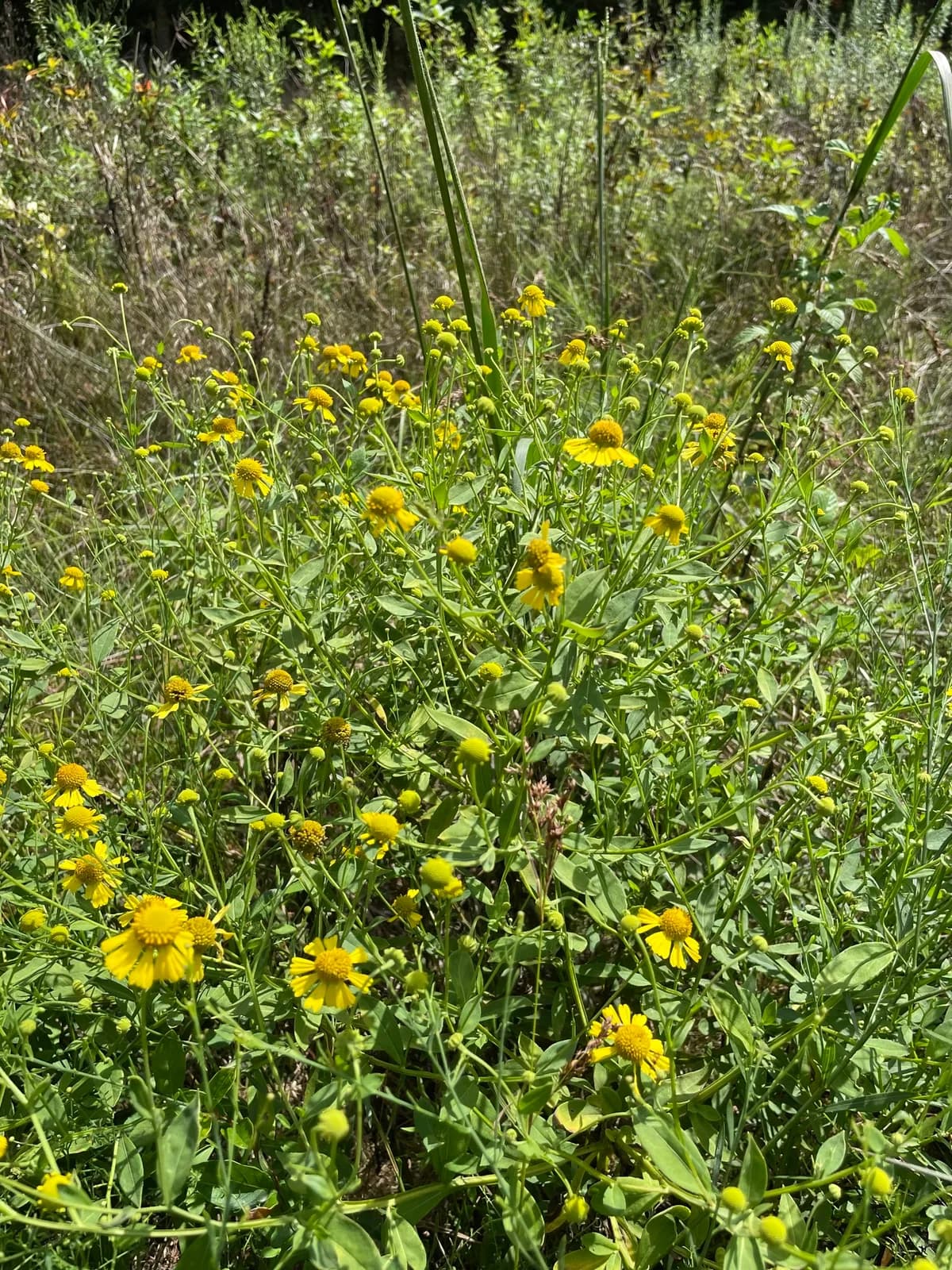
Helenium autumnale is a sun-loving forb that blooms from July through October, producing yellow daisy-like flowers in moist meadows, ditches and streambanks. It grows well in medium to consistently damp soil across much of the eastern and central United States.
Toxicity unknown
Common Sneezeweed (Helenium autumnale) is not listed by the ASPCA Animal Poison Control Center (opens in new tab) or the other sources we check, so we have no verdict for it either way. Absence from those lists is not a clearance. If your pet shows symptoms after eating any plant, call the ASPCA at (888) 426-4435.
Common Sneezeweed is listed as toxic to grazing livestock such as cattle, sheep, and goats at a severe level by the USDA PLANTS Database (opens in new tab). This is a livestock indicator and is separate from pet toxicity.
Light
full sun
Water
medium
Size
24"–60" H × 12"–24" W
Bloom
Jul, Aug, Sep, Oct
Native to
AL, AR, AZ, CA and 38 more states
Pollinators
bees, butterflies, beetles
Deer
Resistant (per Prairie Moon Nursery)
Before you buy
Your city may pay you to plant this
Cities and water utilities offer rebates for replacing lawn with native and water-wise plants. We track 459 programs across 44 states, each with a link to the provider and the date we last checked it.
Find rebates in your areaPicture natives in your own yard
Upload a photo of your yard and Patch Vision shows a rendering of it planted with natives for your region, like Common Sneezeweed.


Browse plants for this ecoregion
Common sneezeweed is a tall native perennial that produces bright yellow daisy-like flowers from mid-summer through fall. Despite its unfortunate name, it doesn't cause sneezing and creates impressive golden displays in sunny gardens. The plant forms upright clumps and provides reliable late-season color when many other flowers are fading.
Growing Common Sneezeweed
Grow Common Sneezeweed in full sun and medium water. Mature plants reach 24 to 60 inches tall and spread 12 to 24 inches wide. Expect low maintenance to keep it looking intentional in a front yard.
How to care for Common Sneezeweed, by region
How to care for Common Sneezeweed where it is actually grown: year-round basics plus what to do each season, region by region, with the sources for each.
Care guidance last updated: October 2026
Central California Foothills and Coastal Mountains (includes San Francisco, CA)
Year-round
Common sneezeweed wants full sun, though a little afternoon shade is fine in San Francisco's foggier neighborhoods. It likes rich soil that stays moist and handles both sandy and clay ground as long as it never fully dries out. Unlike its native wet meadows back east, the Bay Area does not hand it free rain most of the year, so plan on watering it by hand or with a drip line through the dry months. A healthy clump grows about 2 to 5 feet tall and just as wide, so give it room toward the back of a bed. The leaves, flowers and seeds hold compounds that can cause vomiting and stomach upset if a person, dog, or grazing animal eats a large amount, so it is worth keeping curious pets and kids from snacking on it.
Fall
Bloom can hold on into October here, later than it would in a colder climate, since San Francisco's mild fall keeps the plant going a bit longer than the books say. Rain usually starts coming back in October or November, so this is when you can start easing off the hose and let the sky take over the watering again. Once flowering finally winds down, cut the spent stems back to where the leaves are still green to tidy up the clump for the season.
Cutting the spent flower stalks back keeps a front yard bed looking neat instead of leggy, which fits an HOA-friendly look for beds visible from the street.
Winter
Winters are mild and wet here, with San Francisco itself rarely seeing a hard freeze, so this plant does not need any frost protection in most years. After it finishes blooming and the foliage browns, cut the whole clump down to a few inches above the ground. Rain from around November through March usually covers all the water it needs, so there is no need to add any through winter unless the season turns unusually dry.
Cutting the dead stalks back in winter keeps the bed tidy through the dormant season instead of showing brown stems in an HOA-friendly front yard.
Spring
San Francisco's last frost usually lands around early February, so by spring this plant already has nothing to fear from cold. Spring is normally the tail end of the city's rainy season, so an established plant may need little extra water for a few more weeks, though it is worth checking the soil since dry stretches happen even in a wet winter. Once new shoots reach 6 to 8 inches, pinch the tips back, or cut the whole clump back by about a third in late May or early June, to keep it bushy and less likely to flop over once it blooms. Spring is also the best time to dig up and split a clump that has been in the ground 3 years or more, replanting the divisions right away.
Summer
Summer is the trickiest stretch for this plant here, since San Francisco gets close to no rain from June through September while sneezeweed actually wants soil that stays moist the whole time. The fog keeps temperatures mild, which helps some, but fog is not the same as water reaching the roots. Give it a deep soak two or three times a week rather than a light daily sprinkle, and water more often if it sits in a sunny or windy spot that dries out fast. Snip off spent flower heads as they fade so the plant keeps making new buds instead of going to seed early.
Sources: Lady Bird Johnson Wildflower Center - Helenium autumnale, USDA Forest Service - Common Sneezeweed (Plant of the Week), Calscape - Common Sneezeweed growing conditions, Climate of San Francisco - Monthly Rainfall 1849-Present (community tip), GrowIt BuildIt - Complete Guide to Sneezeweed (community tip), UC Marin Master Gardeners - What Is Your Climate Zone
Coast Range (includes Eureka, CA)
Year-round
Common sneezeweed is a native, water-loving perennial in the Eureka area that blooms heaviest from late summer into fall and does best where the soil stays consistently damp.
- Give it full sun to light shade and soil that stays moist. It is native to California's far north coast and naturally grows in wet meadows and along streambanks.
- Plan on regular watering through Eureka's dry summer stretch, since local rainfall drops off well before the plant's fall bloom peak.
- Cut stems back by about a third in early summer to build a bushier plant with more flowers instead of one tall, floppy stem.
- Divide crowded clumps every two to three years in spring. This is the standard way to keep plants vigorous and to propagate more.
Fall
Fall brings sneezeweed's heaviest bloom in Eureka, and despite the name it is not a hay fever culprit, since insects rather than wind do the pollinating.
- Deadhead spent flower heads to tidy the plant and extend bloom, though leaving some seed heads standing also feeds birds later in fall.
- Keep leaves, flowers, and seeds away from pets and grazing animals. All parts are toxic in large amounts, and sheep in particular are known to be affected.
- Do not expect sneezeweed to trigger allergies. Its pollen is large and carried by insects, not airborne the way ragweed's is.
- Ease off supplemental watering as fall rains return to Eureka, which typically resume by October.
Staying on top of deadheading through fall keeps a front-yard bed looking intentional rather than leggy during the plant's showiest month.
Winter
Sneezeweed goes dormant in winter, and a late-fall or early-winter cutback to the ground keeps the bed neat through Eureka's rainy season.
- Cut stems back to a few inches above the ground once they die back. This is the standard winter maintenance step for this species.
- Leave the crown undisturbed over winter. Roots stay alive underground and resprout in spring.
- Mulch lightly around the base if a hard frost is forecast, though Eureka's coastal winters are usually mild.
- Hold off on dividing or planting until early spring. The ground is often saturated from Eureka's heavy winter rainfall.
A clean late-fall or winter cutback to the ground is the single biggest thing that keeps a dormant native bed looking tended rather than overgrown through the rainy season.
Spring
New growth comes up in spring, which is the best window to divide crowded clumps or plant new sneezeweed while the ground is still cool and moist from winter rain.
- Divide any clump that died out in the middle or bloomed less the year before, and replant divisions right away so the roots do not dry out.
- Keep new spring growth consistently moist. Eureka's spring rains usually taper off by late May, so do not count on the ground staying wet on its own.
- Pinch or cut the tips back once stems reach about a foot tall to build a bushier plant and cut down on flopping later in the season.
- Watch young spring shoots for slug and snail damage, which is common in damp coastal soil this time of year.
Summer
Summer is sneezeweed's main growth push ahead of fall bloom, and in Eureka's cool, foggy, dry summer it needs supplemental water since the marine layer keeps the air damp without actually wetting the soil.
- Water deeply on a regular schedule through summer. Coastal fog keeps humidity up but rarely delivers enough moisture down to the root zone.
- Stake tall stems or let neighboring plants help support them. Sneezeweed can reach four to five feet and flops easily in wind off the bay.
- Watch for powdery mildew and leaf spot on foliage, both more likely when the air stays humid and the soil surface stays wet.
- Clear fallen leaves and debris from around the base regularly to cut down on fungal buildup in the marine-layer humidity.
Staking or corralling tall stems keeps the bed looking tended rather than sprawling into a walkway or sidewalk sightline.
Sources: Lady Bird Johnson Wildflower Center: Helenium autumnale, Calscape: Common Sneezeweed (Helenium autumnale), NC State Extension Gardener Plant Toolbox: Helenium autumnale, UC Agriculture and Natural Resources: Does Sneezeweed Make You Sneeze?, Cornell Department of Animal Science: Sesquiterpene Lactones (Plants Poisonous to Livestock)
Columbia Plateau (includes Yakima, WA)
Year-round
Common sneezeweed grows on both sides of the Cascades in Washington, and herbarium records confirm at least one documented find in Yakima County itself. But it is naturally a streambank and wet-meadow plant, and the Columbia Plateau's dry, high desert climate is a real mismatch for that habit. Grown here, it needs a spot that gets regular water rather than a dry border, so think of it as a plant you irrigate on purpose rather than one that fits the native sagebrush landscape around it. It is not on the ASPCA's toxic plant lists for dogs or cats, though the genus contains compounds documented to poison grazing livestock like sheep if eaten in quantity, so keep grazing animals away from it if you keep any.
- Give it full sun to part shade and soil that stays consistently moist. In Yakima's dry summers that usually means a spot near a downspout, low point in the yard, or a bed on regular drip irrigation, not a xeriscape planting.
- Expect a tall plant, 3 to 5 feet, so place it toward the back of a bed or somewhere it will not flop onto a path once it is in full bloom.
- Cut the stems back by about a third in early summer. This keeps the plant bushier and shorter so it needs less staking once the yellow fall flowers open.
- Because Yakima's summers are hotter and drier than the streambanks this plant is used to, expect to water more often than a general care guide written for a wetter climate would suggest.
Fall
Fall brings the main bloom for common sneezeweed and cooler, more forgiving temperatures for the Yakima area. Keep watering through fall since the Columbia Plateau's dry season continues even as the air cools.
- Expect the yellow daisy-like flowers to be at their best from late summer into fall. This is the main show for this plant.
- Do not cut back watering just because temperatures drop. Yakima gets little fall rain, and this plant still needs consistently moist soil.
- Deadhead spent flowers if you want a tidier look, or leave some seed heads standing for birds before winter.
- Fall is also a reasonable time to divide an overcrowded clump, once the worst of the heat has passed.
Deadheading spent blooms in fall keeps a front bed looking tended rather than tired as the season winds down.
Winter
Common sneezeweed dies back to the ground for winter, which fits Yakima's cold winters reasonably well since the plant is dormant during the coldest months. The bigger risk here is the ground drying out completely, not the cold itself.
- Let the plant die back naturally after fall bloom and cut the dead stems to the ground once they have browned.
- A layer of mulch over the root zone helps insulate through Yakima's cold winter nights and reduces how much the soil dries out.
- Do not assume winter dormancy means no water is needed. If there is a stretch of dry, cold weather with no snow cover, an occasional deep watering keeps roots from drying out completely.
- New growth will resume from the base in spring, so do not disturb the crown while it looks bare over winter.
Spring
Spring is the best time to plant common sneezeweed in the Yakima area, while temperatures are mild and before the dry summer heat sets in. Get the watering routine established early since this plant does not have the drought tolerance that many Columbia Plateau natives do.
- Plant in spring so roots have time to establish before summer heat arrives. Dig in compost first since Yakima's native soils are naturally low in organic matter compared to what this plant prefers.
- Set up regular watering from the start, ideally drip irrigation, rather than waiting until the plant shows stress. It cannot rely on natural rainfall here the way it can farther east or in wetter parts of Washington.
- New growth appears low and clumping in spring. Give it room since it will grow to 3 to 5 feet tall by late summer.
- Watch for slug or snail damage on tender new growth if you are watering a nearby lawn or bed heavily.
Summer
Summer is the hardest season for this plant on the Columbia Plateau. Yakima's hot, dry summer is close to the opposite of the moist streambanks common sneezeweed grows in naturally, so consistent water matters most right now.
- Water deeply and often enough that the soil never fully dries out. A dry stretch here can stress or wilt this plant faster than it would in its normal wet-meadow habitat.
- Cut back by about a third in early summer if you have not already. This keeps the plant sturdier and less likely to flop in Yakima's summer wind.
- Watch for powdery mildew or leaf spot, especially if the plant gets crowded or watered overhead in the heat. Water at the base instead of over the foliage.
- Flowering typically runs from late summer into fall, so expect the yellow blooms to build through the second half of summer.
Keep it staked or supported through summer so the tall stems do not sprawl over a sidewalk or into a neighbor's view of the bed.
Sources: Burke Herbarium Image Collection (University of Washington), Helenium autumnale taxon page (Washington range and habitat), Consortium of Pacific Northwest Herbaria, specimen search for Helenium autumnale in Yakima County, WA (1 documented record), ASPCA, Toxic and Non-Toxic Plant List, Dogs (Helenium/sneezeweed not listed), USDA Agricultural Research Service, Poisonous Plant Research Lab, Sneezeweed (Helenium hoopesii), a related Helenium species documented as toxic to grazing livestock, mainly sheep, NC State Extension Gardener Plant Toolbox, Helenium autumnale (light, water, size, bloom time, maintenance)
Cross Timbers (includes Fort Worth, TX)
Year-round
Common sneezeweed is a wet-footed native for the Eastern Cross Timbers around Fort Worth. It wants steady moisture, so treat it as a low-spot or rain-garden plant, not a plant for dry upland clay. Give it full sun and clay or loam that stays damp, and it rewards you with sprays of yellow daisy flowers late in the season when most things have quit.
- Plant it where water naturally collects: the low end of a bed, a downspout run-off area, a rain garden, or the damp edge of a lawn.
- Full sun keeps the stems sturdy. In too much shade the plant flops and needs staking.
- It is native to the Cross Timbers along moist stream corridors, per the Lady Bird Johnson Wildflower Center and BONAP county records.
- Leaves, flowers, and seeds are toxic only if eaten in large quantities, per the Lady Bird Johnson Wildflower Center. Mammals avoid the bitter foliage, so it is a poor fit only where a pet or child grazes plants.
- Late-summer nectar plant with special value to native bees and butterflies, per the Lady Bird Johnson Wildflower Center.
Kept to a damp low spot or rain garden, its tidy clumping habit and bright fall bloom read as intentional, HOA-friendly color rather than a weedy patch.
Fall
Fall is the whole point of this plant. Yellow daisy flowers open from roughly late summer into October and pull in bees and butterflies when the rest of the yard is winding down.
- Expect peak bloom from roughly July through October, per the Lady Bird Johnson Wildflower Center.
- Deadhead spent flowers to stretch the bloom and keep the clump looking neat.
- This is prime late-season nectar for native bees and butterflies, per the Lady Bird Johnson Wildflower Center, so leave some blooms for them.
- Let a few seed heads stand at the end of the season if you want volunteer seedlings next spring.
A wave of clean yellow bloom in fall is an easy curb-appeal win and looks deliberate to neighbors.
Winter
Sneezeweed dies back to the ground in winter and rests. This is normal for the plant, not a sign it died. Do a simple cleanup and leave the roots alone.
- The top growth browns and collapses after frost. The crown is alive underground and will return in spring.
- Cut back the dead stems in late winter, or leave them standing over winter for a little cover and seed for birds.
- Do not overwater the dormant crown. It needs moisture in the growing season, not soggy roots in cold dormancy.
- No need to dig or protect the roots in the Fort Worth area. It is fully winter hardy here.
Cutting the browned stems back by late winter keeps a dormant clump from looking neglected from the street.
Spring
Spring is when you plant sneezeweed and let it get its roots into damp soil before the Cross Timbers heat arrives. Keep the ground evenly moist and it will send up fresh green clumps fast.
- Set out plants or divisions in early spring so roots establish while the soil is still cool and wet.
- Water deeply and often the first few weeks. This is a moisture-loving plant, so do not let the root zone dry out.
- Pinch the growing tips once in mid to late spring to make the plant bushier and less likely to flop later.
- Spring is also the time to lift and divide older clumps every few years to keep them vigorous.
Summer
Fort Worth summers are hot and often dry, which is the hard season for a wetland plant. Sneezeweed needs consistent water now or the leaves scorch and drop. Buds set in late summer for the fall show.
- Water on a steady schedule through the dry heat. Wilting or crispy lower leaves mean the root zone went too dry.
- A layer of mulch over the root zone holds moisture and keeps the soil cooler.
- If plants are getting tall and leggy by early summer, one more pinch or a light cutback makes them stockier before bloom.
- Buds form in late summer, so keep the water coming right up to bloom time.
Sources: Lady Bird Johnson Wildflower Center, Helenium autumnale, BONAP North American Plant Atlas, Helenium autumnale county map, Wisconsin Horticulture Extension, Helenium autumnale, New Moon Nursery, Helenium autumnale grower notes, North Carolina Extension Gardener Plant Toolbox, Helenium autumnale
East Central Texas Plains (includes College Station, TX)
Year-round
Common sneezeweed is a native fit for the moist bottoms of the Post Oak Savanna around College Station. It lives along stream edges and in wet open woods and fields, so give it a damp spot in sun. In return you get tall yellow daisies from late summer into fall.
- Best in stream-bottom soil, low damp corners, or a rain garden. Skip the dry sandy uplands.
- Full sun for upright stems, though it takes a little afternoon shade in the hottest part of summer.
- Native to the moist open woodlands and wet fields of this region, per the Lady Bird Johnson Wildflower Center and BONAP county records.
- Leaves, flowers, and seeds are toxic only if eaten in large quantities, per the Lady Bird Johnson Wildflower Center. Grazing animals avoid the bitter foliage.
- Special value to native bees plus a butterfly nectar source, per the Lady Bird Johnson Wildflower Center.
Placed in a defined damp bed with a clean edge, the clumped form and fall bloom read as intentional and HOA-friendly.
Fall
Fall is the payoff. Yellow daisies open from roughly late summer into October and feed pollinators late in the year.
- Peak bloom is roughly July through October, per the Lady Bird Johnson Wildflower Center.
- Deadhead spent blooms to keep the flush going and the clump neat.
- Important late-season nectar for native bees and butterflies, per the Lady Bird Johnson Wildflower Center.
- Leave a few seed heads standing for reseeding and birds.
Clean fall color in a bordered bed keeps the planting reading as tended and HOA-friendly.
Winter
Sneezeweed goes dormant to the ground in winter and rests. Clean up the dead stems and leave the crown in place.
- Top growth browns after frost. The crown is alive and returns in spring.
- Cut back dead stems in late winter, or leave them for winter cover and bird seed.
- Keep the dormant crown from sitting in waterlogged soil in the cold.
- Winter hardy in the College Station area, no digging or covering needed.
A late-winter trim of browned stems keeps the resting clump tidy from the curb.
Spring
Spring is planting and dividing time. Get sneezeweed into damp ground early and pinch it once for a bushier plant.
- Plant in early spring so roots establish in cool, moist soil before summer.
- Keep the soil evenly moist for the first weeks after planting.
- Pinch the tips once in mid to late spring so the plant grows fuller and flops less.
- Lift and divide older clumps in spring every couple of years.
Summer
Summer heat and sandy Post Oak soils drain fast, so water is the job now. Keep the root zone damp and buds will form for a strong fall bloom.
- Water steadily through the heat. Crispy or dropping lower leaves mean it went too dry.
- Mulch to hold moisture in the quick-draining soil.
- A light early-summer trim keeps tall plants from flopping later.
- Buds set in late summer, so do not ease off the water before bloom.
Sources: Lady Bird Johnson Wildflower Center, Helenium autumnale, BONAP North American Plant Atlas, Helenium autumnale county map, New Moon Nursery, Helenium autumnale grower notes, Wisconsin Horticulture Extension, Helenium autumnale, North Carolina Extension Gardener Plant Toolbox, Helenium autumnale
Erie Drift Plain (includes Buffalo, NY)
Year-round
Sneezeweed likes full sun and soil that stays damp, and it blooms from midsummer into fall.
- Plant it in full sun where the soil stays moist.
- Cut it back in early summer so it branches and holds more flowers.
- Tall stems may need a stake.
Cutting stems back in early summer keeps it shorter and tidier, and trimming old stems in late fall or early spring gives a neat winter look.
Fall
Fall is peak bloom time, and flowers can last until the first hard frosts.
- Keep watering if autumn turns dry.
- Look over leaves for mildew, leaf spot or rust.
- Cut stems down after frost or leave them until spring.
Winter
In winter the plant sleeps under Buffalo snow and needs nothing from you.
- No watering is needed while the ground is frozen.
- Leave the roots alone under the snow.
- Do any cutback on a dry, mild day if you did not do it in fall.
Spring
Spring is when new shoots wake up, so keep the soil damp and wait out Buffalo frost.
- Cut last year's dead stems to the ground once new growth shows.
- Keep soil moist as shoots grow.
- Spring is a good time to divide a big clump.
Summer
Summer is the busy season, so give it steady water and a trim early on.
- Cut stems back in early summer to get a bushier plant with more blooms.
- Water during dry spells since this plant wants damp soil.
- Stake tall stems before bloom if they flop.
Sources: Lady Bird Johnson Wildflower Center: Helenium autumnale, NC State Extension Plant Toolbox: Helenium autumnale
High Plains (includes Lubbock, TX)
Year-round
Common sneezeweed is a tall wildflower that wants steady moisture, so around Lubbock the watering is most of the job. Give it full sun and the dampest ground you have, like a low bed, a spot near a downspout, or the edge of a rain garden. Alkaline High Plains soil is fine for it, because it handles high lime soil well, so skip soil acidifiers and skip peat. Wind is the second problem here, since stems reach 3 to 5 feet and flop or snap in a hard gust. Cutting every stem back by half in late May keeps the plant shorter and stiffer so it barely needs staking. The Lady Bird Johnson Wildflower Center lists the leaves, flowers, and seeds as poisonous if eaten in quantity, so put it where grazing animals and small children will not chew on it.
- Pick the dampest sunny spot in the yard, never a dry sandy berm.
- Water deeply once or twice a week from May through October.
- Keep 2 to 3 inches of mulch over the root zone year round.
- Skip acidifiers and peat, this plant is fine in high lime soil.
- Cut stems back by half in late May so wind has less to grab.
A 4 foot plant that has flopped over reads as neglect from the street, so keep the late May cutback and add a support ring early if it sits in a front bed. Cut back and supported, it looks intentional and HOA-friendly.
Fall
Flowers keep coming into October here, and the first frost usually holds off until early November, so fall is this plant's best stretch. Keep watering deeply about once a week until frost, because a blooming plant is still drinking hard. The USDA Forest Service notes that insects do the pollinating on common sneezeweed, and bees and butterflies work these flowers, so leaving the last blooms alone through October is worth doing. After the first hard freeze the stems brown out and you can either cut them down or leave them standing. Do not fertilize now, since extra feeding only makes weak, floppy growth.
- Keep watering about once a week until the first hard freeze.
- Leave October flowers standing for the insects still working them.
- Skip fertilizer in fall, it only makes weak tall stems.
- After the first hard freeze, cut the brown stems down or leave them.
- Top the mulch back up to 3 inches before winter wind starts.
In a front bed, cutting the brown stems to about 6 inches after the first hard freeze keeps the winter view neat and HOA-friendly, while a back bed can hold taller stems for insects.
Winter
Winter here is cold, dry, and windy, but this plant is hardy well past zone 7a, so cold is not the risk. Dry roots are. Check in once a month, and if a month has gone by with no rain or snow and the ground is not frozen, give the crown a slow soaking. Keep 2 to 3 inches of mulch over the roots, but pull it back an inch from the center of the plant so the crown is not buried in wet material. Do not dig, divide, or fertilize now. Use the down time to decide where a divided piece will go in spring.
- Water once a month if a month passed with no rain or snow.
- Never water frozen ground, it just runs off and does nothing.
- Keep mulch 2 to 3 inches deep, pulled back from the crown.
- Skip all fertilizer until growth restarts in spring.
- Mark the spot so you do not dig into the dormant crown.
Spring
Spring is when you plant, divide, and set this one up to survive summer. The last frost around Lubbock lands near the middle of April, and late freezes still happen, so set out new plants after mid April. If a clump is 3 or 4 years old and thin in the middle, dig it in early spring and split it into fist sized pieces. Start watering as soon as new leaves appear, because spring wind dries the top few inches of soil in a day. In late May, before flower buds form, cut every stem back by about half. That one cut is the difference between a plant that stands up in a June thunderstorm and one that lies flat.
- Set out new plants after mid April, once late freeze risk passes.
- Divide crowded clumps in early spring, every 3 to 4 years.
- Water twice a week once growth starts, wind dries soil fast.
- Refresh mulch to 2 to 3 inches before the heat arrives.
- Cut all stems back by half in late May to control height.
Summer
Summer here is a watering job and not much else. The plant blooms from July onward, which is also the hottest and windiest stretch of the year on the High Plains. This species does not tolerate dry soil, so it needs a deep soak once or twice a week rather than a light daily sprinkle. Heavy thunderstorms look like they solve the problem, but a lot of that water runs off in a few minutes, so check the soil yourself instead of trusting the sky. Hail is a real risk in this part of Texas, and a battered plant will regrow if you trim the broken stems. Pinching off finished flowers each week keeps new buds coming into fall.
- Water deeply twice a week in July and August, more in a heat run.
- Push a finger 2 inches into the soil first, water only if it is dry.
- Do not count a short hard thunderstorm as a real watering.
- Pinch off finished flowers weekly to keep new buds forming.
- After hail, trim broken stems back to a leaf joint.
Sources: Lady Bird Johnson Wildflower Center, Helenium autumnale, USDA Forest Service, Plant of the Week: Common Sneezeweed, Missouri Botanical Garden Plant Finder, Helenium autumnale, Texas A&M AgriLife Earth-Kind, Efficient Use of Water in the Garden and Landscape, NC State Extension Gardener Plant Toolbox, Helenium autumnale
Huron/Erie Lake Plains (includes Toledo, OH)
Year-round
Common sneezeweed does best in full sun with soil that stays moist to wet, and it puts on a show of yellow to orange daisy-like flowers from late summer into fall.
- Plant in full sun for the sturdiest, most upright stems. It also tolerates some light afternoon shade in hot stretches.
- Give it consistently moist to wet soil. A low spot, rain garden, or an area near a downspout works well since this plant does not like to dry out.
- Expect yellow to orange daisy-like flowers from late summer into fall, a good late-season food source for bees and butterflies.
- Divide the clump every three to five years in spring to keep it vigorous and prevent the center from getting woody and sparse.
- The foliage is bitter, so deer and rabbits usually leave it alone.
- Common sneezeweed does not appear on the ASPCA's toxic plant list for dogs. As with most garden plants, it is still smart to discourage pets from chewing on large amounts of any plant.
Fall
Fall is peak bloom for this plant in the Toledo area, running from late summer up until the first hard frost typically arrives around mid-October.
- Peak bloom runs from late August through October in the Toledo area, right up to the first hard frost, which typically lands around mid-October.
- Deadhead spent flowers through September to keep new blooms coming.
- Stop deadheading once nights turn consistently cold in October and let the last flowers go to seed. The seed heads are a food source for goldfinches and other songbirds through fall.
- Leave the stems standing after frost rather than cutting the plant back right away. The seed heads keep feeding birds and the old growth helps protect the crown as the ground cools.
Regular deadheading through September keeps the front-yard planting looking tended rather than tangled, and it reads as intentional even after you let the last flowers go to seed in October.
Winter
Leave the dried stems and seed heads standing through Toledo's cold winters and cut the plant back in late winter, just before new growth starts.
- Wait to cut back dead stems until late winter, roughly February into early March, rather than tidying up right after frost in fall.
- Leaving stems standing over winter keeps seed heads available for birds and helps protect the crown through freeze-thaw cycles common in the Toledo area.
- A layer of mulch after the ground freezes gives extra insulation, especially in a consistently wet spot where the soil can heave.
- Cut everything back to a few inches above the ground once you see new growth starting to emerge in early spring.
Standing stems with defined seed heads read as a deliberate winter planting rather than a neglected, dead patch, which helps avoid a tidiness complaint before the late-winter cutback.
Spring
In the Toledo area, spring is the time to divide crowded clumps and pinch new growth back so the plant grows compact and self-supporting instead of tall and floppy.
- Once new growth is a few inches tall and the last spring frost has passed, divide any clump that has gotten crowded or hollow in the center.
- Pinch stems back by about a third in late spring, roughly late May to early June in the Toledo area. This delays bloom by about a week but produces a stockier plant that needs less staking later.
- Watch for slugs on tender new growth, especially in the clay, poorly drained soils common around Toledo.
- Water deeply if spring rainfall runs light. This plant does not tolerate drying out even early in the season.
Pinching stems back in late spring keeps the plant compact and upright instead of sprawling later in the season, which reads as an intentional, tended planting rather than an overgrown one.
Summer
Summer heat in the Toledo area means steady watering and, for taller varieties, some support so the plant does not flop before it blooms.
- Keep soil consistently moist through the summer. Water deeply during dry stretches, especially if a week or more passes without rain.
- Stake taller stems before they flop, or plant in a group so the stems support each other. This matters most in open, windy spots.
- Watch for powdery mildew during humid summer stretches. Good airflow between plants and watering at the base rather than overhead both help.
- The first flowers of the season typically open in August in the Toledo area, with bloom building through the rest of summer.
Sources: Lady Bird Johnson Wildflower Center - Helenium autumnale, University of Wisconsin-Madison Extension - Helenium (Helenium autumnale), NC State Extension Gardener Plant Toolbox - Helenium autumnale, ASPCA - Toxic and Non-Toxic Plant List for Dogs
Lake Agassiz Plain (includes Fargo, ND)
Year-round
Common sneezeweed is documented by USDA as severely toxic to grazing livestock, especially sheep and cattle, so keep it out of any area animals graze or forage in. In the Red River Valley around Fargo it is also genuinely native, not just cold-hardy: USDA PLANTS and the Lady Bird Johnson Wildflower Center both list North Dakota in its native range.
- USDA rates its toxicity to grazing animals as Severe, and separately rates it low-palatability to both browsing and grazing livestock, meaning most animals leave it alone unless there is nothing else to eat.
- It grows two to five feet tall as an upright, single-stemmed forb with fine green foliage, and it dies back to the ground every winter.
- It wants full sun and medium, even moisture. USDA rates its drought tolerance as low, which matters most during a dry Red River Valley summer.
- It comes back each year from the same crown. Its habit is clump-forming rather than spreading, so it stays where it is planted instead of moving into neighboring beds.
Fall
Fall is both bloom season and cutback season for this plant, and it is the point in the year a person is most likely to handle its toxic material directly, so lead with that: USDA rates common sneezeweed Severe for toxicity to grazing livestock, so wear gloves when cutting it back and keep the cut stems and seed heads away from any spot animals graze, including a compost pile livestock could reach.
- Blooms carry into fall until the season's first hard frost, which typically arrives in the Red River Valley by mid-to-late September or early October.
- Cutting the plant back after bloom also gets the toxic plant material out of the bed instead of leaving it to break down in place over winter.
- USDA also rates it as not palatable to humans, so there is no reason to eat any part of it either.
A fall cutback keeps the bed looking tended instead of leaving tall, browning stems through winter on a street-facing border.
Winter
Once cut back, the plant goes fully dormant and holds up to genuinely severe cold. USDA lists its cold tolerance down to about -43F, well beyond what a Fargo winter typically delivers, so no winter protection is needed.
- If any cut stems or seed heads sit in a pile over winter, keep the pile away from areas pets or livestock can reach. USDA's Severe toxicity rating for grazing animals does not go away once the plant is dead.
- There is no live foliage to protect this time of year. It returns from the crown once the soil warms again in spring.
- No mulching or wrapping is needed for cold protection given how far its rated hardiness extends past a typical winter low here.
A cut-back planting keeps a tidy, low winter silhouette instead of tall dead stalks in a front-yard bed.
Spring
New growth breaks from the crown once the soil warms, usually after the Red River Valley's last spring frost, which historically lands in mid-to-late May around Fargo.
- Give it full sun and steady moisture while it gets going. USDA rates its drought tolerance as low, so a dry spring is when supplemental watering matters most.
- If an established clump needs dividing, spring, before flower buds form, is a better window in this climate than late summer or fall.
- USDA lists its cold tolerance down to about -43F, well past a typical Fargo winter low, so slow spring emergence is normal here and not a sign the plant died over winter.
Summer
Through Fargo's short, warm summer the plant grows quickly toward its full two-to-five-foot height and sets buds ahead of its late-summer bloom.
- USDA rates its moisture use as medium and its drought tolerance as low, so water it through hot, dry stretches rather than letting it dry out completely.
- It typically starts flowering in August in this ecoregion. Removing spent blooms as they fade can extend the flower show.
- Full sun keeps growth upright. In richer soil or more shade it can lean over and may need a stake by late summer.
Deadheading through summer keeps a street-facing bed looking tended instead of leggy.
Sources: USDA PLANTS Database - Common Sneezeweed (HEAU): toxicity, native status, and growth characteristics, Lady Bird Johnson Wildflower Center - Helenium autumnale native range
Middle Rockies (includes Missoula, MT)
Year-round
Common sneezeweed is native across a broad swath of the northern and central US that includes Montana, and it does fine in Missoula's zone 5 to 5b climate as long as it gets consistent moisture.
- USDA PLANTS records list Helenium autumnale as native within the Lower 48, and Montana falls inside its documented range.
- Wants full sun and soil that stays evenly moist to wet. Missoula's dry summers mean it usually needs supplemental water unless it sits near a downspout or a low, naturally damp spot.
- Grows as an upright clump 2 to 5 feet tall. Taller stems can flop in wind or heavy rain and may need a stake.
- USDA PLANTS rates this species severely toxic to livestock if eaten in quantity. There is no dedicated ASPCA listing for sneezeweed, so no dog, cat, or horse specific determination exists. Treat grazing exposure with caution and keep it out of pastures.
Fall
Bloom in Missoula wraps up close to the average first frost in late September, earlier than the October to November finish this plant sees in warmer climates.
- Expect bloom to taper off around the average first frost, typically late September in the Missoula area, rather than continuing into November.
- After flowering ends and stems die back, cut them to the ground, or leave the seed heads standing since they still have value for pollinators before the plant goes fully dormant.
- This is a good time to divide overcrowded clumps if it was not done in spring, working before the ground freezes.
- Skip fertilizer this time of year. NC State Extension notes that fertilizing sneezeweed tends to produce weak, floppy stems rather than a sturdier plant.
Cutting the dead stems back after bloom gives the bed a clean, tidy look through the rest of fall, if a tended appearance matters more than late season pollinator value.
Winter
Missoula's cold, snowy winters are well within what this plant tolerates. It dies back completely and needs little more than leaving the root crown undisturbed.
- Sneezeweed is hardy to USDA zone 3, well below Missoula's zone 5 to 5b conditions, so the crown does not need extra winter protection in a typical year.
- Top growth dies back completely each winter. Any stems left standing from fall will be brown and bare through the cold months.
- In a low snow year, a light layer of mulch over the crown after the ground freezes is a reasonable extra step, since snow cover is normally enough insulation on its own.
- Do not dig around the roots or cut into the crown while the ground is frozen. Wait for spring thaw to divide or transplant.
Left standing, the dry stems add some winter texture, but cutting them to the ground in fall instead leaves the bed bare and tidy through winter if that is the priority.
Spring
Spring in Missoula, with a last frost around mid to late May, is the time to divide crowded clumps and give new growth a strong, bushy start.
- Divide clumps every 3 to 4 years in spring to keep the plant vigorous and control its spread.
- Once new shoots are a few inches tall, pinch or cut them back by about a third in late spring to early summer. This builds a bushier, sturdier plant that needs less staking later on.
- Hold off on major cutting or dividing until the danger of a hard frost has passed, typically past mid to late May in the Missoula area, since fresh cuts and new growth are more frost tender.
- Water deeply after dividing so roots reestablish before summer heat and dry conditions arrive.
Dividing and an early cutback keep the clump compact along a front walk or bed edge instead of sprawling.
Summer
Missoula summers are dry, so keeping this plant blooming from July into September mostly comes down to consistent water and deadheading.
- Keep soil consistently moist through the dry summer months. Deep, less frequent watering works better than light daily sprinkling.
- Deadhead spent blooms to encourage more flowers and stretch out the bloom window.
- Watch for powdery mildew or leaf spot in humid or crowded conditions. Good airflow around the clump helps prevent both.
- Flowers have special value to native bees and draw butterflies through the season, so leaving some blooms unpicked in mid to late summer benefits pollinators.
Regular deadheading keeps the bed looking tended through peak summer, which matters most for a front yard planting.
Sources: USDA PLANTS Database, Helenium autumnale (HEAU), Lady Bird Johnson Wildflower Center, Helenium autumnale, NC State Extension Gardener Plant Toolbox, Helenium autumnale, Missoula County Extension, Timing Is Everything When to Plant in Montana
Piedmont (includes Atlanta, GA)
Year-round
Common Sneezeweed is a wildflower native to Georgia's Piedmont, the same region Atlanta sits in, and it wants full sun and soil that stays consistently damp, the way it grows naturally along streams and in wet meadows.
- Give it full sun to light afternoon shade and soil that stays evenly moist, it comes from wet meadows and stream edges in the wild
- Water it during Atlanta's dry summer stretches, it struggles more from drought than from too much water
- Pinch or cut the stems back by about a third in late spring so the 3 to 5 foot stalks do not flop over later
- Divide the clump every 2 to 3 years in early spring to keep it blooming well
- Wear gloves when handling or cutting it back, the leaves and stems can irritate skin
Fall
Fall is Common Sneezeweed's real moment, this is its natural bloom season and Atlanta yards get weeks of yellow and orange daisy flowers right up until frost.
- Peak bloom runs from late August through October in the Atlanta area, up until the first frost, usually around mid-November
- Deadhead spent flower heads regularly to keep new buds coming and stop the plant from looking leggy
- Leave a few late seed heads standing for goldfinches and other birds before the first hard freeze
- Cut the whole plant back to a few inches once bloom is fully done and frost has knocked back the top growth
- Divide crowded clumps now if you missed the spring window, fall works too in most years
Staying on top of deadheading through fall and finishing with one clean cutback once frost hits reads as a tended bed rather than one left to go wild, which is the difference a fall curb check usually notices.
Winter
Common Sneezeweed goes fully dormant through an Atlanta winter, the top growth dies back and the plant waits underground until spring, needing almost no care.
- The plant dies back to the ground after the first hard freeze, usually by late November in the Atlanta area
- Leave the cut stubble or a light mulch layer over the crown, Atlanta winters bring occasional hard freezes and ice that can heave shallow roots
- Skip watering while it is dormant unless the region goes through an unusually dry winter
- Hold off on fertilizer until new growth shows in spring
- If you did not cut it back in fall, tidy up any collapsed dead stalks now for a cleaner winter look
A cut back, mulched bed reads as deliberately maintained through the dormant months instead of neglected, which matters if your HOA does a winter appearance pass.
Spring
Spring is when Common Sneezeweed wakes up from winter dormancy and pushes out fresh growth, and it is the best window to divide a crowded clump.
- New shoots appear at the base as soil warms, usually through March and April, Atlanta's average last frost falls in early April
- Divide overcrowded clumps in early spring before much new growth appears, this keeps the plant blooming well and controls its spread
- Cut back any dead stalks left standing over winter to make room for the new growth
- Start watering regularly once new growth is a few inches tall, spring rain in Atlanta is usually enough except during dry spells
- Wait until stems reach about 12 inches, usually late spring, before pinching tips for a bushier plant
Summer
Summer is Atlanta's hot, humid growing season, and Common Sneezeweed uses it to bulk up fast, budding by the time late summer arrives.
- Water deeply once or twice a week during hot dry stretches, the plant wants consistently moist soil and Atlanta summers can turn dry between storms
- Thin out crowded stems for better airflow, humid Georgia summers are hard on fungal leaf issues in dense plantings
- Stake tall clumps or use a peony ring if stems start to lean, the plant can reach 4 to 5 feet by midsummer
- Skip extra fertilizer unless growth looks pale, rich Georgia clay can already push it too tall and floppy
- Pinch stem tips once in early summer to encourage a bushier, sturdier plant before bloom
Sources: Helenium autumnale distribution and range, Lady Bird Johnson Wildflower Center, Helenium autumnale toxicity and contact dermatitis, NC State Extension Gardener Plant Toolbox, USDA NRCS Illinois Grazing Manual Fact Sheet, Sneezeweeds (Helenium autumnale toxicity)
South Central Plains (includes Beaumont, TX)
Year-round
Common sneezeweed is core native habitat in the Piney Woods around Beaumont. This is the wettest, highest-rainfall part of Texas, full of soggy thickets, stream margins, and moist open woods where this plant thrives. Give it a damp sunny opening and it delivers yellow fall daisies for pollinators.
- A natural fit for stream edges, soggy low spots, ditch margins, and rain gardens. Avoid dry sandy ridges.
- Full sun to light shade. In the humid Piney Woods it takes a bit of dappled light better than most.
- Native to the moist woodlands, marshes, and soggy thickets of East Texas, per the Lady Bird Johnson Wildflower Center and BONAP county records. It holds a FACW wetland status, per the National Wetland Plant List.
- Leaves, flowers, and seeds are toxic only if eaten in large quantities, per the Lady Bird Johnson Wildflower Center. Bitter foliage keeps browsing animals away.
- Special value to native bees plus a butterfly nectar source, per the Lady Bird Johnson Wildflower Center.
In a defined damp bed at a woodland edge with a clean border, its upright clumps and fall color read as an intentional, HOA-friendly planting.
Fall
Fall is the reward. Yellow daisies open from roughly late summer into October and feed East Texas pollinators when little else is blooming.
- Peak bloom is roughly July through October, per the Lady Bird Johnson Wildflower Center.
- Deadhead spent flowers to keep new buds coming and the clump neat.
- Key late-season nectar for native bees and butterflies, per the Lady Bird Johnson Wildflower Center.
- Leave a few seed heads standing for reseeding and birds.
A clean sweep of fall yellow in a bordered bed keeps the planting reading as tended and HOA-friendly.
Winter
Sneezeweed dies back to the ground for a short mild-winter rest in the Piney Woods. Cut back the dead stems and leave the crown in place.
- Top growth browns after frost. The crown lives underground and returns in spring.
- Cut back dead stems in late winter, or leave them for cover and bird seed.
- Even in this wet region, avoid keeping the dormant crown in standing water all winter.
- Fully hardy in the Beaumont area, no digging or covering needed.
A late-winter trim of the browned stems keeps the dormant clump from looking neglected.
Spring
Plant sneezeweed in spring while the East Texas ground is cool and soaked. Pinch it once so it grows dense and stays upright.
- Plant in early spring so roots settle into the moist soil before summer.
- Piney Woods spring rain usually keeps things wet, but do not let new plants dry between storms.
- Pinch the tips once in mid to late spring for a fuller, sturdier plant.
- Divide older clumps in spring every couple of years to keep them vigorous.
Summer
Piney Woods summers are hot and humid. Sneezeweed handles the wet fine, but give it airflow to dodge leaf disease and keep the soil damp in any dry spell.
- Keep the root zone moist through the heat. It prefers wet feet to dry ones.
- Space and thin plants so air moves through the clump, since humidity plus crowding invites leaf spot.
- A light early-summer trim helps tall stems stay upright through summer storms.
- Buds set in late summer, so keep moisture steady into bloom.
Sources: Lady Bird Johnson Wildflower Center, Helenium autumnale, BONAP North American Plant Atlas, Helenium autumnale county map, USACE National Wetland Plant List, Helenium autumnale (FACW), North Carolina Extension Gardener Plant Toolbox, Helenium autumnale, Wisconsin Horticulture Extension, Helenium autumnale, New Moon Nursery, Helenium autumnale grower notes
Southern California/Northern Baja Coast (includes Los Angeles, CA)
Year-round
Common sneezeweed is a tall, cheerful, late-season bloomer with daisy-like yellow to orange flowers. It comes from wet meadows and stream banks across much of North America, including parts of Northern California, so it is used to a lot more water than most Los Angeles-area native plants. It has not been documented growing on its own in the Los Angeles area, so treat it as a garden addition rather than a local native. Give it consistently moist soil and full sun and it rewards you with pollinator activity from midsummer into fall.
- Water deeply and often. This plant wants soil that stays consistently moist, more like a streambank than a typical drought-tolerant Southern California native bed.
- Give it full sun and a spot that holds moisture, near a downspout, low point, or drip irrigation line.
- Expect real height, 2 to 5 feet, so plan space and staking rather than tucking it into a tight foundation bed.
- No ASPCA determination exists for dogs or cats specifically, so there is no official read on pet safety either way.
- The USDA Forest Service documents it as toxic to livestock (especially sheep) in large amounts, and the leaves and sap can irritate human skin and stomachs too, so handle it with gloves and keep grazing animals away from it.
Its upright habit and late bloom time read more like a wild meadow than a tidy foundation planting, so most owners tuck it toward the back of a bed rather than right up front by the sidewalk.
Fall
Fall is peak season for common sneezeweed, with blooms running from around July into October or later. Keep watering through fall since the plant is still active and thirsty even as Los Angeles heat starts to ease. This is also the tallest and most visible the plant will be all year, right as many yards are winding down for the season.
- Keep the water going. Fall heat and dry wind events pull moisture out of the root zone fast, and this plant does not handle that well.
- Deadhead through fall to stretch the bloom as long as possible.
- Cut back by about half after the main flush of bloom fades, to tidy the shape and reduce flopping.
- Fall is a reasonable time to divide an overgrown clump, roughly every 3 to 4 years, if you want to control its spread.
Peak bloom and peak height land at the same time, right as neighboring beds are quieting down for fall. Deadheading, staking, and a post-bloom trim keep it looking intentional and HOA-friendly instead of like an overgrown patch.
Winter
Common sneezeweed dies back to the ground after its first real cold snap and goes dormant for winter. Los Angeles winters are usually mild enough that the dieback is more about the plant's natural cycle than a hard freeze. Cut back the dead stems to keep the bed tidy and ease off watering while it rests. It should return reliably from the root come spring.
- Cut dead stems down to the base once they have browned and finished for the season.
- Ease off watering while the plant is dormant, but do not let the soil go bone dry for weeks at a time.
- Mulch lightly over the crown, especially if an unusual cold snap is expected.
- Winter dormancy is a good window to plan a division or move the clump if it has outgrown its spot.
Cut stems back once they brown. A stand of bare, dead stalks sitting in a front bed through winter is one of the easier things to fix for a tidy, HOA-friendly look.
Spring
Spring is when common sneezeweed puts on its main growth spurt before flowering starts in summer. Keep the soil evenly moist from the start. It is not a plant that tolerates a dry spring the way many Southern California natives do, so consistent watering now matters more than for most of the yard. Full sun and a spot near a downspout or reliable irrigation line will set it up for a strong bloom later in the year.
- Water on a regular schedule from the start. Do not let the root zone dry out between waterings.
- Site it in full sun where it will not compete with drought-tolerant neighbors for water.
- If the clump is crowded, early spring is a good time to divide it.
- Skip heavy fertilizer. Too much nitrogen leads to tall, floppy growth that needs more staking later in the year.
Summer
Summer is when common sneezeweed goes to work, pushing out its first daisy-like yellow and orange blooms from around July on. It is also the thirstiest stretch of the year for this plant, and a typical Los Angeles summer without irrigation will stress it fast since it comes from streambanks and wet meadows, not chaparral. Plan on regular deep watering through the dry months, more than you would give most of a California native bed. As stems stretch toward their full 2 to 5 foot height, they can flop without support.
- Water deeply on a regular schedule. Do not treat this like a drought-tolerant native that can skip a week.
- Stake or corral tall stems now, before summer wind or the weight of flowers knocks them over.
- Deadhead spent blooms to keep new flowers coming through the summer.
- Wear gloves when deadheading or cutting stems. The sap and foliage can irritate skin.
- Give plants airflow and avoid overhead watering late in the day to cut down on powdery mildew.
A floppy, unstaked clump at 3 to 5 feet tall next to the front walk can read as unkempt. Staking it early and deadheading through the season keeps it HOA-friendly even at peak summer height.
Sources: USDA Forest Service - Common Sneezeweed (Plant of the Week), Calscape (California Native Plant Society) - Common Sneezeweed, Missouri Botanical Garden Plant Finder - Helenium autumnale, ASPCA Toxic and Non-Toxic Plant List (no Helenium/sneezeweed entry found), NC State Extension Gardener Plant Toolbox - Helenium autumnale
Southern Coastal Plain (includes Orlando, FL)
Year-round
Common Sneezeweed actually grows wild in Central Florida wetlands right around Orlando, in a yard it wants the same thing it gets there, soil that stays constantly damp and plenty of sun.
- Plant it in full sun to light afternoon shade, afternoon shade takes some of the edge off Orlando's intense summer heat
- Keep the soil consistently wet to boggy, its wild Central Florida habitat is floodplain forests, wet flatwoods, bogs, and swamps
- Expect it to behave more like a short lived perennial in Central Florida's year round warmth than it does farther north, plan to divide and refresh clumps every year or two
- Wear gloves when cutting or dividing it, the leaves and stems can irritate skin
- Watch the crown for rot during the summer rainy season if drainage is poor, wet soil is good but standing water sitting on the crown is not
Fall
Fall is bloom season here too, and because hard freezes are rare in Orlando, Common Sneezeweed often keeps flowering well into what would already be winter farther north.
- Peak bloom runs roughly September through November in Central Florida, later and longer than in colder climates
- Deadhead spent blooms regularly to keep the plant flowering and looking tidy instead of leggy
- Leave a few seed heads standing for goldfinches and other birds before cutting back
- Cut the plant back hard once flowering finally slows, usually by late fall or early winter in the Orlando area
- Divide crowded clumps now if they slowed down over summer, Central Florida's mild fall is a good second window
Regular deadheading followed by a fall cutback once bloom slows keeps the bed looking cared for instead of overgrown, which is the visual an HOA walk through usually responds to.
Winter
Winter in Orlando stays mild and mostly frost free, so Common Sneezeweed usually holds onto some green growth instead of going fully dormant the way it does farther north.
- Expect partial dieback rather than full dormancy most winters, since Orlando rarely sees a hard freeze
- Cut back any frost damaged or ragged stems after one of the occasional freeze events, they happen a few times a decade
- Cut the whole plant back to a few inches by mid to late winter even without frost, this resets it for a stronger spring flush
- Ease off watering during Orlando's dry winter, but do not let the soil fully dry out, this is still a wetland plant
- Hold off on fertilizer until new spring growth appears
Spring
Spring in Orlando is mild and mostly dry, a good stretch to get new Common Sneezeweed plants or divisions into the ground before summer's heat and rain arrive.
- Plant or divide from late winter into early spring while temperatures stay mild, ahead of summer heat
- Water new plantings regularly since Orlando's dry season usually runs through spring
- Watch for the first flush of new growth as days lengthen, it often starts earlier here than farther north since hard freezes are rare
- Refresh mulch around the base to help hold moisture through the dry spring months
- Work compost into fast draining sandy soil instead of reaching for fertilizer at planting time
Summer
Summer is Orlando's rainy season and Common Sneezeweed's natural growing season, it should be putting on its fastest growth and starting to bud as fall approaches.
- Let regular summer downpours handle most of the watering, adding extra only during an unusually dry stretch
- Thin out crowded stems for airflow, Central Florida's combined heat and humidity are hard on fungal leaf issues
- Stake floppy stems if needed, plants pushed by heavy rain and heat can grow tall fast
- Do not let the crown sit under standing water after heavy storms, drainage at the base still matters even for a wetland native
- Pinch stem tips once in early summer for a bushier, sturdier plant ahead of fall bloom
Sources: Common sneezeweed native range, Orange and Lake counties habitat, Florida Wildflower Foundation, Helenium autumnale toxicity and contact dermatitis, NC State Extension Gardener Plant Toolbox, USDA NRCS Illinois Grazing Manual Fact Sheet, Sneezeweeds (Helenium autumnale toxicity)
Southern Rockies (includes Durango, CO)
Year-round
Common Sneezeweed is confirmed native to Colorado by the Lady Bird Johnson Wildflower Center, and its wet meadow and streambank habitat does occur in low, damp pockets around Durango, even though most of that area is naturally dry. It needs full sun and soil that stays consistently moist to wet, so it belongs in a boggy corner, a spot where water naturally collects, or a bed on regular irrigation rather than a typical dry Durango-area planting. Agricultural sources also document the plant as toxic to grazing sheep and cattle when eaten in quantity, though the ASPCA does not currently list it as toxic to dogs, cats, or horses.
- Lady Bird Johnson Wildflower Center lists Colorado in the plant's native range, with habitat described as moist, open areas along streams and ponds, and wet meadows.
- Give it full sun and soil that stays moist to wet. Plant it where water naturally collects, or where you can water it often, not in a standard xeric Durango-area bed.
- Mature clumps reach 3 to 5 feet tall, so place it toward the back of a bed or along a fence line, away from walkways.
- Cornell's agricultural poisonous-plants database lists Helenium autumnale as toxic to grazing sheep and cattle in quantity, a condition historically called spewing sickness. The ASPCA's horse plant list does not include it.
Fall
Fall is peak bloom for Common Sneezeweed. Once flowering finishes and the first hard frost blackens the foliage, cut the whole plant back to 2 to 3 inches above the ground and remove the debris. This keeps a front-yard bed looking tended through the shoulder season instead of leaving collapsed brown stalks standing.
- Let the plant finish flowering. Fall color is its main display.
- After a hard frost kills the top growth, cut stems to 2 to 3 inches above ground and clear away the cut material.
- Clearing the old stalks now also removes the plant's toxic leaves and seeds from the bed before they sit through winter.
- Skip fertilizing this late in the season. Save dividing crowded clumps for next spring.
Cutting the spent stalks back after frost reads as deliberate seasonal cleanup rather than a collapsed, neglected bed, which avoids looking like an HOA violation in a front-yard planting.
Winter
Common Sneezeweed dies back completely in winter and survives as a dormant crown underground, regrowing from the base in spring. If the bed was already cut back in fall, winter care is minimal. If any stalks were left standing, cut them down before new spring growth starts so old, brittle stems do not mat over the crown.
- Expect no top growth over winter once the plant has been cut back. The crown survives underground and regrows in spring.
- Do not let the bed go bone dry over winter, since this plant's habitat is consistently moist ground, but skip extra irrigation while it is dormant.
- If stalks were left standing into winter, remove them before spring growth emerges.
- Winter is a good time to confirm the spot is still staying damp (check a downspout or irrigation valve has not been redirected), since this plant fails in a bed that dries out.
A neatly cut-back bed over winter reads as intentional off-season maintenance rather than an abandoned planting, useful for anything visible from the street.
Spring
In spring, let the new basal growth come up in damp soil, then pinch or cut the stems back once they reach about 6 to 8 inches tall. This builds a bushier, sturdier plant with more flowers later in the season instead of one tall, floppy stalk. Spring is also the right time to divide a clump that has been in place three years or more.
- Pinch stems back at 6 to 8 inches tall to encourage branching and a denser plant, per Virginia Cooperative Extension's Piedmont Master Gardeners guidance.
- Divide crowded, multi-year clumps in spring as new growth appears, then replant divisions into another consistently moist spot.
- Keep the root zone evenly moist. NC State Extension notes the plant prefers moist to wet clay and tolerates standing water, so do not let spring winds dry the bed out.
- Check tender new shoots for slug damage, common in soil kept this damp.
Summer
Common Sneezeweed blooms from midsummer into fall, with wedge-petaled yellow flowers that draw bees, butterflies, and other pollinators. Deadhead spent blooms regularly, or shear off the top 4 to 6 inches of the plant, to keep it flowering longer and stop volunteer seedlings from crowding the clump. Stems reach 3 to 5 feet and often need staking, since the moist soil this plant needs tends to produce softer growth.
- Deadhead by hand, or shear 4 to 6 inches off the top, to extend bloom and control height.
- Stake tall stems in a wind-exposed yard, especially since moist soil produces softer, less self-supporting growth.
- Keep watering deeply through hot, dry summer stretches. Do not let the wet-loving root zone dry out.
- Watch foliage for powdery mildew, leaf spot, or rust, especially if plants are crowded.
Deadheading and staking keep the bed looking tended and upright through peak bloom instead of leggy or flopped over, which reads as intentional care, not neglect.
Sources: Lady Bird Johnson Wildflower Center - Helenium autumnale (Common sneezeweed), Cornell Department of Animal Science - Sesquiterpene Lactone toxicity to livestock, ASPCA Toxic and Non-Toxic Plant List, Horses (no Helenium/Sneezeweed entry found), Piedmont Master Gardeners (Virginia Cooperative Extension) - Helenium care guide, NC State Extension Gardener Plant Toolbox - Helenium autumnale
Texas Blackland Prairies (includes Dallas, TX)
Year-round
Common sneezeweed is a genuine Blackland Prairie native, at home in the moist clay of the Dallas area. It grows in the wetter pockets of prairie, so plant it where the heavy clay holds water rather than on a dry slope. Full sun and steady moisture give you tall yellow fall daisies.
- Best in the damp spots your Blackland clay already makes: low corners, swales, rain gardens, and pond or ditch edges.
- Full sun for strong upright stems. Shade makes it stretch and flop.
- Native to moist Blackland prairies and meadows, per the Lady Bird Johnson Wildflower Center and BONAP county records, so it belongs in Dallas-area plantings.
- Leaves, flowers, and seeds are toxic only if eaten in large quantities, per the Lady Bird Johnson Wildflower Center. Livestock and pets avoid the bitter foliage.
- Special value to native bees and a butterfly nectar source, per the Lady Bird Johnson Wildflower Center.
In a defined moist bed with a mowed or bordered edge, its clumped shape and fall color read as an intentional, HOA-friendly planting.
Fall
Fall brings the yellow daisy show and a burst of pollinator traffic. Bloom runs from roughly late summer into October across the Dallas area.
- Peak bloom is roughly July through October, per the Lady Bird Johnson Wildflower Center.
- Deadhead spent flowers to keep new buds coming and the clump tidy.
- This is key late-season food for native bees and butterflies, per the Lady Bird Johnson Wildflower Center.
- Leave a few seed heads at the end of the season for volunteer seedlings and birds.
Bright, uniform fall color signals a cared-for bed to neighbors and HOA reviewers.
Winter
The plant dies back to the ground in winter and rests. That is normal. Clean up the dead stems and leave the crown to overwinter in place.
- Top growth browns and falls after frost. The roots are alive and return in spring.
- Cut back dead stems in late winter, or leave them for cover and bird seed over winter.
- Avoid keeping the dormant crown soggy. It wants moisture in the growing season, not waterlogged cold roots.
- Fully winter hardy in the Dallas area with no need to dig or cover the roots.
A late-winter cut of the browned stems keeps the dormant clump from looking abandoned.
Spring
Plant and divide sneezeweed in spring while Blackland clay is still cool and wet. Give it a moist start and pinch it once so it grows dense.
- Set out plants in early spring so roots settle into the damp clay before summer heat.
- Keep the soil consistently moist for the first few weeks after planting.
- Pinch the tips once in mid to late spring for a fuller, sturdier plant.
- Divide crowded clumps every couple of years in spring to keep them healthy.
Summer
Dallas summer heat is the test for this moisture-lover. Water it steadily so the leaves stay green, and it will set buds for a big fall bloom.
- Water on a regular schedule through the heat. Scorched or dropping lower leaves signal the root zone dried out.
- Mulch the root zone to hold water and keep the heavy clay from baking.
- Do a final pinch or light trim in early summer if plants are getting tall, to reduce flopping.
- Buds form in late summer, so keep watering right up to bloom.
Sources: Lady Bird Johnson Wildflower Center, Helenium autumnale, BONAP North American Plant Atlas, Helenium autumnale county map, Wisconsin Horticulture Extension, Helenium autumnale, New Moon Nursery, Helenium autumnale grower notes, North Carolina Extension Gardener Plant Toolbox, Helenium autumnale
Western Gulf Coastal Plain (includes Houston, TX)
Year-round
Common sneezeweed is a true native of the Gulf Coast prairies and marshes around Houston. This is classic wet-loving habitat for it: marshes, wet fields, ditch edges, and pond margins. Give it sun and a spot that stays damp, and it delivers yellow fall daisies that pollinators love.
- A natural fit for the wettest parts of the yard: rain gardens, ditch and pond edges, and low spots that hold water.
- Full sun for the sturdiest stems. It tolerates the humidity fine as long as air moves around it.
- Native to Gulf Coast marshes and wet fields, per the Lady Bird Johnson Wildflower Center and BONAP county records. It carries a FACW wetland status, meaning it usually grows in wetlands, per the National Wetland Plant List.
- Leaves, flowers, and seeds are toxic only if eaten in large quantities, per the Lady Bird Johnson Wildflower Center. Bitter foliage keeps grazing animals away.
- Special value to native bees and a butterfly nectar plant, per the Lady Bird Johnson Wildflower Center.
In a shaped rain-garden or pond-edge bed with a mowed border, its upright clumps and fall bloom look designed rather than wild, which keeps it HOA-friendly.
Fall
Fall is the show. Yellow daisies open from roughly late summer into October and pull in Gulf Coast bees and butterflies late in the year.
- Peak bloom runs roughly July through October, per the Lady Bird Johnson Wildflower Center.
- Deadhead spent flowers to extend bloom and keep the clump neat.
- Prime late-season nectar for native bees and butterflies, per the Lady Bird Johnson Wildflower Center.
- Leave some seed heads at season's end for reseeding and birds.
A tidy fall wave of yellow in a bordered bed keeps the planting reading as intentional to neighbors.
Winter
The plant dies back to the ground for a short mild-winter rest on the Gulf Coast. Cut back the dead stems and leave the crown to return in spring.
- Top growth browns after the first frost. The crown stays alive underground.
- Cut back dead stems in late winter, or leave them for cover and bird seed.
- Even on the wet coast, avoid letting the dormant crown sit in standing water all winter.
- Fully hardy in the Houston area, no protection needed.
Trimming the browned stems in late winter keeps a dormant clump looking cared for.
Spring
Plant sneezeweed in spring so it roots in before Gulf Coast summer. Keep it wet and pinch it once for a fuller plant.
- Set out plants in early spring while the soil is cool and moist.
- On the coast, spring rain often does the watering, but do not let new plants dry out between storms.
- Pinch the tips once in mid to late spring for a bushier, sturdier clump.
- Divide crowded clumps in spring every couple of years.
Summer
Houston summers are hot and wet, which suits this plant when the ground stays moist. Water in any dry stretch and give it room for airflow to fend off humidity rots.
- Keep the root zone damp through the heat. It handles wet feet better than dry ones.
- Space plants so air moves through the clump, since crowding plus humidity invites leaf disease.
- A light early-summer trim helps tall plants stay upright through storms.
- Buds set in late summer, so keep moisture steady into bloom season.
Sources: Lady Bird Johnson Wildflower Center, Helenium autumnale, BONAP North American Plant Atlas, Helenium autumnale county map, USACE National Wetland Plant List, Helenium autumnale (FACW), New Moon Nursery, Helenium autumnale grower notes, North Carolina Extension Gardener Plant Toolbox, Helenium autumnale, Wisconsin Horticulture Extension, Helenium autumnale
Willamette Valley (includes Portland, OR)
Year-round
Common sneezeweed is an easy fit for a Willamette Valley yard because it likes what most garden plants hate, which is heavy clay that stays wet. Winter rain and soggy ground are not the threat here. The real test is July through September, when the Portland area gets almost no rain and this plant, which cannot handle dry soil, browns out without help. Give it full sun and plan on a deep soak every 5 to 7 days through that dry window. Fall is the best time to plant, because winter rain settles the roots in for free. The Lady Bird Johnson Wildflower Center lists the leaves, flowers, and seeds as poisonous if eaten in quantity, so keep it away from grazing animals and small children.
- Give it full sun and your wettest, heaviest clay bed.
- Water deeply every 5 to 7 days from July through September.
- Plant in September or October so winter rain does the watering.
- Cut all stems back by half in early June to stop late summer flopping.
- Divide the clump every 3 to 4 years to keep the center full.
Stems reach 3 to 5 feet and lean once they bloom, so in a front bed do the early June cutback and add a low support ring. That keeps the planting reading as intentional and HOA-friendly.
Fall
Fall is the best planting window in the Willamette Valley, so September and October are the months to add or move this plant. Keep watering anything newly planted until the rains genuinely return, which is often late October and not the first cool week. Flowers usually run into October here, and the USDA Forest Service notes that insects, including bees and butterflies, do the pollinating on common sneezeweed, so leave the last blooms standing instead of tidying them off. The first frost lands around the middle of November, and after that the stems brown out and can be cut down. Unlike dry country plants, this one needs no special winter drainage work, because it handles wet clay through the rainy season.
- Plant or move it in September or October, the easiest window.
- Keep new plants watered until real rain returns in late October.
- Leave the last flowers for the insects still feeding on them.
- Cut brown stems down after the mid November frost, or leave them.
- Do not fertilize in fall, it only makes weak floppy growth.
For a front bed, cutting the browned stems to about 6 inches after the mid November frost keeps the winter view tidy and HOA-friendly.
Winter
Winter is the easy season for this plant in the Willamette Valley. It is dormant, it is hardy far below anything the valley sees, and the steady rain suits it, so there is nothing to water and nothing to protect. Your one real job is to stay off the bed, because walking on soaked clay packs it down and that damage shows up as poor growth next summer. Keep mulch on the surface but pull it back an inch from the crown so the center of the plant is not sitting under wet material. Skip fertilizer entirely until growth restarts, and use the quiet months to plan where divisions will go next year.
- Do not water, winter rain covers everything the plant needs.
- Stay off the soggy bed so the clay does not get packed down.
- Pull mulch back an inch from the crown so it does not rot.
- Skip fertilizer until new growth appears in spring.
- Plan spring divisions and new planting spots now.
Spring
Growth starts early in a mild Willamette Valley spring, often well before the mid April last frost, and that is fine because this plant is hardy far colder than the valley ever gets. The main spring rule is to stay off the bed while the clay is wet, since walking on soggy clay squeezes the air out of it and roots pay for it all year. Wait until a handful of soil crumbles instead of smearing before you dig or divide. You do not need to irrigate in spring, because rain is still doing the work through April and most of May. Toward the end of May, start checking soil moisture, because the dry season can start sooner than people expect.
- Stay off wet clay beds, wait until the soil crumbles to dig.
- Divide in early spring only if you missed the fall window.
- Skip irrigation through April, spring rain is enough.
- Pull weeds early while the soil is still soft.
- Start checking soil moisture in late May as rain tapers off.
Summer
This is the season that decides whether the plant lives. Portland area summers run dry from July into September, often under an inch of rain a month, and clay bakes into a hard crust that sheds water instead of soaking it up. Water slowly and deeply every 5 to 7 days, using a soaker hose or a hose on a trickle for 30 minutes or more, so the water actually reaches the roots. A quick sprinkle every evening does more harm than good, because it keeps roots shallow. Early June is the cutback window, so if stems are already 3 feet tall by mid June, cut them by half anyway and accept a slightly later bloom. Take the finished flowers off each week and the show runs into October.
- Soak deeply every 5 to 7 days from July through September.
- Use a slow trickle or soaker hose so hard clay can take it in.
- Never rely on short evening sprinkles, they keep roots shallow.
- Pinch off finished flowers weekly to stretch bloom into October.
- Thin crowded stems if white powdery mildew shows on the leaves.
Sources: Lady Bird Johnson Wildflower Center, Helenium autumnale, USDA Forest Service, Plant of the Week: Common Sneezeweed, Missouri Botanical Garden Plant Finder, Helenium autumnale, OSU Extension, Drought-tolerant landscape plants for Western Oregon: site selection and preparation, NC State Extension Gardener Plant Toolbox, Helenium autumnale
In an HOA neighborhood
Common Sneezeweed is an HOA-friendly choice. Maintenance level: low. Tidiness: 3 out of 5.
Works well in: mid zone, foundation.
- Height may appear too informal for front yards
- Can look sparse in early spring
- Name may concern uninformed neighbors
Wildlife value
This plant is a pollinator powerhouse, attracting bees, butterflies, and beetles with its abundant nectar-rich blooms. The long flowering period makes it especially valuable for late-season pollinators preparing for winter.
Common questions
- When does Helenium autumnale bloom?
- Common sneezeweed typically flowers from July into October, with yellow blooms often persisting into early fall.
- What pollinators visit Helenium autumnale?
- Bees, butterflies and beetles regularly visit the flowers for nectar and pollen during the summer and fall bloom period.
- How much water does Helenium autumnale need?
- It prefers medium to consistently moist soil and tolerates wetter sites such as ditches, streambanks and low meadows better than dry ground.
- What light does Helenium autumnale need to bloom well?
- Full sun produces the strongest bloom, though the plant will also grow and flower in part sun with somewhat reduced flowering.
- Is Common Sneezeweed toxic to livestock?
- Common Sneezeweed is listed as toxic to grazing livestock such as cattle, sheep, and goats (severe severity) by the USDA PLANTS Database. This is separate from pet (dog and cat) toxicity.
- Is Common Sneezeweed HOA-friendly?
- Common Sneezeweed is generally an HOA-friendly choice in the right placement, with low maintenance.
These answers were drafted with an AI model from this plant's data. Verify care details with a local expert.
Native range data from vouchered herbarium specimen records and regional native plant society lists. Pollinator and host plant associations compiled from GBIF, iNaturalist, and published ecological literature.
If something looks wrong
Common plant problems, and what to check first
These come up on almost any plant. Each guide lists the likely causes in the order they are worth ruling out, with one thing to check before you act on any of them, and links to the source it came from.
- It is dying right after planting
- Leaves turning yellow
- Wilting even though I watered it
- Brown crispy leaf tips
- Bugs on the plant
Ready to grow Common Sneezeweed? Add it to your garden in Pollinator Patch to track it and get season-by-season care guidance.