Bracken
Pteridium aquilinum
Last reviewed: October 2026
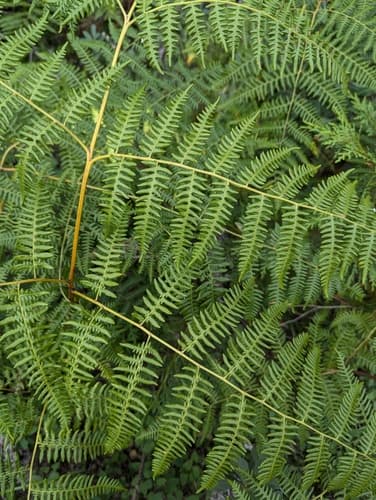
Pteridium aquilinum is a fast spreading fern found in open woods, fields, and forest edges across much of the United States. It grows well in part shade to full shade with medium moisture and spreads by underground rhizomes rather than flowers.
Toxicity unknown
Bracken (Pteridium aquilinum) is not listed by the ASPCA Animal Poison Control Center (opens in new tab) or the other sources we check, so we have no verdict for it either way. Absence from those lists is not a clearance. If your pet shows symptoms after eating any plant, call the ASPCA at (888) 426-4435.
Bracken is listed as toxic to grazing livestock such as cattle, sheep, and goats at a slight level by the USDA PLANTS Database (opens in new tab). This is a livestock indicator and is separate from pet toxicity.
Light
part shade
Water
medium
Size
24"–72" H × 24"–72" W
Bloom
N/A
Native to
AL, AR, CA, CO and 40 more states
Before you buy
Your city may pay you to plant this
Cities and water utilities offer rebates for replacing lawn with native and water-wise plants. We track 459 programs across 44 states, each with a link to the provider and the date we last checked it.
Find rebates in your areaPicture natives in your own yard
Upload a photo of your yard and Patch Vision shows a rendering of it planted with natives for your region, like Bracken.


Browse plants for this ecoregion
Bracken is a large, aggressive fern that spreads rapidly through underground rhizomes to form dense colonies. It has distinctive triangular fronds that can grow quite tall and turn golden-brown in fall before dying back completely in winter.
Growing Bracken
Grow Bracken in part shade and medium water. Mature plants reach 24 to 72 inches tall and spread 24 to 72 inches wide. Expect high maintenance to keep it looking intentional in a front yard.
How to care for Bracken, by region
How to care for Bracken where it is actually grown: year-round basics plus what to do each season, region by region, with the sources for each.
Care guidance last updated: July 2026
High Plains (includes Lubbock, TX)
Year-round
Bracken fern is native to Texas but a shade-and-moisture woodland fern, so in the dry, open, alkaline High Plains around Lubbock it only survives in a shady, well-watered backyard spot with steady help.
- Native to Texas at the state level, but its real home is shadier, moister, more acidic ground, so it is only marginal in the treeless High Plains and needs help to hang on here
- Give it real shade (north side of the house or under trees) because the open, sunny High Plains will fry it
- It cannot live on Lubbock's roughly 19 inches of rain, so plan to water it regularly through the growing season
- Mulch with acidic organic material like pine bark to hold moisture and soften the strongly alkaline local soil
- Keep horses and livestock away from it because USDA lists bracken as toxic to grazing animals, and keep pets and children from eating it
- This is a backyard-only plant, not a front-yard choice, because it spreads aggressively and looks messy in winter
Keep bracken in the backyard, not the front yard. It spreads by underground runners and can reach about 6 feet across, so contain it with a deep root barrier or it will run. It also goes bare and untidy in winter, which reads as weedy on an HOA-facing street.
Fall
In fall the fronds start to yellow and fade as the plant heads toward dormancy, so keep watering until it goes down and let it store energy in the roots.
- Keep watering through early fall until the fronds naturally begin to die back
- Ease off water as the plant goes dormant and the weather cools
- Top up the acidic mulch to protect the rhizomes before the cold windy winter
- You can leave the fading fronds in place for now and clean them up in late winter
- Check the root barrier edges in fall since fall is when spreading rhizomes are easy to spot
Fading fronds look tired by late fall. In a backyard bed that is fine to leave, but do not let the patch creep toward any front-facing area, since bracken reads as weedy once it browns.
Winter
Bracken is fully deciduous, so it dies to the ground in winter and leaves a bare patch, and late winter is the time to cut down the dead fronds before spring growth.
- Expect a bare, empty patch all winter because the fern dies completely to the ground
- Cut the dead brown fronds down to the ground in late winter before new fiddleheads appear
- Leave the mulch layer in place over winter to protect the dormant rhizomes
- Water lightly only if the winter is very dry and the soil stays bone dry for a long stretch
- Use the bare season to check and reset the deep root barrier before spring spreading starts
The winter patch is bare and can look untidy, which is exactly why bracken belongs in the backyard. Cut the dead fronds down in late winter so the spot looks cleaner and does not read as neglected.
Spring
In spring the fern wakes from its winter dormancy and pushes up new curled fiddleheads, so this is the time to clean up, mulch, and start watering.
- Cut down any dead fronds you left over winter before the new fiddleheads unfurl
- Refresh the acidic organic mulch to hold spring moisture and keep the alkaline soil buffered
- Start regular watering as growth begins because spring in Lubbock is windy and drying
- Check that the shade cover is still doing its job before summer sun ramps up
- Do not let children or pets nibble the young fiddleheads, and keep them away from livestock
Summer
Summer is the hardest season for bracken here, so steady water and deep shade are what keep it alive through the hot, dry, windy High Plains heat.
- Water regularly and deeply because hot dry summers will kill an underwatered fern fast
- Keep a thick layer of organic mulch over the roots to slow evaporation between waterings
- Make sure it stays in shade during the worst afternoon heat
- Watch for scorched or crisping fronds as a sign it needs more water or more shade
- Keep it fenced off from any grazing animals since bracken stays toxic to livestock in summer
Sources: USDA PLANTS Profile, Pteridium aquilinum (PTAQ), native status and toxic-to-livestock listing, Lady Bird Johnson Wildflower Center, Pteridium aquilinum (western bracken fern), Texas A&M AgriLife Extension, fall care and mulching guidance
Texas Blackland Prairies (includes Dallas, TX)
Year-round
Bracken fern is native to Texas but a shady, moisture-loving woodland fern, so in the heavy black clay and open sun of the Dallas Blackland Prairies it only survives in a shaded, well-drained backyard spot with steady help.
- Native to Texas at the state level, but its real home is shadier, moister, more acidic, better-draining ground, so it is only marginal in the heavy alkaline clay around Dallas and needs help to hang on here
- Give it real shade (north side of the house or under trees) because open Dallas sun and heat will scorch it
- The number-one killer here is wet feet in the sticky black gumbo, so plant it high in a raised or amended bed and never let water sit around the roots
- Loosen the heavy clay with acidic organic matter like pine bark and compost to improve drainage and soften the strongly alkaline local soil
- Even with about 37 inches of rain a year it still needs regular water through the long hot Texas summer
- Keep horses and livestock away from it because USDA lists bracken as toxic to grazing animals, and keep pets and children from eating it
- This is a backyard-only plant, not a front-yard choice, because it spreads aggressively and looks messy in winter
Keep bracken in the backyard, not the front yard. It spreads by underground runners and can reach about 6 feet across, so contain it with a deep root barrier or it will run. It also goes bare and untidy in winter, which reads as weedy on an HOA-facing street.
Fall
In fall the fronds start to yellow and fade as the plant heads toward dormancy, so keep watering until it goes down and let it store energy in the roots.
- Keep watering through early fall until the fronds naturally begin to die back
- Ease off water as the plant goes dormant and the weather cools
- Top up the acidic mulch to protect the rhizomes and keep buffering the alkaline clay
- You can leave the fading fronds in place for now and clean them up in late winter
- Check the root barrier edges in fall, since fall is when spreading rhizomes are easy to spot
Fading fronds look tired by late fall. In a backyard bed that is fine to leave, but do not let the patch creep toward any front-facing area, since bracken reads as weedy once it browns.
Winter
Bracken is fully deciduous, so it dies to the ground in winter and leaves a bare patch, and late winter is the time to cut down the dead fronds before spring growth.
- Expect a bare, empty patch all winter because the fern dies completely to the ground
- Cut the dead brown fronds down to the ground in late winter before new fiddleheads appear
- Leave the mulch layer in place over winter to protect the dormant rhizomes
- Water lightly only if the Dallas winter turns very dry and the soil stays bone dry for a long stretch
- Use the bare season to check and reset the deep root barrier before spring spreading starts
The winter patch is bare and can look untidy, which is exactly why bracken belongs in the backyard. Cut the dead fronds down in late winter so the spot looks cleaner and does not read as neglected.
Spring
In spring the fern wakes from its winter dormancy and pushes up new curled fiddleheads, so this is the time to clean up, improve the soil, and start watering.
- Cut down any dead fronds you left over winter before the new fiddleheads unfurl
- Work more acidic organic matter into the clay to keep improving drainage and buffer the alkaline soil
- Refresh a thick pine-bark or leaf mulch to hold spring moisture and keep the roots cool
- Start regular watering as growth begins, and make sure water drains away instead of pooling in the clay
- Do not let children or pets nibble the young fiddleheads, and keep them away from livestock
Summer
Summer is the hardest season for bracken in Dallas, so deep shade and steady water are what carry it through the long, hot North Texas heat.
- Water regularly and deeply because hot Dallas summers will kill an underwatered fern fast
- Keep the soil evenly moist but never soggy, since standing water in the clay rots the roots as surely as drought kills them
- Keep a thick layer of organic mulch over the roots to slow evaporation and keep the soil cool
- Make sure it stays in shade during the worst afternoon heat, and watch for scorched or crisping fronds
- Keep it fenced off from any grazing animals since bracken stays toxic to livestock in summer
Sources: USDA PLANTS Profile, Pteridium aquilinum (PTAQ), native status and toxic-to-livestock listing, Lady Bird Johnson Wildflower Center, Pteridium aquilinum (western bracken fern) light and moisture needs, Texas A&M AgriLife Extension, improving clay soil and mulching for shade-loving plants
In an HOA neighborhood
Bracken takes more care to keep looking intentional in a front yard. Maintenance level: high. Consider it for backyard or mid-zone beds rather than the street edge.
Works well in: backyard only.
- Spreads aggressively and can take over large areas
- Looks completely bare and messy in winter
- Considered weedy and invasive in appearance
Wildlife value
While bracken provides shelter for small wildlife, it offers limited value to pollinators since it does not flower. Its dense growth can crowd out more beneficial native plants.
Common questions
- Does bracken fern produce flowers?
- No. Pteridium aquilinum is a fern, so it reproduces by spores rather than flowers and has no bloom period.
- What light does bracken fern need?
- It grows best in part sun to shade, often forming dense stands under open tree canopies or along forest edges.
- How much water does bracken fern need?
- Medium, consistent moisture suits it well, though established stands can handle brief dry spells once rhizomes are set.
- Why is bracken fern considered aggressive?
- It spreads through creeping underground rhizomes, which lets it colonize fields, clearings, and woodland edges quickly and form large colonies.
- Is Bracken toxic to livestock?
- Bracken is listed as toxic to grazing livestock such as cattle, sheep, and goats (slight severity) by the USDA PLANTS Database. This is separate from pet (dog and cat) toxicity.
- Is Bracken HOA-friendly?
- Bracken takes more care to look intentional in a front yard. Consider it for backyard or mid-zone beds rather than the street edge.
These answers were drafted with an AI model from this plant's data. Verify care details with a local expert.
Native range data from vouchered herbarium specimen records and regional native plant society lists. Pollinator and host plant associations compiled from GBIF, iNaturalist, and published ecological literature.
If something looks wrong
Common plant problems, and what to check first
These come up on almost any plant. Each guide lists the likely causes in the order they are worth ruling out, with one thing to check before you act on any of them, and links to the source it came from.
- It is dying right after planting
- Leaves turning yellow
- Wilting even though I watered it
- Brown crispy leaf tips
- Bugs on the plant
Ready to grow Bracken? Add it to your garden in Pollinator Patch to track it and get season-by-season care guidance.