Big Bluestem
Andropogon gerardii
Last reviewed: October 2026
Andropogon gerardii is a tall warm season prairie grass that grows well in full sun with low water once established, blooming from September through November across much of the central and eastern United States.
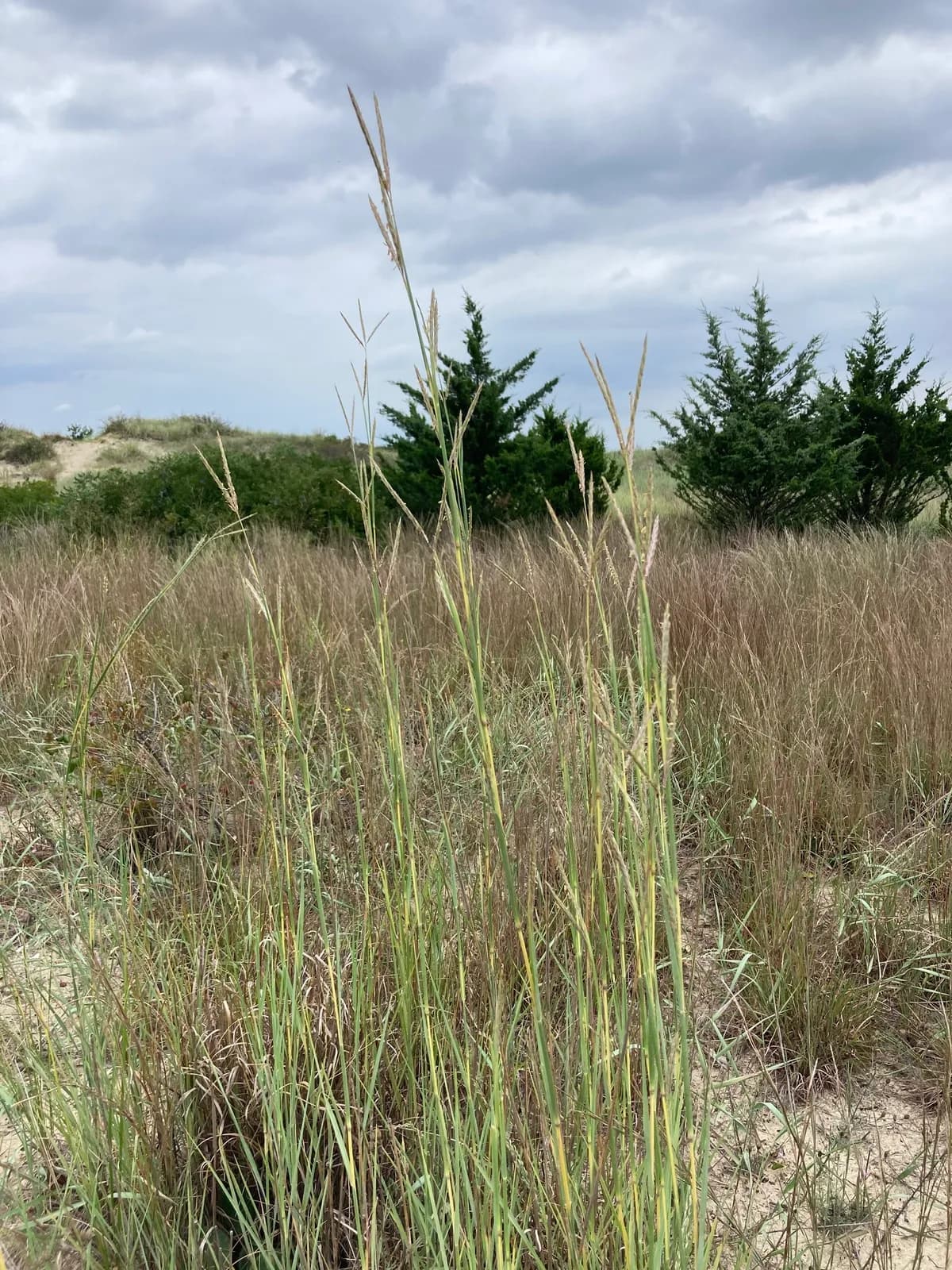
Toxicity unknown
Big Bluestem (Andropogon gerardii) is not listed by the ASPCA Animal Poison Control Center (opens in new tab) or the other sources we check, so we have no verdict for it either way. Absence from those lists is not a clearance. If your pet shows symptoms after eating any plant, call the ASPCA at (888) 426-4435.
The USDA PLANTS Database (opens in new tab) does not flag Big Bluestem as toxic to livestock.
Light
full sun
Water
low
Size
36"–72" H × 12"–24" W
Bloom
Sep, Oct, Nov
Native to
AL, AR, AZ, CO and 39 more states
Pollinators
bees
Deer
Resistant (per Prairie Moon Nursery)
Before you buy
Your city may pay you to plant this
Cities and water utilities offer rebates for replacing lawn with native and water-wise plants. We track 459 programs across 44 states, each with a link to the provider and the date we last checked it.
Find rebates in your areaPicture natives in your own yard
Upload a photo of your yard and Patch Vision shows a rendering of it planted with natives for your region, like Big Bluestem.


Browse plants for this ecoregion
Big Bluestem is a tall prairie grass that forms attractive upright clumps with blue-green foliage that turns bronze and orange in fall. It produces distinctive three-pronged seed heads in late summer that persist through winter, adding seasonal interest to the landscape.
Growing Big Bluestem
Grow Big Bluestem in full sun and low water. Mature plants reach 36 to 72 inches tall and spread 12 to 24 inches wide. Expect low maintenance to keep it looking intentional in a front yard.
How to care for Big Bluestem, by region
How to care for Big Bluestem where it is actually grown: year-round basics plus what to do each season, region by region, with the sources for each.
Care guidance last updated: October 2026
Cross Timbers (includes Fort Worth, TX)
Year-round
Big bluestem is a tall native prairie grass with fine texture and coppery fall color. In the Cross Timbers around Fort Worth it is a natural fit for sunny beds and prairie-style plantings on sand or clay.
- Native to the Cross Timbers and Prairies region of Texas, so it belongs in Fort Worth-area yards (Texas A&M AgriLife rangeplants, Lady Bird Johnson Wildflower Center).
- Full sun to part shade on sand, loam, or clay. Deep roots make it drought tolerant once established (Lady Bird Johnson Wildflower Center).
- Larval host for skipper butterflies including the Arogos, Delaware, Cobweb, and Orange-headed Roadside Skippers (Native Plant Society of Texas).
- Not on the ASPCA toxic plant list, so it is not expected to poison dogs, cats, or horses (ASPCA Animal Poison Control plant database).
One or two clumps set as accents read as intentional ornamental grasses. Keep edges clean and it holds up well in a front yard.
Fall
Fall brings the color. The clump turns reddish copper and the three-pronged turkeyfoot seed heads stand tall, the best show of the year.
- Colors up August through November, shifting to maroon and coppery tan (Lady Bird Johnson Wildflower Center).
- Leave the stalks standing for color, bird seed, and wildlife cover through fall and winter (Native Plant Society of Texas).
- Do not cut it back now. Fall pruning throws away the seed heads and winter structure.
The upright coppery clump gives easy fall curb appeal and reads as a deliberate ornamental choice.
Winter
Winter is the rest season. The grass goes tan and dormant and can stand for texture or be trimmed if you want a neater look.
- Fully cold hardy in the Fort Worth area and dormant all winter. The tan blades hold their shape and feed birds.
- Leave it standing into late winter, then cut back before spring green-up.
- If it flops or looks messy after a storm, an early cutback is fine. It regrows from the crown.
For a clean winter yard an early trim keeps the clump tidy without hurting the plant.
Spring
Spring is cutback and green-up. Trim old stalks before new blades push, and expect a late start since this is a warm-season grass.
- Cut last year's growth to about 4 to 6 inches in late winter or early spring before new blades appear.
- It greens up later than cool-season plants, staying tan into mid-spring. That is normal for a warm-season grass.
- Divide crowded old clumps in early spring if the center has died out, then water the divisions in well.
The pre-green-up trim keeps the bed looking tended while the grass is still waking up.
Summer
Summer is the tall growth season. Big bluestem shoots up and fills out, and the main task is a little water in dry spells and giving it room.
- Grows fast in summer heat and can hit 4 to 6 feet or taller, so give it space and put it toward the back of a bed.
- Drought tolerant once established but looks fuller with a deep soak every week or two in the driest stretches (Lady Bird Johnson Wildflower Center).
- No fertilizer needed. Rich soil or feeding makes it grow floppy and lean over.
Sources: Texas A&M AgriLife, Plants of Texas Rangelands: Big Bluestem, Lady Bird Johnson Wildflower Center: Andropogon gerardii, Native Plant Society of Texas: Big Bluestem, ASPCA Animal Poison Control: Toxic and Non-Toxic Plants
East Central Texas Plains (includes College Station, TX)
Year-round
Big bluestem is a tall native prairie grass with coppery fall color. In the Post Oak Savanna around College Station it fits the sandy loams and prairie openings between the oak stands.
- Native to the Post Oak Savanna region, at home on the sandy loam soils and grassland openings here (Texas A&M AgriLife rangeplants, Lady Bird Johnson Wildflower Center).
- Full sun to part shade on sand, loam, or clay, and drought tolerant once its deep roots are set (Lady Bird Johnson Wildflower Center).
- Larval host for skipper butterflies including the Arogos, Delaware, Cobweb, and Orange-headed Roadside Skippers (Native Plant Society of Texas).
- Not on the ASPCA toxic plant list, so it is not expected to poison dogs, cats, or horses (ASPCA Animal Poison Control plant database).
A clump or two as accents read as intentional ornamental grasses. Set it as a deliberate feature and keep edges clean for front-yard use.
Fall
Fall is the payoff. The clump turns reddish copper and the turkeyfoot seed heads stand tall over the bed.
- Colors up August through November, shifting to maroon and coppery tan (Lady Bird Johnson Wildflower Center).
- Leave the stalks standing for color, bird seed, and wildlife cover into winter (Native Plant Society of Texas).
- Do not cut it back now. Fall pruning throws away the seed heads and winter structure.
The upright coppery clump gives easy fall curb appeal and reads as a deliberate choice.
Winter
Winter is the rest season. The grass goes tan and dormant and can stand for texture or be trimmed for a neater look.
- Cold hardy in the College Station area and dormant all winter. The tan blades hold shape and feed birds.
- Leave it standing into late winter, then cut back before spring green-up.
- If it flops after a storm and looks messy, an early cutback is fine. It regrows from the crown.
For a clean winter yard an early trim keeps the clump tidy without hurting the plant.
Spring
Spring is cutback and green-up. Trim old stalks before new blades push, and expect a late start since this is a warm-season grass.
- Cut last year's growth to about 4 to 6 inches in late winter or early spring before new blades appear.
- It greens up later than cool-season plants, staying tan into mid-spring. That is normal for a warm-season grass.
- Water spring plantings deeply once a week so roots get down before summer heat.
The pre-green-up trim keeps the bed looking tended while the grass is still waking up.
Summer
Summer is the tall growth season. The clump fills out and shoots up, and the main task is a deep soak in dry spells and giving it room.
- Grows fast in summer heat and can reach 4 to 6 feet or more, so put it toward the back of a bed.
- Drought tolerant once established but stays fuller with a deep soak every week or two in the driest stretches (Lady Bird Johnson Wildflower Center).
- No fertilizer needed. Feeding just makes it grow floppy.
Sources: Texas A&M AgriLife, Plants of Texas Rangelands: Big Bluestem, Lady Bird Johnson Wildflower Center: Andropogon gerardii, Native Plant Society of Texas: Big Bluestem, ASPCA Animal Poison Control: Toxic and Non-Toxic Plants
Edwards Plateau (includes San Antonio, TX)
Year-round
Big bluestem is a tall native prairie grass with coppery fall color. On the Edwards Plateau around San Antonio it grows on the deeper soils and swales, not the thin rocky ridges, so give it a spot with some soil depth.
- Native to the Edwards Plateau region, best on the deeper loams and low areas rather than shallow caliche ridges (Texas A&M AgriLife rangeplants, Lady Bird Johnson Wildflower Center).
- Full sun to part shade on sand, loam, or clay, and drought tolerant once its deep roots are set (Lady Bird Johnson Wildflower Center).
- Larval host for skipper butterflies including the Arogos, Delaware, Cobweb, and Orange-headed Roadside Skippers (Native Plant Society of Texas).
- Not on the ASPCA toxic plant list, so it is not expected to poison dogs, cats, or horses (ASPCA Animal Poison Control plant database).
A clump or two as accents read as intentional ornamental grasses. On the Hill Country's shallow soils, planting where there is soil depth keeps it full and tidy.
Fall
Fall is the payoff. The clump turns reddish copper and the turkeyfoot seed heads stand tall over the bed.
- Colors up August through November, shifting to maroon and coppery tan (Lady Bird Johnson Wildflower Center).
- Leave the stalks standing for color, bird seed, and wildlife cover into winter (Native Plant Society of Texas).
- Do not cut it back now. Fall pruning throws away the seed heads and winter structure.
The upright coppery clump gives easy fall curb appeal and reads as a deliberate choice.
Winter
Winter is the rest season. The grass goes tan and dormant and can stand for texture or be trimmed for a neater look.
- Cold hardy in the San Antonio area and dormant all winter. The tan blades hold shape and feed birds.
- Leave it standing into late winter, then cut back before spring green-up.
- If it flops after a storm and looks messy, an early cutback is fine. It regrows from the crown.
For a clean winter yard an early trim keeps the clump tidy without hurting the plant.
Spring
Spring is cutback and green-up. Trim the old stalks before new blades push, and expect a later start since this is a warm-season grass.
- Cut last year's growth to about 4 to 6 inches in late winter or early spring before new blades appear.
- It greens up later than cool-season plants, staying tan into mid-spring. That is normal for a warm-season grass.
- Water spring plantings deeply once a week so roots get down before the Hill Country summer heat sets in.
The pre-green-up trim keeps the bed looking tended through the slow start.
Summer
Summer is the tall growth season. The clump fills out and shoots up, and the main task is a deep soak in dry spells and giving it room.
- Grows fast in summer heat and can reach 4 to 6 feet or more, so put it toward the back of a bed.
- Drought tolerant once established but stays fuller with a deep soak every week or two in the driest stretches (Lady Bird Johnson Wildflower Center).
- No fertilizer needed. Feeding just makes it grow floppy.
Sources: Texas A&M AgriLife, Plants of Texas Rangelands: Big Bluestem, Lady Bird Johnson Wildflower Center: Andropogon gerardii, Native Plant Society of Texas: Big Bluestem, ASPCA Animal Poison Control: Toxic and Non-Toxic Plants
Erie Drift Plain (includes Buffalo, NY)
Year-round
Big bluestem is a tall prairie grass that likes sun, handles dry spells once settled, and needs little fuss.
- Give it full sun to part shade.
- Too much shade, water, or fertilizer can make it top-heavy and flop.
- Deep roots make it quite drought-tolerant once established.
Cut it back in late winter for a clean look before new growth starts.
Fall
In fall it blooms from August through November, and seed can be collected in October and November.
- Enjoy the red, blue, or brown flower heads.
- Collect seed in October and November if you want more.
- Leave the stems standing for now.
Winter
In winter the dormant stems can stand, then get cut back in late winter.
- Leave stems up through winter, snow and all.
- Cut back, mow, or burn in late winter, per the source.
- Winter dormancy is a good time to divide roots.
Spring
Spring is when new blades sprout, so finish any cutting back before growth starts.
- Cut back or mow old stems in late winter or very early spring.
- Do not mow once it is growing, since that can kill it.
- New plants can be started from seed or root division.
Summer
Summer is for letting it grow, with little help needed.
- Skip fertilizer, which can make it flop.
- Water new plants during dry spells and leave settled ones alone.
- Do not mow during the growing season.
Sources: Lady Bird Johnson Wildflower Center: Andropogon gerardii
High Plains (includes Lubbock, TX)
Year-round
Big bluestem is a tall native prairie grass that turns coppery in fall. On the High Plains around Lubbock it lives in the moister low spots, playa edges and swales, not the dry open flats, so plant it where a little extra water collects.
- Native across Texas including the High Plains region, but it wants the wetter pockets here, so give it a low spot or a spot you can water a bit (Texas A&M AgriLife rangeplants, Lady Bird Johnson Wildflower Center).
- Full sun to part shade, sandy loam to clay, and deep roots that make it drought tolerant once it is settled in (Lady Bird Johnson Wildflower Center).
- It is a larval host for skipper butterflies including the Arogos, Delaware, Cobweb, and Orange-headed Roadside Skippers (Native Plant Society of Texas).
- Not on the ASPCA toxic plant list, so it is not expected to poison dogs, cats, or horses (ASPCA Animal Poison Control plant database).
A single clump reads as an intentional ornamental grass. Set it as an accent near a walk or bed corner rather than a loose sweep to keep the front yard looking tended.
Fall
Fall is the payoff. The blades and seed heads turn reddish copper and the three-part seed head that gives it the turkeyfoot nickname stands up over the yard.
- Blooms and colors up August through November, going maroon to coppery tan (Lady Bird Johnson Wildflower Center).
- Leave the stalks standing through fall and winter for color, seed for birds, and cover for wildlife (Native Plant Society of Texas).
- Skip any hard pruning now. Cutting in fall throws away the winter interest and the standing cover.
The upright coppery fall clump is one of the tidier looks in a native bed, easy curb appeal with no work.
Winter
Winter is a rest season. The grass goes tan and dormant and can be left standing. High Plains winds are strong, so decide whether you want the standing look or a neater trim.
- Fully cold hardy here and dormant all winter. The tan blades and seed heads hold up and feed birds.
- You can leave it standing until late winter, then cut back before spring green-up.
- If winter wind flattens the clump and it looks messy, an early cutback is fine. It will regrow from the crown.
If neighbors prefer a clean winter yard, an early trim keeps the clump tidy without hurting the plant.
Spring
Spring is cutback and green-up time. On the High Plains the grass wakes late, so give it a hard trim before new blades push and do not panic when it sits brown into April.
- Cut last year's stalks down to about 4 to 6 inches before new growth starts, usually late March into April here.
- It is a warm-season grass, so it stays dormant and tan well into spring while cool-season plants are already green. That is normal, not dead.
- Water new spring plantings deeply once a week so the deep roots can get established before summer heat.
Doing the cutback before green-up keeps the bed looking cared for through the slow High Plains spring.
Summer
Summer is when big bluestem does its growing and shoots up tall. Around Lubbock the main job is enough water in the dry stretches so the clump stays full instead of thin.
- It grows fast in the summer heat and can reach 4 to 6 feet or more, so give it room and do not crowd it.
- Water deeply every week or two during the driest weeks. It is drought tolerant once established but looks fuller with the moisture it wants (Lady Bird Johnson Wildflower Center).
- No fertilizer needed. It does fine on low-fertility soil and too much feeding just makes it flop.
Sources: Texas A&M AgriLife, Plants of Texas Rangelands: Big Bluestem, Lady Bird Johnson Wildflower Center: Andropogon gerardii, Native Plant Society of Texas: Big Bluestem, ASPCA Animal Poison Control: Toxic and Non-Toxic Plants
Ouachita Mountains (includes Hot Springs, AR)
Year-round
Big bluestem is a tall native prairie grass that grows in upright clumps and turns a copper-orange color in fall. U.S. Forest Service vegetation surveys list it as a dominant grass in the glade and open-woodland plant communities of Arkansas's Ouachita Mountains, so it is a genuine fit for a full-sun spot in a Hot Springs yard.
- Give it full sun, at least six hours a day. Less sun means floppier stems and less of the reddish fall color.
- Mature size runs four to eight feet tall with a two-to-three-foot spread. Space plants two to three feet apart if you are filling a bed.
- It grows in average to dry, well-drained soil and does not need regular watering once established, though it also handles the heavier clay soils common around Hot Springs.
- Turkey-foot-shaped seed heads show up reddish-purple from late summer into fall, then fade to the tan-copper color that holds through winter.
Big bluestem's height is the main thing to manage for an HOA-conscious yard. A crisp bed edge and a spot set back from the sidewalk keep it reading as an HOA-friendly planting instead of an overgrown patch.
Fall
Fall is big bluestem's showiest season. The reddish seed heads and blue-green foliage shift toward a bronze-copper color as the plant heads into dormancy.
- Color and seed head display peak from late summer through October, then fade toward the tan-copper shade that holds through winter.
- The average first fall frost for the Hot Springs area lands around October 31, with the first freeze following in mid-November.
- Leave the seed heads and stems standing through fall. University of Arkansas extension guidance on warm-season grasses recommends cutting back in late winter, not fall, so the plant can store energy and provide winter cover.
- If a front bed needs to look tidier for fall, trim only the stems that have flopped over rather than cutting the whole clump down early.
For an HOA-friendly fall look, a light edge around the bed reads as tended even while the seed heads and stems stay up for winter interest and bird food.
Winter
Big bluestem goes fully dormant in winter, standing as dried tan-copper stems until you cut the clump back in late winter, right before spring green-up starts.
- Cut the whole clump back to four to six inches sometime in February, before new growth starts. University of Arkansas extension recommends this same timing for warm-season grasses like big bluestem across the state.
- The plant should go into winter with plenty of standing growth left on it. Extension guidance points to around 18 inches of canopy height, since that height helps the crown store energy and insulates it through cold snaps.
- The Hot Springs area falls in the warmer part of Arkansas's hardiness range, roughly zone 7b to 8a, so the crown comes through a typical winter without mulch or covering.
- No water needed while the plant is dormant.
A single clean cutback in February, right before green-up, keeps the bed from carrying an untrimmed clump into spring, which is the easiest way to keep a big bluestem planting reading HOA-friendly through the dormant months.
Spring
Spring is when big bluestem breaks winter dormancy in the Hot Springs area. New blue-green shoots come up from the base of the clump once the soil warms and the last frost has passed.
- The average last spring frost for the Hot Springs area lands around April 3, with new growth usually following once nights stay reliably above freezing.
- If you have not cut the old growth back yet, do it before the new shoots get more than a couple inches tall so you do not shear off this year's growth by mistake.
- Skip the fertilizer. Rich soil tends to make the stems grow tall and lean, more likely to flop over later in the season.
- Water new transplants or divisions regularly through their first spring while roots are still establishing, then back off.
If cutback slipped past February, finishing it early in spring before new shoots emerge still keeps the bed looking HOA-friendly for the rest of the growing season.
Summer
Summer is big bluestem's peak growing season. Hot Springs summers are hot and humid, which is exactly the climate this warm-season prairie grass evolved to handle.
- Once established, it holds up through summer heat without supplemental water except during an extended, multi-week dry spell.
- Stems grow quickly through summer and reach their mature four-to-eight-foot height by late summer.
- Wet, rich soil is more likely to cause floppy, leaning stems than summer heat is, so resist the urge to baby it with extra water or fertilizer.
- No pruning or deadheading needed in summer. The seed heads are part of the plant's late-season display, not something to trim off.
Sources: Lady Bird Johnson Wildflower Center - Andropogon gerardii, USDA Forest Service - Central Interior Highlands Dry Acidic Glade and Barrens (Ouachita Mountains, AR), University of Arkansas Extension - Native Grass Winter Management, University of Arkansas Extension - Understanding the New USDA Hardiness Zones, National Weather Service Little Rock - Frost and Freeze Dates, Hot Springs/Garland County
South Central Plains (includes Beaumont, TX)
Year-round
Big bluestem is a tall native prairie grass with coppery fall color. In the Piney Woods around Beaumont it grows in the sunny prairie openings and moist meadows between the pine stands, not under the dense canopy.
- Native to the Pineywoods region, found in the grassy openings and low meadows rather than deep shade (Texas A&M AgriLife rangeplants, Lady Bird Johnson Wildflower Center).
- Full sun to part shade on sandy, loamy, or moist soils, and it takes the East Texas moisture well (Lady Bird Johnson Wildflower Center).
- Larval host for skipper butterflies including the Arogos, Delaware, Cobweb, and Orange-headed Roadside Skippers (Native Plant Society of Texas).
- Not on the ASPCA toxic plant list, so it is not expected to poison dogs, cats, or horses (ASPCA Animal Poison Control plant database).
A clump or two in a sunny front spot read as intentional ornamental grasses. Give it sun, since a shaded, floppy clump looks less tidy.
Fall
Fall is the payoff. The tall clump turns reddish copper and the turkeyfoot seed heads stand out against the dark pines.
- Colors up August through November, shifting to maroon and coppery tan (Lady Bird Johnson Wildflower Center).
- Leave the stalks standing for color, bird seed, and wildlife cover into winter (Native Plant Society of Texas).
- Do not cut it back now. Fall pruning throws away the seed heads and winter structure.
The upright coppery clump gives easy fall curb appeal and reads as a deliberate choice.
Winter
Winter is mild and wet here, but the grass still goes tan and dormant. Leave it standing for texture or trim it for a neater look.
- Fully hardy through East Texas winters and dormant, going tan. The blades hold shape and feed birds.
- Leave it standing into late winter, then cut back before spring green-up.
- On soggy winter ground tall stalks can lean, so an early cutback is fine if it looks messy. It regrows from the crown.
For a clean winter yard an early trim keeps the clump tidy without hurting the plant.
Spring
Spring is cutback and green-up. Trim old stalks before new blades push, and expect a late start since this is a warm-season grass.
- Cut last year's growth to about 4 to 6 inches in late winter or early spring before new blades appear.
- It greens up later than cool-season plants, staying tan into mid-spring. That is normal for a warm-season grass.
- East Texas spring rain usually covers new plantings, so only add water if a dry spell hits.
The pre-green-up trim keeps the bed looking tended while the grass is still waking up.
Summer
Summer is the tall growth season. With East Texas rain and heat big bluestem gets tall and full, so give it sun and room.
- Grows fast and can reach 6 to 8 feet in the moist summer, so put it at the back of a bed.
- Usually needs little extra water here thanks to summer rain, but a deep soak helps in a dry stretch (Lady Bird Johnson Wildflower Center).
- Give it as much sun as you can. In too much shade it grows leggy and leans over.
Sources: Texas A&M AgriLife, Plants of Texas Rangelands: Big Bluestem, Lady Bird Johnson Wildflower Center: Andropogon gerardii, Native Plant Society of Texas: Big Bluestem, ASPCA Animal Poison Control: Toxic and Non-Toxic Plants
Southern Texas Plains (includes McAllen, TX)
Year-round
Big bluestem is a tall native prairie grass with coppery fall color. In the South Texas Plains around McAllen it turns up in the moister prairie remnants and low ground, so give it a spot that holds a little more water.
- Native to the South Texas Plains region, found in the moister prairie sites rather than the driest brush country (Texas A&M AgriLife rangeplants, Lady Bird Johnson Wildflower Center).
- Full sun to part shade on sand, loam, or clay, drought tolerant once its deep roots are set (Lady Bird Johnson Wildflower Center).
- Larval host for skipper butterflies including the Arogos, Delaware, Cobweb, and Orange-headed Roadside Skippers (Native Plant Society of Texas).
- Not on the ASPCA toxic plant list, so it is not expected to poison dogs, cats, or horses (ASPCA Animal Poison Control plant database).
A clump or two set as accents read as intentional ornamental grasses. Place it where the soil holds moisture so it stays full in the South Texas heat.
Fall
Fall is the payoff. The clump turns reddish copper and the turkeyfoot seed heads stand up over the bed as the weather eases.
- Colors up August through November, shifting to maroon and coppery tan (Lady Bird Johnson Wildflower Center).
- Leave the stalks standing for color, bird seed, and wildlife cover into winter (Native Plant Society of Texas).
- Do not cut it back now. Fall pruning throws away the seed heads and structure.
The upright coppery clump gives easy fall curb appeal and reads as a deliberate choice.
Winter
Winter is mild here but the grass still goes tan and dormant. Leave it standing for texture or trim it for a neater look.
- Fully hardy through South Texas winters and dormant, going tan. The blades hold shape and feed birds.
- Leave it standing into late winter, then cut back before spring green-up.
- If it flops and looks messy, an early cutback is fine. It regrows from the crown.
For a clean winter yard an early trim keeps the clump tidy without hurting the plant.
Spring
Spring is cutback and green-up. Trim old stalks before new blades push. In the warm South Texas spring it may green up a bit earlier than farther north.
- Cut last year's growth to about 4 to 6 inches in late winter before new blades appear.
- It is a warm-season grass, so it stays tan until real warmth arrives, then greens up.
- Water spring plantings deeply once a week so roots get down before the long McAllen summer.
The pre-green-up trim keeps the bed looking tended.
Summer
Summer is the tall growth season, and it is a hot dry one here. The main task is enough water in the dry stretches so the clump stays full instead of thin.
- Grows fast in summer and can reach 4 to 6 feet, so give it room toward the back of a bed.
- Drought tolerant once established but the fullest look needs a deep soak every week or two through the hottest, driest weeks (Lady Bird Johnson Wildflower Center).
- No fertilizer needed. Feeding just makes it flop.
Sources: Texas A&M AgriLife, Plants of Texas Rangelands: Big Bluestem, Lady Bird Johnson Wildflower Center: Andropogon gerardii, Native Plant Society of Texas: Big Bluestem, ASPCA Animal Poison Control: Toxic and Non-Toxic Plants
Texas Blackland Prairies (includes Dallas, TX)
Year-round
Big bluestem is the signature tall grass of the Blackland Prairie, and Dallas sits right in its stronghold. It thrives on the region's deep clay soils and gives a tall, coppery, prairie look.
- Native and abundant in the Texas Blackland Prairies, one of its core Texas regions, and well suited to local clay soils (Texas A&M AgriLife rangeplants, Lady Bird Johnson Wildflower Center).
- Full sun to part shade, thrives on clay, loam, or sand, and drought tolerant once its deep roots are set (Lady Bird Johnson Wildflower Center).
- Larval host for skipper butterflies including the Arogos, Delaware, Cobweb, and Orange-headed Roadside Skippers (Native Plant Society of Texas).
- Not on the ASPCA toxic plant list, so it is not expected to poison dogs, cats, or horses (ASPCA Animal Poison Control plant database).
A clump or two as accents read as intentional ornamental grasses. On deep Blackland clay it grows tall, so set it toward the back and keep edges clean for front-yard use.
Fall
Fall is the payoff. The tall clump turns reddish copper and the turkeyfoot seed heads stand well above the bed.
- Colors up August through November, shifting to maroon and coppery tan (Lady Bird Johnson Wildflower Center).
- Leave the stalks standing for color, bird seed, and wildlife cover into winter (Native Plant Society of Texas).
- Do not cut it back now. Fall pruning throws away the seed heads and winter structure.
The upright coppery clump gives easy fall curb appeal and reads as a deliberate ornamental choice.
Winter
Winter is the rest season. The grass goes tan and dormant and can stand for texture or be trimmed for a neater look.
- Fully cold hardy in the Dallas area and dormant all winter. The tan blades hold shape and feed birds.
- Leave it standing into late winter, then cut back before spring green-up.
- If it flops after a storm and looks messy, an early cutback is fine. It regrows from the crown.
For a clean winter yard an early trim keeps the clump tidy without hurting the plant.
Spring
Spring is cutback and green-up. Trim old stalks before new blades push, and expect a late start since this is a warm-season grass.
- Cut last year's growth to about 4 to 6 inches in late winter or early spring before new blades appear.
- It greens up later than cool-season plants, staying tan into mid-spring. That is normal for a warm-season grass.
- Divide crowded old clumps in early spring if the center has died out, then water the divisions in well.
The pre-green-up trim keeps the bed looking tended while the grass is still waking up.
Summer
Summer is the tall growth season. On deep Blackland clay big bluestem can get very tall and full, so give it room and a little water in dry spells.
- Grows fast and can reach 6 to 8 feet on the rich Blackland soils, so put it at the back of a bed.
- Drought tolerant once established but stays fuller with a deep soak every week or two in the driest stretches (Lady Bird Johnson Wildflower Center).
- No fertilizer needed. The clay here is already fertile, and extra feeding makes it flop.
Sources: Texas A&M AgriLife, Plants of Texas Rangelands: Big Bluestem, Lady Bird Johnson Wildflower Center: Andropogon gerardii, Native Plant Society of Texas: Big Bluestem, ASPCA Animal Poison Control: Toxic and Non-Toxic Plants
Western Gulf Coastal Plain (includes Houston, TX)
Year-round
Big bluestem is a tall native prairie grass with coppery fall color. On the Gulf Coast Prairie around Houston it is a natural fit, at home in the moist coastal grasslands and heavy soils.
- Native to the Gulf Prairies and Marshes region, well suited to the moister coastal prairie soils around Houston (Texas A&M AgriLife rangeplants, Lady Bird Johnson Wildflower Center).
- Full sun to part shade, handles clay, loam, or sand, and takes the extra Gulf Coast moisture well (Lady Bird Johnson Wildflower Center).
- Larval host for skipper butterflies including the Arogos, Delaware, Cobweb, and Orange-headed Roadside Skippers (Native Plant Society of Texas).
- Not on the ASPCA toxic plant list, so it is not expected to poison dogs, cats, or horses (ASPCA Animal Poison Control plant database).
A clump or two as accents read as intentional ornamental grasses. In wetter coastal soil it grows tall, so set it toward the back and keep edges clean for front-yard use.
Fall
Fall is the payoff. The tall clump turns reddish copper and the turkeyfoot seed heads stand well above the bed as the humidity eases.
- Colors up August through November, shifting to maroon and coppery tan (Lady Bird Johnson Wildflower Center).
- Leave the stalks standing for color, bird seed, and wildlife cover into winter (Native Plant Society of Texas).
- Do not cut it back now. Fall pruning throws away the seed heads and winter structure.
The upright coppery clump gives easy fall curb appeal and reads as a deliberate choice.
Winter
Winter is mild and wet here, but the grass still goes tan and dormant. Leave it standing for texture or trim it for a neater look.
- Fully hardy through Gulf Coast winters and dormant, going tan. The blades hold shape and feed birds.
- Leave it standing into late winter, then cut back before spring green-up.
- On soggy winter ground the tall stalks can lean, so an early cutback is fine if it looks messy. It regrows from the crown.
For a clean winter yard an early trim keeps the clump tidy without hurting the plant.
Spring
Spring is cutback and green-up. Trim old stalks before new blades push, and expect a late start since this is a warm-season grass.
- Cut last year's growth to about 4 to 6 inches in late winter or early spring before new blades appear.
- It greens up later than cool-season plants, staying tan into mid-spring. That is normal for a warm-season grass.
- The Gulf Coast usually brings enough spring rain, so hold off on extra water unless a dry spell hits new plantings.
The pre-green-up trim keeps the bed looking tended while the grass is still waking up.
Summer
Summer is the tall growth season. With Gulf Coast rain and heat big bluestem gets very tall and full, so give it room and go easy on extra water.
- Grows fast and can reach 6 to 8 feet in the moist, hot coastal summer, so put it at the back of a bed.
- Usually needs little added water here thanks to summer rain, but a deep soak helps in a dry stretch (Lady Bird Johnson Wildflower Center).
- No fertilizer needed. Rich soil and feeding make it flop, and it flops more easily on wet ground.
Sources: Texas A&M AgriLife, Plants of Texas Rangelands: Big Bluestem, Lady Bird Johnson Wildflower Center: Andropogon gerardii, Native Plant Society of Texas: Big Bluestem, ASPCA Animal Poison Control: Toxic and Non-Toxic Plants
In an HOA neighborhood
Big Bluestem takes more care to keep looking intentional in a front yard. Maintenance level: low. Consider it for backyard or mid-zone beds rather than the street edge.
Works well in: backyard only.
- Height exceeds typical HOA-friendly range
Wildlife value
This native grass provides excellent habitat for ground-nesting birds and serves as a host plant for several butterfly species. The seeds are valuable food for quail, songbirds, and small mammals.
Common questions
- What growing conditions does Andropogon gerardii need?
- Big bluestem grows best in full sun to part sun and tolerates low to medium water once established. It handles poor, dry soils and is often used in prairie and meadow plantings.
- When does Big Bluestem bloom?
- Andropogon gerardii produces its distinctive purplish, turkey-foot shaped seed heads from September through November.
- Does Andropogon gerardii support pollinators?
- Big bluestem is wind pollinated like most grasses, so it does not depend on bees for pollination, but its foliage and seed heads provide shelter and forage for various insects and birds through fall and winter.
- How should I care for Big Bluestem in a garden setting?
- Once established, this grass needs little supplemental water and benefits from cutting back in late winter before new growth emerges in spring.
- Is Big Bluestem toxic to livestock?
- The USDA PLANTS Database does not flag Big Bluestem as toxic to livestock.
- Is Big Bluestem HOA-friendly?
- Big Bluestem takes more care to look intentional in a front yard. Consider it for backyard or mid-zone beds rather than the street edge.
These answers were drafted with an AI model from this plant's data. Verify care details with a local expert.
Native range data from vouchered herbarium specimen records and regional native plant society lists. Pollinator and host plant associations compiled from GBIF, iNaturalist, and published ecological literature.
If something looks wrong
Common plant problems, and what to check first
These come up on almost any plant. Each guide lists the likely causes in the order they are worth ruling out, with one thing to check before you act on any of them, and links to the source it came from.
- It is dying right after planting
- Leaves turning yellow
- Wilting even though I watered it
- Brown crispy leaf tips
- Bugs on the plant
Ready to grow Big Bluestem? Add it to your garden in Pollinator Patch to track it and get season-by-season care guidance.