Sixweeks fescue
Festuca octoflora
Last reviewed: September 2026
Sixweeks fescue (Festuca octoflora) is a annual grass native to AL, AR, AZ, CA and 45 more states. It blooms in April, May, and June.
Toxicity unknown
Sixweeks fescue (Festuca octoflora) is not listed by the ASPCA Animal Poison Control Center (opens in new tab) or the other sources we check, so we have no verdict for it either way. Absence from those lists is not a clearance. If your pet shows symptoms after eating any plant, call the ASPCA at (888) 426-4435.
Light
full sun
Water
low
Size
4"–12" H × 4"–8" W
Bloom
Apr, May, Jun
Native to
AL, AR, AZ, CA and 45 more states
Before you buy
Your city may pay you to plant this
Cities and water utilities offer rebates for replacing lawn with native and water-wise plants. We track 458 programs across 44 states, each with a link to the provider and the date we last checked it.
Find rebates in your areaBrowse plants for this ecoregion
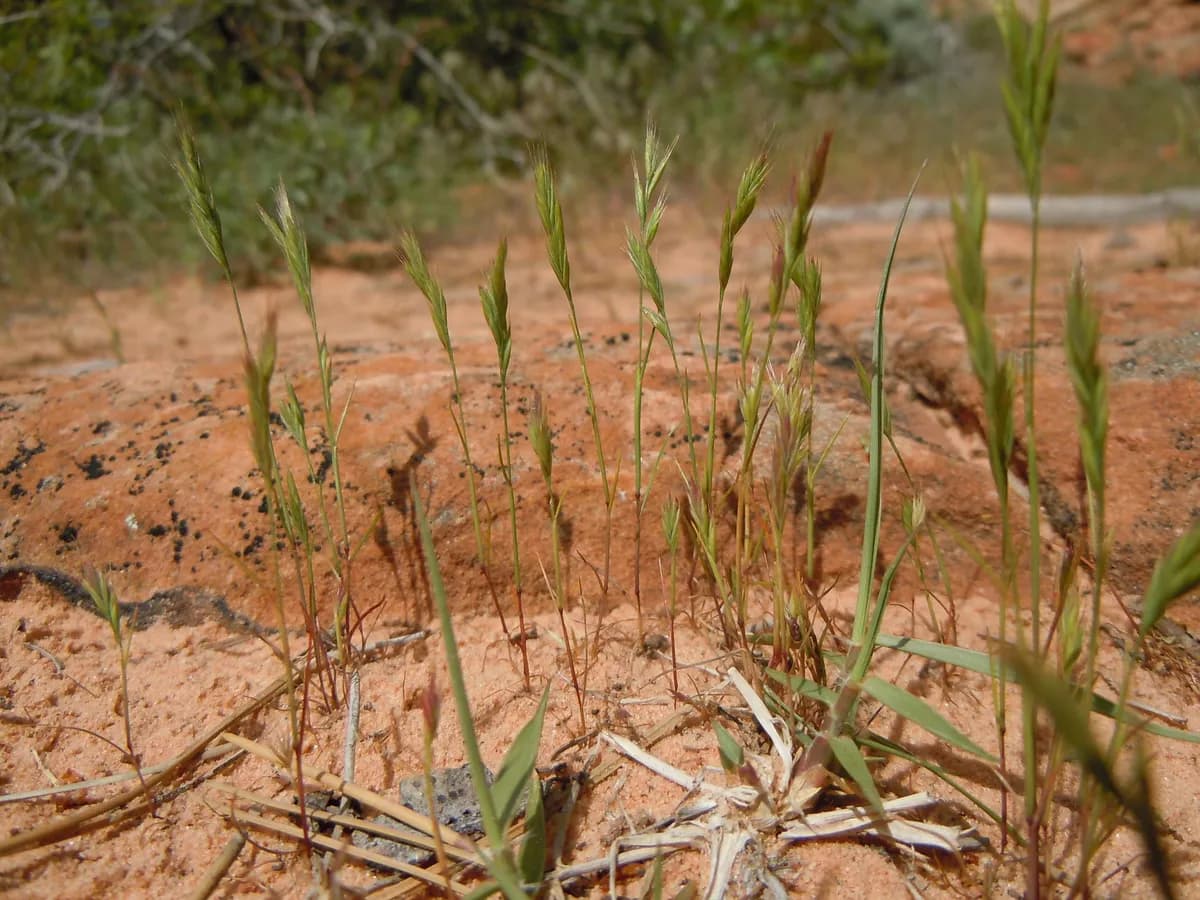
A small, delicate annual grass with slender stems and narrow, few-flowered seed heads. It grows in dry, open, often disturbed ground, completing its life cycle quickly in spring.
Growing Sixweeks fescue
Grow Sixweeks fescue in full sun and low water. Mature plants reach 4 to 12 inches tall and spread 4 to 8 inches wide.
How to care for Sixweeks fescue, by region
How to care for Sixweeks fescue where it is actually grown: year-round basics plus what to do each season, region by region, with the sources for each.
Care guidance last updated: August 2026
Sonoran Basin and Range (includes Palm Springs, CA)
Year-round
Sixweeks fescue is a tiny annual desert grass that sprouts with fall and winter rain, grows low through the cooler months, then flowers and dies back by early summer.
- This is a true annual grass. It grows from seed each year and does not come back as a perennial clump the way many bunchgrasses do.
- It sprouts after fall and winter rain and stays low and grassy through the cooler months.
- It flowers and sets seed in spring, then dries out and dies back on its own by early summer once the heat sets in.
- It prefers full sun and coarse, sandy or gravelly soil, and it does not need supplemental water once it has sprouted from rain.
- It is not on the ASPCA's toxic or non-toxic plant lists, so there is no official read on whether it is a problem for dogs and cats. Treat any grass a pet chews on a lot with normal caution.
- It spreads by dropping its own seed, so a patch tends to come back on its own the next rainy season without replanting.
Fall
Fall is germination time. The first real rain of the season wakes up seed that has been sitting in the soil since last spring.
- Watch for tiny grass-like seedlings after the first good fall rain. That is this grass starting its new year.
- No planting or watering needed if it already grew in your yard before. It grows from its own dropped seed.
- Clearing out old dead thatch left from last summer first helps new seedlings get sunlight and keeps the bed looking intentional rather than neglected.
- If you want a fuller patch, avoid disturbing bare, sandy soil where seed may already be sitting and waiting.
- Cooler fall temperatures in the Palm Springs area are what let this grass germinate at all. It will not sprout in summer heat.
Clearing last summer's dried thatch before fall germination gives new grass room to fill in and keeps the yard from looking neglected in the meantime.
Winter
Winter is this grass's main growing season, staying low, green, and grassy through the cooler months.
- Growth is slow and steady through winter. No mowing is needed since it naturally stays short.
- No supplemental water needed in a normal rain year. Only step in with light watering during a stretch of unusually dry winter weather.
- The low, tidy green tufts it forms in winter are its neatest look all year.
- Skip fertilizer. It grows this way naturally in lean desert soil.
- Frost is rarely a problem in the low desert around Palm Springs, so freezing weather is not something to plan around for this grass.
Its low, even winter growth habit is naturally tidy for a front-yard bed, with no extra grooming needed to keep it looking neat.
Spring
Spring is when this little grass is at its fullest, with thin seed heads topping short green tufts before it dries out for the year.
- No need to water it. It is finishing its life cycle on the rain that already fell over fall and winter.
- You will see small seed heads by mid to late spring. The 'octoflora' in its name refers to the flowers packed into each tiny spikelet.
- Skip fertilizer. It is built to grow fast and light in lean desert soil, not to be fed.
- As days heat up later in spring, the blades will start turning tan and dry. That is the normal end of its cycle, not a sign of a problem.
- Let some seed drop before you tidy up if you want a patch to return again next winter.
Summer
By summer in the low desert around Palm Springs, this grass has already finished its short life and dried out for the year.
- By early summer the plant is dead and tan colored. That is the natural end of its six to eight week growing burst, not something you did wrong.
- There is nothing to water or feed. Its live growing season is already over.
- If the dry, straw colored patches bother you out front, you can cut or rake them back for a tidier look.
- Leaving a little seed litter in place helps a new patch sprout again when fall rain returns.
- Extreme low desert summer heat, regularly 100 to 115 degrees, is exactly why this grass avoids summer altogether by dying back before it hits.
Raking or trimming back the dried, straw colored patches keeps a front yard looking tended instead of weedy once the grass has died back for the season.
Sources: Calscape: Six Weeks Fescue (Festuca octoflora), USDA Forest Service, Fire Effects Information System: Vulpia octoflora, ASPCA Toxic and Non-Toxic Plants, letter F (no Festuca/Fescue/Vulpia entry found)
Wildlife value
Its small seeds provide food for birds and its fine structure supports ground-dwelling insects.
Common questions
- How much sun does Sixweeks fescue need?
- Sixweeks fescue grows best in full sun conditions.
- When does Sixweeks fescue bloom?
- Sixweeks fescue blooms in April, May, and June.
- Where is Sixweeks fescue native?
- Sixweeks fescue (Festuca octoflora) is native to AL, AR, AZ, CA and 45 more states, per vouchered herbarium specimen records and regional native plant society lists.
Native range data from vouchered herbarium specimen records and regional native plant society lists. Pollinator and host plant associations compiled from GBIF, iNaturalist, and published ecological literature.
If something looks wrong
Common plant problems, and what to check first
These come up on almost any plant. Each guide lists the likely causes in the order they are worth ruling out, with one thing to check before you act on any of them, and links to the source it came from.
- It is dying right after planting
- Leaves turning yellow
- Wilting even though I watered it
- Brown crispy leaf tips
- Bugs on the plant
Ready to grow Sixweeks fescue? Add it to your garden in Pollinator Patch to track it and get season-by-season care guidance.