Philadelphia Fleabane
Erigeron philadelphicus
Last reviewed: October 2026
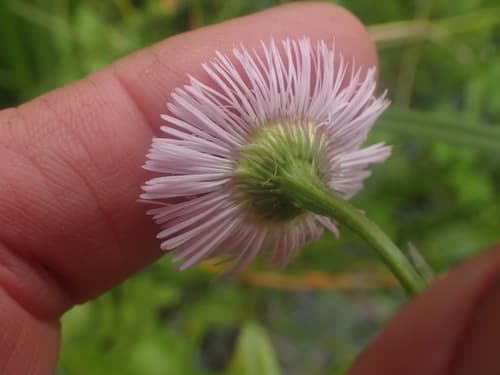
Daisy fleabane is a short lived forb with small white and yellow daisy like flowers that bloom from May through August. It grows well in full sun and moist to average soil along meadows, roadsides, and open fields.
Toxicity unknown
Philadelphia Fleabane (Erigeron philadelphicus) is not listed by the ASPCA Animal Poison Control Center (opens in new tab) or the other sources we check, so we have no verdict for it either way. Absence from those lists is not a clearance. If your pet shows symptoms after eating any plant, call the ASPCA at (888) 426-4435.
The USDA PLANTS Database (opens in new tab) does not flag Philadelphia Fleabane as toxic to livestock.
Light
full sun
Water
medium
Size
12"–36" H × 12"–24" W
Bloom
May, Jun, Jul, Aug
Native to
AL, AR, CA, CO and 42 more states
Pollinators
bees, butterflies, beetles
Before you buy
Your city may pay you to plant this
Cities and water utilities offer rebates for replacing lawn with native and water-wise plants. We track 459 programs across 44 states, each with a link to the provider and the date we last checked it.
Find rebates in your areaPicture natives in your own yard
Upload a photo of your yard and Patch Vision shows a rendering of it planted with natives for your region, like Philadelphia Fleabane.


Browse plants for this ecoregion
Daisy fleabane is a cheerful annual wildflower that produces small white to pale pink daisy-like flowers from late spring through summer. This compact native plant grows in an upright form and naturalizes easily in meadow-style plantings. It thrives in full sun with moderate water and provides continuous blooms for several months.
Growing Philadelphia Fleabane
Grow Philadelphia Fleabane in full sun and medium water. Mature plants reach 12 to 36 inches tall and spread 12 to 24 inches wide. Expect low maintenance to keep it looking intentional in a front yard.
How to care for Philadelphia Fleabane, by region
How to care for Philadelphia Fleabane where it is actually grown: year-round basics plus what to do each season, region by region, with the sources for each.
Care guidance last updated: October 2026
Erie Drift Plain (includes Buffalo, NY)
Year-round
Philadelphia fleabane is a short-lived, self-seeding daisy that likes full to partial sun and moist soil.
- Expect it to live two years or a bit longer, since it is a biennial or short-lived perennial
- It prefers moist spots and stays smaller on drier sites
- Wind-carried seed lets it pop up in new places
Self-seeding can look weedy in a tidy front bed, so pull unwanted seedlings early.
Fall
Fall is when new seedlings and rosettes show up, so decide what to keep.
- Seed is spread by wind, so new plants may appear nearby
- One gardener reported a fall rosette that returned in spring
- Pull seedlings now where you do not want a colony
Winter
In winter the plant is mostly out of sight, with little to do.
- It is a biennial or short-lived perennial, so older plants may not return
- Any rosettes that overwinter are the start of next spring's growth
Spring
Spring is when it grows fast and flowers, so give it moisture and room.
- It starts as a low leaf rosette that disappears when the stem shoots up in spring
- Blooms run from late spring into mid-summer
- Water during dry spells since it prefers moist soil
Summer
After flowering it tends to die back for the rest of summer, so don't panic when it fades.
- Plants die down after the bloom period
- Keep soil from drying out completely if you want to keep it going
- It can reach about 6 to 36 inches tall
Sources: Illinois Wildflowers: Philadelphia Fleabane, Minnesota Wildflowers: Philadelphia Fleabane
In an HOA neighborhood
Philadelphia Fleabane takes more care to keep looking intentional in a front yard. Maintenance level: low. Consider it for backyard or mid-zone beds rather than the street edge.
Works well in: backyard only.
- Annual nature means gaps in plantings
- Can self-seed aggressively and spread
- May appear weedy or uncontrolled to some
Wildlife value
This native plant attracts a diverse array of pollinators including native bees, butterflies, and beetles throughout its long blooming season. The abundant small flowers provide easily accessible nectar and pollen for smaller beneficial insects.
Common questions
- When does Daisy Fleabane bloom?
- Daisy fleabane typically flowers from May through August, with clusters of small white to pale pink ray flowers on branching stems.
- What pollinators visit Daisy Fleabane?
- The flowers attract a range of bees, butterflies, and beetles that feed on the nectar and pollen produced in the small composite blooms.
- What growing conditions does Daisy Fleabane prefer?
- This forb grows best in full sun with medium moisture but tolerates part shade and both wetter and drier soils, which is why it turns up in fields, ditches, and disturbed ground.
- How long does Daisy Fleabane live?
- It behaves as a short lived perennial or biennial, often flowering the first or second year and reseeding readily in open, sunny sites.
- Is Philadelphia Fleabane toxic to livestock?
- The USDA PLANTS Database does not flag Philadelphia Fleabane as toxic to livestock.
- Is Philadelphia Fleabane HOA-friendly?
- Philadelphia Fleabane takes more care to look intentional in a front yard. Consider it for backyard or mid-zone beds rather than the street edge.
These answers were drafted with an AI model from this plant's data. Verify care details with a local expert.
Native range data from vouchered herbarium specimen records and regional native plant society lists. Pollinator and host plant associations compiled from GBIF, iNaturalist, and published ecological literature.
If something looks wrong
Common plant problems, and what to check first
These come up on almost any plant. Each guide lists the likely causes in the order they are worth ruling out, with one thing to check before you act on any of them, and links to the source it came from.
- It is dying right after planting
- Leaves turning yellow
- Wilting even though I watered it
- Brown crispy leaf tips
- Bugs on the plant
Ready to grow Philadelphia Fleabane? Add it to your garden in Pollinator Patch to track it and get season-by-season care guidance.